
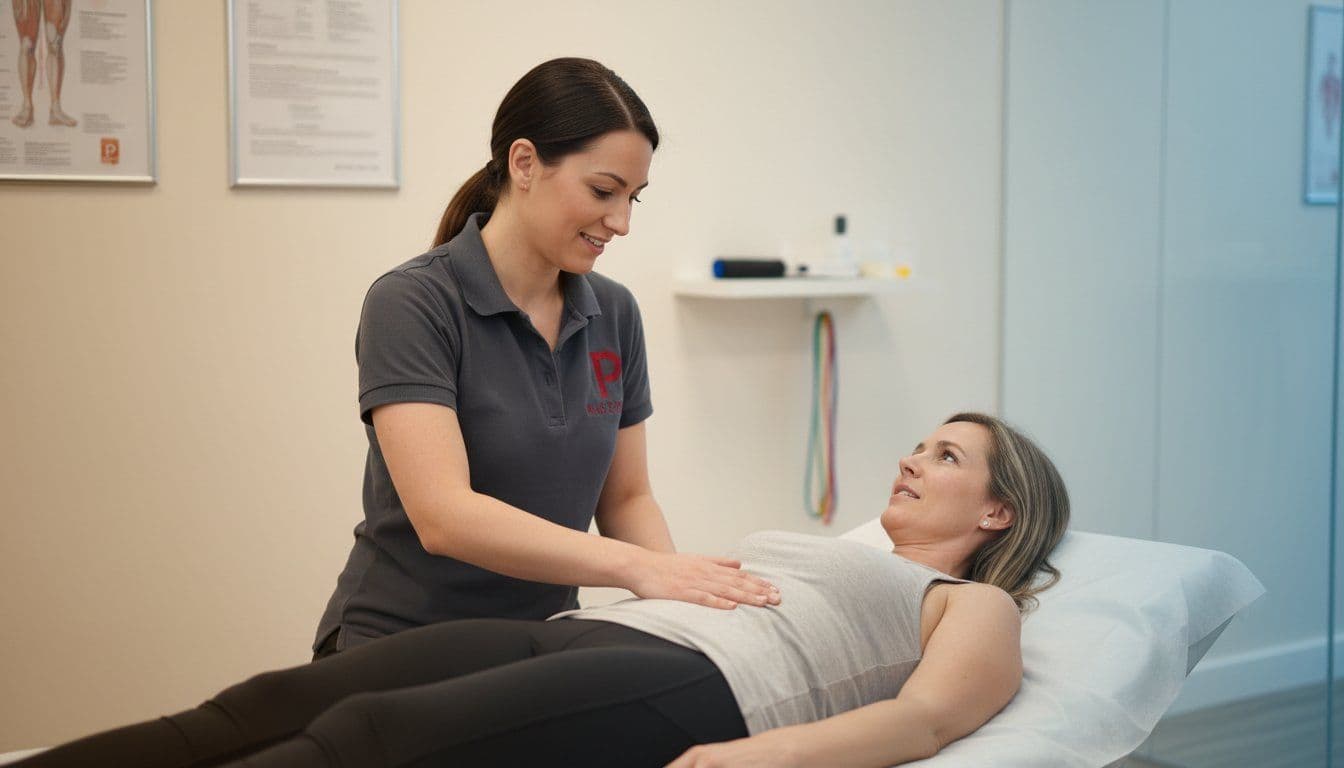
Abseparation Treatment in Milton Keynes and Northampton: Your Guide to Closing the Gap
Struggling with abseparation in Milton Keynes or Northampton? Our hands-on physio helps you close the gap, fix back pain & regain core strength. Ditch the wait.
What if that stubborn "mummy tummy" isn't about your diet at all, but a physical gap your body simply hasn't been shown how to close? It’s incredibly frustrating to feel disconnected from your own core, especially when research shows 45% of women still experience an abseparation six months after giving birth. You're likely tired of nagging back pain and even more tired of waiting months for an NHS specialist only to be handed a generic exercise sheet that doesn't seem to help.
We understand that you want your strength back without the guesswork or the long wait times. This guide shows you how to identify and fix the problem with hands-on physiotherapy tailored for our patients in Milton Keynes, Northampton, and Towcester. We’ll move past the "just do some sit-ups" advice and dive into a bespoke treatment plan that delivers visible results. You'll gain a clear understanding of your recovery and the confidence to return to lifting, running, or hitting the gym safely. We're here to help you bridge the gap and get back to the activities you love.
Key Takeaways
- Learn why abseparation is a functional issue rather than just a cosmetic one and how it affects your overall core stability and back health.
- Get a step by step guide on how to safely measure your abdominal gap at home to monitor your recovery progress with confidence.
- Discover why hands-on clinical intervention is far more effective than following generic exercise videos that can often do more harm than good.
- Find out how simple changes to your daily habits, like breathing techniques, can protect your midline and speed up your results between clinic visits.
- Access fast and effective treatment plans at our Milton Keynes and Northampton clinics to help you return to the activities you love without the long wait.
What is Abseparation and Why is it Affecting Your Core?
If you've ever looked in the mirror and wondered why your stomach still has a "pooch" despite your best efforts, you might be dealing with abseparation. Physically, this is known as what is diastasis recti, a condition where the connective tissue between your rectus abdominis muscles thins and stretches. It is a common misconception that this is strictly a "mummy tummy" issue that only affects women after pregnancy. In our clinics across Milton Keynes and Northampton, we frequently see men and avid gym-goers who have developed this gap through incorrect lifting techniques or poor pressure management. When those muscles aren't held together tightly, your core loses its ability to support your spine, often leading to chronic back pain that won't shift with rest alone.
The Role of the Linea Alba
Think of your abdominal wall as a suspension bridge. The muscles are the solid towers, but the Linea Alba is the 'bridge' between your abdominal halves. This band of connective tissue is designed to be tough and springy, but when it's subjected to too much internal pressure, it stretches out like an old hair tie. It loses that vital "snap back" ability. Usually, the real culprit is how you manage the pressure inside your torso when you move rather than just having weak muscles. At RED Physiotherapy, we see how this loss of tension affects your whole biomechanics. When this bridge loses its integrity, you lose that flat, firm support, and your entire midsection starts to feel disconnected from the rest of your body.
Common Symptoms You Might Notice
The most obvious sign of abseparation is a vertical ridge or "coning" that appears when you strain, such as when you're sitting up in bed or getting out of a car. You might also notice that your belly protrudes more than usual, even if you're otherwise fit. Because your core is your foundation, this separation often causes a domino effect of physical niggles. We treat many patients in Towcester who struggle with lower back pain or pelvic floor issues because their midsection isn't doing its job properly. Simple tasks, like carrying the heavy weekly shopping or lifting a toddler, can suddenly feel like a massive struggle because your internal support system is compromised.
We don't believe in an "exercises-only" approach to fixing this. While movement is part of the journey, our hands-on treatment at RED Physiotherapy focuses on the tension of the tissue itself. We help you understand how to manage your internal pressure so you can stop the doming and start feeling strong again. Identifying these symptoms early is the first step toward a bespoke recovery plan that actually produces visible results.
The Diastasis Recti Self-Check: How to Measure Your Gap
Measuring the gap is the first step toward reclaiming your core strength. While the body does a lot of healing in those early weeks, we usually suggest waiting until 6 to 8 weeks postnatal for your first proper check. However, it is never too late to start. We see patients in our Northampton clinic who have lived with a gap for years, and we can still make a significant difference. Understanding your starting point is the only way to build a bespoke plan that works. It is a simple process, but you need to be precise to get an accurate reading of your current abseparation.
Step-by-Step Guide to the Finger Test
To get started, lie on your back on a firm surface with your knees bent and your feet flat on the floor. Place one hand behind your head for support and your other hand on your abdomen, with your fingers pointing toward your toes, just above the belly button. Gently lift your head and shoulders off the floor as if you're starting a mini crunch. This contraction makes the edges of your abdominal muscles easier to find. You can find more clinical details on how to check for abseparation if you want to see the anatomical specifics. Press your fingers gently into the midline and count how many finger-widths fit between the two muscle bellies. Repeat this check directly at the belly button and about two inches below it, noting how deep your fingers sink into the space.
What Your Results Actually Mean
Our physios in Northampton and Milton Keynes always emphasize that the 'feel' of the gap matters far more than the width. A gap of one to two fingers is often considered normal, provided the tissue underneath feels firm and resilient. If you find three fingers or more, it usually suggests you need professional guidance to close the gap effectively. We are more concerned with a 'deep' gap than a 'wide' but shallow one. A deep, jelly-like sink indicates that the connective tissue has lost its integrity and isn't managing internal pressure well. A shallow gap, even if it's wide, shows that the underlying support is still somewhat functional.
If you've noticed coning or a significant sink during your self-check, don't panic. It simply means your core needs a bit of expert recalibration. Our team can provide a professional women's health physiotherapy assessment to give you a definitive measurement and a clear path forward. Knowing exactly what you're dealing with is the best way to replace frustration with a solid, results-driven plan.
Why Hands-On Physio Beats 'Exercises-Only' for Abseparation
Most people start their recovery journey by typing "best abs workout" into YouTube. While well-intentioned, this is often where the trouble starts. Many generic routines are designed for a healthy, intact core, not one dealing with abseparation. Doing the wrong move can actually increase the internal pressure that pushes your muscles further apart. We see patients who have spent months doing hundreds of repetitions with zero progress, simply because they're strengthening the wrong patterns. You need a professional to look at how your body moves before you start loading it with heavy exercises.
The Problem with Generic Core Workouts
Traditional sit-ups and planks are the biggest offenders. These movements create massive amounts of intra-abdominal pressure. If your connective tissue is already thin, that pressure has nowhere to go but out, causing the "coning" effect we discussed earlier. Your body is clever and will often "cheat" by using your hip flexors or lower back to compensate for a weak core. This prevents the gap from ever truly healing. You can find more detail on how we identify these compensation patterns on our conditions page. We don't want you wasting time on movements that are actively working against your recovery.
How Manual Therapy Accelerates Healing
At RED Physiotherapy, we believe that you can't just exercise your way out of a structural tension problem. Healing requires a whole-system approach. We look at your ribcage alignment, your pelvic tilt, and even your breathing patterns from your very first session. If your back is incredibly tight, it acts like a bowstring, pulling your front open and keeping the gap wide. By using hands-on manual therapy to release those tight back or hip muscles, we allow the abdominal halves to naturally come back together. It's about creating the right environment for your body to repair itself.
This isn't just about giving you a list of homework. It's about active, clinical intervention. Research into the rehabilitation for diastasis recti shows that a tailored, professional approach is vital for restoring function. Our philosophy for Milton Keynes residents is simple: fix the problem, don't drag it out. We provide a clear, structured plan so you know exactly when you'll see progress. We want you back to your full physical potential, whether that's running a marathon or just lifting your kids without that nagging feeling of core weakness.
Practical Advice: Protecting Your Core in Daily Life
Your recovery doesn't stop the moment you walk out of our clinic doors. While our hands-on sessions in Milton Keynes and Northampton provide the clinical "reset" your body needs, healing actually happens in the 23 hours you are not with us. Habits matter. If you are constantly straining your midline during the day, you are essentially undoing the progress we make during your treatment. We help our patients in Towcester and the surrounding areas adapt their daily movements to ensure their abseparation has the best possible environment to knit back together.
Safe Lifting Techniques for Parents
For parents, the "daily grind" involves a lot of heavy lifting that can be brutal on a healing core. Whether you are moving a heavy car seat or wrestling a pram into the boot, your technique is vital. We teach the "exhale on exertion" method. By breathing out as you lift, you naturally engage your deep core and prevent the internal pressure from pushing against your abdominal gap. Holding your breath while lifting is the biggest mistake you can make because it creates massive internal pressure that forces your abdominal wall outward.
Another simple but effective change is the "log roll" method. Instead of sitting straight up from bed or the sofa, which causes your stomach to cone, roll onto your side first. Use your arms to push yourself up into a sitting position. This small adjustment protects your midline from unnecessary strain hundreds of times a week. We want these movements to become second nature so you can focus on your busy life without worrying about your core giving way.
What to Avoid Until the Gap is Stable
While we want to get you back to the gym as fast as possible, some movements need to wait until your core is stable. Steer clear of heavy lifting, twisting under a heavy load, and high-impact moves like jumping or sprinting in these early stages. A common mistake many people make is "sucking it in" all day to make their stomach look flatter. This is actually counterproductive because it creates a constant pressure that can weaken your pelvic floor and prevent your core from functioning naturally.
Once we have established a firm foundation and your tension has improved, we can look at a more energetic return to sport. If you are a keen athlete, we often recommend a professional running assessment to ensure your gait isn't putting uneven pressure on your healing midline. Our goal is to move you from protection to performance without any setbacks. If you are ready to stop guessing and start a structured recovery, get in touch with our team today to book your initial assessment.
Bespoke Abseparation Recovery at RED Physiotherapy
We aren't just another clinical space. RED Physiotherapy is a family-run business that understands the reality of modern life. Between school runs, demanding jobs, and trying to stay fit, your health often slips to the bottom of the list. We see many people in Milton Keynes and Northampton who have been struggling with abseparation for months, or even years, because they were told it would just go away or they've been stuck on a six-month waiting list for an NHS appointment. We believe you deserve better than a wait and see approach. Our mission is to provide fast, effective care that returns you to the activities you love without the fear of your core failing you.
Expert Hands-On Care in Your Local Area
With clinics conveniently located in Milton Keynes, Northampton, and Towcester, expert help is never far away. You won't be passed around between different junior staff. You get a dedicated professional from our team who stays with you throughout your entire recovery journey. We pride ourselves on offering competitive pricing because we believe that high-quality, hands-on care should represent genuine value for money. We don't do fluff or unnecessary appointments. We focus on fixing the problem efficiently so you can get back to your life.
Your First Session: What to Expect
Your journey starts with a deep dive into how your body actually functions. We don't just look at the gap; we assess your posture, your breathing, and your overall movement patterns to find out why the abseparation isn't closing. Unlike many clinics that just hand you a sheet of exercises and send you on your way, we provide hands-on manual therapy from day one. This immediate intervention helps to release the tension holding your muscles apart and kickstarts the healing process. By the time you leave your first session, you will have a clear, written plan so you are never left wondering what to do next.
When to Seek Help
While some degree of separation is normal shortly after pregnancy, you should seek professional help if you notice any of the following symptoms persisting beyond eight weeks:
- A visible ridge or "doming" when you sit up or lift something heavy.
- Persistent lower back pain that doesn't improve with rest.
- A feeling of "heaviness" or weakness in your pelvic floor.
- Frustration with a protruding belly that doesn't respond to diet or standard exercise.
- General core weakness that makes everyday tasks like lifting a pram feel difficult.
Conclusion
Fixing an abdominal gap is about more than just aesthetics; it's about restoring the functional foundation of your body. We've shown you how to identify the signs, how to check your own progress, and why a bespoke, hands-on plan is the fastest way to see real results. You don't have to settle for long wait times or generic advice that doesn't work. Whether you are in Milton Keynes, Northampton, or Towcester, our team is ready to help you close the gap and regain your confidence. Stop worrying about your core and start your recovery today by booking an appointment with our specialist team.
Focus Keywords:
abseparation, Diastasis Recti, women's health physiotherapy, Milton Keynes physiotherapy, Northampton physiotherapy, Towcester physiotherapy, core recovery.
Reclaim Your Core Strength Today
Living with abseparation doesn't have to be your new normal. We have explored how identifying the gap and managing internal pressure through better daily habits can transform your recovery journey. You don't need to struggle with persistent back pain or feel disconnected from your body any longer. Our expert team specializes in women's health and core recovery, providing evidence-based, hands-on treatment from your very first visit to ensure you see real, functional results.
With convenient clinic locations across Northamptonshire and Bucks, we are here to help you return to the activities you love, whether that is hitting the gym or simply lifting your children without discomfort. We focus on fixing the problem efficiently so you can move forward with confidence and strength. Don't wait for the gap to fix itself. Book your hands-on assessment in Milton Keynes or Northampton today. You are in safe hands, and we are ready to help you thrive again.
Focus Keywords:
abseparation, Diastasis Recti, women's health physiotherapy, Milton Keynes physiotherapy, Northampton physiotherapy, Towcester physiotherapy, core recovery.
Frequently Asked Questions
Can abseparation be fixed years after having a baby?
Yes, you can absolutely improve your core function years after giving birth. Connective tissue is remarkably adaptable, and we've successfully helped patients in Milton Keynes who gave birth over a decade ago. The focus simply shifts from early postnatal healing to retraining how your muscles fire together. It's never too late to regain your strength and close the gap with a bespoke treatment plan.
Will I need surgery if my gap is wider than three fingers?
Not necessarily. In our experience, the tension and functional integrity of the gap matter far more than the width alone. We always recommend at least three to six months of dedicated, hands-on physiotherapy before considering surgical options. Most of our patients find that improving their core's ability to manage pressure removes the need for an operation entirely, even with wider separations.
Does abseparation cause lower back pain or pelvic floor issues?
It certainly does. Your core acts as a 360 degree support system for your torso. When the front wall is compromised by abseparation, your lower back muscles have to work double time to keep you upright. This often results in a nagging ache in your lumbar spine or a feeling of weakness in your pelvic floor during everyday tasks like lifting or sneezing.
Is it safe to exercise with a gap in my stomach muscles?
It is safe, provided you choose the right movements and manage your internal pressure correctly. We want you to stay active, but you must avoid exercises that cause your stomach to "dome" or "cone" during the move. Once we teach you how to coordinate your breathing with your movement, you can safely return to the gym and gradually reintroduce more challenging lifts.
How long does it typically take to see results with physiotherapy?
Most patients notice a significant change in their core stability within 6 to 8 weeks of consistent treatment. While the physical gap might take longer to narrow, the functional improvements, such as reduced back pain and better posture, often happen much faster. Our hands-on approach ensures you feel a difference in how your muscles engage from your very first session in the clinic.
Can men get abseparation, and is the treatment the same?
Yes, men can develop this condition. It is often caused by improper lifting techniques at the gym or significant changes in weight. The anatomical principles of the abseparation remain the same regardless of gender. We focus on releasing tight compensatory muscles in the back and hips while teaching proper pressure management to close the gap and restore full athletic performance.
Do I need a GP referral to see a physio in Milton Keynes?
No, you do not need a GP referral to book an appointment at our Milton Keynes, Northampton, or Towcester clinics. You can simply call us or book online to get started with your recovery immediately. This is a popular choice for residents who want to avoid the current 12 to 18 week wait times often found within the local NHS services.
What happens if I ignore my abseparation and keep exercising?
Ignoring the issue while continuing high-intensity exercise can lead to a worsening of the separation or even the development of an umbilical hernia. Without proper support, your body will continue to compensate using your back and hip muscles. This often leads to chronic musculoskeletal pain and a protruding "pooch" that becomes much harder to treat the longer you leave it unaddressed.
Tags:
About the Author
Red Physiotherapy Team
Content Team
Health and wellness content from the RED Physiotherapy team.