
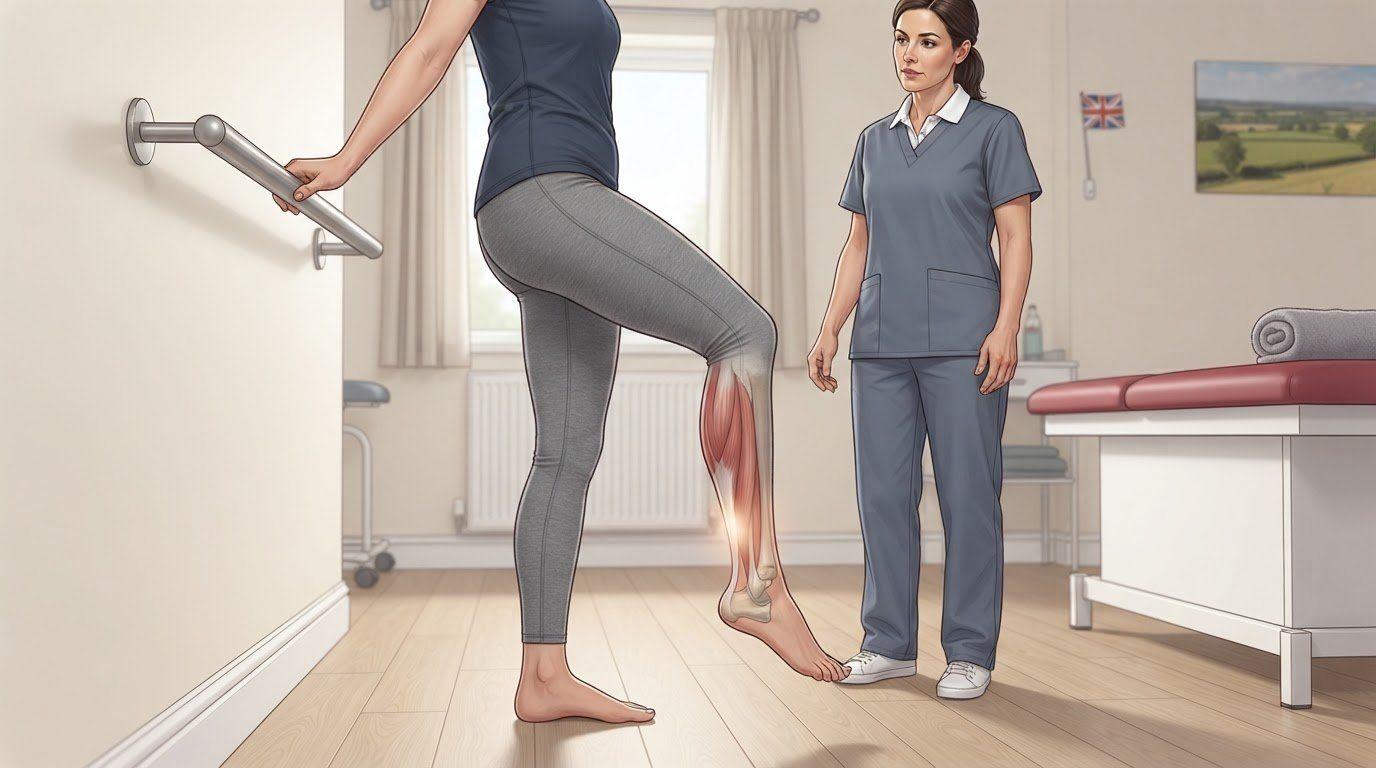
Achilles Tendinopathy Specialist Care in Northampton
Need an Achilles tendinopathy specialist in Northampton? Get clear advice on when to seek assessment and how tailored rehab can help you return to sport.
A run that usually clears your head can become something you plan around when Achilles pain starts affecting training and the rest of your week. If you’re looking for an Achilles tendinopathy specialist in Northampton, understanding what may be causing the problem is a useful first step towards care that fits your sport, work and daily routine.
This guide explains the condition in plain English, when to seek an assessment and how rehabilitation can progress towards your goals. It also offers practical guidance for deciding what to do next, rather than simply hoping the problem will settle on its own.
Key Takeaways
- Notice whether discomfort sits in the tendon itself or close to the heel, as the location can shape rehabilitation.
- Pay attention to morning stiffness, recurring pain and changes in push-off strength when deciding whether to seek an assessment.
- Rehabilitation can adjust activity while progressively building the strength and control needed for your work or sport.
- A tailored physiotherapy plan can help you move towards your goals with a clearer understanding of what to do next.
What Is Achilles Tendinopathy?
Achilles tendinopathy describes pain or stiffness in the tendon joining your calf muscles to your heel bone. This strong band helps you walk, run and rise onto your toes. Symptoms can develop gradually, even without a clear injury. Where the pain sits matters, because it can influence footwear choices and rehabilitation.
Mid portion, or mid substance, tendinopathy affects the tendon body, typically 2 to 6 cm above its attachment to the heel. You might notice tenderness or thickening there, especially after running or repeated calf work. For example, a runner may feel stiffness on their first steps, then discomfort returning after training.
Insertional tendinopathy affects the point where the Achilles tendon meets the heel bone. A shoe that rubs the back of the heel or deep ankle bending can aggravate this area. Non-insertional tendinopathy causes pain away from the heel attachment, often in the tendon’s middle portion. The pain’s location helps guide appropriate loading exercises.
Clinics in Northampton may use musculoskeletal ultrasound to examine tendon changes. MRI may also be considered if further imaging is needed. Scan costs depend on the imaging method and provider.
Ultrasound findings are considered alongside your symptoms and physical examination, not in isolation. Changes to training load and footwear can also support preventative care and help shape a practical treatment plan.
Symptoms may be most noticeable in the morning or after activity. Achilles tendon pain can feel worst first thing in the morning and after resting, though it may ease as you warm up.
Insertional pain may occur at the back of the heel, where shoes can rub and irritate the sore area. Haglund’s syndrome comprises insertional Achilles tendinopathy, retrocalcaneal bursitis and a bony prominence on top of the heel bone. Mid-substance Achilles tendinopathy may cause painful swelling and can follow an unfamiliar activity or minor injury.
Symptoms and indications for specialist assessment
Achilles tendinopathy can cause gradual pain, swelling or stiffness, sometimes with reduced push-off strength. Morning stiffness may ease as you move, but running, jumping, walking uphill or standing on tiptoe can bring symptoms back. Note which activities trigger pain and whether it settles afterwards. This information can make an assessment more useful.
Seek assessment if pain continues beyond 2 to 3 weeks despite reducing activity, keeps returning or limits daily tasks. Morning stiffness lasting more than 10 to 15 minutes is another reason to get advice. A clinician will consider your symptoms, training changes and previous treatment, then examine movement and tendon tenderness. Other possible causes include bursitis, plantar fascia irritation, referred calf pain and a partial tear.
For a sudden snap, major swelling or bruising, or difficulty pushing off, seek urgent assessment. These symptoms can indicate a complete rupture and need prompt medical attention. For gradual pain, Northampton options include private clinics and NHS pathways. Compare clinic location, appointment availability, published reviews and fees directly, since these vary. NHS access depends on local referral routes; your GP can advise which service is appropriate.
When choosing a physiotherapist, check for HCPC registration and relevant advanced qualifications, such as MSc or MCSP, with CSP where applicable. Ask how they assess tendon problems and tailor care to your previous treatment, work and sport.
Symptoms may first appear during activity or in the morning, then become more constant over time. Achilles tendinopathy is assessed using your symptoms and a physical examination. Seek a specialist assessment if pain has lasted more than six to eight weeks without meaningful improvement.
Approximately 5% of patients with Achilles tendinopathy will go on to experience a rupture. The London Orthopaedic Clinic states that an acute Achilles tear should be assessed and managed immediately by an orthopaedic surgeon or in an emergency department.

Rehabilitation tailored to work and sport
A useful rehabilitation plan matches tendon loading to your daily demands, not just the pain you feel during an appointment. It may reduce aggravating activity while keeping the tendon working in a controlled way.
Treatment Options
Physiotherapy usually focuses on progressive strengthening, with an assessment guiding exercise choice and load. Your physiotherapist considers whether the pain is mid-portion or insertional, as well as your work, sport and current walking tolerance. Complete rest is rarely the whole plan: temporarily reducing impact can help manage symptoms while preserving suitable activity. For persistent symptoms, shockwave therapy may be considered if exercise-based care has made limited progress.
At your appointment, explain which movements cause discomfort and what your usual week involves. A runner’s plan may adjust hills and speed, while someone who stands at work may benefit from pacing strategies. The aim is to build treatment around your injury and priorities, not a generic programme.
Exercises and Recovery Timelines
Exercises can progress from calf strengthening to heavier loading, single-leg control and, later, impact work. Mid-portion symptoms commonly improve with structured loading over 8 to 12 weeks, though recovery depends on tendon response, consistency and activity demands. Insertional symptoms may need different exercise ranges, particularly where deep ankle bending aggravates the heel.
Use symptoms to guide activity: modified running may be appropriate when pain stays below 4 out of 10 and returns to baseline within 24 hours. Pain of 6 or above suggests excessive loading, so stop that session. Your clinician can adjust the next step accurately, including work tasks and sport-specific drills. Book an Achilles rehabilitation appointment to discuss a plan for your goals.
RED Physiotherapy
RED Physiotherapy can help you understand your Achilles symptoms and plan a practical return to work, walking or sport. Physiotherapy combines a focused assessment with tailored rehabilitation, so you can manage activity and build tendon capacity instead of guessing which exercises to try.
Consider an appointment if pain keeps returning, affects your training or makes standing and everyday movement harder. Your goals matter: a recreational runner preparing to return to local routes may need different progressions from someone whose job involves long periods on their feet. The aim is clear guidance that fits your routine and supports steady, sustainable progress.
If you’re looking for an Achilles tendinopathy specialist in Northampton, contact RED Physiotherapy to discuss your next step.
Take your next step with confidence
Returning to activities you enjoy starts with a plan that fits your life, not an idealised training week. Think about what you most want to regain, whether that’s finishing a shift comfortably, returning to a regular running route or joining in without second-guessing every step. These priorities can help shape meaningful goals for your care.
An Achilles tendinopathy specialist in Northampton can help turn your goals into practical next steps, with progress guided by how your tendon responds and what you need it to do. You deserve clear advice that supports your independence and fits everyday life.
Contact RED Physiotherapy to discuss your next step and move towards activity with a clearer plan.
Frequently Asked Questions
What is Achilles tendon pain?
Achilles tendon pain is discomfort around the tendon at the back of your ankle, but pain alone doesn’t identify its cause. Soreness after a run, for example, could relate to tendon irritation, while pain near the heel may involve nearby structures. A clinical assessment can distinguish these possibilities and match next steps to your symptoms and activity.
When should Achilles tendon pain be assessed urgently, and what are the risks of delaying treatment?
Seek urgent assessment after a sudden injury that leaves you unable to push off or walk normally. Delaying assessment of a serious tear can postpone appropriate care. Gradually worsening pain also deserves attention, especially if it starts limiting everyday activities. An assessment can clarify what may be causing the problem and help you avoid repeatedly aggravating it.
What are the qualifications and experience of Achilles tendon specialists in Northampton?
Check for HCPC registration and relevant advanced qualifications, such as MSc or MCSP, with CSP where applicable. Ask how the physiotherapist assesses tendon problems and tailors care to your work, sport and previous treatment.
Tags:
About the Author
Red Physiotherapy Team
Content Team
Health and wellness content from the RED Physiotherapy team.