
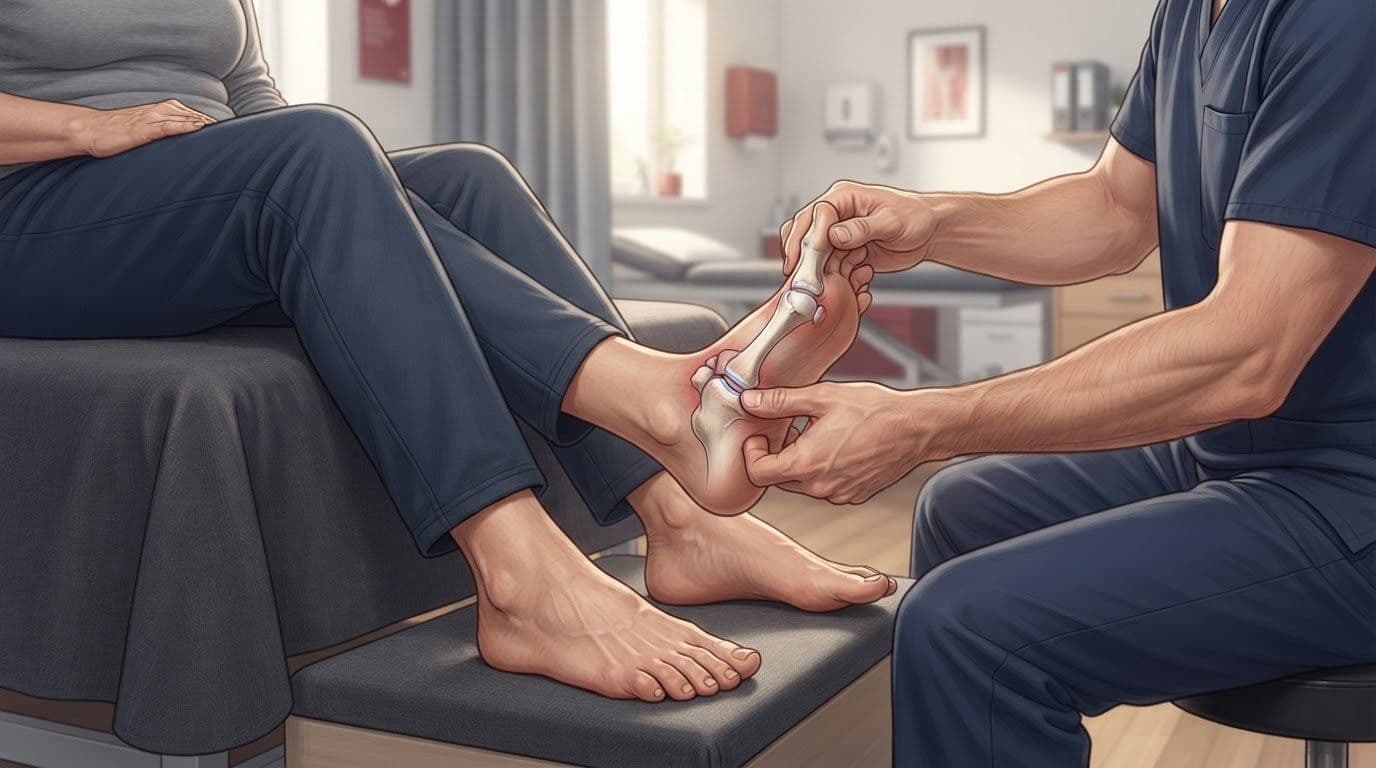
Big toe joint pain in Milton: causes, symptoms and treatment
Big toe joint pain milton can make walking difficult. Learn about arthritis, bunions and gout, symptoms to watch for, and treatment options in Milton Keynes.
Big toe joint pain in Milton Keynes can be caused by hallux limitus or hallux rigidus, forms of arthritis that make the joint stiff and sore, especially when your toe bends as you walk. You may also notice swelling or a bony bump on top of the joint.
If every step feels uncomfortable or your shoes rub against a sore lump, it’s understandable to wonder what’s causing the pain. Big toe joint pain in Milton Keynes can have other causes too, including a bunion, gout or irritation beneath the joint. The location and timing of discomfort offer useful clues, but they can’t confirm the cause on their own.
This article explains hallux limitus and hallux rigidus, the symptoms to look out for and factors that may contribute to them. You’ll also learn what an assessment at RED Physiotherapy may involve, how treatment options differ and when to seek professional advice, helping you decide on a practical next step.
Key Takeaways
- Learn how cartilage changes can stiffen the big toe joint and make walking or running uncomfortable.
- Notice which symptoms may suggest arthritis, and why other causes of toe pain can feel similar.
- Understand what an assessment can consider and which practical changes may ease pressure on the joint.
- If toe pain has not improved after 2 weeks of home treatment, seek GP advice, as the NHS recommends.
What is Hallux Limitus or Rigidus?
Yes. Big toe joint pain can result from gout, a bunion, arthritis or an injury, and symptoms can overlap. Hallux limitus and hallux rigidus are forms of arthritis that affect the joint at the base of the big toe.
Cartilage Damage in the Big Toe Joint
Cartilage is the smooth tissue covering the ends of bones, helping the big toe joint move with less friction. Wear or injury can damage this surface, so bending your toe during walking may become painful or stiff.
As cartilage damage progresses, bone can grow around the joint and further restrict movement. A bump may also develop and rub against footwear. The joint, called the first metatarsophalangeal joint, is where your big toe meets your foot. Its movement helps your foot push off with each step.
Hallux Rigidus and Other Arthritis
Hallux limitus means upward movement at the big toe joint is reduced; hallux rigidus describes more advanced restriction. Both are forms of osteoarthritis. The terms describe changes in joint movement, not a separate muscle or bone condition.
Rheumatoid arthritis can also cause persistent joint pain and stiffness. With hallux rigidus, cartilage changes and bone growth can increasingly limit toe movement. Exercises may help maintain movement in some cases, while surgery may be considered if significant symptoms persist despite simpler options.
Gout, Bunions and Injury as Possible Causes
Gout can cause sudden, severe pain, often alongside redness, heat and swelling. A bunion is a bony protrusion at the base of the big toe. Shoe pressure can irritate it, and bursitis may develop alongside it.
A previous fracture or repeated minor injuries can also affect the joint. The pattern offers useful clues: gradual stiffness is different from sudden, hot swelling. An assessment can help distinguish between possible causes, which may require different treatment approaches.
Big toe pain assessment and treatment
An assessment considers your symptoms, toe movement, footwear and walking pattern to help guide care. In Milton, a GP can assess persistent pain and discuss NHS options, including whether podiatry or further medical care is appropriate.
Assessing Big Toe Pain
A clinician may ask when the pain began, what makes it worse and how it affects daily activities. They can check for tenderness and swelling, assess how far your toe bends, and consider your footwear and walking pattern. These details help distinguish joint arthritis from other causes and inform a treatment plan.
The NHS advises seeking GP advice if toe pain has not improved after 2 weeks of home treatment. For NHS help in Milton, start with your GP practice. Some people may be able to refer themselves directly to a podiatrist, depending on local arrangements. A pharmacist can also advise about pain relief and whether GP care is needed.
For gout or arthritis, the NHS route begins with an assessment of your symptoms and their likely cause. Pain relief options for toe pain include paracetamol, ibuprofen gel or tablets. If you’re unsure about using anti-inflammatory medicines, ask a pharmacist or doctor.
Non-Surgical Treatment Options
The NHS advises resting and raising your foot when possible. Apply an ice pack wrapped in a towel for up to 20 minutes every 2 to 3 hours, unless you have chilblains or Raynaud’s. Wide, comfortable footwear can reduce pressure, while a stiff or rocker sole may limit painful toe bending.
Insoles or pads may improve comfort and foot function. For big toe arthritis, treatment options for arthritis include practical symptom management. Surgery, such as cheilectomy or joint fusion, is considered when simpler care has not helped and significant symptoms remain.

What are the possible symptoms?
Symptoms can range from a stiff toe when walking to sudden, intense pain. Where the discomfort is and how it changes with movement can help distinguish possible causes.
Symptoms of a Painful Big Toe Joint
Arthritis may cause pain on top of the joint, particularly when your big toe bends upwards as you walk or run. You might notice stiffness after sitting, swelling or reduced movement. A bony lump can press against shoes and occasionally cause tingling or numbness if it irritates nearby nerves.
Notice what brings on your symptoms. Pain that builds during activity can feel different from sudden, severe discomfort with a hot, red joint, which can occur with gout.
Big Toe Bursitis Symptoms
Bursitis is irritation of a small cushioning sac near the joint. It can cause local swelling and tenderness, with pain when you put weight through the toe or wear tight shoes. The area may look red or feel warm, and bending the toe up or down can become uncomfortable.
For example, footwear rubbing against a swollen area may make it more sensitive when you walk. Bursitis can also cause stiffness after sitting, making your first steps uncomfortable.
Symptoms Needing Urgent Medical Attention
Contact NHS 111 urgently if you’ve badly injured your big toe, have severe pain, tingling or loss of feeling, or your toe points at an odd angle. Seek urgent advice if you heard a snap, grinding or popping sound during an injury, can’t move your toes or walk, or feel hot, cold or shivery alongside toe pain.
These symptoms can signal an injury or another problem that needs prompt assessment. If walking or running repeatedly brings on pain, arrange an assessment to understand what may be causing it and what could help.
RED Physiotherapy: Physiotherapy
RED Physiotherapy can assess your big toe movement and how discomfort affects your walking, footwear and daily activities. If stiffness or pain is changing the way you move, physiotherapy can help identify contributing movement patterns and shape a plan around your needs and goals.
Assessment may consider your symptoms, toe movement and the way you load your foot. This helps guide practical steps to support function, such as adjusting activity or working on movement where appropriate. If symptoms suggest gout, a fracture or another condition needing medical assessment, seek advice from your GP or NHS 111 rather than relying on physiotherapy alone.
If you’re in Milton and would like help deciding your next step, contact RED Physiotherapy to discuss an assessment.
Choose a confident next step
A practical next step is to think about what you want to get back to, whether that’s comfortable walks, running or simply moving through your day without changing your stride. That goal gives an assessment a clear focus and helps shape care around your priorities.
If big toe joint pain in Milton is affecting activities that matter to you, you don’t have to work out the cause alone. RED Physiotherapy can assess your movement and discuss whether physiotherapy is a suitable next step. Seek NHS care for urgent or sudden symptoms.
Contact RED Physiotherapy to discuss your next step. A clearer plan can help you move forward with confidence.
Frequently Asked Questions
What can you do to help?
For big toe joint pain in Milton, RED Physiotherapy can assess how symptoms affect your movement and everyday goals. If discomfort changes how you push off when walking, that movement can help shape your assessment and plan. Treatment may include hands-on care and practical advice, with exercises where useful. The aim is to help you manage the problem confidently, not simply hand you a list of exercises.
Can I avoid surgery?
Non-surgical options are often tried first. Surgery is generally considered when simpler treatments have been exhausted but significant symptoms remain. Changes to footwear, insoles, pain relief and suitable exercises may help manage symptoms, but they can’t restore cartilage in advanced arthritis, so surgery isn’t always avoidable. The decision depends on how much pain affects your daily life and which options have helped.
Can I wear high heels?
If high heels aggravate your toe, choose a lower heel and a roomy toe box to reduce pressure. The right shoe depends on your symptoms and how much your joint bends, so comfort is a useful guide. After big toe fusion, the joint no longer bends upwards, which usually makes high heels impractical. Discuss your footwear needs before considering surgery, especially if particular shoes matter for work or social occasions.
What is big toe arthritis?
Big toe arthritis affects the joint at the base of your toe. Osteoarthritis is one cause, involving cartilage wear and changes around the joint. Other forms, including rheumatoid arthritis, can also cause ongoing pain and stiffness. If big toe joint pain in Milton is affecting your usual routine, identifying the likely cause helps guide next steps, as different conditions may need different assessment or treatment.
What is sesamoiditis?
Sesamoiditis is irritation or inflammation of the two small sesamoid bones beneath the big toe joint. These bones sit within the tendons and help them work as your toe bends. Pain is usually felt under the joint rather than on top, and may worsen when pressure goes through the ball of your foot. The location can help distinguish sesamoiditis from joint arthritis.
Tags:
About the Author
Red Physiotherapy Team
Content Team
Health and wellness content from the RED Physiotherapy team.