
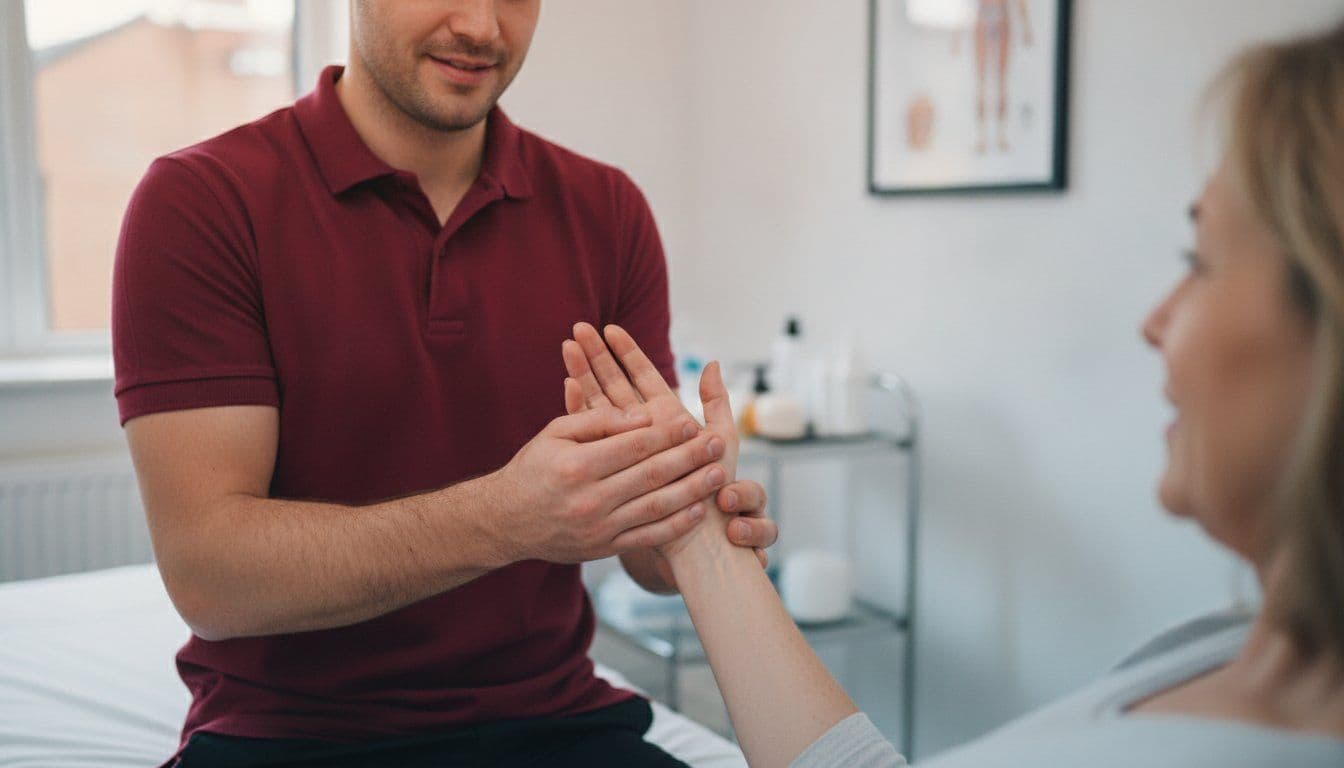
Carpal Tunnel Syndrome Treatment: Expert Hands-On Relief in Milton Keynes and Northampton
Tired of wrist pain? Our hands-on carpal tunnel syndrome treatment in Milton Keynes & Northampton offers fast relief without long waiting lists. Regain your ...
How many times have you woken up at 3 AM to shake your hand like a Polaroid picture, desperately waiting for that "pins and needles" feeling to fade? It's incredibly frustrating when your own hands start letting you down, whether you're dropping your morning cuppa or struggling to type at your desk. If you've been told to "wait and see" by a GP, you likely feel stuck in a holding pattern while your symptoms only get worse. You deserve a carpal tunnel syndrome treatment that actually addresses the mechanical bottleneck in your wrist rather than just masking the discomfort.
I understand how much this affects your daily life, from the lack of sleep to the worry about your long-term grip strength. The good news is that you don't have to settle for a year-long NHS waiting list or a future of surgery. In this article, I'll explain how our hands-on approach can restore full sensation to your fingers and help you return to the hobbies you love. We'll explore why "exercises-only" plans often miss the mark and how targeted manual therapy in our Milton Keynes and Northampton clinics provides a faster, more effective route to recovery.
Key Takeaways
- Understand why carpal tunnel syndrome is a mechanical bottleneck and how identifying the pressure on your median nerve is the first step to relief.
- Discover how specialized carpal tunnel syndrome treatment using hands-on manual therapy can create space in the wrist and reduce pain faster than exercises alone.
- Find out how we diagnose the severity of your symptoms in our Milton Keynes and Northampton clinics without the frustration of long waiting lists.
- Take home practical advice on workstation ergonomics and why neutral wrist splints are your best friend for a better night's sleep.
- Understand the clear, structured path we use to restore your grip strength and get you back to your hobbies without restriction.
What is Carpal Tunnel Syndrome and Why Does it Hurt?
To understand why your hand feels like it's permanently "asleep," we need to look at the anatomy of your wrist. Think of the carpal tunnel as a narrow, rigid gateway at the base of your palm. The floor and sides are made of solid bone, while the roof is a tough band of tissue called the transverse carpal ligament. It's a tight squeeze even on a good day. When you develop Carpal Tunnel Syndrome, this gateway becomes a bottleneck.
The problem usually boils down to a lack of space. If the tendons that flex your fingers become irritated and swell, or if the ligament itself thickens, the pressure inside the tunnel skyrockets. There's nowhere for that pressure to go, so it pushes directly onto the most sensitive structure in the area: the median nerve. This nerve doesn't handle pressure well. When it gets squeezed, it starts sending "glitchy" signals to your brain, which you experience as pain, tingling, or that classic burning sensation. Seeking an effective carpal tunnel syndrome treatment early is vital because nerves that are squashed for too long can eventually start to lose their function.
Common symptoms we see in our clinics include:
- Waking up at night needing to shake your hand to "get the blood back."
- Numbness that makes it difficult to do up buttons or pick up small coins.
- A dull, heavy ache that can radiate from your wrist right up into your forearm.
- A noticeable loss of grip strength, leading to the "clumsy hand" syndrome where you find yourself dropping things unexpectedly.
The Median Nerve: The Power Line of Your Hand
The median nerve acts like a high voltage power line. It provides the "data" for sensation to your thumb, index finger, middle finger, and half of your ring finger. It also provides the "juice" to the small, meaty muscles at the base of your thumb. This is why carpal tunnel issues often make your thumb feel weak or clumsy. A very specific diagnostic clue we look for is your little finger. Since the pinky is served by a completely different nerve, it usually feels perfectly normal. If your whole hand is numb, including the little finger, the problem might actually be originating elsewhere.
Is it Carpal Tunnel or a Trapped Nerve in the Neck?
It's quite common for people to arrive at our practice convinced they have a wrist problem when the "blockage" is actually further up the chain. The nerves that end up in your fingertips actually start in your neck. If you have a stiff neck or a disc issue in your cervical spine, it can mimic the exact symptoms of carpal tunnel. We often call this a "double crush" if the nerve is being irritated in both the neck and the wrist. If you also experience neck stiffness or pain between your shoulder blades, you might find our guide on a trapped nerve in neck helpful to see if your symptoms match. Distinguishing between the two is a core part of our initial assessment to ensure your carpal tunnel syndrome treatment is targeting the right area.
The Hands-On Difference: Why Physiotherapy is the First Line of Defence
If you have visited a GP, you might have been handed a photocopied sheet of exercises and told to come back in six weeks. We think you deserve better than that. Effective carpal tunnel syndrome treatment shouldn't be a passive "wait and see" game. At our clinics, we get stuck in from your very first session. We know that mechanical problems require mechanical solutions. We don't just look at your wrist in isolation; we look at how your whole arm is functioning to find the root of the pressure.
A clinical review of Carpal Tunnel Syndrome confirms that conservative management is often the most effective first step for mild to moderate cases. We take this further by using specific manual therapy to mobilise the eight small carpal bones in your wrist. If these bones aren't moving correctly, the tunnel remains restricted and the pressure on your nerve stays high. By gently adjusting their alignment, we can literally create more breathing room for your median nerve. We also focus heavily on the forearm muscles. The tendons that pass through the carpal tunnel start high up in your arm. If those muscles are tight, they pull on the tendons and increase the squeeze in the wrist. Targeted soft tissue release helps drop that tension immediately.
Beyond the Splint: Active Recovery
A wrist splint is a useful tool for preventing you from curling your hands into a "fetal position" while you sleep, but it doesn't actually fix the underlying restriction. It's a bit like putting a car in a garage. It stops it from getting rained on, but it won't fix the engine. Our hands-on techniques focus on restoring the natural glide of your nerve. We use nerve gliding techniques to ensure the median nerve can slide freely through the tunnel without getting snagged on scar tissue or swollen tendons. This active approach is about restoring full function, not just masking your symptoms for a few days.
Reducing Inflammation Without Heavy Medication
Many people rely on ibuprofen or hope for a corticosteroid injection to dull the pain. While these have their place, they don't address why the inflammation is there in the first place. We use manual lymphatic drainage and targeted soft tissue release to move fluid away from the wrist and reduce local swelling naturally. This approach often helps our patients avoid the need for painful injections or invasive surgery. If you're ready to see how a tailored plan can help you get back to your best, you can explore our full range of services to see how we tackle nerve pain differently.
Assessing the Severity: How We Diagnose Without the Wait
Waiting for a formal diagnosis is often the most stressful part of the journey. While the traditional route usually involves a long wait for nerve conduction studies, our clinics in Milton Keynes and Northampton can typically see you within a matter of days. We don't believe in the "wait and see" approach. We want to get you started on your carpal tunnel syndrome treatment immediately so you can get back to sleeping through the night.
Our assessment is a deep dive into how your hand actually functions. We use specific clinical tests like Phalen’s maneuver and Tinel’s sign to provoke the nerve and confirm the site of compression. These are the bread and butter of our exam. We also look closely at your grip strength and the muscle bulk at the base of your thumb. If that muscle is starting to look a bit thin, it tells us the nerve is under significant stress and we need to act quickly to prevent long-term damage.
The Clinical Examination: What to Expect
During your first visit, we test the sensation in every finger and check the motor power of your thumb. It isn't just about the wrist, though. Our expert team will also screen your elbow and neck to ensure we aren't dealing with a "double crush" where the nerve is snagged in two places. This comprehensive look ensures we aren't just treating a symptom, but fixing the real cause. You can find more information on various Carpal Tunnel Syndrome treatments to see how clinical diagnosis fits into the wider picture of recovery.
When is Diagnostic Ultrasound Necessary?
Sometimes, a physical exam alone doesn't reveal the full story. That’s where diagnostic ultrasound comes in. This high-level technology allows us to see inside your wrist in real-time. We can measure the exact thickness of the median nerve and see if it’s being crowded by a ganglion cyst or an unusually thick ligament. Having this tech available in our local clinics means you get answers fast, without needing a hospital referral. It’s about giving you the clarity you need to move forward with confidence and a clear plan of action.
Practical Relief: 5 Ways to Manage Carpal Tunnel at Home
While we get to work with hands-on carpal tunnel syndrome treatment in the clinic, your habits at home play a massive role in how quickly you'll see results. Think of these tips as the homework that keeps the progress moving between your sessions. We want to stop the cycle of irritation so the nerve can actually start to heal. If you're only addressing the pain during your appointment, you're missing a huge opportunity to speed up your recovery.
Here are five practical ways to manage your symptoms today:
- Wear a neutral wrist splint at night: Many of us naturally curl our hands into a "fetal position" while we sleep. This bends the wrist and increases the pressure on the nerve. A splint keeps you straight and prevents that 3 AM wake-up call.
- Optimise your workstation: If you spend eight hours a day at a desk, your setup is likely the culprit. Keeping your wrists in a straight, neutral line is non-negotiable for long-term relief.
- Take micro-breaks: Every 20 to 30 minutes, stop what you're doing for 30 seconds. Shake out your hands and give the median nerve a break from repetitive typing or manual work.
- Nerve gliding exercises: These are specific movements we'll teach you in the clinic to keep the nerve sliding smoothly. Don't overdo them; little and often is the secret to success.
- Use ice packs: After a long day of activity, apply an ice pack to the base of your palm for 10 minutes. It's a simple, effective way to calm down local swelling without reaching for the pill bottle.
Ergonomics for the Modern Office Worker
Most office setups are a bit of a disaster for wrist health. Start by adjusting your chair height so your elbows sit at a comfortable 90-degree angle. If you feel your wrists deviating to the side, consider swapping your standard mouse for a vertical one or trying a split keyboard. These tools aren't just gadgets; they fundamentally change the mechanical load on your carpal tunnel. We also see a lot of "slumping" at the desk. When your shoulders roll forward, it creates tension all the way down the nerve to your fingertips, making your hand symptoms feel much worse.
The Right Way to Splint
There's a common mistake of pulling splint straps as tight as possible. Don't do this. If it's too tight, you're actually adding to the compression you're trying to fix. The goal is a neutral position, exactly 0 degrees, not bent backwards like a motorbike handle. Unless we've specifically told you to wear it during the day for a high-risk activity, keep the splint for nighttime use only. Your wrist needs to move during the day to stay healthy and maintain its range of motion.
If you've tried the DIY route and those niggles just aren't shifting, it's time for a professional eye. Book an assessment with our team today to start a proper, hands-on plan that gets to the root of the problem.
Your Path to Recovery at RED Physiotherapy
Choosing the right carpal tunnel syndrome treatment shouldn't feel like a gamble. At RED Physiotherapy, we provide a clear, structured roadmap designed to move you from frustration to full function as quickly as possible. We know you're busy. Whether you're juggling a high-pressure office job in Milton Keynes or keeping active in Northampton, you don't have time for endless appointments that don't show results. Our focus is on fixing the underlying mechanical issue from day one, using hands-on therapy to create the space your median nerve needs to heal.
We believe in honest, straight-talking care. If we assess your condition and find that physiotherapy isn't the right fit, perhaps because the nerve compression is too advanced, we will tell you immediately. We won't drag out a treatment plan if a surgical referral is the more effective path for you. Our goal is your recovery, even if that means pointing you toward a different specialist. This patient-first ethos is the foundation of our practice, ensuring you always receive the most appropriate care for your specific needs.
Why Choose Our Milton Keynes and Northamptonshire Clinics?
We take pride in being a local, family-run practice that values genuine care over corporate targets. If you've been searching for a physiotherapist near me, you'll find that we maintain elite clinical standards while keeping things approachable and friendly. Our clinics in Milton Keynes, Northampton, and Towcester are designed to be modern, comfortable spaces where you are treated as a partner in your own recovery. We also believe in total transparency. You can check our prices online before you even step through the door. There are no hidden fees or unexpected costs, just high-quality care that respects both your time and your wallet.
Taking the First Step Toward Pain-Free Hands
Nerve damage doesn't always give you a second chance. If you keep ignoring the numbness and just "shaking out" your hands every morning, you risk permanent loss of sensation and muscle wasting. Starting carpal tunnel syndrome treatment early is the best way to avoid the surgeon's knife and the long recovery times that come with it. It’s time to stop managing the symptoms and start resolving the cause. You don't have to live with the pins and needles or the fear of dropping things. Contact our team today to book your initial assessment. Let’s get your hands back to work and your sleep back on track.
Take Control of Your Recovery and Reclaim Your Sleep
You don't have to spend another night shaking your hand like a faulty remote control just to get some feeling back. We've seen hundreds of patients in our Milton Keynes and Northampton clinics who were stuck on "wait and see" lists while their symptoms worsened. The reality is that carpal tunnel syndrome treatment is most effective when it's proactive and mechanical. By addressing the bottleneck in your wrist and ensuring your median nerve can glide freely, you can stop just surviving the day and start enjoying it again.
Our expert clinicians are ready to help you skip the long queues and get started with hands-on relief from your very first session. We don't just hand you a sheet of exercises and hope for the best. Instead, we work with you to restore your grip strength and your quality of life. Don't let persistent numbness become your new normal when professional help is right around the corner. Book your hands-on carpal tunnel assessment today and let's get you back to full strength. We're here to help you reach your full physical potential.
Frequently Asked Questions
How do I know if my hand pain is carpal tunnel syndrome?
Typical signs usually involve numbness or tingling in your thumb, index, middle, and half of your ring finger. It is often much worse at night or first thing in the morning. A very reliable clue is the little finger. If your pinky feels perfectly normal while the rest of your hand is buzzing, it is almost certainly carpal tunnel. A proper clinical assessment is the only way to be 100% sure before starting treatment.
Can carpal tunnel syndrome go away on its own?
It can, particularly if the cause is temporary, such as pregnancy or a short term burst of repetitive manual work. However, if your symptoms persist for more than a few weeks, the nerve may be under genuine risk. Early intervention is the best way to avoid long term weakness or the need for more invasive carpal tunnel syndrome treatment later down the line.
Is surgery always necessary for carpal tunnel?
Not at all. Many of our patients in Milton Keynes and Northampton respond brilliantly to hands-on physiotherapy, night splinting, and simple ergonomic changes. Surgery is usually reserved for very severe cases where there is significant muscle wasting or when conservative care hasn't provided relief. We always aim to fix the mechanical issue naturally first.
How many physio sessions will I need?
This varies depending on how long you've been "shaking it out," but most patients see a significant improvement within 3 to 6 sessions. Our goal isn't to see you forever. We want to use our hands-on techniques to create space in the wrist and then give you the tools to manage it independently as quickly as possible.
Will I need to stop working during treatment?
Usually, the answer is no. We focus on adapting your work environment and your habits so you can keep earning while the nerve recovers. We provide practical advice on workstation setups and micro-breaks to reduce the strain during your shift. It's about working smarter, not stopping altogether.
What happens if I ignore the symptoms?
Ignoring the warning signs can lead to permanent nerve damage. This often results in constant numbness that never goes away and the wasting of the muscles at the base of the thumb. Once that muscle bulk disappears, it becomes very difficult to perform simple tasks like doing up buttons or holding a heavy mug safely.
When to Seek Help
While many people try to "wait and see" if the tingling goes away, there are specific red flags that mean you should book an assessment immediately. If you notice the muscles at the base of your thumb are starting to look thinner or flatter than the other hand, the nerve is under significant stress. This muscle wasting is often irreversible if left too long.
You should also seek professional help if the numbness has become constant rather than just coming and going at night. If you find yourself dropping items frequently or if the pain is radiating up into your shoulder and affecting your sleep every single night, your carpal tunnel needs more than just rest. Our teams in Milton Keynes, Northampton, and Towcester are experts at identifying these severity markers and getting a plan in place before the damage becomes permanent.
Focus Keywords
- carpal tunnel syndrome treatment
Tags:
About the Author
Red Physiotherapy Team
Content Team
Health and wellness content from the RED Physiotherapy team.