
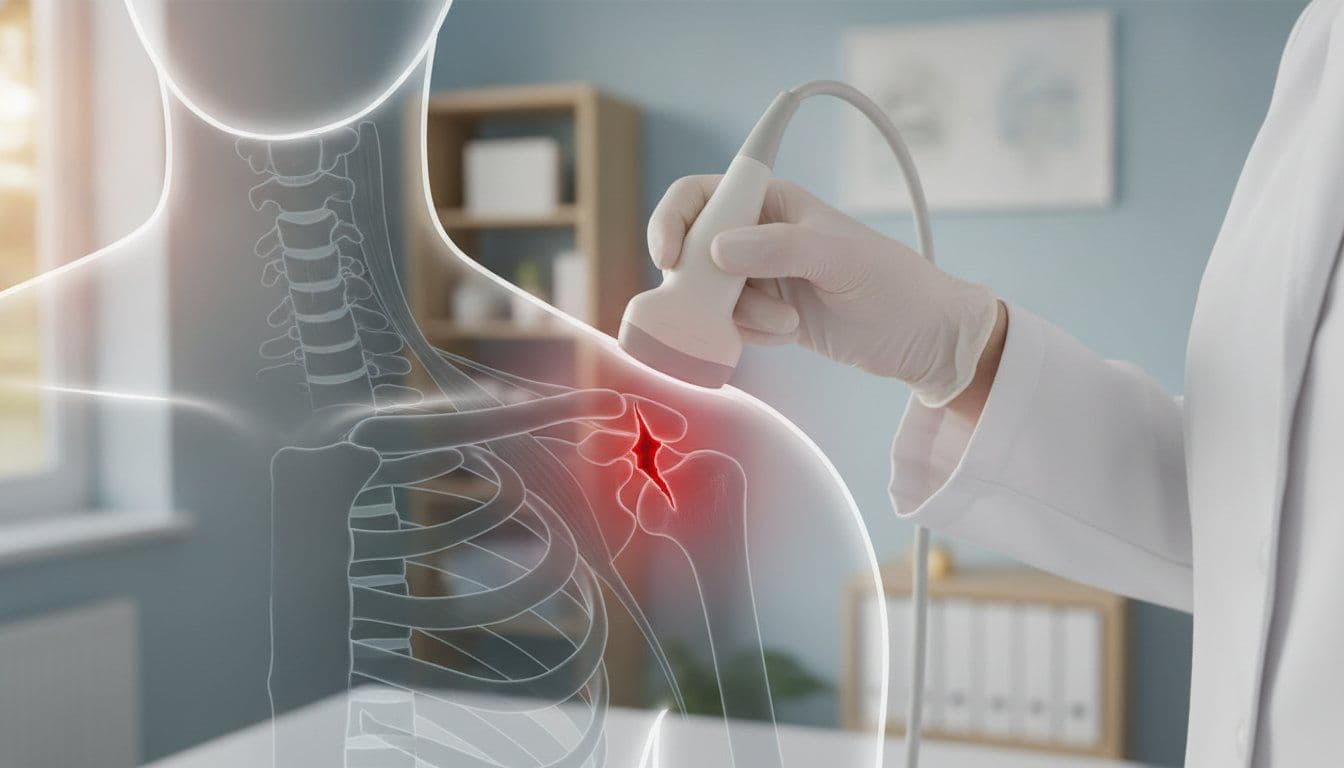
Diagnostic Ultrasound for Rotator Cuff Tear in Northampton: Get a Clear Answer Today
Skip NHS wait lists with a diagnostic ultrasound for rotator cuff tear Northampton. Get fast clinical clarity and hands on physio care today. Book online.
Imagine trying to reach for a coffee mug on the top shelf, only for a sharp, stabbing pain to stop you mid-stretch. It's the same dull ache that wakes you up at 3 am, making a decent night's sleep feel like a distant memory. You're probably asking the one question that really matters: "How do I know if my rotator cuff is actually torn without waiting months for an NHS scan?" At RED Physiotherapy, we use a diagnostic ultrasound for rotator cuff tear Northampton to give you that answer right now. There's no need for guesswork or struggling through generic exercise sheets that don't seem to help. We use real-time imaging to see exactly what's happening inside your shoulder while you move it, providing the clinical clarity you've been searching for.
We understand the frustration of feeling physically limited, especially when you're used to being active and independent. You deserve a recovery plan built on clinical facts rather than assumptions. In this guide, you'll discover how bypassing the standard waiting lists for a scan can fast-track your journey back to the gym or the golf course. We'll look at the benefits of immediate, hands-on treatment and show you how getting a clear diagnosis today is the essential first step toward a pain-free tomorrow.
Key Takeaways
- Identify the clear signs of a genuine tear, such as persistent night pain and restricted movement, to move past the frustration of generic advice.
- Discover how a diagnostic ultrasound for rotator cuff tear Northampton captures live images of your shoulder in motion to reveal precisely why it hurts.
- Compare the practical benefits of ultrasound over MRI, including better affordability and a much more comfortable experience without the long wait.
- Learn why a one-stop approach combining a professional scan with hands-on treatment is the fastest way to return to the activities you love.
- Understand how clinical clarity allows us to build a tailored recovery plan that moves beyond basic exercise sheets to fix the root cause.
Why Your Shoulder Pain Needs More Than a GP Guess
If you've visited your GP with a clicking, painful shoulder, you've likely been told to "take some ibuprofen and rest it for a few weeks." While well-intentioned, this generic advice often masks a deeper issue. You know it's likely a rotator cuff tear when you physically cannot lift your arm to reach a cupboard or when the pain is so sharp it jolts you awake at night. Resting a structural tear won't make the tendon knit back together; it often just leads to a "frozen" shoulder and more frustration. A physical exam alone can't distinguish between a minor strain and a significant rupture. That's why we use diagnostic ultrasound for rotator cuff tear Northampton. It moves us from guessing to knowing, ensuring you don't waste months performing the wrong rehabilitation exercises.
The Frustration of the Northampton Waiting List
Waiting for a scan on the NHS can currently take upwards of 12 weeks in the local area. For an active person, three months of "watchful waiting" is unacceptable. It's not just about the discomfort. It's about the lost hours in the gym, the missed rounds of golf, and the mounting fatigue from broken sleep. Seeing us this week for a diagnostic ultrasound for rotator cuff tear Northampton prevents a manageable tear from fraying further into a complex surgical problem. Early intervention is the most reliable way to protect your long-term mobility and avoid the operating theatre.
Rotator Cuff Tear or Just Impingement?
It's easy to confuse a full-thickness tear with Shoulder Impingement, where the tendon is simply catching on the bone. Sometimes, the pain isn't even coming from the shoulder at all; it's referred from the neck. We use ultrasound to rule these out immediately. By visualising the structure of your tendons, we can see if they are frayed, inflamed, or completely detached. This clarity is the difference between a generic exercise sheet and a targeted, hands-on recovery plan that actually works. We don't want you guessing about your health. We want you moving again with total confidence.
How Diagnostic Ultrasound Visualises Your Rotator Cuff
Musculoskeletal (MSK) ultrasound is essentially a high-definition window into your shoulder. It uses high-frequency sound waves to create live, moving images of your tendons, muscles, and ligaments. Unlike an X-ray, which only shows the "hard" structures like bone, a diagnostic ultrasound for rotator cuff tear Northampton allows us to see the soft tissues that are actually causing your pain. The real magic happens when we perform a dynamic assessment. We don't just ask you to sit still; we move your arm through the specific range of motion that triggers your discomfort. This "live" advantage means we can see exactly when a tendon catches or when a tear becomes visible under tension.
When we look at the screen, we're searching for specific markers of health or injury:
- Healthy Fibres: Bright, linear patterns that glide smoothly during movement.
- Dark Gaps: Areas where the sound waves pass through because the tendon is torn or thinned.
- Fluid Buildup: Pockets of black on the screen that indicate inflammation or bursitis.
- Bony Changes: Rough edges on the bone that might be "pinching" the supraspinatus tendon.
We pay particular attention to the supraspinatus tendon. It's the primary workhorse of your rotator cuff and, because of its position under the bone, it's the most common site for injuries. Seeing this on the screen removes all the uncertainty. You aren't just taking our word for it; you're seeing the evidence for yourself in real-time.
Grading Your Tear: Partial vs. Full Thickness
A partial tear is like a rope that's starting to fray. It's still connected, but it's weak, inflamed, and painful. These usually respond brilliantly to a dedicated, hands-on recovery programme. A full-thickness tear, however, means the tissue has a gap running all the way through it. Identifying this early is vital. It allows us to discuss more advanced options or tailor your rehab to protect the remaining tissue. Ultrasound is also excellent for spotting bursitis, which is a painful swelling of the fluid-filled sac in your shoulder that often hitches a ride alongside a rotator cuff injury.
The Science of Sound in Our Northampton Clinic
This technology is completely safe and non-invasive. There's no radiation involved, no needles, and definitely no claustrophobic tunnels or loud banging noises. You'll sit comfortably in our clinic while we apply a small amount of gel and move the probe over your shoulder. You can watch the monitor whilst your physiotherapist explains the findings in plain English. This immediate feedback helps you understand exactly why your shoulder hurts, which is the first step toward fixing it. If you're ready to stop guessing, you can explore our diagnostic ultrasound services to get started today.
Ultrasound vs. MRI: Why Scanning in Northampton is Smarter
When you're in pain, you want the best possible picture of the problem. Many people assume that means an MRI, but for most shoulder issues, a diagnostic ultrasound for rotator cuff tear Northampton is actually the superior choice. The most significant difference is that an MRI is a static snapshot. It's like looking at a photograph of a car to see if the engine is knocking. In contrast, an ultrasound is a live movie. We can watch your tendons move, slide, and catch in real-time, which is often when the pain actually happens. If a tendon only hitches when you lift your arm to 90 degrees, we can see that exact moment on the screen.
Cost is another major factor. A private MRI in the UK can be quite an investment, often costing several hundred pounds. Ultrasound is significantly more affordable, making it a more accessible route to a definitive diagnosis without the financial sting. It's also much kinder to those who aren't fans of small spaces. There are no claustrophobic tubes or loud, rhythmic banging noises to endure. You simply sit comfortably in a chair while we work. Of course, MRI has its place. If we suspect an issue deep inside the bone marrow or a complex tear of the joint capsule (the labrum), an MRI provides depth that sound waves cannot reach. However, for the vast majority of rotator cuff injuries, ultrasound is the smarter, faster, and more practical tool.
The Practical Benefits of Choosing Ultrasound
One of the biggest hurdles with traditional imaging is the "gatekeeping." Usually, you need a GP referral followed by long-winded authorisation forms for your insurance. At our clinic, you can bypass that entire process. We offer immediate results, meaning you don't have to wait days for a radiologist to type up a report. You'll leave your appointment knowing exactly what's wrong. You don't even need to change into a sterile hospital gown. Just wear your favourite loose-fitting top or a vest, and we can get to work straight away.
Is Private Imaging Worth the Investment?
We often get asked if paying for a scan is worth it when the NHS offers them for free. The real cost isn't just the price of the scan; it's the cost of your time. Every week spent on a waiting list is a week where your injury could be worsening or your muscles could be wasting away from lack of use. A scan effectively pays for itself by shortening your total treatment time. When we know the exact grade of the tear, we can be much more aggressive and efficient with your rehabilitation. You can find a full breakdown of our transparent fees on our RED Physiotherapy Prices page. Getting an answer today means starting your recovery tomorrow, rather than three months from now.

What to Expect During Your Scan at RED Physiotherapy
Walking into our clinic feels very different from a trip to a traditional hospital. Imagine an active Northampton local who has felt a sharp, worrying "twinge" while bench pressing at the gym or playing a round of golf. Instead of a cold, sterile waiting room, you're met with a warm, professional environment that values your time. We don't just point a machine at you and hope for the best. Your session begins with a thorough physical assessment. We use our hands to test your muscle strength, check your range of motion, and pinpoint where the "ache" truly lives. This clinical context is vital because it ensures the diagnostic ultrasound for rotator cuff tear Northampton is focused on the right structures from the very first second.
Once we've narrowed down the likely culprit, the scan begins. We apply a small amount of cool gel to your shoulder and move the ultrasound probe gently over the skin. It's a completely painless and non-invasive process. As the images appear on the monitor, we'll talk you through what we're seeing in real-time. If there's a "dark gap" in your supraspinatus or a pocket of fluid indicating bursitis, we'll find it together. This isn't a silent procedure where you wait weeks for a letter in the post; it's a collaborative discovery of the root cause of your pain.
A Personalised Plan from Day One
We believe that understanding your injury is half the battle. We don't just hand you a report and wave goodbye. We explain the "why" behind your pain in plain English, ensuring you leave with total clarity about your condition. You'll be working with a clinician who understands both high-level performance and everyday comfort. You can learn more about the experts who will be conducting your scan by visiting Our Team page. This transparency builds the trust necessary for a successful, long-term recovery.
Hands-On Treatment Immediately After
The biggest difference at RED Physiotherapy is that we can often start your treatment in the very same session. If the scan confirms that manual therapy is safe and appropriate, we'll get started straight away. We are not an "exercises-only" clinic. While specific movements are part of the long-term fix, we use hands-on techniques to reduce inflammation and improve mobility from day one. If you're worried about the scan itself, don't be. Aside from the slightly cold gel, it's a comfortable and stress-free experience. If you are ready to get a clear answer and a concrete plan of action, book your diagnostic scan at our Northampton clinic today.
From Diagnosis to Recovery: Fixing Your Rotator Cuff
A diagnostic ultrasound for rotator cuff tear Northampton is the clinical bridge between your current pain and your future progress. We don't believe in leaving you with a diagnosis and no direction. Instead, we use the clarity provided by the scan to build a four-step roadmap tailored specifically to your lifestyle and goals. This journey moves you away from the uncertainty of "rest and see" toward a state of controlled, professional recovery.
- Step 1: The Scan. We secure the definitive answer in our Northampton clinic, identifying the exact grade and location of any tendon damage.
- Step 2: The Hands-On Fix. We immediately begin manual therapy to reduce inflammation, soothe the nervous system, and restore basic movement patterns.
- Step 3: Advanced Options. If the tendon is particularly stubborn or chronic, we may discuss shockwave therapy to stimulate the body's natural healing response.
- Step 4: The Long-Term Plan. We move beyond the initial pain to build a resilient, strong shoulder that can handle the demands of your daily life without tearing again.
Our approach is built on the principle of high-performance mentorship. We provide the elite-level knowledge you need whilst remaining approachable and grounded in your personal motivations. We aren't here to collect appointments; we're here to collect results.
Why We Focus on Results, Not Just Appointments
Our primary goal is to return you to the activities that define your life. Whether you're aiming for a pain-free round of golf at Collingtree Park, a return to heavy lifting at the gym, or simply the ability to pick up your grandkids without a wince, we anchor your plan in those passions. We're also committed to total honesty. If the scan reveals a complex injury that requires a surgical consultation, we'll tell you straight. We won't drag out treatment if a different clinical path is better for your long-term health. You can find more detail on how we manage these conditions on our Rotator Cuff Injuries page.
Taking the Next Step in Northampton
Getting started is straightforward. You don't need a formal referral to access our diagnostic services. When you arrive for your first appointment, we suggest wearing a loose-fitting top or a vest to allow easy access to the shoulder area. You'll leave that very first session with a clear diagnosis and, in most cases, your first round of hands-on treatment already completed. If you're tired of waiting for answers and ready to start your recovery, you can secure your time through our online booking portal. Let's find out exactly what's happening inside your shoulder so we can get you back to your best.
Take the First Step Toward a Pain-Free Shoulder
You don't have to live with the frustration of a shoulder that limits your life or keeps you awake at night. By choosing a diagnostic ultrasound for rotator cuff tear Northampton, you're choosing clarity over guesswork and action over waiting. This live imaging provides the definitive answers needed to build a recovery plan that actually works for your specific injury. It moves you from a state of uncertainty toward a concrete plan of action.
At our clinic, we provide hands-on care from day one. You won't be sent home with generic exercise sheets; instead, you'll work with expert clinicians who actually listen to your goals and experiences. Whether you want to get back to the gym, improve your golf swing, or simply reach the top shelf without a wince, the path forward starts with an accurate diagnosis today. We're here to act as your high-performance mentors, helping you reach your full physical potential through tailored, evidence-based care.
Stop letting shoulder pain dictate your schedule. Book your diagnostic ultrasound in Northampton today and let's get you moving with confidence again. Your recovery is our priority, and we're ready to help you rediscover your strength and independence.
Frequently Asked Questions
Do I need a GP referral for a diagnostic ultrasound in Northampton?
You don't need a GP referral to access a diagnostic ultrasound for rotator cuff tear Northampton at our clinic. We operate as a private practice, which allows you to bypass the standard waiting lists often found within the local healthcare system. You can simply book your session online or call us directly. This direct access ensures you get the clinical clarity you need without any unnecessary bureaucratic delays or long periods of waiting.
Can a physiotherapist really diagnose a rotator cuff tear?
Yes, our specialist physiotherapists are highly trained in both clinical assessment and musculoskeletal imaging. We combine hands-on physical testing with real-time ultrasound technology to identify structural damage. This dual approach provides a level of diagnostic accuracy that a standard physical exam alone cannot match. It allows us to pinpoint the exact location and severity of the tear, ensuring your recovery plan is based on hard evidence rather than guesswork.
How much does a private shoulder ultrasound scan cost?
We maintain a policy of total transparency regarding our fees. The cost of a private scan varies depending on whether it's part of an initial assessment or a follow-up session. You can find our current, up-to-date pricing for all our diagnostic and treatment services on our dedicated prices page. We focus on providing excellent value for money by combining your scan with a professional clinical consultation during a single visit to our clinic.
Is ultrasound better than MRI for a rotator cuff injury?
For most rotator cuff injuries, ultrasound is often the preferred tool. Its primary advantage is the ability to perform a dynamic assessment. We can watch your tendons move while you lift your arm, which often reveals issues that a static MRI snapshot might miss. It's also more affordable and much more comfortable for patients who dislike enclosed spaces. MRI is generally reserved for looking deep into the bone or the joint capsule.
What happens if my scan shows a full-thickness tear?
If the scan reveals a full-thickness tear, we'll discuss your options with complete honesty. Depending on your age, activity levels, and pain, some people respond well to intensive, hands-on physiotherapy to strengthen the surrounding muscles. However, if we believe the injury requires a surgical opinion, we'll tell you straight away. Our goal isn't to drag out treatment; it's to ensure you get the most effective clinical outcome for your specific situation.
How long does the diagnostic ultrasound appointment take?
A typical appointment for a diagnostic ultrasound for rotator cuff tear Northampton usually lasts around 45 minutes. This isn't just time spent with the machine. It includes a comprehensive physical assessment where we test your strength and movement patterns. We take the time to explain the findings as they appear on the screen. This ensures you leave the clinic with a deep understanding of your injury and a clear plan for the next steps.
Will I get the results of my scan immediately?
You'll receive your results immediately during the session. One of the biggest benefits of MSK ultrasound is the real-time feedback it provides. As we move the probe over your shoulder, we'll point out exactly what we're seeing on the monitor. There's no need to wait days for a radiologist's report to be typed up and sent to your GP. You'll leave your appointment with total clarity about the state of your shoulder tendons.
Can I have treatment on the same day as my ultrasound scan?
Yes, we aim to start your recovery journey straight away. Unlike many imaging centres that only provide the scan, we are a results-driven physiotherapy clinic. If the ultrasound confirms a diagnosis that would benefit from manual therapy, we can often begin hands-on treatment in the same session. We don't believe in "exercises-only" plans. We want to start reducing your inflammation and improving your mobility from the moment you walk through the door.
Tags:
About the Author
Red Physiotherapy Team
Content Team
Health and wellness content from the RED Physiotherapy team.