
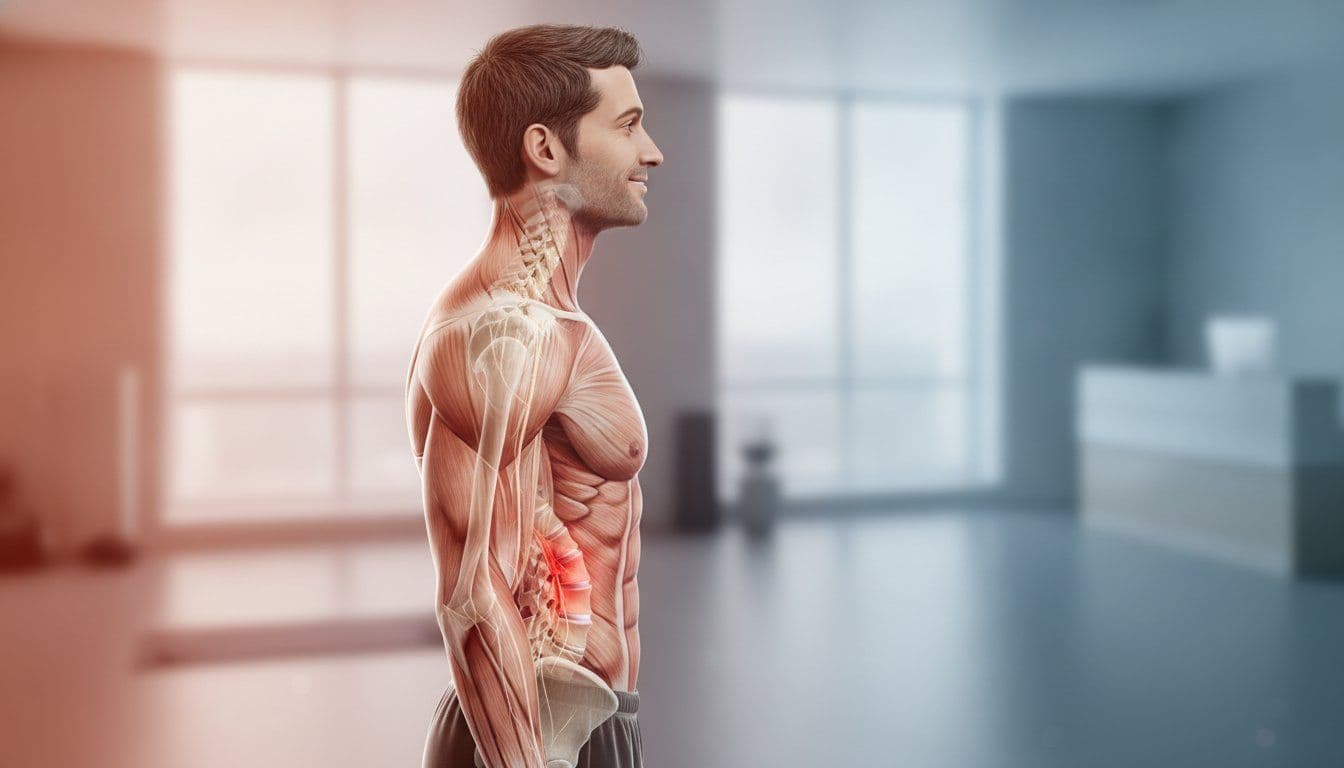
Disc Herniation Milton Keynes: Your Path to Recovery Without Surgery
Struggling with a disc herniation in Milton Keynes? Discover how our hands-on physio can get you back on your feet without surgery. A clear path to recovery.
What if the sharp, shooting leg pain you’re experiencing isn't a permanent sentence to the sidelines? When you're struggling with a disc herniation in Milton Keynes, the fear of nerve damage or the prospect of spinal surgery can feel overwhelming. You might find yourself unable to sit through a morning meeting or missing out on your favourite sport, wondering if you'll ever feel like yourself again. It’s a common frustration, but it doesn't have to be your long-term reality.
We understand that you want more than just a temporary fix; you need a clear path back to your daily routine. This article will show you how hands-on physiotherapy and a results-driven recovery programme can effectively treat your slipped disc without the need for invasive surgery. We'll explore exactly what to expect during your journey, providing a realistic timeline for returning to the gym or work whilst ensuring you regain your physical potential. By focusing on sustainable wellness and proactive movement, you can move from uncertainty toward a concrete plan of action that puts you back in control of your health.
Key Takeaways
- Understand the "jam doughnut" analogy of a slipped disc and why your body is naturally capable of healing without needing invasive surgery.
- Identify whether your symptoms, from sharp leg pain to tingling feet, are classic signs of sciatica or a different musculoskeletal issue.
- Compare private treatment options for disc herniation milton keynes to find the approach that best supports your long-term mobility and independence.
- Learn why hands-on manual therapy is essential from your very first session to reduce muscle guarding and help you move with confidence again.
- Discover how a personalised recovery programme moves you beyond temporary relief and towards your full physical potential at work or in the gym.
What exactly is a herniated disc and will it heal on its own?
Understanding what a herniated disc is doesn't require a medical degree. Think of your spinal discs as small, rubbery shock absorbers situated between your vertebrae. They have a tough outer layer and a soft, jelly-like centre. A herniation occurs when that inner "jelly" pushes through a tear in the outer ring, often leading to significant discomfort. If you’re looking for specific help with slipped discs, understanding these mechanics is the first step toward relief.
The "jam doughnut" analogy is the easiest way to visualise this condition. If you squeeze a doughnut, the jam might bulge or even squirt out. In your spine, that "jam" can press against nearby nerves, causing the sharp leg pain or numbness you’re currently feeling. Can it heal on its own? The honest answer is yes. Research suggests that approximately 1 to 3 per cent of adults will experience a symptomatic lumbar disc herniation, and the body is remarkably efficient at reabsorbing that escaped material. However, the speed of your recovery depends entirely on how proactive you are during the early stages.
For many people dealing with a disc herniation in Milton Keynes, the standard "wait and see" approach is often the worst advice. If you spend your day sitting at a desk or commuting along the M1, you’re placing constant, static pressure on the disc. Without a tailored movement strategy, a six-week recovery can easily turn into six months of frustration and lost time. We focus on getting you moving safely to encourage that natural healing process rather than just hoping for the best.
The difference between a bulge and a herniation
It’s easy to feel panicked when reading an MRI report filled with terms like "protrusion" or "extrusion". A bulging disc is like a car tyre with a slight bubble in the sidewall; the outer layer is still intact but under pressure. A herniation means the material has actually broken through the outer casing. While the latter sounds more severe, it often triggers a stronger healing response from your immune system. A disc herniation is a manageable mechanical issue that requires the right movement strategy rather than a permanent disability.
Why discs "slip" in the first place
Discs don’t actually "slip" out of place like a bar of soap in the shower. They wear down or tear due to a combination of factors. In Milton Keynes, we often see this amongst active adults who balance intense gym sessions with long hours of sedentary office work. This "sitting-to-sprinting" lifestyle creates repetitive strain on the lower back. Common causes include poor lifting technique during DIY, the "Milton Keynes commute" posture where slumped seating puts uneven pressure on the spine, and natural age-related changes. A common misconception is that a therapist can simply "pop" the disc back into place. Real recovery is about reducing inflammation and restoring the structural integrity of your movement.
Recognising the symptoms: Is it a slipped disc or something else?
Identifying the source of your discomfort is the first step toward a successful recovery. Whilst many people assume every back ache is a "slipped disc", the reality is often more nuanced. If you are currently struggling with a disc herniation Milton Keynes specialists like our team can help you identify the hallmark signs that distinguish it from a simple muscle strain. Localised lower back pain is common, but the primary indicator of a disc issue is often radiating pain that travels through the buttock and down one leg. Recognising the symptoms early allows for a faster, more effective intervention before the problem becomes chronic.
Sensory changes are another key indicator of nerve involvement. You might experience persistent pins and needles, a dull numbness, or a sharp, "electric shock" sensation that shoots down to your calf or foot. These symptoms often fluctuate based on your activity level and posture. For example, sitting at a desk for several hours or driving along the A5 can increase the mechanical pressure on your spinal discs, causing the pain to intensify. Conversely, finding a specific position that offloads the spine might provide temporary relief. If you find your symptoms are worsening during your daily commute or whilst lifting at the gym, it is a clear sign that the nerve is under significant stress.
The Sciatica connection
Disc herniations are the leading cause of sciatica, a condition where the sciatic nerve becomes irritated or compressed. True sciatica isn't just a sore muscle; it’s a neurological issue that requires a precise, clinical assessment. At RED Physiotherapy, we use specific tests to check for nerve root compression, such as assessing your reflexes, muscle strength, and skin sensation. This thorough approach ensures we aren't just treating the surface-level pain, but addressing the exact level of the spine where the nerve is being pinched, helping you move from uncertainty toward a concrete plan of action.
Red Flags: When to seek immediate medical attention
Safety remains our absolute priority. While most disc issues respond exceptionally well to conservative care, there are rare instances where surgery is the only safe option. You must seek immediate medical attention at an A&E department if you experience any of the following "red flags" associated with Cauda Equina Syndrome:
- Sudden loss of bladder or bowel control.
- Numbness or "saddle anaesthesia" in your groin, buttocks, or inner thighs.
- Significant and sudden weakness in both legs that makes standing or walking difficult.
Our team is trained to triage these symptoms immediately to ensure you receive the correct level of care. If your situation is stable, we focus on a rapid, hands-on recovery plan to get you back to your best. If you're unsure about the sensations you're feeling, you can speak with one of our specialists to gain professional clarity on your next steps.
Physiotherapy vs Chiropractic for disc herniation in Milton Keynes
When searching for a solution for a disc herniation Milton Keynes residents often find themselves choosing between a chiropractor and a physiotherapist. Both professions treat spinal issues, but their philosophies differ significantly. Chiropractic care traditionally focuses on spinal manipulation to provide relief from joint restriction. Whilst this can offer short-term comfort, our approach at RED Physiotherapy prioritises functional restoration. We don't just want to "adjust" your spine; we want to build the strength and mobility required to ensure your injury doesn't return.
Understanding the nuances of Physiotherapy vs Chiropractic for disc herniation helps you make an informed choice based on your specific recovery goals. Many patients find physiotherapy more sustainable for long-term back health because it empowers them with autonomy. Instead of relying on frequent, ongoing adjustments, you learn proactive management strategies that protect your spine during the gym sessions or office hours mentioned in previous sections. This results-driven focus ensures you aren't just managing pain, but reaching your full physical potential.
From a value perspective, private physiotherapy often proves more efficient than repetitive NHS cycles. By the time you navigate the administrative hurdles of traditional routes, a simple disc issue could become a chronic frustration. Investing in early, specialised care allows for a faster return to work and your personal passions, ultimately saving you time and preventing the need for more invasive interventions later.
The Private vs NHS debate
The reality of NHS wait times for back pain in Milton Keynes can be a major barrier to recovery. Waiting several weeks for an initial assessment often leads to increased anxiety and physical compensation patterns. Early intervention in a private clinic stops this downward spiral. We believe in total transparency to help you make decisions quickly, which is why you can view our prices directly on our website without having to wait for a callback or navigate hidden fees.
What makes a good physiotherapist?
A good clinician is a high-performance mentor who listens to your goals and provides dedicated, hands-on care from day one. You should avoid "exercise-only" factory-style clinics where you are left to follow a generic sheet without professional guidance. Your recovery requires a practitioner who understands the science of movement and stays at the forefront of specialized physical health. You can check out our expert team to see the diverse clinical backgrounds and specialist skills we bring to every individualised recovery plan.

Hands-on treatment: Moving beyond "just do your exercises"
Many clinics treat spinal issues with a "hands-off" approach, often handing you a photocopied exercise sheet before sending you on your way. We believe you deserve a more dedicated level of care. At RED Physiotherapy, we provide a "hands-on from day one" promise to every patient. When you’re struggling with a disc herniation Milton Keynes residents often find their muscles are "guarding" the injured area. This is your body's natural defensive response to protect the spine, but it frequently leads to secondary stiffness and increased discomfort. Manual therapy is the key to breaking this cycle.
By using specific soft tissue work and joint mobilisation, we can reduce this protective tension and help you move with more freedom. This isn't just about temporary relief; it’s about creating the mechanical environment your body needs to facilitate natural healing. Manual therapy helps to restore normal movement patterns, which significantly reduces the uneven load on the affected disc. We don't just tell you what to do; we use our clinical expertise to physically assist your body in regaining its full physical potential.
Manual therapy techniques we use
Our team utilises a range of specialised techniques to address both the disc and the surrounding structures. This often includes targeted sports massage to release secondary muscle tension in the glutes, hips, and lower back. We also employ nerve gliding techniques. These specific movements are designed to gently mobilise the nerve, reducing that "trapped" or "tethered" feeling often associated with sciatica. By carefully applying manual pressure and mobilisation, we can help "open up" space for the nerve, providing a path toward the rapid pain relief we discussed earlier.
Advanced options: Shockwave and Dry Needling
For more stubborn cases where pain has persisted despite rest, we offer advanced clinical options. You might consider shockwave therapy if your back pain is particularly resistant to traditional methods. This technology uses acoustic waves to stimulate blood flow and accelerate the body’s natural repair mechanisms. Additionally, dry needling can be highly effective for releasing deep muscle knots that manual pressure alone might struggle to reach. These advanced tools support, but don’t replace, the expert hands-on physiotherapy that forms the foundation of your recovery.
If you're ready to move beyond generic exercise sheets and experience a dedicated, hands-on approach to your recovery, you can book your initial assessment at our Milton Keynes clinic today.
Your recovery plan at RED Physiotherapy Milton Keynes
Your first visit to our clinic is about more than just identifying a disc herniation Milton Keynes specialists like our team look for the precise mechanical root cause. We examine your movement patterns, posture, and lifestyle to understand exactly why your spine is under stress. This isn't a generic assessment; it’s a detailed investigation into your physical history and future goals. By the end of this session, you’ll move from a state of uncertainty to having a clear, evidence-based plan of action that prioritises your long-term health.
Consider "Mark," a typical Milton Keynes commuter who spent two hours a day in his car before sitting at a desk. He arrived with acute sciatica, unable to sit for more than ten minutes without sharp, shooting pain. Mark wasn't just worried about the discomfort; he was terrified he wouldn't be able to lift his toddler or return to his local gym. Our approach didn't just target his symptoms. We adjusted his sitting habits, used hands-on therapy to settle his irritated nerve, and built a strength programme that fit his busy schedule. Mark’s journey shows that with the right guidance, recovery is about reaching your full physical potential, not just the absence of pain.
We anchor your recovery in what motivates you personally. Whether your goal is high-level athletic performance or simply basic comfort whilst playing with your children, your plan is unique to you. We focus on long-term autonomy rather than temporary fixes, ensuring you have the tools to manage your back health proactively for years to come. This rhythmic consistency in care helps to lower your anxiety and replace it with a sense of controlled, professional guidance.
What to expect in your first 48 hours
The first 48 hours after an injury are critical for lowering inflammation and managing discomfort. We provide immediate advice on positions of comfort that offload the disc and reduce nerve irritation. If you’re working in one of the many office hubs in Milton Keynes, we’ll help you optimise your desk setup to prevent further strain. Whilst it might feel scary to move when you're in pain, we’ll show you why movement is medicine and how gentle, controlled activity actually speeds up the body's natural healing process.
Booking your recovery
We know that when you’re in pain, you can’t wait weeks for an appointment. That’s why we offer same-day or next-day appointments to get your recovery started immediately. As a family-run clinic, we pride ourselves on a personal touch that corporate practices often lack. You aren't just a number to us; you’re an active partner in your own progress toward sustainable wellness. You can book your Milton Keynes physio appointment now and take the first step toward a life without physical limitations.
Taking the First Step Toward Lasting Relief
Recovering from a disc herniation Milton Keynes doesn't have to mean months of frustrating waiting or the looming uncertainty of spinal surgery. You now understand that your body is remarkably capable of healing when it's supported by the right movement strategies and dedicated clinical care. By moving away from passive "wait and see" approaches and embracing proactive functional restoration, you can reclaim your ability to commute, work, and play without the constant shadow of sciatica.
Our family-run clinic is built on a foundation of genuine care and results-driven treatment. With our team of HCPC registered experts, you'll receive specialised, hands-on treatment from your very first visit. We don't just manage your symptoms; we partner with you to restore your long-term autonomy and physical potential. It’s time to stop letting back pain dictate your daily schedule and start focusing on your personal goals again.
Book your hands-on assessment in Milton Keynes today and let’s begin your journey toward a stronger, more resilient future. You have the power to change your recovery story, and we’re here to support you every step of the way.
Frequently Asked Questions
Can a physiotherapist tell if I have a herniated disc without an MRI?
Yes, a qualified physiotherapist can diagnose a suspected disc herniation through a comprehensive physical examination. By assessing your reflexes, muscle power, and skin sensation, we can identify which nerve root is affected. Whilst an MRI provides a picture of the anatomy, it doesn't always correlate with your pain levels. Our clinical tests focus on how your body functions, allowing us to start your recovery plan immediately without waiting for hospital imaging.
How many sessions of physio will I need for a slipped disc?
Every recovery journey is unique, but most patients see significant improvement within six to twelve sessions. You'll often experience initial pain relief in the first two to four visits as we use hands-on techniques to settle inflammation. For a long-term resolution of a disc herniation Milton Keynes residents usually follow a structured programme over several months. This ensures we don't just fix the immediate pain but also build the strength needed for a permanent recovery.
Is it better to rest or keep moving with a disc herniation?
Gentle, controlled movement is almost always better than total bed rest. Prolonged inactivity can lead to muscle stiffness and secondary weakness, which often makes the recovery process longer. We'll guide you on specific positions of comfort and light activities that encourage blood flow to the disc without causing further irritation. Movement is medicine for your spine, provided it's done within the safe parameters we establish during your initial hands-on assessment at our clinic.
Will I eventually need surgery for my herniated disc?
Statistics show that the vast majority of disc herniations, approximately 90 per cent, resolve effectively with conservative care like physiotherapy. Surgery is typically reserved for rare cases where there is a progressive loss of nerve function or specific red flag symptoms. Our goal is to help you avoid invasive procedures by using manual therapy and functional rehabilitation. We focus on fixing the mechanical root cause so your body can heal naturally and sustainably without surgical intervention.
Can I still go to the gym if I have a slipped disc?
Yes, you can usually continue training, but your routine will need temporary modifications. Staying active is vital for your mental and physical health, so we'll help you identify which exercises are safe and which ones to avoid whilst your disc is healing. We often replace heavy spinal loading with core stability work and mobility drills. This allows you to maintain your fitness levels whilst protecting your back as you return to full strength and gym performance.
What is the difference between a slipped disc and a trapped nerve?
A slipped disc is the structural injury, whereas a trapped nerve is the resulting symptom. When the jelly-like centre of a disc pushes out, it can physically press against or chemically irritate a nearby nerve root. This irritation is what causes the radiating leg pain or tingling known as sciatica. Understanding this distinction helps us target the treatment to both reduce the nerve irritation and support the structural integrity of the disc itself for lasting wellness.
Why does my disc pain feel worse in the morning?
Spinal discs naturally absorb fluid overnight, a process called imbibition, which makes them slightly more tense and pressurised when you first wake up. Additionally, your muscles can become stiff after hours of inactivity. We recommend a gentle morning routine to help warm up the spine and move that fluid. By performing simple, therapist-approved stretches before you leave the house, you can significantly reduce that early-morning discomfort and start your day with more confidence and ease.
Can I drive to my appointment if I have severe sciatica?
You should only drive if you feel safe and have full control of your pedals. If your sciatica causes significant leg weakness or numbness in your foot, it's safer to have someone else drive you to our Milton Keynes clinic. Sitting for long periods can also aggravate disc pressure. If you do drive, try to adjust your seat for maximum lumbar support and take a short walk before and after your journey to settle the nerve.
Tags:
About the Author
Red Physiotherapy Team
Content Team
Health and wellness content from the RED Physiotherapy team.