
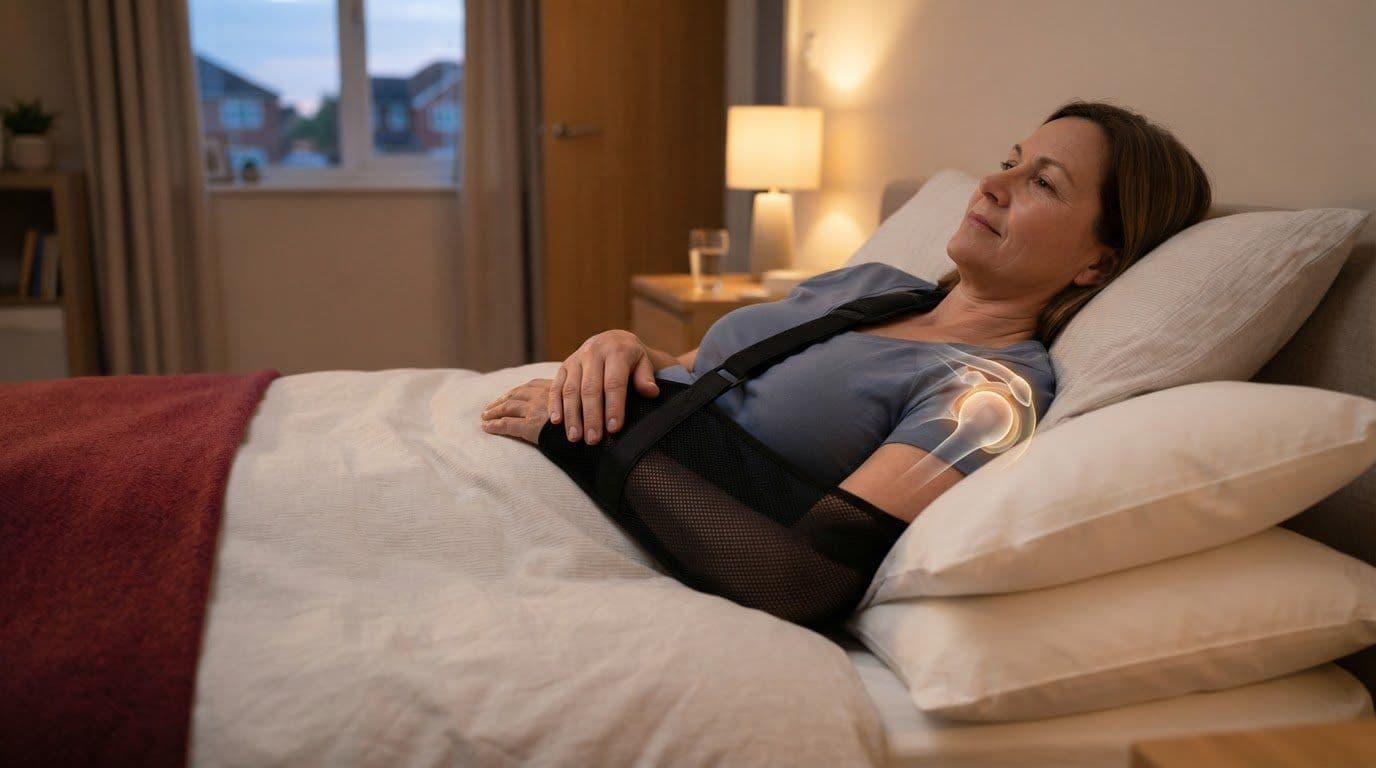
Dislocated Shoulder Sleep: Sling Use, Pain Relief and Positions
The best ways to sleep after getting a dislocated shoulder put back in: get sling advice, support your arm, ease pain and learn which positions to avoid.
After your shoulder has been put back in place, wear a sling in bed only if your discharge instructions or clinician’s plan says to. The best ways to sleep after getting a dislocated shoulder put back in start with supporting your arm and avoiding pressure on the injured side.
After a shoulder has been put back in place, bedtime can bring a practical question: should you remove the sling to sleep more comfortably? Follow the instructions you were given rather than guessing, and choose a position that supports your arm. This guide covers sling use, ways to ease discomfort before bed, pillow positioning and sleep positions to avoid. It also explains when to seek medical advice and how physiotherapy can help you work towards everyday movement and activities as recovery progresses.
Key Takeaways
- Wear your sling in bed if it’s part of your recovery instructions, and keep your injured arm supported rather than letting it hang.
- A cold pack for 15 to 20 minutes before bed may help ease discomfort. Follow medicine label directions and your clinician’s advice.
- Try sleeping on your back or in a reclined position, and avoid lying on your injured shoulder, your stomach or with your arm overhead.
- Physiotherapy can help guide your shoulder’s movement and strength as you recover, especially if pain or stiffness is making everyday activities harder.
Can I Sleep Without A Sling After A Shoulder Dislocation?
After a reduction, you may need a sling or splint for a few weeks while your shoulder heals. Sleep in it if your hospital or clinician’s instructions say to.
Immobilising the Shoulder
A sling or splint holds your arm close to your body and limits shoulder movement. It supports the injured tissues while the joint settles after reduction. For example, keep it on when getting out of bed so your arm does not swing unexpectedly. This support is temporary, and does not mean you should avoid movement recommended by your clinician.
Wearing a Sling at Night
At night, a sling supports your arm and can limit accidental reaching as you turn. Wear it in bed if your discharge instructions specify night-time use. Check the fit before settling, making sure your elbow is supported and the straps feel comfortable. If pain, tingling or swelling worsens while you wear it, contact your care team before changing your instructions.
Supporting the Arm with a Sling
The sling carries some of your forearm’s weight, rather than leaving your shoulder to support it alone. Keep your elbow seated in the fabric and your hand supported, not dangling. When you shift position or stand beside the bed, move slowly and keep your arm close. A secure fit helps avoid unnecessary pulling around the joint.
How Long to Sleep in a Sling
How long should you sleep in a sling? Follow your recovery plan. A sling may be used for a few weeks after reduction, but night-time use depends on your injury and the instructions you received. Ask how long to wear it and when to begin shoulder exercises. If you have had surgery, follow your surgeon’s separate instructions about the sling.
Pain relief and bedtime medication
For pain at bedtime after shoulder reduction, use a cold pack and follow the directions for any pain medicine. Seek urgent medical help if numbness develops or persists, or if pain becomes severe or rapidly worsens after treatment.
Managing Pain Before Bedtime
A cold pack before bed can ease discomfort around the shoulder joint. Wrap it in a thin cloth, then apply it for 15 to 20 minutes. Never place ice directly against your skin. If your upper arm feels more uncomfortable after lying down, use the supported position recommended in your recovery instructions rather than forcing the joint to move.
Pain Relief After Treatment
After reduction, pain relief can make resting more manageable while the tissues begin healing. Paracetamol or anti-inflammatory medicines such as ibuprofen, aspirin or naproxen may help. Follow the packet directions, and stop when your pain improves. If you’re unsure how long to take pain relief, ask a healthcare professional. If you take other medicines or have concerns about a dose, ask a pharmacist or doctor before taking it.
During the first day or two, you can apply a cloth-wrapped cold pack every couple of hours while awake. Keep each application to 15 to 20 minutes, then give your skin time to return to its usual temperature. A cold pack can help settle swelling, but it won’t put the upper arm bone back into position. If pain keeps waking you, or numbness or tingling appears in your arm or hand, contact a medical professional promptly rather than simply taking extra medicine.

Avoiding the stomach or operated-side sleeping position
After shoulder reduction, sleeping on your back or slightly reclined may feel more comfortable than lying flat. Choose a position that supports your injured arm without putting pressure on the shoulder. When considering the best ways to sleep after getting a dislocated shoulder put back in, start with a position where your arm can rest without strain.
Avoid sleeping on your stomach, on the injured side or with your arm overhead. These positions can twist or compress your shoulder and increase discomfort during recovery. If you sleep on your uninjured side, hug a body pillow and rest the injured arm across it.
When lying on your back, place a pillow behind you to discourage rolling towards the injured shoulder. Support your arm in front of your body rather than letting it hang freely. A pillow beneath your elbow can help keep the shoulder settled overnight. Arrange your pillows before lying down so you do not have to reach or twist to adjust them.
During the first 1 to 2 weeks, back or reclined sleeping is advised. A recliner isn’t essential; the key is finding a position that reduces pressure and lets your arm rest comfortably. Avoid heavy lifting, overhead reaching and sports that put stress on the shoulder. Don’t force painful movements, even if discomfort eases during the day. Returning to activity too soon can lead to another injury, so follow your recovery instructions as movement returns.
Is it better to sleep sitting up or lying down after reduction? Either may work. Try lying on your back first, then recline slightly if that eases discomfort. The best ways to sleep after getting a dislocated shoulder put back in avoid lying on your stomach or injured side, and avoid positions with your arm overhead. If you wake with increased pain, adjust your support. Seek prompt medical advice for new or persistent numbness or tingling.
RED Physiotherapy: Physiotherapy
RED Physiotherapy offers physiotherapy in Milton Keynes, Northampton and Towcester to help you plan your next stage of shoulder recovery. A physiotherapist can assess how your shoulder is affecting daily tasks and help shape your rehabilitation around your current movement and goals. If stiffness, lingering discomfort or uncertainty about returning to activities is getting in your way, an assessment can help clarify the next steps. For support with your recovery in Milton Keynes, Northampton or Towcester, contact RED Physiotherapy.
Build confidence as your shoulder recovers
Understanding the best ways to sleep after getting a dislocated shoulder put back in can help you feel more confident about everyday movement. From there, work towards the tasks and activities that matter to you without rushing your shoulder or second-guessing every movement. Physiotherapy can help you understand your progress and develop a plan around your needs, from daily routines to a gradual return to sport.
If you’re unsure how to move forward, you can get in touch with RED Physiotherapy to discuss support. Keep taking recovery one step at a time. With a clear plan and steady progress, you can work towards feeling more capable and confident again.
Frequently Asked Questions
How should I sleep after a shoulder dislocation has been reduced?
Make getting into bed straightforward: sit down first, then lower yourself without pushing up with the injured arm. Keep essentials such as your phone and water within reach of your uninjured hand. If you share a bed, let the other person know which side is sore so they can avoid bumping it overnight.
How can I support a dislocated shoulder with pillows in bed?
Check that your pillow arrangement does not push your shoulder forwards or pull it backwards. Your neck should feel relaxed, not sharply tilted towards the mattress. If a pillow slips during the night, do not stretch across your body to retrieve it. Ask for help or reposition yourself carefully without forcing the injured arm.
Should I wear a sling while sleeping after shoulder reduction?
Follow the instructions you received after treatment. They should clarify whether to wear your sling at night as well as during the day. If your paperwork is unclear, contact the team that treated you before changing how you wear it. Do not use a sling left over from an earlier injury without checking its fit and instructions.
How can I reduce shoulder pain at night after reduction?
If pain repeatedly interrupts your sleep despite following your treatment instructions, contact your healthcare team to discuss what to do next. Briefly note when pain wakes you, your sleeping position and any medicine you took. This record can help the team review your pain management without you exceeding the recommended dose.
How long does recovery take after a shoulder dislocation, and when can I sleep normally?
There is no single night when everyone can return to their usual sleep routine. Consider changing your setup as using your arm in everyday activities becomes easier, rather than relying on a calendar alone. If a new position brings back marked discomfort, return to a position that feels manageable and discuss ongoing difficulty sleeping at your follow-up appointment.

Tags:
About the Author
Red Physiotherapy Team
Content Team
Health and wellness content from the RED Physiotherapy team.