
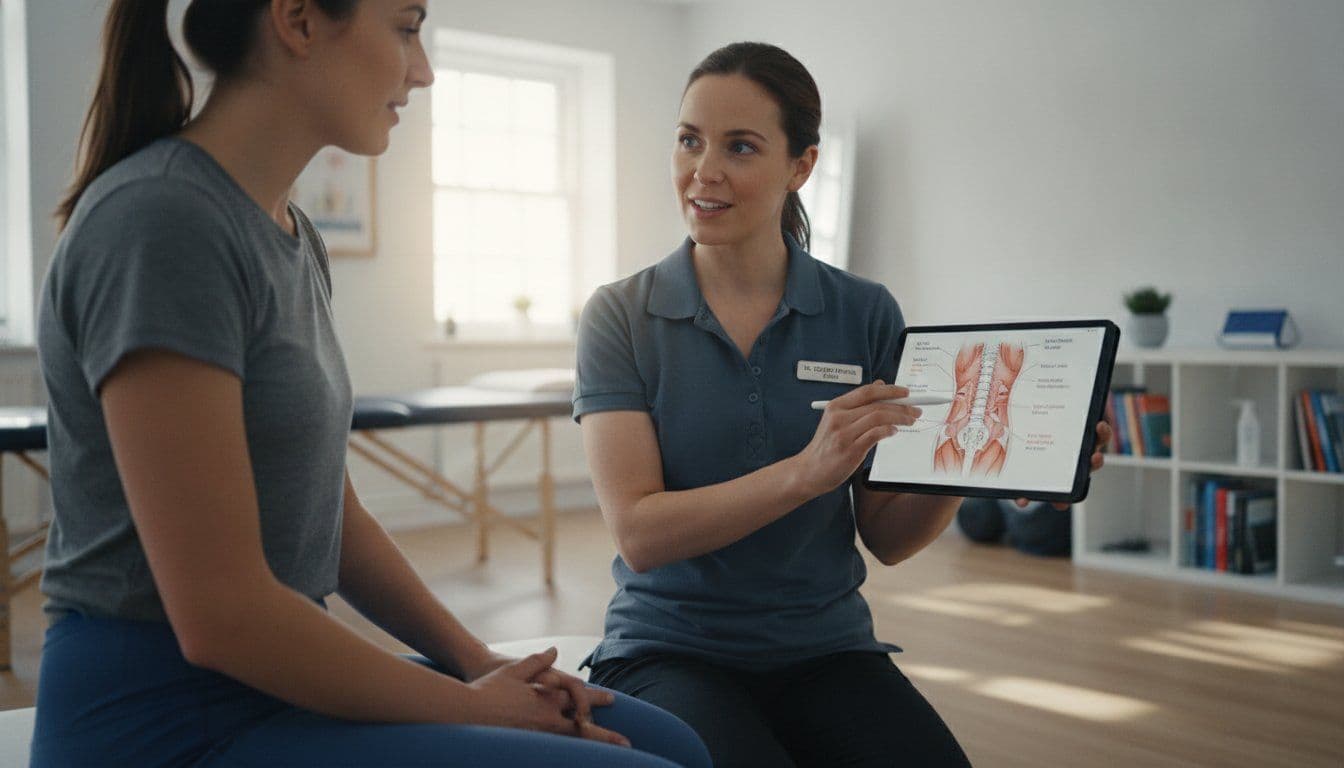
Exercises for Pelvic Floor Strengthening Northampton: The Hands-On Guide
Tired of leaks? Our guide to exercises for pelvic floor strengthening Northampton offers a hands-on physio plan to rebuild your core and stop guesswork. Get ...
You’re mid-way through a HIIT class or finally finding your stride on a morning run when it happens. A sudden cough or a heavy lift leads to that familiar, embarrassing dampness that makes you want to head straight for the changing rooms. If you’ve spent months searching for exercises for pelvic floor strengthening Northampton and found nothing but conflicting YouTube videos and a massive NHS waiting list, you aren't alone. It is incredibly frustrating to feel like your body is letting you down, especially when you just want to stay active and confident.
We believe you deserve better than a "wait and see" approach or a generic leaflet. This guide will show you how to effectively rebuild your core strength and why hands-on physiotherapy is the missing piece for lasting results. You’ll discover a clear, professional plan to help you reclaim your bladder control and get back to the gym without a second thought. From specific movement patterns to expert clinical insights, we’re going to look at how a tailored, manual approach can finally put an end to the guesswork and get you back to your best.
Key Takeaways
- Learn why your pelvic floor is the unsung hero of your core stability and internal organ support.
- Master the "Slow Hold" technique to build the muscle endurance you need for daily life and exercise.
- See why exercises for pelvic floor strengthening Northampton often fall short without our hands-on clinical approach.
- Stop the "leaking while lifting" taboo and get back to running around Delapré Abbey with total confidence.
- Discover how a clear, expert plan can replace frustrating wait times with fast and effective results.
Why Pelvic Floor Strengthening Matters for Northampton Residents
Think of your pelvic floor as the hidden foundation of your entire core. It isn't just a static "hammock" of tissue; it's a dynamic, hard-working group of muscles that support your bladder, bowel, and uterus. Whether you are training for the Northampton Half Marathon or you spend your days sitting through the stop-start traffic on the A45, these muscles are constantly under pressure. When they work well, you don't even notice them. When they don't, life can become a bit of a bother.
One of the biggest frustrations we hear at our clinic is the sheer length of NHS waiting lists. People are often told to "just do some squeezes" while they wait months for an appointment. We don't think that's good enough. Finding the right exercises for pelvic floor strengthening Northampton shouldn't feel like a full-time job, and you certainly shouldn't have to wait half a year to start feeling better. It's also a total myth that this is only an issue for new mums. We see athletes, office workers, and men who all need a bit of help getting their foundation back in order.
The Role of the Pelvic Floor in Daily Life
Your pelvic floor muscles do a lot of the heavy lifting when it comes to your posture. If you spend your day hunched over a desk in a Northampton office, these muscles are part of the system that keeps your spine aligned and prevents that nagging lower back pain. They act as a pressure regulator every time you sneeze, cough, or jump. While many people are familiar with the basic concept of Kegel exercises, simply squeezing isn't always the answer. These muscles need to be able to relax just as much as they need to contract to keep your internal organs properly supported and your core stable during movement.
Common Signs Your Pelvic Floor Needs Attention
It's easy to ignore the early warning signs, but your body is usually quite vocal when things aren't right. You might notice a bit of leakage when you laugh at a joke or a sudden, desperate urge to find a loo while you're out shopping in the town centre. Other common signs include:
- A feeling of heaviness or pressure in the pelvic area.
- Difficulty emptying your bladder or bowel completely.
- Pain during exercise or intimate moments.
- Persistent lower back pain that doesn't seem to shift with standard stretching.
If you're experiencing any of these conditions, please know that while they are very common, they aren't something you just have to live with. You don't need to accept "leaking" as your new normal just because you've had a baby or you're getting older. There is a clear, active path to recovery that goes far beyond a generic exercise sheet.
Effective Exercises for Pelvic Floor Strengthening in Northampton
If you've been searching for exercises for pelvic floor strengthening Northampton, you probably want to get straight to the "how-to". Before we dive into the movements, it's vital to remember that these are internal muscles. You shouldn't see your legs moving or your bottom clenching. The goal is to isolate the muscles that control your bladder and bowel without involving your whole body. It takes focus, but once you get the hang of it, you can do these exercises anywhere without anyone noticing.
Start by finding a comfortable, quiet spot. For beginners, lying on your side is often best as it takes the weight of your internal organs off the pelvic floor. Once you're comfortable, imagine you are trying to stop yourself from passing wind while simultaneously trying to stop the flow of urine. It’s a "lift and squeeze" sensation that moves up and forwards. If you need a more visual breakdown of the anatomy, this NHS guide to pelvic floor exercises offers a great starting point for understanding the basic mechanics.
Mastering the Slow Hold
This technique is all about building endurance so your muscles can support you throughout the day. Slowly draw the muscles up and hold that contraction. Aim for 10 seconds, but don't worry if you can only manage three or four to begin with. The most important part is the "letting go" phase. You must fully relax the muscles for at least 10 seconds between each rep to prevent them from over-fatiguing. Try to complete 10 repetitions, ensuring your breathing remains steady and your stomach stays soft.
The Fast Squeeze for Sudden Support
Life doesn't always happen in slow motion. Whether you are lifting a heavy bag of shopping or sprinting for a bus in the town centre, you need "fast-twitch" fibers to kick in instantly. This prevents the "stress incontinence" that many active people find so discouraging. To train this, perform a strong, quick squeeze and then let go immediately. Repeat this 10 times in a row. It is a fantastic way to prepare your body for sudden movements like coughing or sneezing during your daily routine.
Consistency is your best friend here. We recommend doing both the slow and fast routines three times a day. It might sound like a lot, but you can do them while the kettle is boiling or during your commute. However, if you find you aren't seeing progress after a few weeks, it might be time to look at our women’s health physiotherapy services. Sometimes, a hands-on assessment is needed to ensure you are actually activating the right muscles rather than just holding your breath and hoping for the best.
Why Exercises Alone Are Often Not Enough
You might have the best intentions in the world when starting your routine, but there is a major catch. Clinical studies often suggest that up to 30 percent of people are performing their pelvic floor exercises incorrectly. It is a tricky area to master because you can't see the muscles working in a mirror like you can with a bicep curl or a squat. This is exactly why searching for exercises for pelvic floor strengthening Northampton is only the first step in your recovery journey. At RED Physiotherapy, we don't just hand you a PDF and wish you luck. We believe in being your active partner in recovery from the very first minute of your appointment.
The Danger of Incorrect Technique
One of the most common mistakes people make is "bearing down" or pushing outwards while trying to contract. Instead of lifting the muscles, they are actually putting more pressure on the pelvic floor. This can actually worsen the symptoms you are trying to fix, leading to more frustration and slower results. Getting the technique right is paramount for your safety and long-term progress. While online resources on pelvic floor muscle training are helpful for basic identification, they cannot replace a physical check-up. This is why a professional assessment in Northampton is essential. Our team can provide a thorough evaluation through our services to ensure you are on the right track and not accidentally causing more harm.
Hands-On Treatment: The Missing Link
Sometimes, the reason you can't feel your muscles working isn't a lack of effort. It's often due to tight tissues or painful trigger points that have developed over time. You wouldn't try to strengthen a knotted calf muscle without addressing the tension first, and the pelvic floor is no different. Our physiotherapists use manual techniques to deactivate these trigger points and manipulate the connective tissue. This "re-sets" the area, making it much easier for you to actually engage the muscles during your exercises for pelvic floor strengthening Northampton. We aren't interested in dragging your treatment out for months. Our goal is to fix the underlying issue efficiently, giving you the tools and the physical freedom to manage your health independently for the long term. We want to see you back on your feet and enjoying life, not sitting in our waiting room indefinitely.
Pelvic Health for the Active: Gyms and Running in Northampton
Walking into a gym in Northampton, you'll see plenty of focus on big lifts and high-intensity sprints. What you won't often hear talked about is the "leaking while lifting" taboo. It’s a common sight at local crossfit boxes or weightlifting clubs, where a heavy squat or a set of double-unders leads to a bit of a damp squib. Many athletes simply accept this as part of the price of training hard, but we are here to tell you that it doesn't have to be that way. In fact, if you're experiencing leakage, it's a sign that your "inner core" isn't managing pressure effectively.
A strong pelvic floor is about much more than just avoiding accidents. It is a fundamental component of your athletic performance. When you are running through Abington Park or tackling the trails around Delapré Abbey, your pelvic floor provides the stability your pelvis needs to transfer power from your legs to your torso. Without this solid base, you're essentially losing energy with every stride. If you want to stop guessing and start progressing, looking for a physiotherapist near me who understands the demands of sport is the smartest move you can make.
Impact on Athletic Performance
Think of your core as a pressurized canister. The top is your diaphragm, the sides are your abdominal muscles, and the bottom is your pelvic floor. For this system to work, all three parts need to be strong and synchronized. If the bottom of the canister is weak, the pressure from a heavy lift or a high-impact jump has nowhere to go but down. This leads to "energy leaks," which not only cause bladder issues but can also manifest as nagging hip or lower back pain. By mastering exercises for pelvic floor strengthening Northampton, you are essentially sealing that canister, allowing you to lift heavier and run more efficiently without the fear of an injury cropping up.
Returning to Sport Post-Injury or Pregnancy
Getting back into your routine after a break, whether due to an injury or childbirth, requires a clear and structured plan. You can't just jump from basic floor work back into a 5k run without a transition phase. We focus on a tailored approach that moves you from isolated muscle activation to full-scale athletic movement. This might involve gait analysis or looking at your lifting technique under load. For those needing more specialized support, our women’s health physiotherapy provides the expert, hands-on care needed to bridge the gap between recovery and peak performance. We want you back at the gym feeling powerful, not just "getting by."
If you're ready to stop letting pelvic health hold back your training, get in touch with us today to book a performance-focused assessment.
Getting Results: Your Pelvic Health Plan at RED Physiotherapy
Stepping into our Northampton clinic for the first time is likely very different from the standard medical appointments you’ve experienced. We don't believe in just listening to a list of symptoms and nodding. We want to understand exactly how these issues are impacting your life, your hobbies, and your confidence. Whether you have spent months trying generic exercises for pelvic floor strengthening Northampton or you are just starting to address the problem, your first session is about gaining total clarity. We provide a thorough, hands-on assessment to see exactly how your muscles are behaving. You will leave that first appointment with a clear diagnosis and a concrete plan that starts immediately.
We pride ourselves on being a hands-on practice from day one. You won't just be told what to do. We help you feel the correct movements through manual therapy and guided activation. This immediate feedback is the fastest way to bridge the gap between "trying" an exercise and actually succeeding at it. We combine clinical authority with a supportive, family-run atmosphere, ensuring you feel like an active partner in your recovery. Our goal is to move you from a state of uncertainty to a place where you feel in total control of your physical health.
When to Seek Professional Help
It is easy to assume that more repetitions are always the answer, but that isn't always the case. You should reach out for expert guidance if your symptoms haven't shifted after a few weeks of consistent home effort. If you experience any pelvic pain, sharp discomfort, or a strange sense of pressure while trying to contract, it is vital to stop and seek a professional opinion. Many people also book in simply because they aren't sure if they are contracting the right muscles. There is no shame in needing a professional to get your technique spot on, especially when it's the difference between wasting time and seeing real progress.
Start Your Recovery Journey Today
Choosing RED Physiotherapy means choosing a patient-first practice that values your time and your results. We aren't interested in dragging out your treatment for the sake of it. We focus on fixing problems efficiently so you can regain your autonomy as quickly as possible. We want to see you back at the gym, hitting the trails at Delapré Abbey, or simply enjoying a day out in town without a second thought about your bladder. Our honest advice and tailored plans are designed to give you lasting wellness rather than a temporary fix. Don't let another week of frustration pass you by. You can contact us today to book your assessment and start your journey back to full strength.
Reclaim Your Movement and Confidence
Your pelvic floor is far more than just a medical topic for new mums; it is the essential foundation for every run in Abington Park and every heavy lift at the gym. We've explored how identifying the right exercises for pelvic floor strengthening Northampton is a brilliant first step, but lasting results come from a deeper, hands-on approach. You don't have to accept leakage or discomfort as your "new normal" or wait months for a generic consultation. Our expert team of clinical directors is ready to provide hands-on treatment from day one, focusing on a fast-track recovery that bypasses the long NHS wait times.
By combining specific techniques like the slow hold with manual therapy to release tight tissues, we help you regain the autonomy you deserve. We are a family-run practice that genuinely cares about getting you back to the activities you love without the guesswork. You shouldn't have to navigate conflicting online advice alone when expert, professional guidance is right here in town. It's time to stop worrying and start moving with strength again. Book your hands-on pelvic health assessment in Northampton today and let's get you back to your best. We can't wait to see you back at full strength.
Frequently Asked Questions
How long does it take to see results from pelvic floor exercises?
You should start to notice a difference in your symptoms within 4 to 6 weeks of consistent work when performing exercises for pelvic floor strengthening Northampton. However, it typically takes around 3 months of daily training to build significant muscle strength and endurance. If you aren't seeing progress by then, it's a sign that your technique might need a professional tweak to ensure you're targeting the right area effectively.
Can men benefit from pelvic floor strengthening exercises in Northampton?
Absolutely, men have a pelvic floor too and it plays a vital role in bladder control and sexual health. We often see men who are recovering from surgery or those dealing with chronic pelvic pain. Strengthening these muscles can significantly improve quality of life and core stability, especially for those who are active in Northampton's local gyms or sports clubs where lifting and high-impact movements are common.
Is it ever too late to start strengthening my pelvic floor muscles?
It is never too late to begin your recovery journey. Muscles can be strengthened and retrained at any age, whether you are 25 or 85. While it might take a little longer to see results in later life, the benefits for your independence and confidence are well worth the effort. Taking action now prevents symptoms from worsening and helps you stay active and mobile for much longer.
Will I have to do these exercises forever?
Think of it like any other form of fitness. Once you have reached your goals, you won't need to train as intensely, but a maintenance routine is essential to keep the muscles strong. Most people find that incorporating a few quick sets into their daily habits, like while the kettle is boiling or during a commute, is enough to maintain their results for the long term without it feeling like a chore.
What happens if I cannot feel my pelvic floor muscles working?
This is a very common frustration and usually indicates that your muscles are either very weak or overactive and "stuck" in a tense position. If you can't feel anything happening, simply following generic online advice won't help much. You likely need a hands-on assessment in our clinic to help "wake up" the neural pathways and ensure you aren't accidentally using your stomach or glutes instead of your pelvic floor.
Can pelvic floor issues cause lower back pain?
Yes, they certainly can. Your pelvic floor is the base of your core canister, and if it isn't providing enough stability, your lower back often has to overwork to compensate. This frequently leads to a nagging ache that doesn't resolve with standard back stretches. By addressing the pelvic foundation, we often see a significant reduction in persistent lower back discomfort for our active patients in Northampton.
Do I need a GP referral to see a private physio in Northampton?
No, you do not need a GP referral to see us. You can book directly with our Northampton clinic and start your treatment immediately. This is often the fastest way to get results, as it bypasses the lengthy NHS waiting lists. We will always keep your GP informed of your progress if you wish, ensuring your care remains coordinated, professional, and focused on your specific recovery goals.
What should I wear to my pelvic health physiotherapy appointment?
Wear something comfortable that you can move easily in, such as leggings, joggers, or loose trousers. While we need to assess your movement and posture, there is no need for specialized gym gear. Our goal is to make you feel as relaxed as possible during your session, so choose whatever makes you feel most at ease for a clinical appointment. We prioritize your comfort and privacy at every stage.
Tags:
About the Author
Red Physiotherapy Team
Content Team
Health and wellness content from the RED Physiotherapy team.