
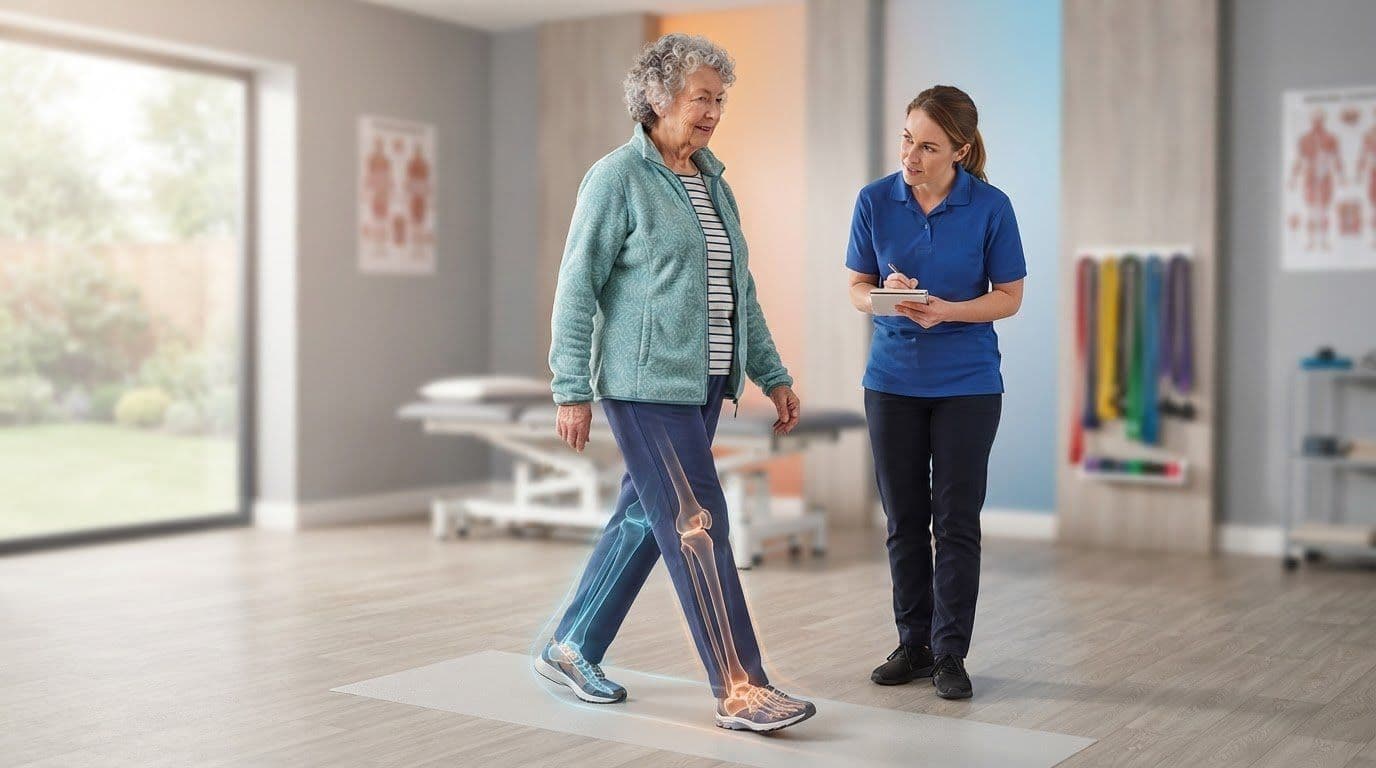
Gait analysis for elderly fall prevention in Towcester: spotting risk
See how gait analysis for elderly fall prevention Towcester can spot walking changes, what tests reveal and when to seek advice for steadier everyday movement.
A change in walking is a reason to look more closely, not simply shrug off. Gait analysis for elderly fall prevention in Towcester can identify movement patterns that may affect steadiness. A clinical assessment considers these alongside your health and daily routine. It can inform a plan, but cannot predict or prevent every fall.
Perhaps a familiar walk from home now feels less straightforward, or you find yourself pausing before setting off. It’s understandable to notice these changes and wonder what they mean. A useful assessment starts with your experience: which journeys feel different, what you’ve stopped doing, and what you’d like to feel more confident doing again.
This article explains how gait analysis compares with clinical assessment, which walking changes may be worth discussing, and how clinicians interpret differences in steps. You’ll also find practical context for deciding what to do next, keeping the focus on your everyday independence and the activities that matter to you.
Key Takeaways
- Learn why walking speed and the Timed Up and Go test provide useful clinical context, but don’t tell the whole story on their own.
- Notice changes in step consistency and foot placement that could be worth discussing during an assessment.
- Understand how cadence and differences between your left and right steps can help build a clearer picture of your movement.
- Find out how physiotherapy can turn assessment findings into practical next steps for steadier everyday movement.
Comparison with conventional clinical assessments
NHS falls and mobility assessments can be accessed through local services. In Towcester, start with your GP, who can assess your concerns and make a referral where appropriate.
A GP can refer you for a falls or mobility assessment. Share specific examples, such as a recent fall, difficulty standing up from a chair, or feeling unsteady on steps. These details help explain what has changed and when it happens.
Clinical tests offer a useful snapshot. The gait speed test measures how quickly you walk over a set distance. The Timed Up and Go test, or TUG, observes standing, walking, turning and sitting. In one study, gait speed classified fallers and non-fallers with 76.4% accuracy; TUG achieved 75.6%.
Those figures describe the results of one study, not a personal prediction. A timed test may show that walking or turning is slower, but it cannot reveal every detail of step timing or foot placement. Gait analysis can add movement data, including measurements from two sensors, one attached to each foot.
According to the National Library of Medicine, one study’s baseline visit lasted two hours and included seven validated balance and mobility tests, including gait speed. This illustrates how conventional assessment can combine several checks rather than rely on one score. A clinician can interpret test results alongside your walking pattern, balance and reported difficulties.
For example, someone may complete a short walking test steadily but feel less secure when turning towards a kitchen counter. Comparing the test with observed steps and everyday concerns gives a fuller picture. Gait assessment adds detail and complements clinical judgement rather than replacing it.
Early identification of gait changes and fall risk
Nearly one in three adults over 65 fall each year. A new shuffle, hesitation or change in turning may be worth discussing, especially if it makes a familiar task, such as reaching the front door, feel harder.
The cost of private gait analysis depends on what the appointment includes, such as time spent assessing movement and discussing the findings. Ask about the total fee before booking so you know what the session covers.
An appointment may begin with questions about your walking, any falls and activities that have become difficult. You may then be asked to walk at a comfortable pace, turn and repeat a task. The clinician can observe how your steps change during these movements.
Changes in walking can have different causes. Knee discomfort, for example, may lead you to shorten a step, while reduced confidence can make turning feel less secure. Note when you first noticed a change and which activities bring it on.
Choose well-fitting shoes that stay secure on your feet. Keep your usual walking aid close and use it as advised. At home, clear clutter from regular routes, such as the path between your bed and bathroom.
One study found that step width variation, step timing variation and predictable foot placement each detected balance issues with over 86% accuracy. These findings describe a study, not your personal likelihood of falling. If a fall causes an injury, or your walking changes suddenly, seek prompt medical advice.
In the study, inertial gait parameters classified fallers and non-fallers with 78.2% accuracy. The inertial gait sensor had 77% sensitivity and 79% specificity for classifying fallers and non-fallers. These results describe group classification, not an individual prediction.

Gait metrics and asymmetry between sides
Cadence is the number of steps you take in a minute. It offers a simple measure of walking rhythm, but makes most sense alongside step length and the time each foot spends on the ground. Two people may have the same cadence yet walk differently because one takes shorter steps.
An assessment can compare how each leg moves through a step. If you spend less time bearing weight on one side, you may be adapting your movement. That difference could relate to discomfort, confidence or a longstanding habit. The measurement alone cannot identify the cause, so it needs to be considered alongside what you feel and how you move.
Consistency matters too. A clinician can observe whether your pace and step pattern stay similar along a short, familiar route, or change when you turn or approach a doorway. If a difference appears only during one task, that context may help explain why the movement feels difficult.
You can make the comparison more useful by describing what you notice in daily life. For instance, do you feel less steady when carrying a shopping bag, stepping onto a kerb or turning towards a chair? Mention which activity feels awkward and whether the feeling changes during the task. These details connect movement measurements to your goals, such as walking to a nearby shop or moving around your home with more confidence. The aim is to understand a pattern, then decide whether it points to a practical change or further assessment.
RED Physiotherapy: Physiotherapy
RED Physiotherapy can help you understand movement concerns through physiotherapy focused on your mobility and everyday goals. Consider an appointment if walking feels less steady, changes in your steps are affecting your confidence, or you want guidance after discussing a fall with your GP.
Your assessment can explore how movement difficulties affect activities such as walking around home or going for a short stroll. The findings help shape practical next steps around your needs, rather than relying on a single measure or a generic plan. If symptoms have changed suddenly or you’ve been injured in a fall, seek medical advice first.
If you’d like support with movement concerns, contact RED Physiotherapy to discuss your next step.
Take your next step towards confident movement
Your next step can be a conversation about what you want to keep doing, whether that’s walking to the shops or getting around your home with greater confidence. Gait analysis for elderly fall prevention in Towcester can inform that discussion, while your goals and concerns help shape what happens next.
RED Physiotherapy offers physiotherapy, sports massage and women’s health physiotherapy. For concerns about walking or balance, physiotherapy can help you explore your movement and consider practical ways forward. If a fall has caused an injury or your walking changes suddenly, seek medical advice promptly.
Contact RED Physiotherapy to discuss a suitable next step. Small, considered changes can help you keep moving towards the activities that matter to you.
Frequently Asked Questions
What is gait analysis and how can it help prevent falls in older adults?
Gait analysis looks at how you move while walking and can highlight patterns worth addressing. Gait analysis for elderly fall prevention in Towcester can help guide practical mobility advice, such as building confidence when stepping onto a kerb. Tell the assessor which everyday movements feel uncertain so recommendations relate to your routines.
Where can older adults get gait analysis near Towcester, Northamptonshire?
Older adults in Towcester can access gait assessment through RED Physiotherapy. Gait analysis for elderly fall prevention in Towcester may be helpful if walking changes are affecting activities such as getting to the bus stop or tending the garden. Bring your usual walking aid and describe the situations that feel difficult so the assessment reflects your needs.
What exercises and physiotherapy can improve balance and walking in older adults?
Physiotherapy can help you practise movements that support daily activities and build a plan around your current ability. Supported heel raises or repeated sit-to-stands from a stable chair are examples to discuss with a physiotherapist. If you feel unsteady, don’t attempt challenging balance exercises alone. Get guidance on suitable movements and how to progress them safely.
Tags:
About the Author
Red Physiotherapy Team
Content Team
Health and wellness content from the RED Physiotherapy team.