
Gait Problems in Toddlers: When to See a Paediatric Physio in Northampton
Tired of "wait and see"? Our guide to gait problems in toddlers physio Northampton helps you spot issues like in-toeing and get a clear, proactive plan.
You have spent months cheering on those first wobbles, only to find yourself staring at your toddler’s feet with a growing sense of unease. Perhaps they are walking on their tiptoes like a little ballerina, or their toes are pointing inwards so much they keep tripping over their own feet. It is exhausting to be stuck between conflicting online advice and a GP telling you to simply wait and see while your anxiety about their long term mobility grows. We know you want a clear answer and a plan that actually works, rather than another month of wondering if your child is falling behind.
We agree that the "wait and see" approach often feels more like "wait and worry," which is why we prefer to get stuck in and help. This guide will clarify whether your child’s walking pattern is a normal developmental phase or if you should seek expert help for gait problems in toddlers physio Northampton. You will learn the difference between typical growth spurts and issues that need a professional eye. We are going to preview the signs of in-toeing and toe-walking, explain the actual milestones, and show you how a proactive, hands-on plan can build the foundation for your child to move with total confidence.
Key Takeaways
- Understand the difference between the typical "high guard" waddle of a new walker and signs that your child might need a helping hand.
- Get the facts on in-toeing and toe-walking so you can stop worrying about conflicting online advice and start a clear plan of action.
- See why choosing an expert for gait problems in toddlers physio Northampton provides faster results than waiting for overstretched local services.
- Learn how a hands-on assessment uses play and movement to identify physical restrictions rather than just handing out a list of exercises.
- Discover simple ways to boost your toddler's foot strength and sensory feedback through barefoot play and the right practice environments.
Normal Wobbling vs. Gait Problems: What is Typical for a Toddler?
Toddler gait is the unique, often slightly nerve-wracking way a child moves between the ages of 12 and 36 months. If your little one looks like a tiny penguin with their arms held high and their feet planted wide apart, try not to worry. This "high guard" position is a brilliant survival mechanism. By holding their arms up, they are essentially using their upper body to find balance while widening their base of support to stop gravity from winning the battle. While it looks quirky, this stage is a vital part of developing core stability. Over time, you should see that wide stance naturally narrow and stabilise as their coordination improves.
That "penguin-like" waddle is actually a sign of healthy lateral weight shifting. Because toddlers haven't yet mastered the sophisticated balance required for a narrow stride, they rock from side to side to move forward. As a physiotherapist, I look for this pattern to become more fluid and less exaggerated as the child approaches their third birthday. If the waddle remains very wide or the child seems stuck in this phase, it might be time to investigate further.
The Developmental Timeline of First Steps
The transition from "cruising" along the sofa to taking independent steps typically happens by 18 months. If your child is not walking independently by this milestone, it is a clear signal to consult a professional. Early walking is almost always flat-footed. You won't see a traditional "heel-to-toe" strike like an adult's for quite some time because the fatty pads in a toddler's feet hide the developing arches. Frequent tumbles are also part of the deal. In the first six months of walking, falling is just a messy way of learning where their centre of gravity lives. We expect these stumbles to decrease significantly as they gain confidence and strength.
When "Quirky" Becomes a Concern
It is helpful to distinguish between developmental quirks and actual structural concerns. While many variations are part of normal growth, symmetry is our golden rule. If one foot turns in significantly more than the other, or if your child seems to favour one leg consistently, it warrants a closer look. Many parents searching for gait problems in toddlers physio Northampton are simply looking for peace of mind that their child is on the right track. By understanding gait abnormalities and how they differ from typical growth, you can decide if a hands-on assessment is needed. We focus on identifying whether a movement pattern is a temporary habit or a physical restriction that requires a proactive plan to fix. Ensuring your child reaches their physical potential early on prevents minor wobbles from becoming long term hurdles.
Common Gait Issues: In-toeing, Toe-Walking, and Bow Legs
While many toddlers waddle like ducks, some movement patterns look a little more distinct. Most of these, like bow legs or knock knees, are just stops on a natural "alignment journey." Most kids start slightly bow-legged as infants, shift to being knock-kneed around age three or four, and finally straighten out by age seven. It is a bit of a rollercoaster, but usually, it is perfectly normal. However, some specific issues like in-toeing or persistent toe-walking often lead parents to look for gait problems in toddlers physio Northampton to ensure their little one is moving as efficiently as possible.
In-toeing and "Pigeon Toes" Explained
In-toeing, or "pigeon toes," is one of the most common reasons parents visit our clinic. It usually happens for two reasons: the thigh bone is rotated inwards at the hip, known as femoral anteversion, or the foot itself is curved, called metatarsus adductus. While research suggests most cases resolve by age eight, we don't believe in just sitting back. Early hands-on physio helps maintain muscle balance and prevents your child from becoming a "frequent tripper." One quick tip for home: try to discourage the "W-sit" position. Sitting with their bottom on the floor and feet flared out to the sides puts unnecessary pressure on their developing hip joints and can encourage the legs to stay rotated inwards.
The Truth About Persistent Toe-Walking
Then there is the "tiny ballerina" habit. Toe-walking is common when kids first find their feet, but if it continues, it can shift from a quirky habit to a physical restriction. We distinguish between "sensory" toe-walking, where a child just likes the feeling or is exploring their balance, and physical tightness in the calf muscles. If left unchecked, persistent toe-walking can lead to shortened Achilles tendons, making it physically impossible for them to put their heels down later in life.
Paediatric physiotherapy provides the hands-on stretching and strengthening needed to correct this before it affects their long term mobility. You can find more details on common gait abnormalities in children to see how these patterns typically evolve. If you are noticing these patterns and want to ensure they don't become a permanent fixture, a quick gait assessment can give you the clarity and the plan you need to move forward confidently.
Why Proactive Paediatric Physio Beats the "Wait and See" Approach
It is incredibly frustrating to be told to "just wait" when you can see your child struggling to keep up with their peers at the park. In Northamptonshire, NHS wait times for paediatric specialities can be lengthy, often leaving parents in a state of limbo for months while they worry about their child's development. We don't believe in leaving families hanging. Our philosophy is built on fixing problems fast and getting your little one moving properly. While many developmental quirks resolve themselves, having a professional confirm when to be concerned about walking patterns provides immediate peace of mind. If there is a genuine issue, addressing gait problems in toddlers physio Northampton early means we can nip potential long term mobility issues in the bud before they become ingrained habits.
The Hands-On Difference from Day One
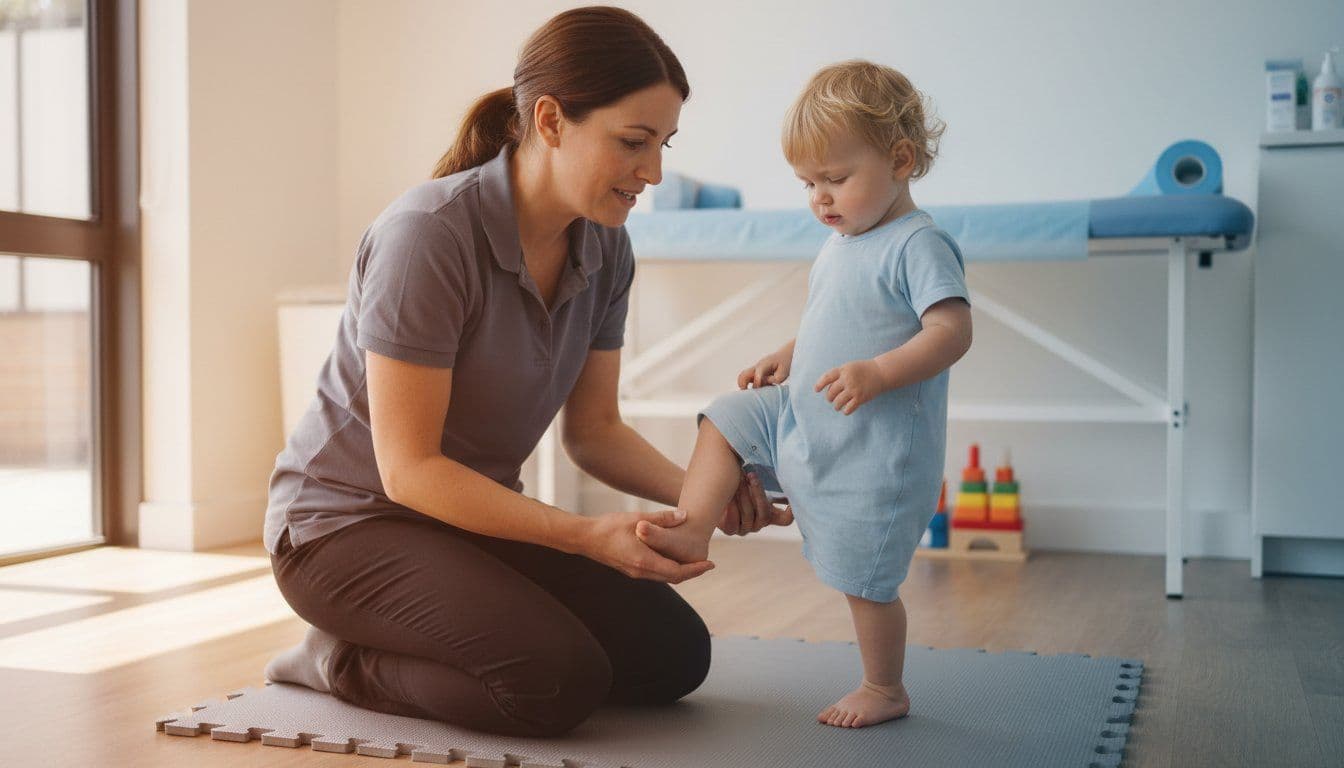
Toddlers aren't exactly known for their dedication to a 20-minute daily stretching routine or following complex instructions. Handing a parent a sheet of paper with exercises and sending them on their way simply doesn't cut it for a two-year-old. That is why we are strictly not an "exercises-only" clinic. From your very first session, we use hands-on manual therapy to improve joint alignment and muscle activation. We make the entire process feel like a game, using play-based movements to guide their bodies into the correct patterns. By physically helping their muscles "fire" correctly during the session, we see results much faster than through simple observation. This active, patient-first approach ensures that every minute in the clinic is moving your child closer to their milestones.
Avoiding Long-Term Compensation Patterns
A small hitch in a child's gait today can easily become a significant compensation pattern tomorrow. If a toddler spends years walking with their toes turned in or their weight shifted to one side, their body will naturally adapt to that imbalance. This often leads to unnecessary hip, knee, or back pain as they grow into active teenagers and adults. We focus on building a robust foundation for all their future adventures, from school sports to weekend bike rides. If you have been looking for a physiotherapist near me who prioritises efficient, results-driven care, we are here to help. Taking a proactive step now ensures your child isn't just "getting by," but is reaching their full physical potential. We want to see them running, jumping, and playing without the shadow of a nagging injury or a restricted range of movement.
What to Expect During a Toddler Gait Assessment in Northampton
Walking into a clinic with a two-year-old can feel like a bit of a gamble. You are likely wondering if they will sit still, if they will cry, or if the whole thing will be a waste of time. At our practice, we don't expect toddlers to act like little adults. We set the room up for success, using toys, stickers, and games to see how your child moves when they think nobody is watching. This is the first step in solving gait problems in toddlers physio Northampton parents often worry about. By creating a stress-free, fun environment, we get a much clearer picture of their natural movement patterns than we ever would in a cold, clinical setting.
The Assessment Journey: From Play to Progress
We start with a thorough gait analysis. This isn't just about watching them walk in a straight line across the room. We want to see them run towards a ball, climb onto a low step, and squat down to pick up a toy. These functional movements tell us everything we need to know about their muscle activation, core stability, and balance. We also take a close look at their footwear. Many parents are surprised to learn how much a certain type of shoe can influence a developing gait. We will give you honest, practical advice on which shoes support healthy foot development and which ones might be making things harder for your little one.
Once they are comfortable and engaged, we move on to the hands-on part of the session. We gently assess the range of motion in their hips, knees, and ankles. We are looking for any physical restrictions, such as a tight Achilles tendon or a hip that doesn't rotate quite as far as it should. This isn't just a quick check. It is a detailed look at their biomechanics to ensure their joints and muscles are working in harmony as they grow.
Creating Your Custom Treatment Plan
After the assessment, we don't just hand you a generic leaflet and send you on your way. Every child is different, so every plan we create is unique to their specific gait pattern and personality. We involve you in every step of the process because you are the one who will be supporting them every day. We will explain exactly what we found using clear language and show you how to encourage better movement through play-based activities at home.
You can meet our team of experts to see the friendly faces who handle these cases with care and precision. Our goal is to give you total confidence that your child is reaching their developmental milestones. If you are ready to stop the guesswork and get a professional opinion, you can book a gait assessment with us today to get started.
Practical Tips for Supporting Your Toddler’s Walking at Home
While we handle the hands-on treatment in the clinic, there is plenty you can do at home to keep the movement momentum going. One of the best things you can do is let your child go barefoot as much as possible. It might feel counterintuitive when you see all those expensive, supportive-looking boots in the shops, but feeling the ground directly provides essential sensory feedback. This helps their brain map out where their feet are in space and builds natural foot strength. When they do practice walking, try to vary the surfaces. Firm carpets, grass, and even soft sand are fantastic for challenging their balance and making those little stabilising muscles work much harder.
You can turn strengthening into a game without them even realising they are working. Try "walking like a bear" on all fours to build core and shoulder stability, or have them "reach for the stars" by standing on their tiptoes to grab a toy from a slightly higher shelf. These cheeky little games are far more effective than trying to follow a rigid exercise sheet. If you have been searching for help with gait problems in toddlers physio Northampton, these home strategies are a great starting point, but they work best when combined with a professional assessment to ensure they are targeting the right areas.
When to Seek Help: The "Red Flags"
It can be hard to know when a quirk needs expert attention and when it is just a phase. While we have discussed how many patterns resolve naturally, there are certain red flags that mean it is time to stop searching and start booking. If your child begins limping, complains of pain, or experiences a sudden loss of walking ability they previously had, you should seek help immediately. Asymmetry is another key indicator. If one foot is noticeably turned in while the other is straight, it suggests a physical restriction rather than a developmental stage. Above all, trust your gut instinct. If you feel like their progress has stalled or something just isn't quite right, a professional opinion is always the safest bet.
Booking Your Northampton Assessment
We make booking an appointment at our Northampton or Towcester clinics as straightforward as possible. We know you are busy, and we know you want results without the endless "wait and see" advice from other services. Our team is dedicated to fixing problems efficiently, ensuring your toddler can get back to the important business of exploring the world with total confidence. You don't need a referral to see us, so you can skip the GP queues and get straight to a solution that works. Book a Paediatric Assessment at RED Physiotherapy today and let’s get your little one moving freely.
Focus Keywords: gait problems in toddlers physio Northampton, paediatric physiotherapy, toddler gait assessment, in-toeing in toddlers, toe-walking physiotherapy.
Give Your Toddler the Best Start on Two Feet
While many developmental wobbles are a natural part of finding their balance, you shouldn't have to spend months wondering if your child’s movement is on the right track. We believe in proactive, hands-on care that addresses issues from day one, rather than leaving you stuck in a cycle of "waiting and seeing." By focusing on joint alignment and muscle activation through play, we help your little one build a solid foundation for a lifetime of active movement.
Our expert paediatric specialists in Northampton and Towcester provide fast, effective results without the long wait times often found elsewhere. If you have concerns about asymmetry or persistent habits, seeking professional help for gait problems in toddlers physio Northampton ensures your child is sorted quickly and correctly. We are here to support your family every step of the way, giving you the confidence that your toddler is moving freely and reaching their full potential.
Book your toddler’s gait assessment at our Northampton clinic today and let’s get those little feet moving in the right direction together.
Frequently Asked Questions
Is it normal for my 2-year-old to walk with their toes pointed in?
Yes, in-toeing is a very common developmental stage for toddlers and usually resolves naturally as they grow. We look for symmetry and ensure your child isn't tripping over their own feet more than usual. If the in-toeing is noticeably worse on one side or persists as they get older, a quick check can ensure their hip and leg alignment is progressing exactly as it should.
How long are the wait times for paediatric physiotherapy in Northampton?
You can typically book an appointment at our clinic within a few days, avoiding the lengthy wait lists often found with public services in Northamptonshire. We know how stressful it is to worry about your child's development, so we prioritise getting you through the door quickly. Our goal is to provide a clear plan immediately so you can stop worrying and start seeing progress.
Does my toddler need special orthopaedic shoes for gait problems?
Most toddlers actually benefit from more barefoot time rather than heavy orthopaedic shoes. Rigid boots can often mask the problem rather than fixing it; they also restrict the sensory feedback a child needs to develop balance. We generally recommend lightweight, flexible footwear that allows the foot to move naturally. During your session, we will check your child's current shoes and give you honest, practical advice.
Can physiotherapy help if my child is a late walker?
Physiotherapy is an excellent way to support a late walker by identifying any physical restrictions or muscle weaknesses that might be holding them back. We use play-based activities to build the core stability and leg strength they need for independent movement. Often, a bit of hands-on encouragement and the right muscle activation are all it takes to give them the confidence to take those first steps.
What is the difference between a habit and a physical gait problem?
A habit is a movement pattern your child chooses, while a physical gait problem is caused by a structural or muscular restriction they cannot easily change. When assessing gait problems in toddlers physio Northampton, we test whether your child is physically capable of a normal walking pattern. If they literally cannot put their heel down or rotate their hip, we know we are dealing with a physical issue that needs treatment.
Will my child grow out of toe-walking without intervention?
Many children do grow out of habitual toe-walking, but it becomes a concern if their calf muscles or Achilles tendons start to tighten. If a child is on their toes for more than half of the time, they risk developing permanent physical restrictions. We use hands-on stretching and strengthening to ensure their muscles stay flexible, preventing the need for more complex interventions as they grow older.
How many sessions will my toddler need to fix a gait issue?
Most families notice a real difference in how their child moves within 3 to 6 sessions. We don't believe in dragging treatment out; we want to fix the issue efficiently and get you back to your normal routine. By combining our hands-on clinic work with simple games you can play at home, we make sure progress is fast, effective, and sustainable for the long term.
Do I need a GP referral to see a paediatric physio at RED Physiotherapy?
No, you can book directly with us without needing a referral from your GP. This allows you to bypass the usual administrative hurdles and get your child seen by a specialist right away. We work independently to provide fast, high-quality care, but we are always happy to share our findings with your doctor or health visitor if you would like us to keep them in the loop.
Tags:
About the Author
Red Physiotherapy Team
Content Team
Health and wellness content from the RED Physiotherapy team.