
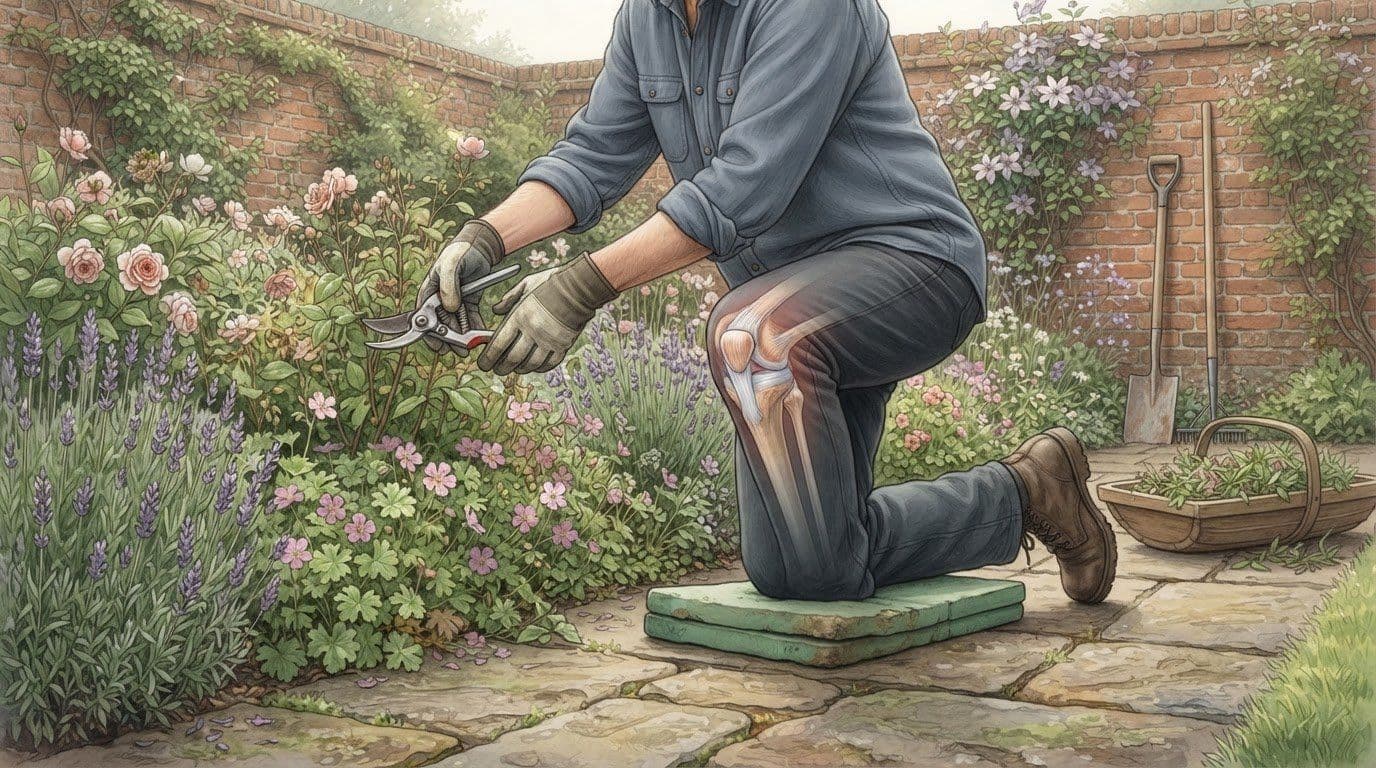
How to manage gardening-related strain and gardener's knee
Learn how physio for gardener's knee in Towcester can help you manage strain, adapt kneeling and lifting, and return to gardening safely with more confidence.
You head outside to prune a border, then notice your knee aching before you’ve finished. Gardening can place significant demands on your body, especially when jobs involve repeated bending, kneeling or lifting. Rather than guessing whether to push through or stop altogether, notice which tasks bring on symptoms and how your knee feels afterwards.
This guide explains how to manage gardening-related strain, return to activity gradually and make kneeling, squatting and tool use more manageable. It also covers when recurring knee discomfort deserves professional attention. If you’re considering physio for gardener’s knee in Towcester, you’ll find practical points to help you understand what support may involve and what to discuss. The aim is to help you make informed choices, protect your confidence and keep the gardening jobs that matter within reach.
Key Takeaways
- Keep gardening tasks close to your body, and bend your knees when lifting loads you can manage safely.
- Spread digging and heavy lifting across the week, with time to recover between projects.
- Use a kneeling pad or long-handled tools to reduce time spent stooping, and change position regularly.
- If knee discomfort keeps returning or makes gardening difficult, physiotherapy can help you plan your next steps.
1. Gardening-related muscle strain
A long spell gardening can strain your back, shoulders, knees and arms, particularly if you’re not used to digging or lifting. Repeatedly twisting to move compost, for example, can leave your back sore. Keep tools close and work in front of you. Turn your feet to change direction instead of twisting your body.
When lifting a heavy planter or soil bag, bend your knees and keep the load close. Lift only what feels manageable. If it’s too heavy, divide the contents or use a wheelbarrow. If kneeling brings on knee discomfort, change position or switch tasks.
How much does private physiotherapy cost in Towcester? The fee depends on the appointment type. You can see the physiotherapy prices before deciding whether to book.
What symptoms of gardener’s knee need urgent medical attention? Seek urgent medical advice if your knee becomes very swollen, hot or red, or you develop a fever. Get prompt help if you cannot bear weight after an injury, have sudden severe pain, or notice a change in the knee’s shape.
What physiotherapy treatments help gardener’s knee? Physiotherapy can assess your knee movement and the activities that aggravate it. Your plan may include practical ways to adapt gardening tasks and guidance on building strength for the movements you want to manage.
Do Towcester physiotherapists offer home visits or online appointments? RED Physiotherapy offers home visits in Towcester. An in-person visit lets the physiotherapist assess your knee and discuss how it affects everyday movement; online appointments are a separate appointment format.
Can I get NHS physiotherapy for gardener’s knee in Towcester, and do I need a GP referral? NHS physiotherapy access depends on the local pathway, which may allow self-referral or require a GP referral. Your GP practice can explain the route available in your area.
2. Gradually increasing gardening activity
After a quieter winter, a full day of digging can overload muscles and joints. Start with one manageable job, such as clearing a small patch, then notice how your body responds afterwards. Avoid turning the first sunny weekend into a garden overhaul. Returning gradually helps you identify which tasks feel comfortable.
Spread heavy digging and lifting across the week rather than squeezing everything into the weekend. You could dig one area on Tuesday, then prune or sort pots another day. Allow time to recover between demanding projects. If soreness affects walking or standing, make your next gardening session lighter instead of pushing through to finish.
- Pick a clear starting point: Choose one small job, such as planting a container.
- Vary the effort: Follow digging with lighter work, such as sorting seed packets.
- Allow recovery: Leave space between heavy jobs and larger garden projects.
- Notice your response: Keep track of which tasks make your knee feel more settled or irritated.
Add to your workload only when the current amount feels manageable. Finish one raised bed before tackling another, for example. A brief note about the task and how you felt afterwards can reveal useful patterns, especially if discomfort appears later rather than during the job.
If knee discomfort repeatedly disrupts your plans, physio for gardener’s knee in Towcester can help you work out a realistic progression. Bring a clear example, such as struggling after digging or kneeling to plant, so your goals guide the next steps. Adjusting your workload can help you keep gardening in view without giving it up.
When planning demanding garden work, spread lifting and digging across the week rather than concentrating them over a weekend. Allow time to recover between projects, too, instead of packing demanding jobs together without a pause.

Kneeling, squatting and using long-handled tools
A kneeling pad can soften pressure when you’re planting bulbs or weeding. If getting up is difficult, use a kneeling bench with a support handle. Place it beside the bed before you start, so you don’t need to reach or twist to grab it.
For weeds across a wider patch, try a long-handled weeder. It lets you work upright and gives your back, legs and knees a break from repeated stooping. For close work with a trowel, squat or sit on the ground instead of folding forwards from your waist. Change position as the task changes.
Staying in one posture can make a long gardening job feel harder. Take regular breaks to stand, walk a little or move gently. If kneeling irritates your knee, switch to a stool or another task rather than forcing yourself to finish that row.
What exercises and self-care can relieve gardener’s knee pain? Start by reducing positions that aggravate your knee, then move gently between gardening tasks. Comfortable stretches may help ease stiffness: hold each for 15-30 seconds and repeat two or three times. Stop if a movement sharply increases your discomfort.
- Weeding: Use a long-handled tool to stay more upright.
- Planting: Sit or squat for trowel work, with tools close by.
- Kneeling: Add a pad, or use a support-handled bench.
- Breaks: Change position and move instead of remaining still.
If knee pain keeps limiting everyday movement, explore options for knee pain support and consider what guidance could help you return to gardening more comfortably.
As you move between jobs, choose tools and positions that reduce stooping or kneeling. A long-handled weeder lets you work upright. For trowel work, sit or squat rather than bending over, and pause to move gently instead of staying in one position for long periods.
RED Physiotherapy
RED Physiotherapy can help when knee discomfort keeps returning, limits your gardening, or leaves you unsure how to adapt. Physiotherapy starts by looking at your symptoms, movement and the garden tasks you want to manage. That helps shape a practical plan around your needs, with hands-on care and guidance to support a gradual return to activity. You’ll leave with clear next steps, rather than a one-size-fits-all exercise sheet.
If kneeling, digging or getting up from the ground remains difficult despite adjusting your routine, a professional assessment can help identify what may be contributing. Contact RED Physiotherapy to discuss your knee and take the next step towards gardening with greater confidence.
Keep your gardening goals in sight
Your next step can be about more than easing today’s discomfort. Think about the garden jobs you want to return to, whether that’s planting pots, tending a raised bed or getting up comfortably after weeding. These goals give your physiotherapist a practical starting point for understanding what you need from your recovery.
If you’re considering physio for gardener’s knee in Towcester, choose support that helps you make informed decisions about movement and activity. A clear assessment can help you understand what may be contributing to your symptoms and what to focus on next.
Get in touch with RED Physiotherapy about your knee to discuss the support you’re looking for. You can take the next step at a pace that feels right, with getting back to the garden firmly in view.
Frequently Asked Questions
Which physiotherapy clinics near Towcester treat knee pain or bursitis?
RED Physiotherapy provides physiotherapy for knee pain in Towcester. If you’re concerned about bursitis, an assessment can help explore your symptoms and suitable next steps. Bursitis describes irritation of a small fluid-filled sac near a joint, but knee pain can have other causes too. Share which movements aggravate it, such as kneeling, climbing stairs or standing from a chair.
What is gardener’s knee and what causes it?
Gardener’s knee refers to knee discomfort associated with gardening. It may be aggravated by repeated kneeling or by doing too much digging and other demanding work without enough recovery.
Tags:
About the Author
Red Physiotherapy Team
Content Team
Health and wellness content from the RED Physiotherapy team.