
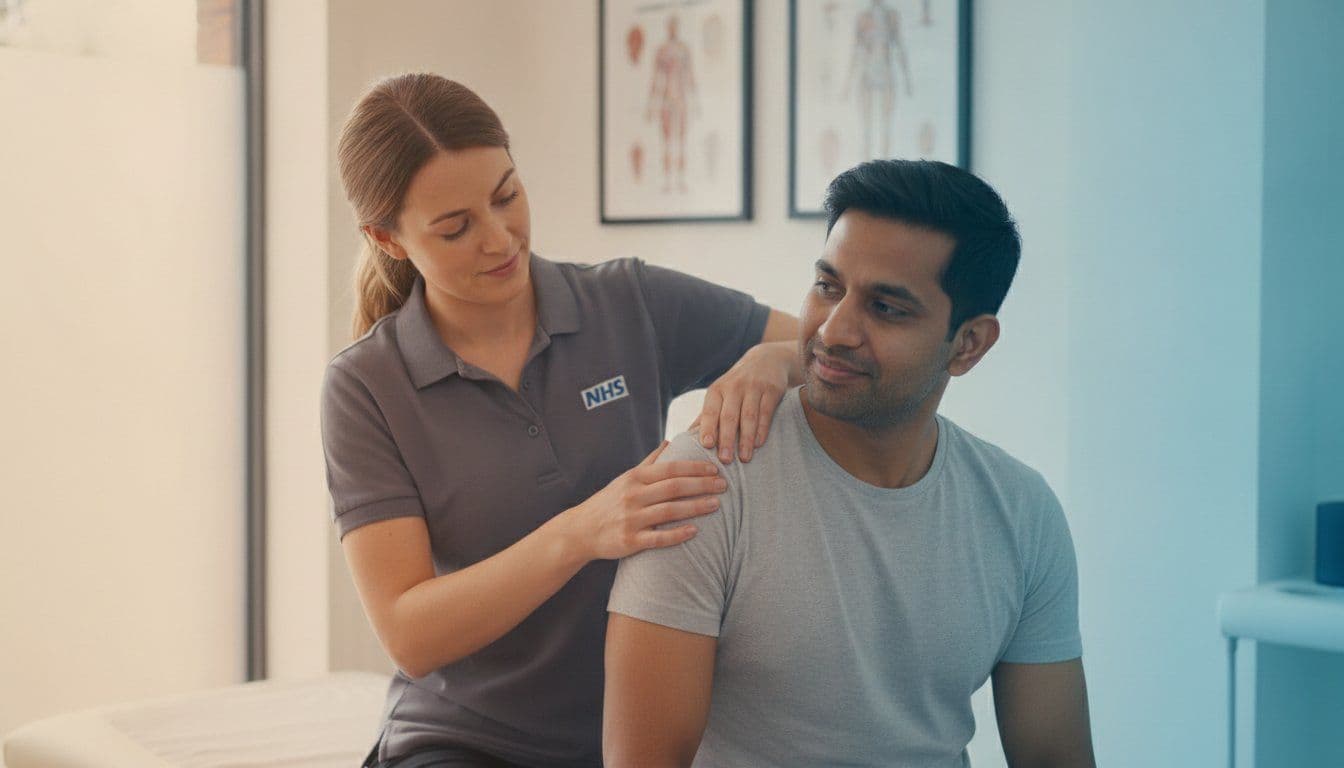
Long-term Recovery from Shoulder Dislocation: Your Roadmap to Lasting Stability
Stop fearing your shoulder will pop out. Our roadmap for long-term recovery from shoulder dislocation uses hands-on physio to build lasting stability.
What if the secret to never worrying about your shoulder popping out again isn't just resting it, but actually moving it much sooner than you think? It’s a terrifying feeling when your joint feels like it’s made of jelly, whether you’re reaching for a high shelf or trying to get a decent night’s sleep. If you’re currently dealing with that nagging weakness or the frustration of a long NHS wait in Milton Keynes, you aren't alone. Achieving a successful long-term recovery from shoulder dislocation requires more than just a list of exercises sent in an email. It needs a hands-on approach that addresses the root cause of your instability from day one.
We understand how much you want to get back to lifting your children or returning to the gym in Northampton without that constant, underlying fear. We promise to guide you through the expert phases of rehabilitation designed to rebuild your strength and prevent future dislocations for good. In this roadmap, we’ll preview the journey from initial hands-on treatment to advanced movement patterns, giving you the tools to regain full autonomy over your body and stay active in Towcester for years to come. It's time to stop worrying about your shoulder and start trusting it again.
Key Takeaways
- Understand how a dislocation affects your joint capsule and labrum, moving beyond the simple ball and socket analogy to protect your future health.
- Follow a structured three-phase timeline to ensure a successful long-term recovery from shoulder dislocation, moving safely from initial protection to full strength.
- Discover why hands-on manual therapy is essential for clearing compensatory tension in your neck and back, rather than just relying on a generic exercise sheet.
- Learn how to retrain your brain’s proprioception to eliminate the nagging fear of your shoulder popping out during sport or while you sleep.
- Find out how to bypass long waiting lists and start expert, results-driven rehabilitation immediately in Milton Keynes, Northampton, or Towcester.
What a Dislocated Shoulder Actually Means for Your Long-term Health
Think of your shoulder joint like a golf ball sitting on a very small tee. This is your glenohumeral joint. It’s the most mobile joint in your body, which is brilliant for reaching the top shelf or bowling a cricket ball, but that freedom comes at a price. When you suffer a dislocated shoulder, that ball is forced entirely off the tee. This isn't just a bone issue; it’s a soft tissue disaster. The trauma violently stretches the joint capsule, which is the fibrous sleeve that keeps the joint airtight, and frequently tears the labrum. The labrum is a crucial ring of specialised cartilage that deepens the socket. Without it, your shoulder loses its natural suction and stability.
Your long-term recovery from shoulder dislocation is won or lost in the first 12 weeks. This is the critical window where your body is working overtime to lay down new collagen and form scar tissue. This scar tissue acts like internal biological glue, trying to bridge the gaps in your torn ligaments. If you rush back to the gym too quickly, you’ll stretch that fresh, vulnerable tissue. However, if you leave it completely still in a sling for weeks on end, the tissue will set like concrete. This leads to a "frozen shoulder" or persistent stiffness that can take a year to resolve. We also have to watch for nerve involvement, as the nerves sitting right next to the joint can be stretched during the injury, leading to that annoying tingling or weakness in your hand.
The Difference Between Subluxation and Full Dislocation
A subluxation is essentially a partial dislocation where the ball slips out but manages to pop back in by itself. While it might feel like you’ve "gotten away with it" compared to a full dislocation, the long-term impact is often just as serious. Repeated subluxations gradually overstretch your ligaments until they become like a loose hair tie that no longer holds. This joint looseness requires your rotator cuff muscles to work significantly harder to provide the stability your ligaments no longer can.
Why "Popping it Back In" is Only the Start
Many patients think that once the doctor at the hospital has popped the shoulder back into place, the job is done. In reality, the reduction procedure only solves the immediate structural problem. What follows is an inflammatory cascade that floods the joint with fluid. This causes the deep, aching pain you feel for weeks afterwards and creates a cycle of muscle guarding. At our clinics in Milton Keynes and Northampton, we see many people who were simply told to "rest it" and now find themselves with a shoulder that feels stiff, weak, and completely untrustworthy. Hands-on treatment is vital here to settle that inflammation and prevent your muscles from locking up in a permanent state of fear.
The Three Phases of Your Shoulder Recovery Timeline
Recovery isn't a race, but it certainly needs a map. Your long-term recovery from shoulder dislocation depends on hitting specific biological milestones rather than just watching the calendar. While a teenager might feel ready to play rugby again in a few months, someone in their 40s or 50s often needs a more measured approach to avoid secondary issues like rotator cuff tears. Every journey is unique, but the path to a stable shoulder always follows three distinct phases.
Phase 1: Managing Pain and Protecting the Labrum
The first 2 to 4 weeks are all about protection. If you’ve been given a sling, use it to take the weight off the joint, but don't let it become a crutch that ruins your posture. We often see patients in our Milton Keynes clinic with secondary neck strain because they’ve been hitching their shoulder up for a fortnight. During this stage, we use gentle isometric exercises. These are "static" contractions where you fire the muscle without actually moving the joint. It keeps the brain connected to the muscle without risking the labrum while it’s trying to knit back together. Ice and compression are your best friends here to keep the initial swelling under control.
Phase 2: Regaining Movement and Muscle Control
Once the initial "angry" phase subsides, we start moving. We transition from passive movement, where we move the arm for you, to active-assisted range of motion. The secret to success in this phase is focusing on the shoulder blade, or scapula. Think of the scapula as the foundation of a house; if it’s wobbly, the shoulder joint on top will never be stable. We focus on nonsurgical treatment for shoulder dislocation by retraining the muscles that control the "tee" we mentioned earlier. We carefully avoid "high-risk" positions, such as having your arm out to the side and rotated back, which could trigger another slip.
Phase 3: Building Bulletproof Strength
This is where the real work happens. We introduce resistance bands and weights to challenge the rotator cuff and the larger prime mover muscles. For our more active patients in Northampton and Towcester, we incorporate plyometric drills. These are explosive movements that teach your shoulder how to handle sudden impacts or quick changes in direction. Strength is the only thing that truly compensates for stretched ligaments. By the end of this phase, your shoulder shouldn't just feel "okay," it should feel robust enough to handle heavy lifting or contact sport without a second thought. If you're unsure which phase you're currently in, our team can provide a tailored assessment to get you on the right track.
Why Hands-on Treatment Beats "Exercises-Only" Every Time
We’ve all been there. You wait weeks for a specialist appointment, only to be handed a grainy, photocopied sheet of exercises and told to get on with it. It’s frustrating, impersonal, and, quite frankly, not the most efficient way to get you back to 100%. While doing your "homework" is vital, a successful long-term recovery from shoulder dislocation requires a bit more elbow grease from your therapist. Exercises are great for building strength, but they don't always address the immediate stiffness and protective muscle guarding that stops you from moving properly in the first place.
At our clinics, we believe in a "hands-on from day one" philosophy. We don't just want to tell you what to do; we want to physically help your body regain its natural rhythm. This approach helps to settle the nervous system and clear the path for those strengthening exercises to actually work. It’s about fixing the problem properly rather than just managing the symptoms with a list of movements you might not even be able to perform comfortably yet.
The Role of Manual Therapy in Early Recovery
When your shoulder dislocates, your brain goes into a high-alert "lockdown" mode. It tightens the muscles around the joint to prevent further damage, which often leads to a hunched posture and a very stiff neck. We use joint mobilisations to gently nudge the joint back into its natural gliding patterns. This is far more effective than just stretching a tight muscle. By treating the whole person, including your neck and thoracic spine, we ensure your entire upper body is supporting your shoulder’s return to health. It stops that "stuck" feeling that often lingers for months after the initial injury.
Specialised Techniques for Stubborn Pain
Sometimes, muscles get stuck in a cycle of tension that exercises alone simply can't break. This is where our specialised physiotherapy services come into play. We might use dry needling to target specific trigger points in your rotator cuff. Think of it as "rebooting" a muscle that has become overactive and glitchy. It resets the muscle's resting tone, allowing you to start your rehab without fighting against your own body.
For our active patients in Milton Keynes and Northampton, we often integrate sports massage into the plan. This isn't a spa luxury; it’s a functional tool to improve local circulation and flush out the inflammatory by-products that cause that deep, nagging ache. It’s a core part of comprehensive shoulder dislocation treatment and rehabilitation. Whether you’re an office worker or a weekend warrior in Towcester, this hands-on approach ensures your tissue is healthy, supple, and ready to handle the demands of your daily life again.
Overcoming Shoulder Instability and the Fear of Recurrence
One of the biggest hurdles in your long-term recovery from shoulder dislocation isn’t actually physical. It’s the mental block. We see it every day in our clinics. Patients come in from Towcester or Northampton feeling physically stronger, yet they’re still terrified of reaching for a seatbelt or rolling over in bed. This "fear of popping out" is a recognised psychological response called kinesiophobia. It happens because your brain has lost trust in the joint. When you dislocate, you don't just tear tissue; you damage the tiny sensors in your joint that tell your brain where your arm is in space. This sense is called proprioception, and without it, your shoulder feels like it’s floating in no-man's-land.
Chronic shoulder instability occurs when this lack of trust meets physical laxity. If those sensors aren't firing correctly, your muscles won't react fast enough to catch the joint if it starts to slip. This is why some people feel "loose" even months after their injury. Sleeping can be particularly stressful, as you can't consciously control your arm position while drifting off. We recommend hugging a large, firm pillow to your chest. This prevents your arm from falling across your body or dropping back into a vulnerable position, allowing you to rest without the subconscious worry of a midnight subluxation.
Retraining Your Brain and Body Connection
To fix this, we have to move beyond simple bicep curls. We use "closed chain" exercises where your hand is fixed against a wall or the floor. This sends a massive amount of sensory data back to your brain, essentially recalibrating your internal GPS. We challenge your stability using unstable surfaces like foam pads or gym balls. This forces your rotator cuff to make split-second adjustments. It’s about teaching your shoulder to be "smart" as well as strong, ensuring it can handle the unpredictable movements of real life in Milton Keynes.
When Should You Consider Surgery?
While most people thrive with conservative rehab, there are "red flags" that shouldn't be ignored. If you experience repeated dislocations from minor movements, or if your joint feels like it’s catching and locking, it might indicate a significant labral tear or bone loss on the socket. We use musculoskeletal ultrasound for pain to get a clear look at your soft tissues right here in the clinic. If your progress has plateaued despite consistent effort, it might be time to discuss surgical options with a consultant. You can read more about the specific conditions we treat and how we bridge the gap between rehab and surgery. If you're tired of living in fear and want to stop the cycle of instability, it's time to get a definitive plan for your shoulder today.
Expert Shoulder Rehabilitation in Milton Keynes, Northampton, and Towcester
When your shoulder is in a bit of a state, the last thing you want to hear is that you'll be waiting months for an appointment. In 2026, the average NHS wait for physiotherapy sits between 4 and 12 weeks according to PhysiotherapistsUK.co.uk. That is a massive chunk of time where your joint could be stiffening up, your muscles could be wasting away, and your confidence could be hitting rock bottom. At RED Physiotherapy, we don't believe in the "wait and see" approach. We believe in getting stuck in right away to ensure your long-term recovery from shoulder dislocation is as smooth and efficient as possible.
Our family-run practice is built on a very simple, honest idea: you deserve more than a generic exercise sheet and a pat on the back. Whether you are an office worker in Milton Keynes or a weekend warrior in Northampton, your recovery needs a plan that is as unique as you are. We combine elite-level knowledge with a grounded, approachable vibe that makes you feel like an active partner in your own progress. We aren't here to drag treatment out; we’re here to get you back to your best, whether that means lifting your kids without a wince or getting back onto the rugby pitch in Towcester.
Tailored Plans for Local Residents
We’ve made it easy for you to access high-quality care with convenient clinic locations across Milton Keynes, Northampton, and Towcester. We know that complex injuries like a shoulder dislocation can be daunting, which is why our clinical directors oversee every single case. This ensures that the latest movement science and hands-on techniques are applied to your specific situation. You aren't just seeing a "physio"; you are working with a dedicated mentor who understands the anatomy of your injury and the psychology of your recovery. You can learn more about the experts who will be guiding you by meeting our team.
Booking Your Initial Assessment
Your journey starts with a comprehensive 45-minute initial assessment. We don't just poke and prod; we listen to your story, assess your movement, and use tools like musculoskeletal ultrasound if we need a deeper look at the soft tissue damage. Most importantly, we provide hands-on treatment from day one. You won't leave with just a list of things to do at home. You’ll leave with a clearer joint, less pain, and a concrete roadmap for the weeks ahead. It is time to stop worrying about your shoulder and start rebuilding it. If you are ready to take that first step toward lasting stability, book your assessment with us today and let's get moving.
Reclaim Your Confidence and Get Back to Moving Properly
You now have the roadmap to move from the initial shock of injury to lasting stability. We’ve explored how a successful long-term recovery from shoulder dislocation relies on more than just taking it easy. It’s about restoring the delicate balance between your joint capsule, your rotator cuff, and your brain’s trust in your own body. By combining hands-on manual therapy with a structured, three-phase plan, you can finally clear that nagging stiffness and silence the fear of your shoulder slipping out during your daily life.
Don’t settle for a long wait on a list or a generic exercise sheet that leaves you feeling unsupported. Our expert team has over 10 years of clinical experience fixing complex injuries just like yours. We provide hands-on treatment from your very first session, ensuring you see real progress from the start. Whether you visit us in Milton Keynes, Northampton, or Towcester, we’re here to help you get back to the gym, the office, or simply lifting your children without a second thought.
Book your hands-on shoulder assessment today and let’s get your recovery moving in the right direction. You are in safe hands.
Frequently Asked Questions
How long does it take for a dislocated shoulder to feel normal again?
It typically takes 12 to 16 weeks to return to most daily activities, though reaching full athletic performance can take up to a year. Your long-term recovery from shoulder dislocation is a marathon, not a sprint. While the initial sharp pain usually settles within a month, the ligaments need significantly longer to regain their structural integrity. We focus on hitting movement milestones rather than just watching the calendar to ensure you don't rush back too soon.
Can I sleep on my side after a shoulder dislocation?
You should avoid sleeping directly on the injured side for at least the first 6 weeks of your recovery. Pressure on the joint can irritate the healing labrum and cause a frustrating flare-up of inflammation. Most of our patients in Milton Keynes find that sleeping on their back or the opposite side with a firm pillow tucked under the injured arm provides the best support. This stops the arm from dropping and keeps the joint in a neutral, happy position.
Is it possible to fully recover from a shoulder dislocation without surgery?
Yes, many people achieve a full recovery without ever needing to see a surgeon. Current clinical data shows that following structured guidelines can reduce re-dislocation rates to around 8.5 per cent. Success depends on a dedicated long-term recovery from shoulder dislocation plan that combines hands-on therapy with progressive strengthening. However, if you have significant bone loss or a large labral tear, we will be honest and refer you for a surgical consultation if conservative rehab isn't enough.
What exercises should I avoid after a shoulder dislocation?
You must avoid the "high-five" or "stop sign" position, where your arm is out to the side and rotated back, in the early stages. This is the most vulnerable position for the joint and is where most dislocations happen. You should also skip heavy overhead presses or wide-grip bench presses until your stability improves. We will gradually reintroduce these movements only once your rotator cuff is strong enough to keep the ball firmly on the socket during load.
Why does my shoulder still ache months after it was put back in?
Lingering aches are often caused by overactive muscles that are still trying to "guard" the joint long after the danger has passed. This protective tension can reduce blood flow and cause a deep, nagging discomfort in the upper back and neck. This is exactly why we use hands-on techniques like sports massage and dry needling. We need to physically reset those tired muscles and clear out the inflammatory waste that is keeping your shoulder feeling grumpy and stiff.
How many physiotherapy sessions will I need for a dislocated shoulder?
Most patients require between 6 and 12 sessions spread over 3 to 4 months to reach their full potential. The first few sessions focus heavily on hands-on treatment to restore movement and settle pain. As you progress, we see you less frequently to monitor your strength gains and adjust your loading. We don't believe in dragging treatment out; our goal is to give you the tools and confidence to manage your shoulder independently for the long run.
Will my shoulder always be weaker after a dislocation?
Not necessarily, in fact, many of our patients in Northampton end up with a shoulder that is more robust than it was before the injury. While the ligaments might be slightly stretched, your muscles can be trained to compensate for that extra looseness. By following a specific, progressive loading program, you can build "bulletproof" strength that protects the joint during sport, work, and everything in between. Weakness is usually a sign of incomplete rehabilitation rather than permanent damage.
What are the signs that my shoulder is becoming chronically unstable?
The most common signs are a persistent "clunking" sensation, frequent subluxations, or a constant fear that the joint might slip during simple tasks. If you find yourself avoiding certain movements or if your shoulder feels like it is made of jelly, it is a sign that the stabilisers aren't doing their job. This is when you need a specialist assessment in our Towcester or Milton Keynes clinics to determine if you need more intensive proprioception training or further imaging.
Tags:
About the Author
Red Physiotherapy Team
Content Team
Health and wellness content from the RED Physiotherapy team.