
Managing Hypermobility in Children: A Parent’s Guide to Stronger Joints
A parent's guide to managing hypermobility in children. Turn wobbly party tricks into confident movement with our hands on physio tips for stronger, pain fre...
It’s 2 AM and you’re back in your child’s bedroom, soothing "growing pains" that feel far too intense for a simple growth spurt. You’ve seen the party tricks, the thumbs that touch wrists and the elbows that bend the wrong way, but the constant sprains and "clumsiness" in PE are starting to feel like more than just a phase. If you’re tired of being told to "wait and see" by a GP who hasn't seen the daily struggle, you aren't alone. Managing hypermobility in children is about much more than just being flexible. It’s about building the stability they need to play without pain.
We understand how frustrating it is when your child’s natural flexibility leads to midnight tears and missed matches. With studies showing that up to 55% of children aged 4 to 14 are hypermobile, you are certainly not the only parent navigating this. This guide will show you how to move your child from wobbly "party tricks" to confident, stable movement using expert, hands on pediatric physiotherapy. We will explore why these joints need extra support and how a clear, proactive treatment plan in Milton Keynes, Northampton, or Towcester can help your child reach their full physical potential.
Key Takeaways
- Learn why those "party tricks" are actually signs of stretchy connective tissue, and how this impacts your child's long-term joint stability.
- Discover how the Beighton score provides a practical roadmap for managing hypermobility in children by identifying exactly where they need to build muscle support.
- Understand why we focus on hands-on therapy to settle uncomfortable joints rather than just handing you a generic sheet of exercises.
- Pick up simple, effective strategies for home and school, including why the right footwear is essential for preventing evening leg aches.
- Find out how to access expert pediatric physiotherapy in Milton Keynes, Northampton, or Towcester to help your child move with confidence again.
Understanding Hypermobility in Children: More Than Just Being Double-Jointed
Most parents first notice something different when their child starts showing off "party tricks" at the dinner table. Whether it’s bending their thumb back to touch their forearm or doing the splits without trying, it usually looks like a harmless bit of fun. In reality, Hypermobility (joints) simply means the connective tissue, or collagen, is a bit more "stretchy" than the average person's. While being flexible is usually a great asset for gymnasts or swimmers, hypermobility is more about a lack of internal brakes.
When a joint moves beyond its normal range, it puts a massive amount of strain on the joint capsule and ligaments. These structures aren't meant to be the primary support system. Because the ligaments are too loose to do the heavy lifting, the muscles have to work double time just to keep everything in place. This is why children with hypermobility often feel completely knackered after a normal day at school. Their bodies are essentially running a marathon just to stand still. Managing hypermobility in children starts with moving away from those "cool" tricks and focusing on building the stability that protects their joints for the long term.
Flexible vs Hypermobility Syndrome: When Does It Become a Problem?
There is a big difference between being a bit bendy and having what we call Hypermobility Syndrome. It becomes a problem when that extra range of motion starts causing daily pain, frequent sprains, or extreme fatigue. Specialists like Restore Chiropractic Center highlight how addressing underlying structural issues can be a game-changer for such chronic pain. Many parents come to our clinics in Milton Keynes, Northampton, or Towcester because their child is waking up with "growing pains." More often than not, these aren't growth spurts at all. They are actually signs of muscle fatigue where the legs are simply exhausted from overcompensating all day.
Another common sign is poor proprioception, which is basically your body's internal GPS. If the joints are too loose, the brain doesn't get clear signals about where the limbs are in space. This leads to that "clumsiness" where kids trip over their own feet or struggle with coordination in PE. At RED Physiotherapy, we don't just hand you a photocopied sheet of exercises and send you on your way. We look at the specific conditions affecting your child and use hands-on treatment to settle those "angry" joints before building a plan for real, lasting strength.
Spotting the Signs: The Beighton Score and How We Assess Your Child
When we assess your child for hypermobility, we use a standard 9 point system called the Beighton score. Don't worry, it isn't a test they can fail. It’s a simple way for us to measure how much movement is in specific joints. We check if the little fingers can bend back past 90 degrees, if the thumbs can touch the forearms, and if the elbows or knees bend backwards beyond the straight line. Finally, we see if they can put their palms flat on the floor without bending their legs. According to a Joint hypermobility factsheet, these signs are key indicators that the body’s support structures are more elastic than average.
Managing hypermobility in children involves looking beyond the joints themselves. We often see "hidden" signs like very flat feet or skin that bruises easily because the connective tissue is softer. If your child has a high Beighton score, we view it as a roadmap. It tells us exactly where we need to build muscle "armour" to protect those vulnerable spots. At RED Physiotherapy, we don't just measure how far a joint bends. We watch how your child moves as a whole, looking for the quality of their control rather than just the quantity of their flexibility.
Common Symptoms Parents Often Miss
Frequent tripping or a general sense of "clumsiness" often stems from the brain not quite knowing where the feet are in space. You might also notice your child gets frustrated with schoolwork because their finger joints are so bendy that holding a pen becomes physically exhausting. Even chronic tummy aches can sometimes be linked to stretchy connective tissue in the digestive system. If these signs sound familiar, you might find it helpful to chat with our team about a proper clinical assessment.
Why Early Assessment Matters
Getting an early assessment is the best way to break the frustrating cycle of injury, rest, deconditioning, and re-injury. When a child is constantly in pain, they start to avoid PE and active play, which makes their muscles weaker and their joints even less stable. We want to build their confidence before they decide that sports just aren't for them. A professional gait assessment is vital for hypermobile kids because it identifies exactly how their walking pattern might be putting unnecessary stress on their ankles and knees.
Why We Are Not a 'Just Do These Exercises' Clinic
If you've ever left a medical appointment with nothing but a grainy, photocopied sheet of exercises and a "see you in six weeks" wave, you'll know exactly how frustrating it feels. When your child is in pain today, being told to go home and do twenty leg lifts feels like a bit of a brush-off. At RED Physiotherapy, we believe that managing hypermobility in children requires a much more active, hands-on approach. You can't expect a child to strengthen a muscle that is already exhausted and spasming from trying to hold a loose joint together. We need to settle the system first.
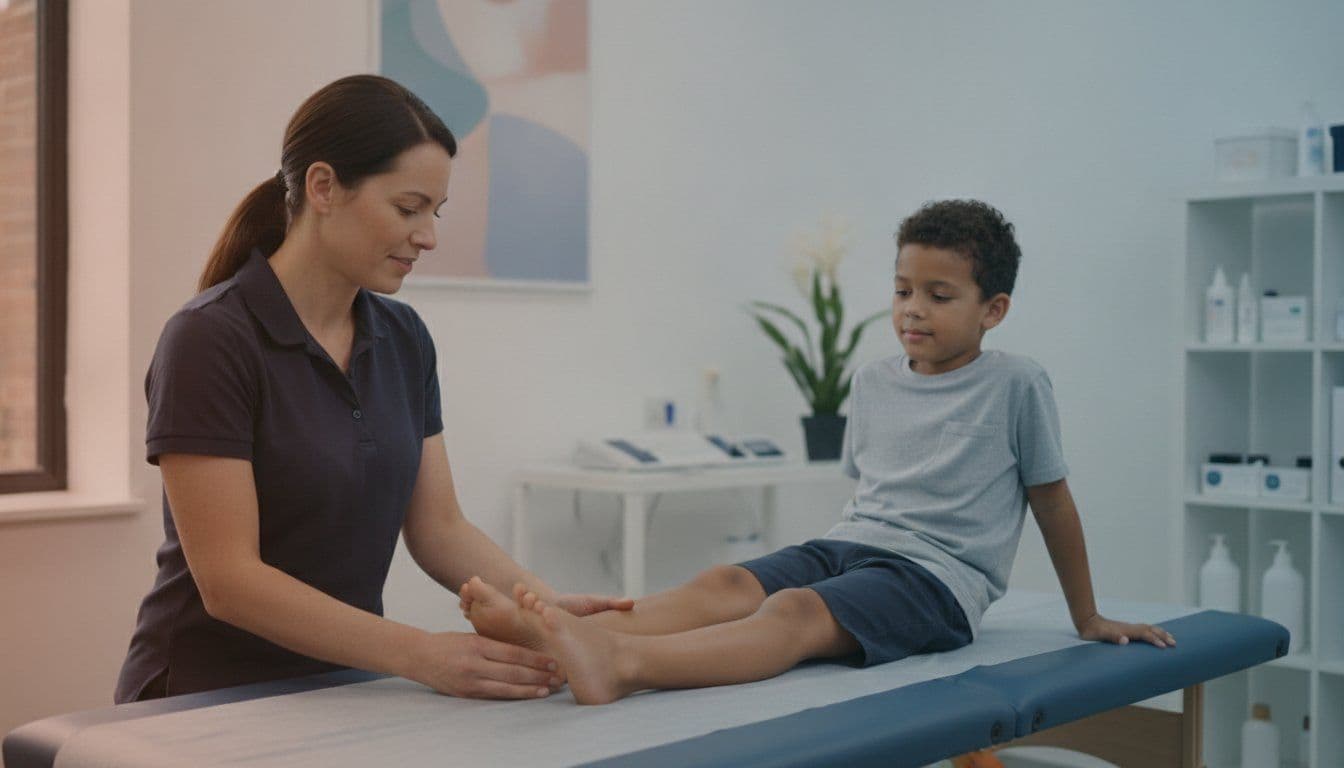
Our approach starts by addressing the immediate discomfort. We use manual therapy to calm those "angry" joints and release the tight, overworked muscles that are doing the job the ligaments should be doing. Many parents are surprised to find that sports massage is incredibly effective for hypermobile kids. It provides a "grounding" sensation that helps their brain reconnect with their body, often providing instant relief from that heavy, aching feeling in their limbs. We balance this immediate comfort with a long term plan for strength, ensuring your child feels better before they even leave our clinic.
Hands-On Treatment from Day One
We don't believe in making you wait for results. From your very first visit at our Milton Keynes, Northampton, or Towcester clinics, we get stuck in with soft tissue work and gentle joint mobilisations. This isn't just about relaxation. It’s about improving the quality of movement so that when we do start strengthening, the body is actually ready for it. By relieving the tension in "overworked" muscles, we create a window of opportunity where movement becomes easier and less scary for your child. They leave feeling lighter and more capable, not just burdened with a list of tasks.
Fixing Problems Efficiently
We know that you have a busy life and your child just wants to get back to football, dance, or climbing trees. Our goal is to fix the problem as efficiently as possible rather than dragging treatment out over months. Managing hypermobility in children doesn't have to mean a two hour daily workout. We create bespoke plans that fit into your family's actual schedule, focusing on high impact movements that build stability fast. As a family run business, we value your time and your money, providing clear plans that deliver real results without the fluff.
Practical Advice for Managing Hypermobility at Home and School
Managing hypermobility in children isn't just about what happens in our clinics in Milton Keynes, Northampton, or Towcester. It’s about the small, daily adjustments that stop the "wear and tear" before it starts. Let's start with shoes. Those flat, canvas "fashion" trainers might be the height of cool, but they are often the secret culprit behind those evening leg aches. Without a supportive arch and a firm heel, your child’s ankles will roll inwards, forcing their knees and hips to overcompensate. Switching to a structured trainer with good cushioning can be a total game-changer for daily comfort.
Another essential tool is the "Pacing" Principle. Hypermobile kids often fall into a "boom and bust" cycle. They feel fantastic on sports day, run themselves into the ground, and then spend the next three days completely wiped out with joint pain. We want to aim for a steady level of activity. Encourage them to take short, frequent breaks before they feel exhausted. Even schoolwork needs a rethink. If your child’s finger joints collapse when they write, try using chunky pens or rubber grips. It reduces the "death grip" they use to stay steady and stops their hands from cramping up during long lessons.
Don't forget the school bag. Carrying a heavy rucksack on one shoulder is a recipe for disaster for a hypermobile spine. Ensure they use both straps and keep the load as central as possible. These small tweaks reduce the constant micro-stress on their connective tissue, allowing their muscles to focus on movement rather than just survival.
When to Seek Professional Help
While home tweaks help, there are times when you need an expert eye. If your child is waking up in pain more than twice a week, it’s a sign their muscles aren't recovering properly. You should also watch for them "opting out" of activities they used to love, like football or dance, because they’ve started to associate movement with discomfort. If you are worried about their posture or notice they walk with their feet turned significantly inwards, it’s time to book a pediatric physiotherapy assessment to get a clear, hands-on plan in place.
Actionable Tips for PE and Sports
Warm-ups are absolutely non-negotiable for hypermobile joints. They prime the muscles to take the load so the ligaments don't have to. In the gym or at home, focus on "closed chain" movements where the feet stay firmly on the floor, such as squats or lunges. These are far safer and more effective for building stability than long, passive stretches. When talking to teachers, explain that hypermobility isn't a fragility, it’s just a need for different support. A quick chat can ensure they aren't forced into deep, static stretches that might actually overstretch their already loose joint capsules.
Pediatric Physiotherapy in Milton Keynes, Northampton, and Towcester
Parents across Northamptonshire and Buckinghamshire often come to us after hitting a brick wall with long NHS waiting lists. When your child is waking up in tears or struggling to keep up in PE, "waiting your turn" simply isn't an option. Our clinics in Milton Keynes, Northampton, and Towcester are specifically designed to be friendly and non-clinical. We want your child to feel like they are coming to see a mentor rather than a doctor. Managing hypermobility in children works best when the environment is relaxed and the child feels like an active partner in their own recovery.
Our team of experts actually listens to your concerns. We know you’ve probably been told it’s "just growing pains" more times than you can count. Managing hypermobility in children requires more than a generic approach, which is why our assessments are so thorough. When you come for an initial assessment, please bring your child’s favourite trainers. Seeing the wear patterns on their everyday shoes gives us a massive head start in understanding their gait and how their joints are coping with daily life. We want to see how they move in the real world, not just on a treatment couch.
A Plan for Every Child
Every child has different goals. One might be an elite gymnast needing high-level stability to protect their spine, while another just wants to walk to school without their ankles rolling. We provide a plan for every child that focuses on long term autonomy. We aren't just fixing a temporary ache. We are giving them the physical "brakes" they need for life. You can meet the specialists at our team page to see who will be guiding your child’s progress through hands-on care and tailored stability work.
Getting Started Today
The best part is that you don't need a GP referral to access private pediatric physiotherapy with us. We believe in fixing problems efficiently, which means getting started as soon as you notice a struggle. We offer straightforward pricing and clear, results-driven plans that respect your family's time and budget. If you're ready to move from "wait and see" to a concrete plan of action, Book an appointment at our Milton Keynes, Northampton, or Towcester clinics today. Let’s get your child back to doing what they love with confidence and strength.
Time to Build Stronger, More Stable Joints
Your child's flexibility doesn't have to be a source of constant pain or frustration. As we have explored, managing hypermobility in children is about moving beyond those wobbly party tricks and building a foundation of real, functional stability. By focusing on the quality of movement and making smart adjustments to things like footwear and pacing, you can help them navigate school and sports without the usual fatigue or midnight aches.
At RED Physiotherapy, we don't believe in the "wait and see" approach. We provide hands-on treatment from your very first visit to settle uncomfortable joints and get your child moving with confidence again. You can avoid the frustration of long NHS wait times with fast, local appointments that offer evidence-based care tailored to your child's specific goals. Whether they want to excel in gymnastics or simply play in the park without tears, we are here to help them reach their full physical potential.
Ready to get started? Book a Pediatric Assessment in Milton Keynes, Northampton, or Towcester and let's help your child feel strong, stable, and ready for anything.
Frequently Asked Questions
Is hypermobility in children serious?
Hypermobility itself isn't a disease or a life threatening condition, but it can be serious for your child's quality of life if left unmanaged. While some kids are just "bendy" without any issues, others suffer from chronic pain, fatigue, and frequent injuries. Managing hypermobility in children is about preventing these symptoms from stopping them from being active. If your child is in pain, it's serious enough to warrant a professional look.
Can my child still do gymnastics or dance if they are hypermobile?
Absolutely, and they are often naturally very good at these activities because of their extra range of motion. The key is ensuring they have the muscle strength to control that flexibility. Without proper stability, they are at a higher risk of dislocations or ligament tears. We work with many young athletes to build the "internal brakes" they need to perform safely at a high level.
What is the best exercise for hypermobile children?
We always recommend "closed chain" exercises where the feet stay in contact with a solid surface, such as squats, lunges, and wall sits. These movements provide more feedback to the brain about where the body is in space, which helps improve coordination. Swimming is also fantastic because the water supports the joints while the muscles work hard. Avoid passive stretching, as their joints are already plenty loose.
Will my child grow out of hypermobility?
Most people naturally become a bit "stiffer" as they get older, which can help stabilise the joints over time. However, you shouldn't just wait for them to grow out of it if they are currently in pain. Proactive management ensures they don't develop bad movement habits or a fear of exercise that could last into adulthood. We focus on giving them the tools to manage their body for life.
How can I tell the difference between growing pains and hypermobility?
Growing pains usually happen at night and feel like a vague ache in the long bones of the legs. Hypermobility pain is typically sharper, occurs in the joints themselves, and is often worse after a busy day of running or sport. If the pain is accompanied by swelling, clicking joints, or frequent tripping, it’s likely linked to their joint laxity rather than just a growth spurt.
What should my child wear to a pediatric physiotherapy session?
Please bring them in comfortable clothes that allow them to move freely, such as shorts and a t-shirt. It’s also vital that you bring the trainers or shoes they wear most often. We need to see the wear patterns on the soles and check how their feet behave during a gait assessment. This helps us understand exactly how their movement is affecting their joint alignment.
How many sessions will my child need to see results?
Every child is unique, but we aim to see a noticeable improvement in pain and stability within a few sessions. We don't believe in dragging treatment out. After an initial assessment, we’ll give you a clear plan of action. Some children only need a few sessions to get on the right track, while others with more complex needs might benefit from a longer period of support.
Does insurance cover pediatric physiotherapy for hypermobility?
Yes, most major private health insurance providers cover pediatric physiotherapy as long as it is for a clinical condition causing pain or dysfunction. We recommend checking with your specific provider before your first visit to confirm your level of cover. We are registered with all the big names and can provide the necessary receipts or paperwork to make your claim straightforward.
Focus Keywords: managing hypermobility in children, pediatric physiotherapy, joint hypermobility, Beighton score, hypermobility treatment Milton Keynes, hypermobility treatment Northampton, hypermobility treatment Towcester, gait assessment.
Tags:
About the Author
Red Physiotherapy Team
Content Team
Health and wellness content from the RED Physiotherapy team.