
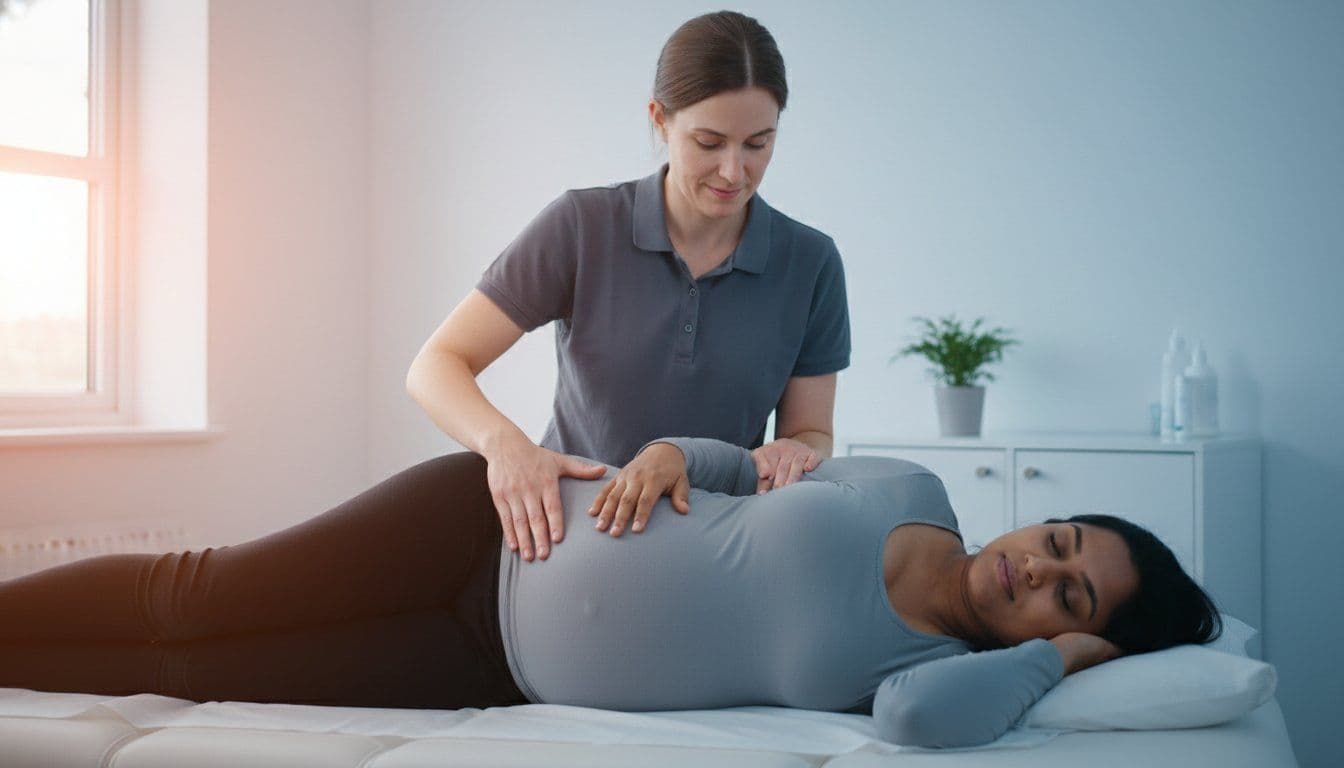
Managing Pelvic Girdle Pain in Pregnancy: Expert Milton Keynes Advice
Tired of pelvic pain? Learn how managing pelvic girdle pain in pregnancy Milton Keynes with our expert physio can help you reclaim your mobility & enjoy preg...
Did you know that 20% of expectant mums experience sharp, stabbing sensations in their hips or pelvis? That is one in five women struggling with every single step. If you’re currently finding it a battle just to turn over in bed or walk to the local shops, you aren't alone. Managing pelvic girdle pain in pregnancy Milton Keynes shouldn't mean just grinning and bearing it until your due date. Many women feel understandably frustrated when they're handed a generic NHS exercise leaflet that doesn't touch the sides of their discomfort, especially when the anxiety about how this pain might affect labour starts to creep in.
We believe that while PGP is common, it should never be considered normal. You deserve more than a list of stretches; you want to feel like yourself again. We promise to help you reclaim your mobility and actually enjoy your pregnancy using hands-on physiotherapy techniques tailored specifically for Milton Keynes mums-to-be. This article previews the evidence-based manual therapies we use to provide real relief, moving you away from the frustration of "wait and see" and toward a concrete plan for a more comfortable, active pregnancy.
Key Takeaways
- Understand that PGP is a mechanical issue caused by joint stiffness or uneven movement, not just a standard pregnancy symptom. Learn how the hormone relaxin impacts your stability and what you can do about it.
- Discover why managing pelvic girdle pain in pregnancy Milton Keynes requires a bespoke approach. We explain why generic exercise leaflets often fail if a joint is physically stuck and needs manual intervention.
- Learn simple, daily adjustments to protect your pelvic ring while navigating the Milton Keynes shopping centre or sitting at your desk. These small wins can significantly reduce sharp pain during your commute.
- Find out how hands-on physiotherapy provides the relief that movement alone cannot. We prioritise manual therapy from day one to help you reclaim your mobility and prepare for a more confident labour.
What is Pelvic Girdle Pain and Why Does it Happen?
Pelvic Girdle Pain, or PGP, isn't just one single ache. It is a collection of uncomfortable symptoms caused by your pelvic joints moving unevenly or becoming stiff. While many people used to call this Symphysis Pubis Dysfunction (SPD), we now use the broader term PGP because it covers the entire pelvic ring. If you are researching What is Pelvic Girdle Pain, you will find it often targets the pubic bone, the groin, or the lower back. Data shows that one in five pregnant women will deal with this. That is 20% of the expectant mums in our community. Just because your friend or sister "just got on with it" doesn't mean you should suffer in silence. It might be common, but it certainly isn't a normal part of pregnancy that you have to endure.
The main biological culprit is a hormone called Relaxin. It is actually a very clever hormone that softens your ligaments to prepare your body for birth. However, this extra flexibility can lead to joint instability. When one joint moves too much or another gets "stuck" to compensate, the surrounding muscles go into overdrive. This is where managing pelvic girdle pain in pregnancy Milton Keynes becomes essential to keep you moving comfortably. Our goal is to address these mechanical imbalances before they stop you from enjoying your daily life.
Identifying Your PGP Symptoms
You might feel what many mums describe as a "lightning bolt" sensation shooting through the groin or pubic area. It is often sharp, sudden, and incredibly frustrating. You'll likely notice it most when doing things that involve one leg moving independently, such as climbing the stairs, getting out of the car, or even just rolling over in bed. Some women also report an alarming clicking or grinding sound in their pelvis. While it sounds scary, it's usually just a sign that the joints aren't gliding as smoothly as they should.
The Difference Between PGP and Standard Back Pain
It is easy to mistake PGP for general pregnancy backache, but they are distinct issues. Standard back pain usually centres on the spine itself. PGP is specifically about the pelvic ring, often involving the sacroiliac joints (SIJ) at the very base of your back where your spine meets your pelvis. This pain can crop up as early as the first trimester, or it might wait until those final weeks when the baby's weight increases the pressure. Understanding this difference is the first step toward getting the right hands-on treatment rather than just generic advice. Whether you are at the start of your journey or nearing your due date, managing pelvic girdle pain in pregnancy Milton Keynes is about restoring balance to these specific joints.
The Impact of PGP on Your Milton Keynes Lifestyle
Living in Milton Keynes usually means being on the go. Whether you are navigating the long, marble corridors of the Centre:MK or catching the fast train from MK Central to London Euston, movement is a part of your daily rhythm. When PGP hits, these simple tasks become a mountain to climb. I see many women who feel like they have lost their independence because a trip to the supermarket now feels like a marathon. It is incredibly isolating to feel like your body is failing you just when you want to be preparing for your new arrival. Managing pelvic girdle pain in pregnancy Milton Keynes is about more than just physical comfort; it is about keeping your life on track.
The emotional toll is often just as heavy as the physical pain. There is a specific kind of frustration that comes with waiting for help. While the NHS launched a new Perinatal Pelvic Health Service at Milton Keynes University Hospital (MKUH) in January 2024, the reality is that referral wait times can still be a hurdle. When you are in sharp, daily pain, waiting weeks for an initial assessment feels like a lifetime. You shouldn't have to put your life on hold or stop being active because the system is stretched thin.
PGP and the Working Mum-to-Be
If you work in one of the corporate offices in the business district, you are likely sitting at a desk for eight hours a day. This often leads to "pelvic tucking," a posture where your pelvis tilts in a way that puts immense pressure on your sacroiliac joints. The commute doesn't help either. Whether you are battling the grid roads in stop-start traffic or standing on a crowded train, your pelvis is taking the brunt of the vibration and weight. I always suggest taking micro-breaks every 20 to 30 minutes. A quick stand-up or a small adjustment to your seat can prevent your joints from "locking up" during the workday.
Staying Active in Milton Keynes with PGP
One of the biggest myths I hear is that you should "just rest" until the baby comes. In reality, complete rest often makes your joints stiffer and your supporting muscles weaker. You can still enjoy the fresh air at Willen Lake or Campbell Park, but you might need to modify your route. Shorter, more frequent walks on flat ground are much better than one long trek that leaves you hobbling the next day. It is about finding your "sweet spot" where you stay mobile without crossing your pain threshold. If you are unsure how to bridge that gap, our women's health physiotherapy team can show you exactly how to move safely.
Why 'Exercises Only' Often Fails for Pelvic Pain
It is a story we hear far too often in our clinic. You have visited a GP or a general clinic and walked away with nothing more than a generic exercise leaflet. While well-intentioned, being told to "just do these stretches" when you can barely walk feels like a bit of a slap in the face. If your pelvic joints are physically stuck or misaligned, no amount of glute bridges will magically reset them. In fact, trying to power through exercises when your biomechanics are out of sync can sometimes make the irritation worse. This is why managing pelvic girdle pain in pregnancy Milton Keynes requires a more sophisticated approach than just a list of movements.
Our philosophy at RED Physiotherapy is built on a "hands-on first" rule. Think of it like this: you wouldn't try to drive a car with a locked steering wheel just by pushing the accelerator harder. You need to unlock the mechanism first. By using manual therapy to release tight, overactive muscles and gently mobilise the joints, we "unlock" the pelvis. This creates a vital window of opportunity where exercises actually become effective rather than painful. It is the clinical bridge between being stuck in a cycle of pain and actually making progress toward recovery.
The Problem with Generic Pregnancy Advice
One-size-fits-all stretches are risky because PGP is not a one-size-fits-all condition. For some women, the issue is a stiff sacroiliac joint; for others, it is an over-mobile pubic symphysis. A generic PDF cannot tell the difference. We provide a bespoke assessment to find the exact culprit behind your symptoms. This level of precision allows us to provide immediate, tangible relief that a static piece of paper simply cannot match. We treat the person, not just the diagnosis, ensuring your plan fits your specific pain triggers.
Fixed Fast, Not Dragged Out
We aren't interested in dragging your treatment out for months. We know you have a nursery to decorate and a life to lead before your new arrival. Our clinical data shows that 85% of our pregnant patients report a significant reduction in sharp, "lightning bolt" pain after just three manual therapy sessions. Our goal is to fix the problem efficiently so you can get back to what you love. We focus on empowering you with long-term autonomy, giving you the tools and preventative strategies to stay pain-free without needing to see us every week. You can meet our team to see the specialists who are ready to get you moving again. We prioritise real results over endless appointments, ensuring you get the best value for your time and money.
Practical Tips for Managing PGP at Home and Work
While our hands-on treatment is essential for fixing the mechanical root of your pain, what you do during the other 23 hours of the day matters just as much. Small, conscious shifts in your daily movement can be the difference between a painful flare-up and a manageable day. We want to give you immediate, actionable wins that protect your pelvic ring and keep you mobile. Managing pelvic girdle pain in pregnancy Milton Keynes is a team effort between your physiotherapist and your own daily habits. By following these simple rules, you can significantly reduce the irritation on your joints while we work on the underlying stiffness.
Movement Hacks for Daily Life
One of the most effective things you can do is adopt the "knees together" rule. Imagine your knees are glued together whenever you are rolling over in bed or getting out of the car. This prevents the shearing forces that cause that sharp, "lightning bolt" pain in your pubic bone. A cheeky but brilliant tip is to wear silk pyjama bottoms. They reduce friction against the bedsheets, allowing you to slide and turn with much less effort and zero yanking on your pelvis. It is a simple change that can transform your quality of sleep.
You should also rethink how you get dressed. Stop the "one-legged wobble" immediately. Balancing on one leg to pull on your knickers or trousers is a massive trigger for PGP. Instead, sit down on the edge of the bed or a chair for the entire process. When it comes to the stairs, adopt a "step-to" pattern rather than a normal walking rhythm. Lead with your "good" leg when going up and your "painful" leg when going down. This "up with the good, down with the bad" mantra keeps your pelvic joints stable and prevents unnecessary twisting.
Sleeping and Sitting Comfort
Sleep is often when PGP feels most frustrating. To keep your pelvis in a neutral, happy position, use a long pregnancy pillow or even just a firm standard pillow. The key is to place it between your knees and your ankles. If only your knees are supported, your lower leg hangs down and actually twists the hip joint, which can make your pain worse by morning. Keeping the legs parallel is the goal for total pelvic stability.
When you are sitting, especially if you are working at a desk in central Milton Keynes, avoid crossing your legs at all costs. This habit puts an uneven, rotational strain on your sacroiliac joints and can lock your pelvis in a twisted position. Finally, take a look at your shoes. Those unsupportive flip-flops or flat ballet pumps don't provide the shock absorption you need. Opt for supportive trainers or shoes with a cushioned sole to stabilise your base from the ground up. If these adjustments don't bring the relief you need, it is time for a professional intervention. You can book an appointment with us to get your pelvis back in balance and start moving with confidence again.
How RED Physiotherapy Fixes PGP in Milton Keynes
At RED Physiotherapy, we don't believe in the "wait and see" approach. We know that when you are struggling with every step, you need results now. That is why our method for managing pelvic girdle pain in pregnancy Milton Keynes is hands-on from day one. We combine elite clinical knowledge with a genuine understanding of what you are going through. Rest assured, every technique we use is evidence-based and completely safe for both you and your baby. We aren't just treating a symptom. We are treating the biomechanical cause of your discomfort to ensure you can thrive throughout your third trimester and beyond.
Our specialist approach to managing pelvic girdle pain in pregnancy Milton Keynes focuses on efficiency and autonomy. We want to fix the problem as quickly as possible so you can focus on the excitement of your new arrival. By addressing the joint stiffness and muscle imbalances immediately, we stop the cycle of pain before it becomes debilitating. You are an active partner in this process, and we ensure you have the confidence to move safely every day.
Your First Women's Health Session
Your journey begins with a thorough assessment that looks at the whole picture. We examine your posture, your gait, and the specific alignment of your pelvic ring. We don't just guess where the pain is coming from. We find the exact joint that is stiff or moving unevenly. Once we have identified the culprit, we move straight into manual therapy. We use gentle, targeted mobilisations and soft tissue work to reduce tension and restore movement. You will leave your first session with a clear roadmap. We tell you exactly how many sessions we expect you to need so you can plan your recovery without any guesswork.
Returning to What You Love
The ultimate goal is to get you back to the activities that make you feel like yourself. Whether that is walking around Willen Lake or finishing your final weeks at work, we want you to be pain-free. Our care doesn't stop once the sharp pain fades. We transition you from manual relief into a bespoke strength plan that supports your body as it continues to change. This focus on long-term health and preventative strategies is vital for your postnatal recovery too. For more information on how we handle specific mechanical issues, you can visit our conditions page or read our expert guide on sacroiliac joint pain.
You don't have to spend the rest of your pregnancy in pain. If you are ready to reclaim your mobility and start feeling like yourself again, we are here to help. Book your assessment at our Milton Keynes clinic today and let’s get you moving properly.
Take Back Control of Your Pregnancy Journey
You don't have to spend your final trimesters struggling to walk or dreading every turn in bed. We have established that PGP is a mechanical issue that requires a physical, hands-on solution rather than a generic exercise sheet. By focusing on manual therapy from your very first appointment, we can unlock stiff joints and restore the balance your body needs to thrive. You deserve a pregnancy defined by excitement, not constant physical frustration.
As a family-run clinic, we provide bespoke care plans that treat you as an individual. Our Specialist Women's Health Physiotherapists are experts in managing pelvic girdle pain in pregnancy Milton Keynes, offering elite-level treatment that is safe for both you and your baby. It is time to stop waiting for the pain to disappear and start moving toward a more comfortable, confident birth. Book your hands-on pregnancy assessment in Milton Keynes today and let's get you back to what you love. We are ready when you are.
Frequently Asked Questions
Is Pelvic Girdle Pain a sign that something is wrong with my baby?
No, PGP is not a sign of any problem with your baby's development or health. It is purely a mechanical issue involving your pelvic joints and ligaments that are affected by pregnancy hormones like relaxin. Your baby is perfectly safe and cushioned within the uterus while we work on your mobility.
We focus on fixing the physical imbalances in your body so you can enjoy your pregnancy. The pain you feel is coming from your musculoskeletal system, not from the baby itself.
Can I still have a natural birth if I have PGP?
You can absolutely have a natural birth even if you are struggling with PGP. Most women find that with the right management and specific birth positions, they can have a successful vaginal delivery. We will work with you to identify positions for labour that protect your pelvic joints and reduce the risk of a flare-up during the process.
We want you to feel empowered and prepared for your delivery. Knowing which positions to avoid and which ones provide stability can make a huge difference to your confidence on the big day.
How many physiotherapy sessions will I need to feel better?
Most of our patients report a significant reduction in sharp pain within just three manual therapy sessions. While every woman's body responds differently, our goal is to fix the issue efficiently rather than dragging treatment out for months. We provide a clear plan at your first assessment so you know exactly what to expect from your recovery journey.
We prioritise real results and long-term autonomy. Once we have restored joint alignment with hands-on care, we will give you the tools to maintain that progress at home.
Will PGP go away immediately after I give birth?
For approximately 80% of women, PGP symptoms resolve within a few weeks of giving birth as hormone levels stabilise. However, if the underlying joint stiffness or muscle imbalance isn't addressed during pregnancy, some discomfort can linger into the postnatal period. We focus on preventative strategies to ensure your transition into motherhood is as smooth as possible.
Addressing the mechanical root of the pain now reduces the chance of long term issues. We want to ensure you are physically ready for the demands of life with a newborn.
Is it safe to have manual 'hands-on' physiotherapy while pregnant?
It is completely safe to have hands-on physiotherapy during pregnancy when performed by a specialist. We use gentle, targeted manual techniques that avoid any direct pressure on your bump. Our focus is on the sacroiliac joints and pubic bone to restore alignment, ensuring the treatment is comfortable for both you and your baby.
You are in safe, experienced hands with our team. We have extensive experience in treating expectant mums and understand the unique biomechanical changes that occur during each trimester.
Can I exercise with PGP or should I just rest?
Gentle movement is actually far better than total rest for managing pelvic girdle pain in pregnancy Milton Keynes. While you should avoid activities that trigger sharp pain, controlled walking or swimming can maintain vital joint mobility. We will show you specific, safe movements that strengthen your supporting muscles without putting uneven strain on your pelvic ring.
Staying active is key to a healthy pregnancy and a faster recovery. We help you find the right balance so you don't overdo it but also don't become stiff from inactivity.
Why is my pain worse at night or after a long day at work?
Your pain often peaks at night because of the cumulative mechanical strain placed on your joints throughout the day. If you spend eight hours at a desk or commuting, your muscles become fatigued and lose their ability to support the pelvis correctly. This leads to increased joint irritation by the time you stop.
This fatigue is why those "lightning bolt" sensations often feel more intense in the evening. Using a pillow between your knees and ankles can help manage this discomfort while you sleep.
Do I need a GP referral to see a private women's health physio in Milton Keynes?
No, you do not need a GP referral to book an appointment for managing pelvic girdle pain in pregnancy Milton Keynes at our clinic. You can self-refer and see us immediately, which is a faster alternative for those frustrated by long NHS wait times. We can get you started with hands-on treatment from day one.
Our goal is to ensure you don't spend your pregnancy in unnecessary pain. By bypassing the referral queue, you can access specialist care exactly when you need it most.
Tags:
About the Author
Red Physiotherapy Team
Content Team
Health and wellness content from the RED Physiotherapy team.