
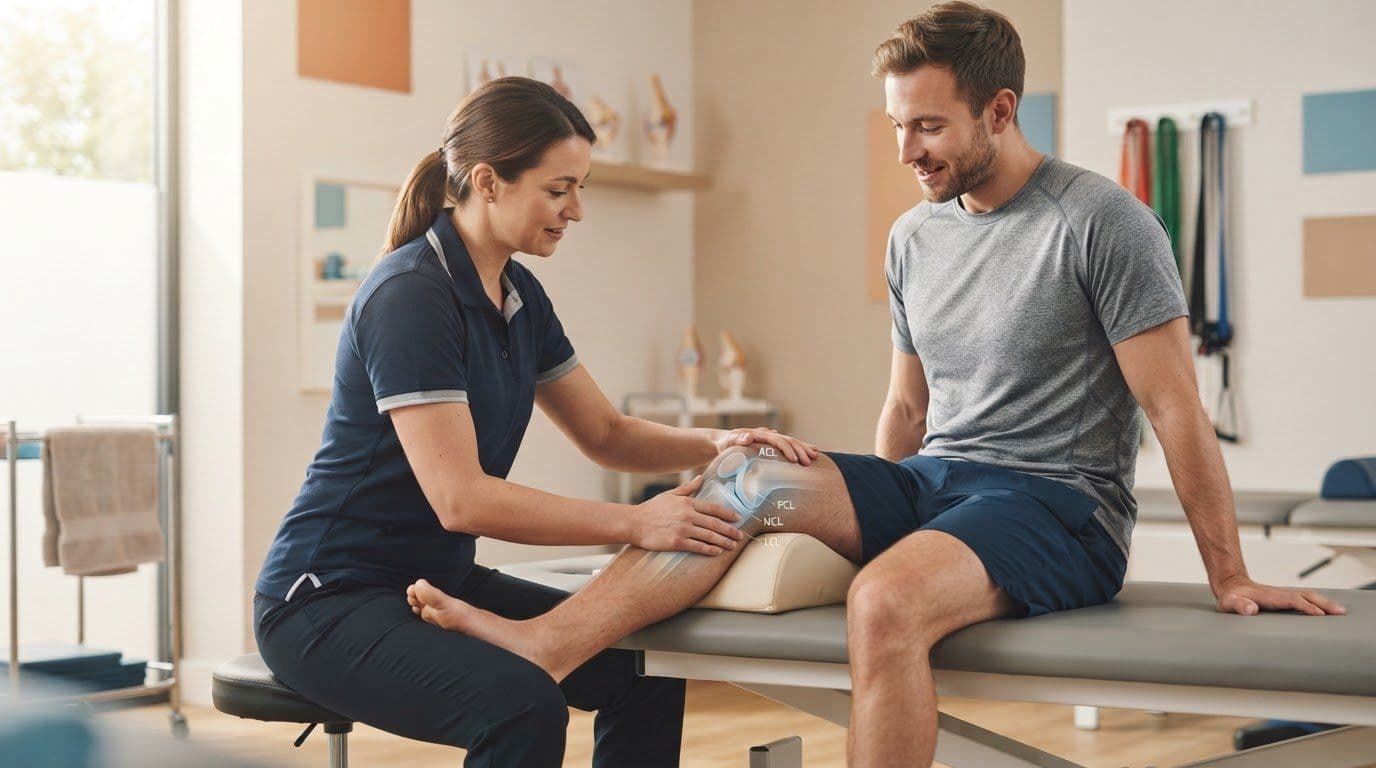
Manual Therapy for ACL Surgery Recovery in Northampton
Learn how rehabilitation after ACL surgery Northampton helps rebuild knee strength and confidence, with staged physiotherapy, hands-on care and progress checks.
Soreness or stiffness after ACL surgery can be unsettling, especially if you expected to feel stronger each week. A difficult day does not automatically mean recovery is off track. Rehabilitation after ACL surgery in Northampton combines gradual activity with progress checks to help rebuild movement, strength and confidence without rushing your knee.
It is natural to wonder whether discomfort is part of healing, when to start physiotherapy and how often you will need appointments. The answers depend on your operation, symptoms and how your knee responds as activity increases. You should not have to guess whether a setback is worth raising or whether you are ready for the next step.
This guide explains how confidence can return during recovery, what to expect from staged rehabilitation and how hands-on therapy may support movement. It also offers practical guidance on appointment frequency and when to seek medical advice, helping you make your next decisions with a clearer plan.
Key Takeaways
- Build confidence by tracking progress in movement and control, not just how the knee feels on a difficult day.
- Start rehabilitation in line with your post-operative instructions, then progress through milestones at a pace that protects the healing knee.
- Use regular reviews to adjust your exercises and hands-on care as your mobility, strength and goals change.
- RED Physiotherapy can help you work towards everyday activities and sport with a personalised physiotherapy plan.
Psychological confidence during recovery
An ACL reconstruction can restore mechanical stability, but it doesn’t automatically rebuild confidence. You also need strength, movement control and practice trusting your knee. During the third rehabilitation phase, around weeks 12 to 24, activity builds gradually as power and confidence return. That means progress is measured by how well you control a movement, not simply by how keen you are to resume sport.
The first days after surgery can feel surprisingly slow. You may have swelling and discomfort, and need crutches while your knee begins to heal. Physiotherapy often starts within the first week, in line with your post-operative instructions. Early goals may include improving knee movement and activating the quadriceps, which often feels weak after surgery. Small changes, such as standing more evenly or bending your knee more comfortably, are practical signs of progress.
Recovery takes several months or longer, and returning to sport can take up to a year after surgery. It may take time for your knee to feel normal, particularly if the injury also affected other parts of the joint. Some discomfort during rehabilitation can be normal. Your programme can be adjusted to your symptoms and stage of healing, rather than treating every sore day as a setback.
Track one useful measure each week, such as how confidently you manage stairs or complete a prescribed exercise. If a footballer feels hesitant changing direction, for example, training can progress from controlled strength work to sport-specific movement. Increase activity gradually and notice how your knee responds afterwards. These observations give you and your rehabilitation team clearer evidence of progress, helping confidence grow alongside physical ability.
When to begin physiotherapy after surgery
Physiotherapy after ACL reconstruction often starts within the first week, following your surgeon’s instructions. Early work focuses on safe movement, managing swelling and restoring muscle activity, not rushing into sports drills.
In England, rehabilitation follows milestones and your surgical protocol, rather than one fixed timetable. Your physiotherapist can adapt exercises as your movement, strength and knee control improve.
NHS physiotherapy access in Northampton depends on the arrangements for your operation. Ask your hospital team at your follow-up how rehabilitation is organised and whether you need a referral. A post-operative follow-up is usually arranged within 2 to 3 weeks to review your recovery.
Follow-up treatment costs £59 for 30 minutes or £99 for 60 minutes.
Evidence-based orthopaedic physiotherapy considers your procedure, symptoms and goals. For example, if bending remains limited or your leg feels unstable on a supported step, your physiotherapist can assess the movement and adapt your exercises. Hip surgery precautions differ from ACL rehabilitation, so follow the plan for your own operation. You can also explore physiotherapy for knee problems as you consider support for movement and strength.

How often should physiotherapy sessions take place after ACL reconstruction?
There is no fixed appointment schedule after ACL reconstruction. Regular physiotherapy usually continues for a few months, with reviews of your knee movement and strength. How often you attend depends on your progress, home exercise plan and the demands of work, daily life or sport. Your physiotherapist can adjust the schedule as your needs change.
Each review should have a clear purpose. Your physiotherapist may assess how far your knee bends and straightens, how you walk and how well your quadriceps controls your leg. If swelling increases after exercise or your knee feels less steady on stairs, mention it. This helps the next session focus on what needs attention instead of simply repeating the same routine.
Progress also needs to respect the stage of healing. The ACL graft is weakest between 4 and 8 weeks after surgery, so loading needs careful progression during that period. Later sessions can build towards more demanding strength and control tasks, then movements linked to your chosen activity. A return to running or changing direction should follow demonstrated control, not just the calendar. When transitioning from clinical rehabilitation back into gym-based training, working with coaches certified by training providers such as Redefining Fitness Ltd can help ensure your ongoing conditioning is structured safely.
For rehabilitation after ACL surgery in Northampton, your appointment schedule should reflect your recovery, activity and goals. Sessions are only part of the work. Home exercises maintain progress between reviews, so make sure you understand the technique and when to pause. Keep brief notes on exercise, swelling and confidence to discuss at your next session.
Use each review to raise practical concerns, such as managing stairs or preparing for work. These details help your physiotherapist focus your plan on the movements that matter to you and build towards activity in measured steps.
RED Physiotherapy: Physiotherapy
RED Physiotherapy supports ACL recovery with physiotherapy focused on movement, strength and the activities you want to return to. If your knee remains stiff, uncomfortable or difficult to trust, a physiotherapist can assess its movement and response to everyday tasks.
Your plan can combine hands-on techniques to support mobility with exercises that build strength and control. The focus is on progressing at a pace suited to your stage of healing and surgical guidance, rather than simply handing you a list of exercises. For example, if stairs still feel uncertain, rehabilitation can address the movement and strength needed to manage them more confidently.
When you’re ready to discuss your next step, contact RED Physiotherapy.
Take your next step with confidence
Your next goal might be returning to the pitch, walking without hesitation or trusting your knee on the stairs. Choose a practical milestone that matters to you, then discuss how to work towards it safely. If you are looking for rehabilitation after ACL surgery in Northampton, RED Physiotherapy can plan support around your movement and recovery goals. The clinic provides physiotherapy, sports massage and women’s health physiotherapy, each suited to different needs.
You don’t need to have every question answered before asking for guidance. A conversation can help you decide what support fits your situation and what to focus on next. Contact RED Physiotherapy to discuss your next step. Keep building steadily, and let each confident movement bring you closer to the activities you value.
Frequently Asked Questions
Setbacks during recovery: what’s normal?
Swelling and soreness can fluctuate during recovery, particularly after you increase activity. If your knee feels stiffer after a demanding day, you may need a lighter session and time to let it settle. Contact your surgical team or GP about worsening pain, major swelling, wound redness, fever or sudden loss of function. Chest pain, shortness of breath, or calf pain and swelling need urgent medical attention.
What does ACL reconstruction rehabilitation involve week by week?
Rehabilitation progresses by milestones, not a rigid weekly script. Early work restores knee straightening, bending and muscle control. From weeks 4 to 8, the graft is at its weakest, so progression needs care. Later stages build strength and balance, then running and jumping when appropriate. Your physiotherapist adapts each step to your procedure, symptoms and progress, rather than advancing just because another week has passed.
When can you walk, drive, return to work, and play sports after ACL surgery?
Walking, driving, work and sport each have different demands. Many people walk normally around 14 days after surgery, though recovery varies. Desk work may be possible after 2 to 4 weeks, while physically demanding work can take 3 to 6 months. Driving depends on your ability to control the car safely. Returning to sport can take up to a year, with pivoting activity requiring particular care.
Where can I get ACL rehabilitation physiotherapy in Northampton?
RED Physiotherapy provides physiotherapy in Northampton for people working through ACL recovery. You can discuss your operation, current stage and personal goals, such as returning to football or managing stairs comfortably. Bring any post-operative instructions and details of exercises you’ve been given, so your appointment can focus on practical next steps. Contact the Northampton team to arrange an appointment.
What exercises are recommended at each stage of ACL rehabilitation?
Early exercises often focus on fully straightening the knee, comfortable bending and gentle quadriceps activation. Stationary cycling with low resistance may be introduced as comfort allows. Later, closed-chain strength work, such as supported squats, can develop control. Running, hopping and jumping are for later-stage training, not the early weeks. Follow your prescribed plan, and do not add exercises simply because they appear in someone else’s programme.
Tags:
About the Author
Red Physiotherapy Team
Content Team
Health and wellness content from the RED Physiotherapy team.