
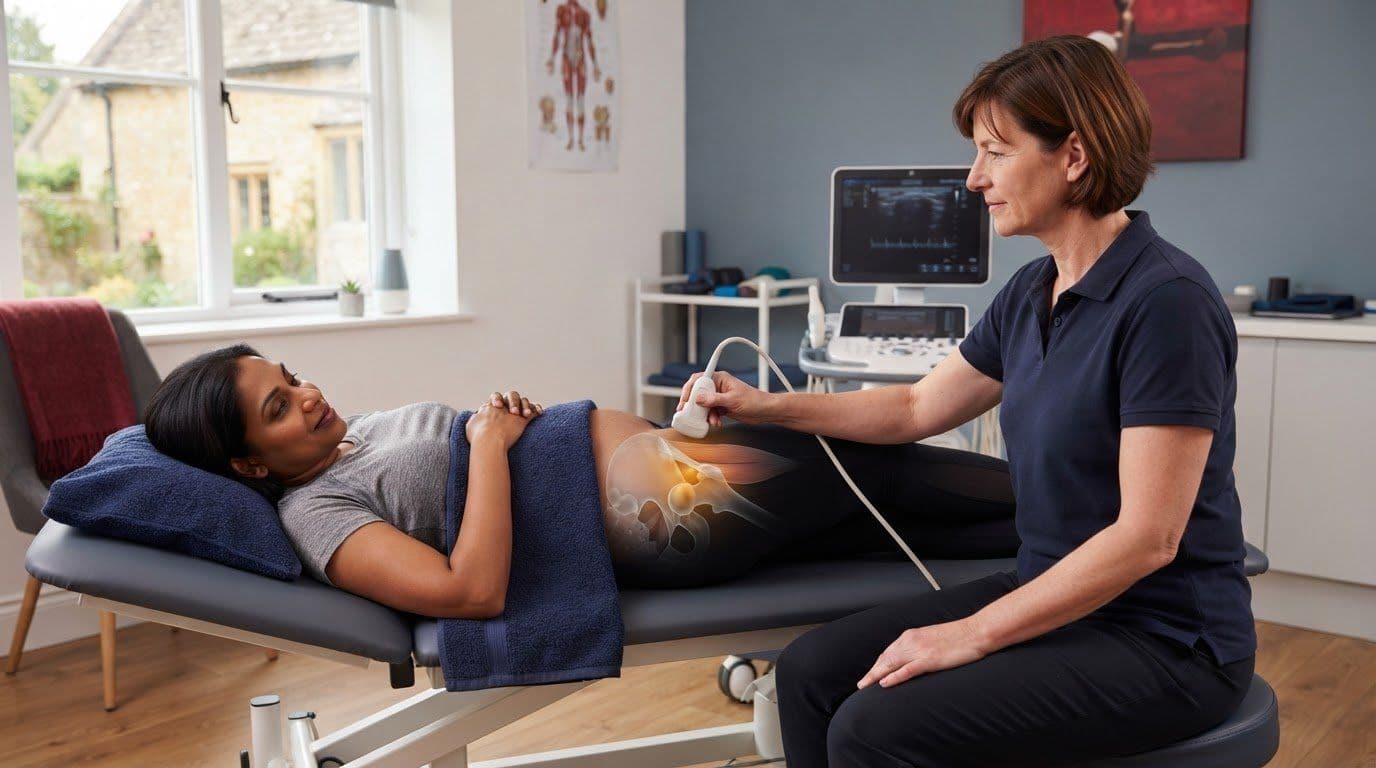
Musculoskeletal Ultrasound for Hip Bursitis in Towcester: What to Expect
Wondering if a scan will solve your hip pain? Learn how musculoskeletal ultrasound for hip bursitis Towcester works, what it shows, and your best next steps.
Could the sore spot on the outside of your hip be the bursa, a gluteal tendon or something else? If pain is disrupting your sleep, walking or exercise, it’s natural to want a clear answer. Musculoskeletal ultrasound for hip bursitis Towcester can add useful information, but a scan alone cannot identify every cause of hip pain or decide what care is right for you.
A helpful next step starts with your symptoms, relevant history and what you want to get back to. This article explains how ultrasound may fit into an assessment, what its limits are and how findings can be considered alongside your movement and goals. You’ll also learn what to note before discussing your options with RED Physiotherapy in Towcester, so you can make an informed choice about imaging rather than assuming you need a scan simply because your hip hurts.
Key Takeaways
- Learn why outer hip pain may involve more than the bursa, and what the term greater trochanteric pain syndrome means.
- See how musculoskeletal ultrasound for hip bursitis Towcester may contribute useful information without being the whole explanation.
- Know what to discuss during an assessment, including your symptoms, relevant history and the activities you want to get back to.
- Understand how scan findings can be considered alongside your movement and goals to shape a practical next step.
Could musculoskeletal ultrasound explain outer hip pain in Towcester?
It may add useful information, but ultrasound on its own cannot explain every cause of outer hip pain. A scan finding needs to make sense alongside your symptoms and a physical assessment. Musculoskeletal ultrasound for hip bursitis Towcester is one possible part of investigating your pain, not a diagnosis in itself.
The trochanteric bursa is a small fluid filled sac near the bony prominence on the outside of your hip. It helps reduce friction as nearby tissues move. “Bursitis” means irritation or inflammation of a bursa, but pain in this area can involve more than the bursa. Greater trochanteric pain syndrome describes a broader pattern of outer hip pain, which may involve nearby tendons as well. You can read a general overview of bursitis, but your own symptoms still need individual consideration.
Imagine a Towcester commuter who notices pain on the outside of their hip after walking from the car, then struggles to lie on that side at night. Those details help guide an assessment, but they do not confirm bursitis by themselves. The same goes for a scan: its findings need to fit the picture you describe and the examination.
What might ultrasound show around the outer hip?
Depending on the clinical question, ultrasound may help examine soft tissues around the outer hip, including the bursa and nearby gluteal tendons. The assessment should first establish whether imaging is likely to add useful information. Similar symptoms can have different contributors, so any finding needs to fit what you report and what the examination shows.
A scan finding is not automatically the whole diagnosis. Images need to be interpreted alongside your symptoms and examination. That balanced approach helps avoid treating a picture instead of the person.

What to expect from a hip ultrasound assessment in Towcester
A useful assessment starts with you, not the scan. You’ll explain where the pain is, what tends to bring it on and what you want to get back to, whether that’s sleeping comfortably, walking or exercising. Mention relevant health history and changes in your symptoms too. These details help shape the clinical question and whether imaging may add useful information.
Before your appointment, it can help to note when the pain began, which activities affect it and what you have changed as a result. Think about your main goal too, such as getting through a walk or sleeping more comfortably. You do not need to identify the painful structure yourself. Clear examples of what you can and cannot do are more useful than guessing at a diagnosis.
Your physiotherapist will discuss and carry out an assessment of your hip and movement. If ultrasound is relevant, it uses sound waves to create images of tissues beneath the skin. RED Physiotherapy provides musculoskeletal ultrasound for pain. The scan adds information to the assessment, rather than producing a picture that automatically dictates treatment.
Any relevant findings are considered alongside your history and movement. A scan may not settle every question, and some causes of hip pain may need a different kind of assessment. If the image and your symptoms do not seem to match, that matters. The next step should make sense for you, rather than being chosen simply because something appeared on a screen.
When is imaging useful, and when might it not settle the question?
Imaging may be useful when the assessment leaves a specific question that could affect your care. But it may not be needed to guide a sensible plan, and ultrasound cannot answer every question about the hip. Your physiotherapist will weigh the findings against how your symptoms behave and which movements bring them on. A scan is one source of information, not a complete explanation or a treatment plan by itself.
A common mistake is to focus on a scan result without asking how it relates to your pain and everyday activities. It is also reasonable to ask what question the scan is meant to answer and how the result might change the next step. Those questions keep the focus on your needs, rather than imaging for its own sake.
Discuss hip pain and musculoskeletal ultrasound with RED Physiotherapy in Towcester
Outer hip pain can make everyday routines feel like a negotiation, from getting comfortable in bed to managing a walk or a commute. At RED Physiotherapy, we take the time to understand what you’re experiencing, what affects it and what you want to do more comfortably. Your daily activities and relevant health history help shape evidence based care around your needs, rather than a one size fits all response.
RED Physiotherapy provides physiotherapy and musculoskeletal ultrasound for pain. A scan is not a treatment in itself, and it is not automatically needed for every sore hip. When it could add useful information, its role should be considered alongside your assessment. You can explore the clinic’s physiotherapy services to understand the wider support available.
Choose a next step that fits your symptoms and goals
An assessment gives you space to explain what’s difficult, ask questions and understand which options may be appropriate. You can discuss whether imaging may help clarify the picture, or whether another approach makes more sense. The aim is a clear, practical plan, not a scan for its own sake or a promise of a particular result.
RED Physiotherapy’s family run clinics serve Towcester, Milton Keynes and Northampton. If you’d like to discuss your hip pain and possible next steps, contact RED Physiotherapy in Towcester.
Take the next step towards understanding your hip pain
You do not need to know exactly which structure is irritated before deciding what to do next. Notice which activities affect your hip, what eases it and how it influences your routine. That information can make a conversation about your symptoms more useful and help keep the focus on what matters to you.
RED Physiotherapy’s family run clinics serve Towcester, Milton Keynes and Northampton, with evidence based care centred on your needs and goals. A clearer understanding can help you make a considered choice about support and move towards the activities you value with greater confidence.
Frequently Asked Questions
Can an ultrasound scan confirm that my outer hip pain is bursitis?
Not on its own. An ultrasound may show changes around the outer hip, but those findings need to fit your symptoms and physical assessment. For example, if a scan notes a tissue change but your pain pattern points elsewhere, the clinician should consider that mismatch rather than assume the image explains everything. Musculoskeletal ultrasound for hip bursitis Towcester can inform the assessment, not replace it.
Is musculoskeletal ultrasound painful?
The scan itself is generally not painful, but pressure from the probe may feel uncomfortable if it passes over a particularly tender area. Tell the clinician if that happens so they can respond appropriately. If you’re worried, mention it before the assessment begins. You can also ask what they’re doing as they go, so you know what to expect rather than having to guess.
Can I keep walking or exercising if I think I have hip bursitis?
Often, you can keep moving, but adjust activities that noticeably aggravate your pain. If a walk leaves you more sore afterwards or symptoms build during exercise, shorten it, ease the pace or choose a gentler activity for now. Avoid pushing through a clear flare. If pain is worsening, affecting daily life or not settling with sensible adjustments, arrange an assessment for personalised advice.
Tags:
About the Author
Red Physiotherapy Team
Content Team
Health and wellness content from the RED Physiotherapy team.