
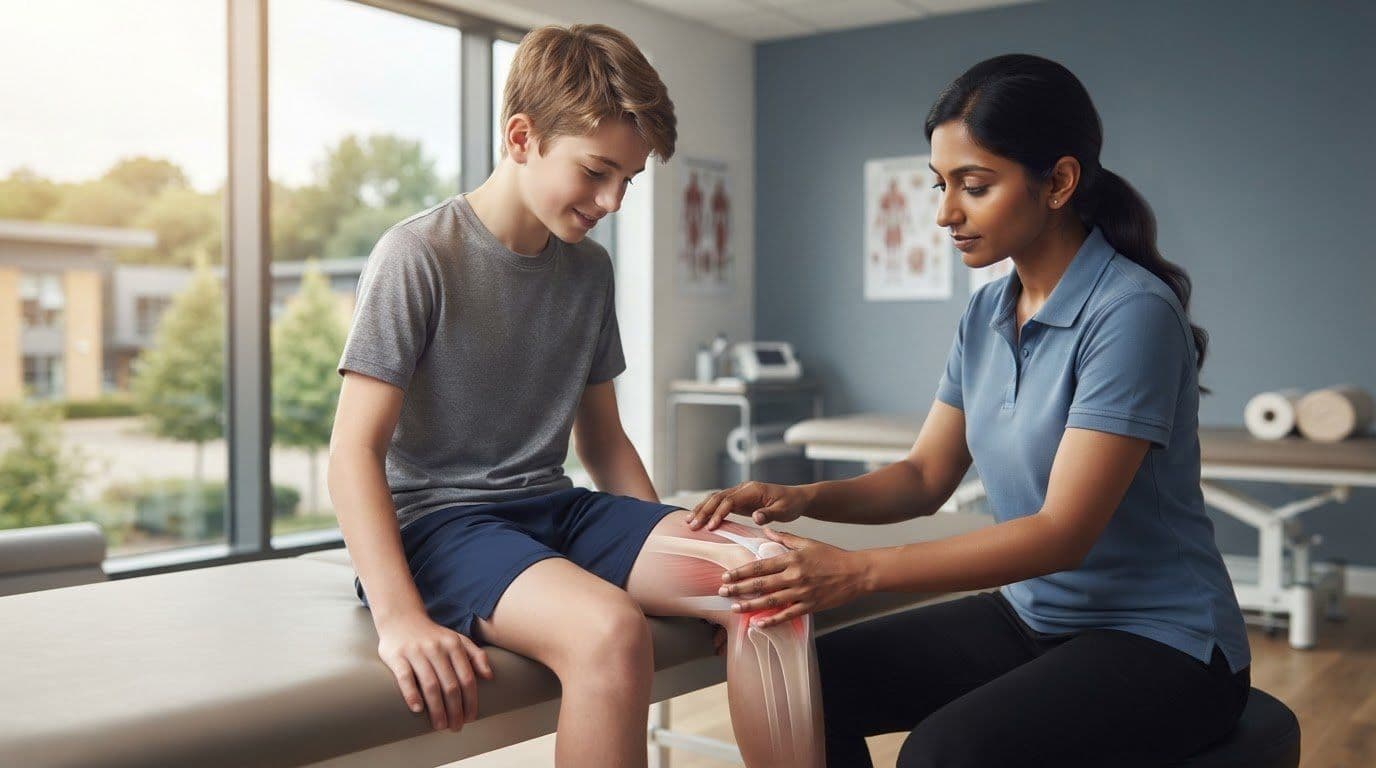
Osgood-Schlatter Disease Treatment Northampton: Expert Hands-On Relief for Young Athletes
Need Osgood-Schlatter disease treatment Northampton? Discover expert hands-on physio to keep your young athlete playing sports without months of total rest.
Does your active teenager really have to sit on the bench for months just to let their knees heal? Seeing your child limp off the pitch or struggle with the stairs at home is stressful, especially when standard advice simply tells them to stop playing. When seeking effective Osgood-Schlatter disease treatment Northampton parents are often relieved to learn that pulling their child out of sport completely is rarely necessary. In reality, total rest can decondition the surrounding muscles and delay genuine recovery.
In this guide, you will discover how hands-on paediatric physiotherapy resolves adolescent knee pain without forcing your child to abandon their favourite sports. We will explore what causes that tender bump below the joint, how structured load management protects growing bones, and the exact steps to keep your young athlete playing safely with confidence.
Key Takeaways
- Understand why total rest rarely resolves adolescent knee discomfort, and how smart movement protects growing bones during rapid growth spurts.
- Discover how dedicated Osgood-Schlatter disease treatment Northampton physiotherapists deliver targeted hands-on relief to ease quadriceps tension from day one.
- Explore a four-stage load management roadmap that keeps your young athlete safely involved in their favourite sports while building joint resilience.
- Learn how active paediatric coaching and personalised rehabilitation replace generic advice sheets with clear, lasting results.
Understanding Osgood-Schlatter Disease and Why Rest Alone Rarely Works
Clinically classified as traction apophysitis, Osgood-Schlatter disease occurs at the tibial tuberosity, the growing bony attachment situated just below the kneecap. During a rapid adolescent growth spurt, the powerful patellar tendon repeatedly pulls against this immature bone. That repetitive traction creates micro-trauma, visible swelling, and a tender bump. Many parents are initially advised to keep their child completely rested until symptoms settle. However, shutting down all physical activity often causes more harm than good.
Total immobilisation causes the quadriceps, hamstrings, and calf muscles to decondition rapidly. The moment your child steps back onto the pitch after weeks on the sofa, those weakened tissues cannot absorb standard impact forces, causing knee pain to return immediately.
The Mechanics Behind Knee Pain in Active Young Athletes
Adolescent bones frequently grow faster than muscular soft tissue can lengthen. This creates significant tension across the patellar tendon, especially in running and jumping sports like football, rugby, and athletics. When searching for reliable Osgood-Schlatter disease treatment Northampton parents quickly realise that passive rest is not a long term solution. Instead, our clinic uses targeted paediatric physiotherapy to relieve immediate muscular tightness, manage daily training loads, and keep young athletes active without risking growth-plate health.
Effective Treatment Strategies to Keep Your Child Active and Pain-Free
Hands-on clinical care forms the foundation of our approach. When delivering Osgood-Schlatter disease treatment Northampton families trust, our therapists begin by releasing excessive muscular tension across the quadriceps and hip flexors using targeted soft tissue therapy. Calming this persistent tightness immediately reduces the mechanical pull exerted on the irritated tibial bump.
From there, we guide your young athlete through a clear four stage rehabilitation roadmap:
- Acute symptom calming and manual tissue release
- Isometric quadriceps loading to build pain-free tendon tolerance
- Dynamic strengthening targeting hip abductors, hamstrings, and calves
- Sport-specific conditioning and graded return to full match play
Load Management Combined with Targeted Rehabilitation
Instead of benching young athletes, smart load management modifies their weekly training volume. If your child plays five days a week across school and club fixtures, we help you trim back the highest impact sessions temporarily while keeping them active.
We introduce isometric knee extensions and glute stability work early in the process. Static contractions allow the tendon to bear weight safely without joint movement, dampening pain sensitivity while maintaining muscle bulk. Strengthening the surrounding kinetic chain ensures running forces are shared evenly across the hips and calves rather than concentrated directly below the kneecap. If you want a structured plan for your young athlete, getting specialised support for adolescent knee pain protects their growing joints and keeps them moving with confidence.

What to Expect from Private Physiotherapy Treatment in Northampton
Stepping into a clinic shouldn't feel intimidating for a teenager or overwhelming for a worried parent. While NHS referrals frequently involve lengthy waiting lists only to result in a generic sheet of home exercises, private care takes a completely different path. We provide active, hands-on treatment from the very first session. Our family-run team works directly with your child on the treatment table, releasing restricted tissues and demonstrating proper exercise technique so they feel supported at every step. We focus on fixing the root cause promptly rather than keeping you locked into endless appointments.
Your First Appointment at Our Northampton Clinic
During an initial consultation for Osgood-Schlatter disease treatment Northampton families receive a comprehensive biomechanical evaluation. We look well beyond the tender bump, analysing running gait, pelvis and hip stability, and quadriceps flexibility to understand the exact forces acting on the knee joint.
Just as importantly, we provide honest, transparent advice about school PE and club sports. Your child will leave knowing precisely what activities they can continue safely, removing the fear of doing further damage. If adolescent knee discomfort is holding your young athlete back from the sports they love, contact our team today to book an assessment and get a clear roadmap forward.
Keep Your Young Athlete Playing with Confidence
Adolescent knee pain does not have to sideline your child from the sports they love. With the right Osgood-Schlatter disease treatment Northampton parents can replace the frustrating cycle of complete rest and flare-ups with proactive, evidence-based recovery. Hands-on physiotherapy from day one eases stubborn quadriceps tension, while structured load management protects growing bones without demanding a complete halt to training.
At RED Physiotherapy, we never hand you a generic printed exercise sheet and send you on your way. Our family-run clinic combines specialised paediatric sports injury experience with honest care plans designed to resolve symptoms efficiently. We focus on fixing the root cause so your child can stay active, build resilience, and enjoy their sport. Book your child’s initial physiotherapy assessment today to give them the expert support they deserve.
Frequently Asked Questions
Can my child continue playing football or rugby with Osgood-Schlatter disease?
Yes, your child can usually continue playing football or rugby, provided their symptoms remain manageable and don't cause an altered running gait or limping. Rather than forcing complete withdrawal, we monitor knee discomfort on a simple scale during and after matches. Temporarily trimming match minutes or resting between high impact fixtures keeps them safely involved with their team.
How is private physiotherapy different from the NHS treatment route?
Private care provides prompt access without lengthy waiting lists and delivers direct, hands-on treatment from your very first appointment. When seeking Osgood-Schlatter disease treatment Northampton families often find public pathways rely heavily on self-guided exercise sheets. We deliver direct soft tissue work, movement coaching, and ongoing load guidance tailored to your child's specific club and school schedule.
Does the painful bump below the knee ever go away completely?
The pain, tenderness, and swelling will completely resolve once the growth plate fuses, but the bony prominence below the kneecap often remains into adulthood. This bump is simply extra bone created in response to tendon traction during rapid growth spurts. While the prominence itself is permanent and harmless, proper rehabilitation ensures it becomes completely pain-free during sport and kneeling.
How many physiotherapy sessions does a teenager typically need for recovery?
Most young athletes experience significant improvements in joint comfort and movement control within four to six clinical sessions. Every case varies based on growth rates, muscular tightness, and sports commitments. Our focus is always on building long term autonomy, equipping parents and young athletes with clear loading strategies so they don't require endless appointments.

Tags:
About the Author
Red Physiotherapy Team
Content Team
Health and wellness content from the RED Physiotherapy team.