
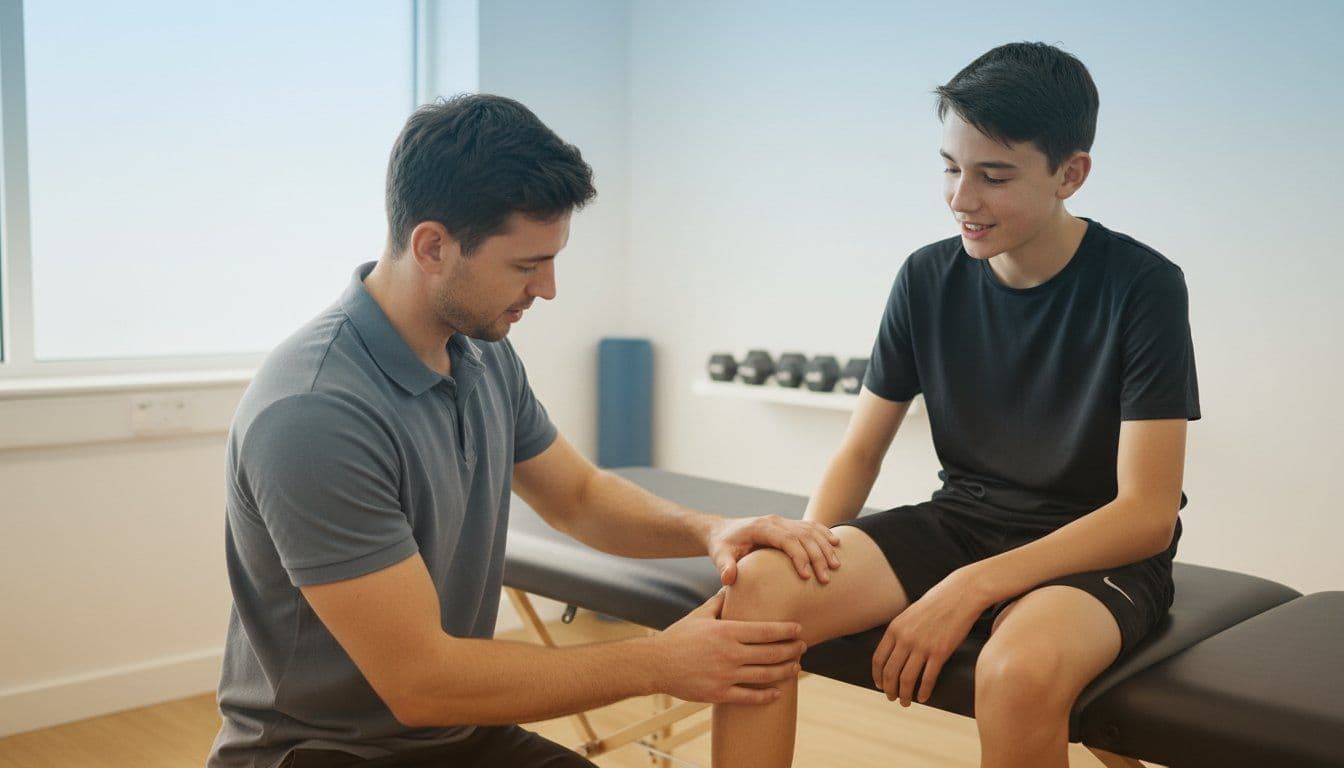
Osgood-Schlatter Treatment in Towcester: Expert Care for Active Kids
Effective Osgood-Schlatter treatment in Towcester for young athletes. Ditch the 'rest it' advice for hands-on physio that provides fast pain relief & a safe ...
Imagine your Saturday morning. Usually, you're on the touchline in Towcester, coffee in hand, watching your child fly down the wing. Instead, you're at home watching them limp across the kitchen, frustrated because a "wait and see" approach isn't getting them back on the pitch. It's heartbreaking to see your budding athlete stuck on the sidelines while their teammates continue to play. If you're looking for effective Osgood-Schlatter treatment Towcester parents can rely on, you've likely realized that waiting months for an NHS appointment often means missing the best parts of the season.
We agree that "just rest it" is probably the most annoying advice a parent can hear. You want a plan that actually works, and you want it now. This article will show you how hands-on physiotherapy can provide pain relief from day one and get your child back to football or rugby safely. We'll explore the balance between activity and recovery, giving you the confidence to help your child thrive without the guesswork or the usual exercise only fluff. It's time to move from the sidelines back into the game with a clear, professional plan of action.
Key Takeaways
- Learn why that painful bump below the knee is a specific overuse injury and how to identify it before it limits your child's movement.
- Discover why the traditional "wait and see" advice is outdated and how proactive care prevents long term issues like permanent bony protrusions.
- Understand how our hands-on Osgood-Schlatter treatment Towcester provides immediate relief through professional therapy rather than just a sheet of exercises.
- Get a clear framework for load management so your young athlete can stay involved in football or rugby without making the injury worse.
- Shift the focus from temporary fixes to building a resilient knee joint, ensuring your child understands their body for a lifetime of sport.
Understanding Osgood-Schlatter Disease and Knee Pain in Active Adolescents
If you've noticed a painful, bony lump just below your teenager's kneecap, you aren't imagining things. This isn't just a bit of soreness they should "walk off" or ignore. It's a common overuse injury known as Osgood-Schlatter disease. As a physiotherapist, I see this frequently in kids who are going through rapid growth spurts while staying highly active. The pain is very real, and the frustration you feel as a parent watching them struggle on the sidelines is completely valid. It's tough seeing a child who usually loves their sport suddenly dreading the next training session because of the ache in their knees.
What exactly is happening in your child’s knee?
The problem starts with a mismatch in growth. During puberty, bones often grow much faster than the muscles and tendons can keep up with. This creates a massive amount of tension. Think of the patellar tendon like a strong, tight rope and the tibial tuberosity, which is the bony bit at the top of the shin, as a fresh anchor point in soft concrete. When your child runs, kicks, or jumps, that "rope" pulls hard on the "anchor" point. Because the bone is still developing and relatively soft, this constant tugging causes irritation and significant inflammation. Eventually, the body tries to protect itself by growing extra bone in that spot, which is why that tell-tale bump appears. Getting the right Osgood-Schlatter treatment Towcester families can rely on means addressing this tension directly rather than just hoping it goes away on its own.
Why active kids in Towcester are more at risk
Towcester is a fantastic place for active families, but our local sports culture puts specific demands on young knees. Whether your child is sprinting down the pitch at Towcestrians RFC or playing for one of our local football clubs, they are performing repetitive, high-impact movements. Research shows that this condition affects nearly 20% of athletes during their rapid growth phase. This constant cycle of sprinting, sudden stopping, and jumping is the perfect recipe for an inflammatory response. We typically see this in boys aged 12 to 14 and girls aged 10 to 13. It isn't that they are doing anything wrong; it's simply that their training load is currently exceeding what their developing skeleton can handle. If you're looking for professional support, understanding these local physical demands is the first step toward a proper, hands-on recovery plan that works for your child's specific lifestyle.
Why "Wait and See" Is Not the Best Advice for Growing Pains
If you've been told your child's knee pain is just a phase they'll grow out of, you've been given a bit of a raw deal. It's the most common advice handed out in GP surgeries across the country, but it's often the most frustrating for a family to hear. Telling a sport-mad teenager to "wait and see" essentially tells them to sit on the sofa for months while their fitness drops and their teammates move on without them. Early intervention is the real key to a faster return to play. Seeking proactive Osgood-Schlatter treatment Towcester parents can trust ensures your child doesn't just survive their growth spurt, but thrives through it.
Debunking the "Growing Pains" myth
Osgood-Schlatter isn't a mysterious glitch; it's a mechanical issue. When we look at the management of Osgood-Schlatter Disease, we're really looking at how the body handles physical load. Resting for six months rarely solves the underlying problem because it doesn't address why the tension was there in the first place. As soon as they step back onto the pitch, that tight tendon starts pulling on the bone again, and the cycle restarts. Pain during activity is a signal that the load is too high, not a command to stop moving entirely. We help you manage that signal without the boredom of total rest.
The risk of chronic knee issues in adulthood
Ignoring the pain now can lead to permanent physical changes. That bony bump isn't just temporary swelling. It's a physical change to the shin bone that remains long after the growth spurt ends. If left unmanaged, untreated OSD can lead to chronic patellar tendonitis or awkward muscle imbalances that affect how they walk and run as adults. This is where professional paediatric physiotherapy becomes essential. We don't just hand over a sheet of stretches and send you on your way. We use hands-on techniques to relieve the immediate tension and create a plan that fixes the root cause. If you're tired of the "wait and see" approach, you can chat with our team about getting a real plan in place.
Let's not forget the mental side of things. For a 13-year-old, sport is their social life and their identity. Being stuck on the sidelines for an entire season is incredibly isolating and can seriously knock their confidence. Getting them back to the sports they love isn't just about their knees; it's about their happiness and long-term health. Proactive Osgood-Schlatter treatment Towcester athletes receive at our clinic focuses on getting them back to rugby or football safely and efficiently, rather than just waiting for the calendar to turn.
The RED Physiotherapy Approach to Osgood-Schlatter Treatment in Towcester
At RED Physiotherapy, we do things a bit differently. We know you're likely here because you're fed up with waiting for an appointment while your child's knee pain gets worse. Our Osgood-Schlatter treatment Towcester service is designed to bypass those long queues and get straight to the point. We don't believe in the "here's a PDF of exercises, see you in six weeks" approach. Instead, we focus on a hands-on, patient-first philosophy that starts the moment you walk through the door of our Towcester clinic at Lucas Bridge Business Park.
Our diagnostic process is thorough and efficient. We use clinical expertise to assess the joint, and if we need a closer look, we can utilize musculoskeletal ultrasound to see exactly how the tendon is reacting to the bone. This level of detail helps us create a plan that is unique to your child's specific growth stage and activity level. As a family-run business, we treat every young athlete like one of our own, ensuring they feel comfortable, heard, and motivated to get back to their best.
Hands-on relief from the very first session
We pride ourselves on being a hands-on clinic. While exercises are a vital part of long-term strength, they don't always help with the immediate, sharp pain that stops a child from running. In your first session, we use manual therapy and sports massage to reduce the tension in the quadriceps. If the quad muscle is constantly tight, it acts like a winch, pulling the tendon against the sensitive shin bone. By releasing that tension manually, we can often provide significant relief from day one. It's about calming the system down so that the rehab actually feels manageable. You can find more Practical management strategies for Osgood-Schlatter that support this active, recovery-focused approach.
Advanced tools like Shockwave Therapy
For cases where the pain has become chronic or isn't responding to basic rest, we have advanced tools at our disposal. We often use shockwave therapy to stimulate the body's natural healing response. This is a non-invasive treatment that sends acoustic pulses into the affected area, increasing blood flow and helping the "anchor point" on the shin bone to settle. It's a fantastic option for younger patients because it doesn't involve needles or medication. By combining these advanced tools with our signature manual therapy, we ensure that the Osgood-Schlatter treatment Towcester kids receive is both effective and efficient, getting them back to the sports they love much faster than traditional "wait and see" methods.
Practical Management Strategies for Parents and Young Athletes
Telling a sports-mad teenager to quit their team for six months is a recipe for a miserable household. It's also usually unnecessary. Instead of total rest, we focus on load management. This means finding the "sweet spot" where your child stays active without causing a flare-up that sets them back weeks. Effective Osgood-Schlatter treatment Towcester families can actually stick to involves a partnership between the child, the coach, and the therapist. We want them on the pitch, not the sofa.
Modifying activity without quitting the team
We teach our young patients to use a simple pain scale from 0 to 10. If the pain is a 3 or below during football or rugby, they can usually keep going. If it hits a 5 or higher, or if they are limping the next morning, we need to dial things back. On those high-pain days, suggest low-impact alternatives like swimming. It keeps their fitness up without the constant pounding on the shin bone. Structuring the training week is also vital. They shouldn't have three high-intensity sessions in a row. They need a recovery day in between to allow the tissues to settle. If you aren't sure how to balance this, our team can help you book an initial assessment to create a custom schedule.
At-home support for the young athlete
While our hands-on work in the clinic does the heavy lifting, what happens at home matters too. A daily stretching routine for the quadriceps and hamstrings is non-negotiable. If these muscles are supple, they pull less on the knee joint. After a match or a PE lesson, use ice and compression for 10 to 15 minutes to manage any immediate inflammation. Don't underestimate the basics either. Quality sleep and good nutrition provide the building blocks for tissue repair. A body that is well-rested heals significantly faster than one running on fumes.
Check their kit regularly. Worn-out boots or trainers with no support can change how a child runs, putting extra stress on the knee. We often recommend a professional gait assessment to see if their movement patterns are contributing to the problem. Open communication is the secret weapon here. If the coach knows we are working on a specific plan, they can adjust drills to keep your child involved without overworking the joint. This team effort is what makes Osgood-Schlatter treatment Towcester athletes receive so successful.
Long-Term Recovery and Preventing Future Knee Injuries
The real goal of any recovery isn't just to stop the pain for a week. It's to ensure your child doesn't end up back in the same position three months from now. Once we've settled the initial inflammation and reduced that sharp tugging sensation, we shift our focus from simple pain relief to building a resilient knee joint. We want your child to understand how their body moves, why certain muscles get tight, and how they can take charge of their own physical health. Moving from a state of injury to a state of high performance is where the real magic happens.
A clear, professional plan beats guesswork every single time. While "wait and see" relies on luck, a structured approach relies on science. By the time your child finishes their Osgood-Schlatter treatment Towcester sessions, they shouldn't just be pain-free; they should be a more robust athlete than they were before the injury started. This long term autonomy is what distinguishes a proper clinic from a quick fix shop.
Building strength for future performance
We don't just stop when the limping ends. We transition into performance coaching to make sure the knee is protected for the long haul. This often involves looking at the "neighbours" of the knee. If the glutes are weak or the calves are tight, the knee joint ends up doing far more work than it was designed for. We focus on:
- Glute activation: Ensuring the hips are doing the heavy lifting during sprints and jumps.
- Calf resilience: Building a strong base that absorbs impact before it reaches the shin.
- Movement efficiency: Teaching your child how to land and pivot safely to avoid future strains.
Our aim is to turn a frustrating setback into an opportunity for your child to become a better, more self-aware athlete.
Booking your Osgood-Schlatter assessment in Towcester
You don't have to stay stuck in a cycle of rest and relapse. Our clinic is conveniently located at Lucas Bridge Business Park in Towcester, making it easy to pop in after school or on your way to training. You'll be working with our team of specialists who understand the unique demands placed on young, growing bodies. We pride ourselves on being approachable, grounded, and intensely focused on getting real results for local families.
If you're ready to stop the sideline frustration and get a clear, hands-on plan in place, we're here to help. Reclaiming your child's sport and their confidence starts with a single professional assessment. Don't let another season slip away while you wait for things to improve on their own. Let's get them back to the game they love with a knee that is stronger and more resilient than ever before.
Get Your Young Athlete Back on the Pitch
Watching your child deal with persistent knee pain is tough, but it doesn't have to be a season-ending sentence. We've seen how moving away from the outdated "wait and see" approach toward active load management keeps kids moving while they heal. By choosing professional Osgood-Schlatter treatment Towcester families can ensure their children get hands-on relief from day one without the frustration of long NHS waiting lists. It is about working with their growth spurts, not against them.
Our specialised paediatric physiotherapy team is here to build a clear, sustainable plan that looks far beyond the initial pain. We focus on restoring strength, improving movement patterns, and rebuilding the confidence your child needs to excel in rugby, football, or dance. You are in safe hands with a family-run practice that prioritises real results and personalised care over generic exercise sheets. Let's turn that sideline frustration into a comeback story.
Book your child’s hands-on assessment in Towcester today and let's get them moving again. We are ready to help them reclaim their sport and reach their full physical potential.
Frequently Asked Questions
Can my child still play football or rugby with Osgood-Schlatter?
Yes, in most cases they can keep playing as long as we manage the training load correctly. We use a pain scale to decide when to push and when to pull back. If the pain stays below a 3 out of 10 and doesn't cause a limp the next day, they are usually fine to continue. Total rest is rarely the answer and often leads to more frustration.
How long does Osgood-Schlatter treatment typically take in Towcester?
Most children see a significant reduction in pain within the first 3 to 4 sessions of Osgood-Schlatter treatment Towcester families book with us. While the growth phase itself can last months, our goal is to get the acute symptoms under control within a few weeks. We then focus on long term strength to keep them on the pitch safely throughout their growth spurt.
Is the bony bump below the knee permanent?
The bony bump often remains as a permanent feature, but it shouldn't remain painful once growth has finished. It is simply extra bone that the body laid down to protect the area during a period of high stress. While the bump stays, the inflammation and discomfort will disappear with the right management. Our job is to ensure that the bump doesn't limit their future performance.
Why is my child only experiencing pain in one knee?
It is very common for Osgood-Schlatter to affect only one side, often the dominant leg used for kicking or jumping. Every child has a slightly different movement pattern, and one knee might be taking more load than the other during sports. We use gait assessments to see if a specific imbalance is causing one leg to work harder than it should.
Does shockwave therapy really work for adolescent knee pain?
Shockwave therapy is highly effective for stimulating a healing response in tendons that have become chronically irritated. It is a non-invasive option that we use to speed up recovery when traditional methods haven't worked fast enough. It helps settle the anchor point on the shin bone, allowing your child to return to the sports they love much faster than rest alone.
Should I use heat or ice for Osgood-Schlatter flare-ups?
Ice is your best friend after a match or a PE lesson to help calm down immediate inflammation and numb the pain. Heat can be useful before activity to help loosen up tight quadriceps, but ice is the standard for managing post-sport flare-ups. Apply an ice pack for 10 to 15 minutes directly to the bony bump itself for the best results.
Can Osgood-Schlatter affect my child into their adult years?
While the active inflammation usually stops when the bones stop growing, untreated cases can lead to permanent muscle imbalances or patellar tendonitis in adulthood. This is why we focus on building a resilient knee joint now. Addressing the root cause during their teens prevents these mechanical issues from following them into later life, ensuring they stay active and pain free.
Do we need an NHS referral to see a physio at RED Physiotherapy?
No, you don't need any referral from a GP or the NHS to begin Osgood-Schlatter treatment Towcester parents can simply book with us directly. We are a private, family-run clinic, which means we can see your child immediately and bypass the long waiting lists. You get expert, hands-on care from day one without the usual bureaucratic delays or "exercise only" advice.
Tags:
About the Author
Red Physiotherapy Team
Content Team
Health and wellness content from the RED Physiotherapy team.