
Perimenopause joint pain relief in Towcester: what may help
Struggling with aching knees or hips? Find sensible perimenopause joint pain relief Towcester women trust, plus honest advice from a local physiotherapist.
Could perimenopause be contributing to aching in your knees, hands or hips, even if your routine hasn’t changed? It may be part of the picture, but joint pain shouldn’t automatically be put down to hormones. If you’re searching for perimenopause joint pain relief Towcester, you deserve practical guidance without a promise of a quick fix.
This guide covers why aches may arise around perimenopause, how to notice useful patterns and ways to adapt movement to your symptoms. It also explains when to seek medical advice or speak with a physiotherapist. A physiotherapy assessment can explore movement and everyday demands, but it can’t confirm a hormonal cause. The aim is to help you choose an informed next step that suits your needs.
Key Takeaways
- Perimenopause may contribute to joint discomfort, but hormones are not the only possible explanation.
- Track changes in pain, stiffness, sleep and activity to identify patterns to discuss with a health professional.
- For perimenopause joint pain relief Towcester, a physiotherapist can help you explore movement and suitable next steps.
- Consider an assessment if symptoms persist, affect daily activities or make you less confident about moving.
Perimenopause joint pain in Towcester: could hormonal changes be involved?
Perimenopause may be relevant to joint aches and stiffness, but it shouldn’t automatically be assumed to be the cause. It is the transition leading up to menopause, when hormone levels fluctuate and periods may change. Some people notice aches or stiffness during this stage. You can read a general overview of perimenopause, but symptoms alone can’t confirm why a particular joint hurts.
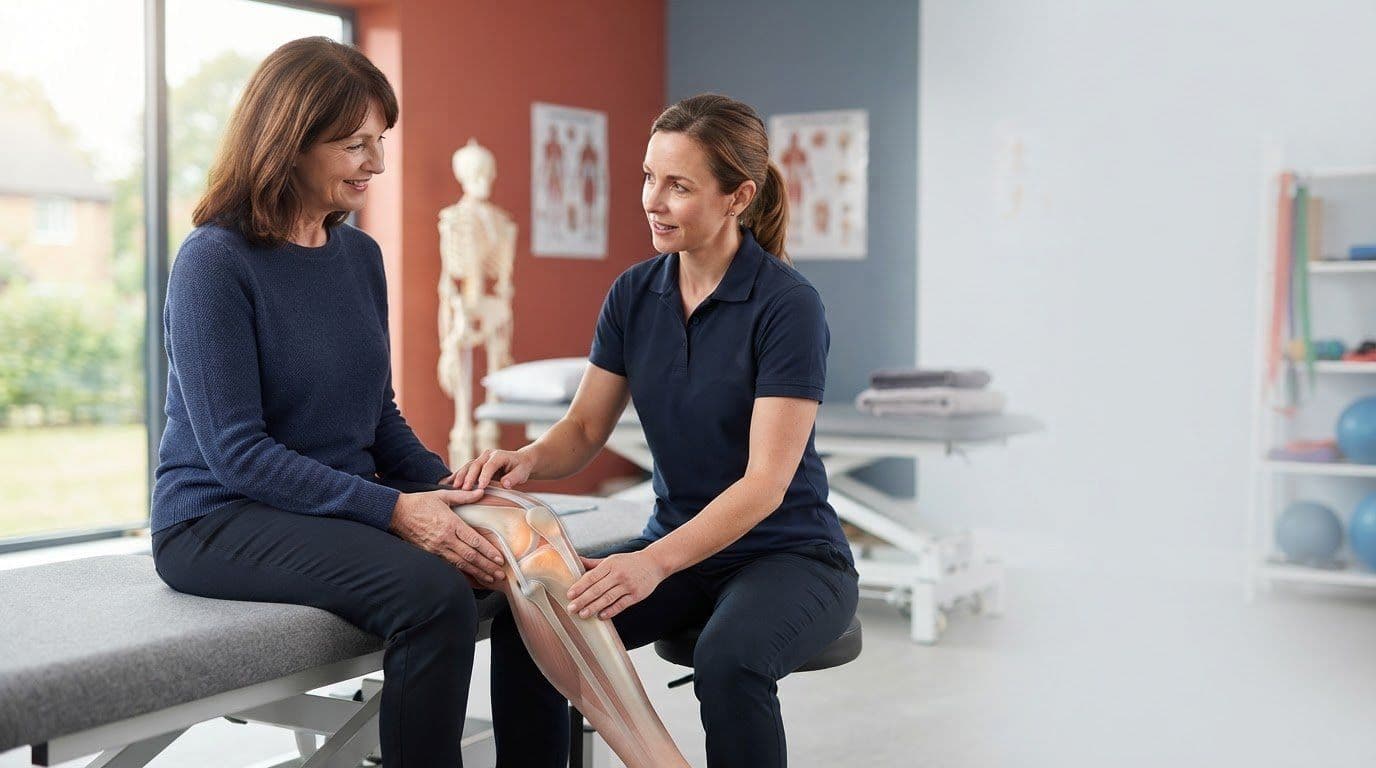
Composite Towcester scenario: Imagine someone commuting from the area who starts noticing stiff knees after sitting at work. Getting out of the car and managing the stairs at home become uncomfortable. The timing may coincide with changes to their periods or sleep, but that doesn’t prove hormones explain the knee pain. A physical assessment can explore movement and everyday demands. You can also read about knee pain and physiotherapy.
When joint pain needs more than a hormonal explanation
Noticing when symptoms began and whether they vary alongside other changes gives useful context, but it doesn’t establish the cause. An assessment may consider your symptom history, how the joint moves, which activities bring on discomfort and relevant health factors. Physiotherapy can help assess movement and discuss ways to manage activity, but it doesn’t diagnose hormonal causes.
For perimenopause joint pain relief Towcester, the aim is to understand what may be affecting your comfort rather than jump to conclusions. Speak to your GP or another appropriate health professional if pain is new, severe, worsening or worrying you. Seek urgent medical advice if symptoms feel urgent or you’re concerned about your immediate health. You don’t need to wait for a physiotherapy appointment to ask for medical advice.
Practical perimenopause joint pain relief Towcester: steps you can try and track
Start with curiosity, not a strict routine. For a short period, note when discomfort appears and what was happening around it. Track pain and stiffness, sleep, activity, and any relevant changes in your health or periods. Brief notes can help you spot patterns and give a health professional a clearer picture. For example, record whether symptoms arise after sitting, during a particular activity or following a poor night’s sleep.
Keep comfortable movement in your day where you can. You might break up a long spell of sitting with a gentle walk, or choose a shorter version of an activity you enjoy. If symptoms flare, adjust the pace or amount rather than pushing through simply to stick to a plan. Notice whether the change makes the activity more manageable and mention that when seeking advice.
How to adapt movement when your joints feel uncomfortable
Let your symptoms and abilities guide the next step. Pacing means spreading activity out, taking breaks before you’re completely worn out and building back gradually when that feels manageable. It may help you stay involved in valued activities, but neither rest nor exercise is a guaranteed fix. If you have a diagnosed joint condition, such as arthritis, advice may need to take that into account.
Hormone related symptoms can be part of the picture. Johns Hopkins Medicine discusses how hormonal changes during perimenopause may relate to aches, but self care won’t address every possible cause. Avoid copying a routine that doesn’t suit you. If pain is limiting the activities you want to keep doing, women’s health physiotherapy may offer an opportunity to discuss your symptoms and suitable next steps.
For perimenopause joint pain relief Towcester, use your notes to support a conversation, not to diagnose yourself. A suitable plan should reflect your symptoms, daily demands and personal goals.

When to seek perimenopause joint pain relief from a Towcester physiotherapist
Consider an assessment if joint symptoms persist, make everyday tasks harder or leave you less confident about walking, working or exercising. You don’t need to wait until movement feels impossible. If pain is new, severe, worsening or concerning, speak to your GP or another appropriate health professional too. A physiotherapist can assess movement and discuss practical support, but can’t establish whether you’re perimenopausal or diagnose a hormonal cause.
What a physiotherapy appointment can and cannot do
An initial appointment is a chance to talk through what you’re experiencing, what you’d like to get back to and how symptoms affect your day. Your physiotherapist may ask about your health and activity, then assess relevant movements with your agreement. Together, you can discuss suitable next steps. These may include practical movement advice, an individual plan and, if appropriate, hands on care. What’s suitable depends on your circumstances, and physiotherapy may not be the right answer for every cause of pain.
RED Physiotherapy provides evidence based physiotherapy and women’s health physiotherapy in Towcester, as well as in Milton Keynes and Northampton. Women’s health physiotherapy can support a conversation about movement and symptom management, but it cannot confirm the hormonal reason for your symptoms.
If you’re looking for perimenopause joint pain relief Towcester, you can check booking options for an appointment and ask the team what next step may suit you.
Take a thoughtful next step for your joint comfort
Perimenopause may contribute to joint pain, but it isn’t the only possible explanation. Notice how symptoms relate to sleep and activity, keep movement comfortable, and seek advice if pain persists or starts getting in the way of daily life. A physiotherapist can assess movement and discuss practical support, though they can’t confirm a hormonal cause.
If you’re looking for perimenopause joint pain relief Towcester, RED Physiotherapy offers evidence based physiotherapy and women’s health physiotherapy locally, with services also available in Milton Keynes and Northampton. An individual conversation can help you consider options that fit your symptoms and goals, without promising a quick fix. Ask RED Physiotherapy about your next step in Towcester.
You don’t have to work it all out alone. A clear, considered next step can help you feel more confident about moving forward.
Frequently Asked Questions
Can perimenopause cause joint pain?
Joint aches and stiffness can be associated with perimenopause, but the timing alone can’t confirm that hormones are the cause. Other health or movement related factors may also contribute. If discomfort persists, worsens or affects everyday activities, consider speaking with a health professional rather than assuming it’s simply part of the hormonal transition.
What can I do for joint pain during perimenopause?
Keep movement comfortable and manageable, adjusting the pace or amount of an activity if symptoms flare. Note when pain or stiffness occurs, alongside sleep, activity and relevant changes in your health. These details can help guide a conversation with a health professional. If symptoms persist or worsen, seek tailored advice rather than relying on a routine that may not suit you.
When should I seek help for joint pain during perimenopause?
Seek professional advice if pain continues, is getting worse, affects sleep or makes daily tasks difficult. Contact your GP or NHS 111 for advice about symptoms that feel severe or concerning. If you think it’s a life threatening emergency, call 999 or go to A&E. Don’t assume new or worrying pain is caused by perimenopause.
Can a physiotherapist in Towcester help with perimenopause joint pain?
A physiotherapist can discuss your symptoms and goals, assess relevant movement and consider practical ways to support activity. For perimenopause joint pain relief Towcester, RED Physiotherapy offers physiotherapy and women’s health physiotherapy locally. An assessment can help inform next steps, but it can’t confirm a hormonal cause or guarantee a particular result. Your plan should reflect your needs.
Tags:
About the Author
Red Physiotherapy Team
Content Team
Health and wellness content from the RED Physiotherapy team.