
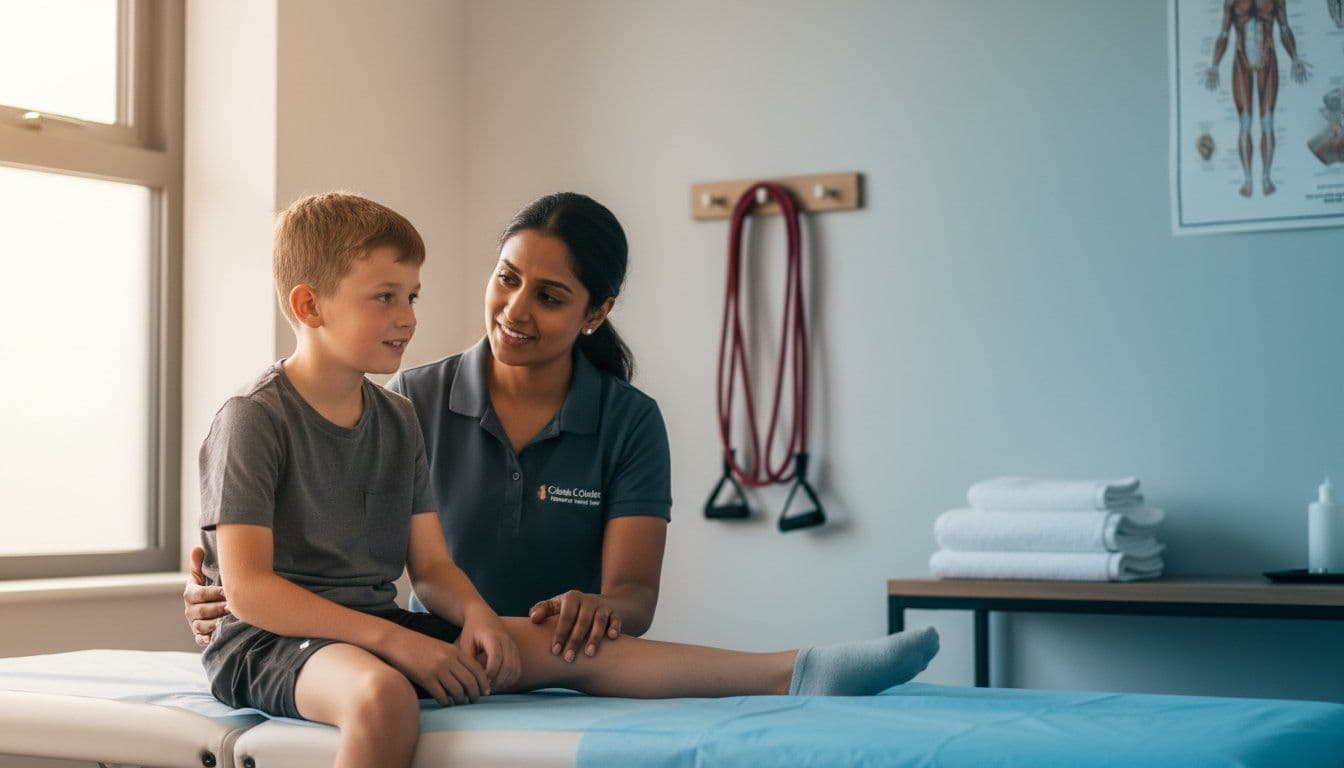
Physiotherapy for Children with Hypermobility in Milton Keynes: A Hands-On Guide
Find expert physiotherapy for children with hypermobility Milton Keynes. Learn how hands-on treatment builds strength & confidence to stop pain and fatigue.
What if your child's "double jointed" flexibility was actually a physical superpower that just lacked the right support system? It's incredibly frustrating to watch your little one struggle with constant joint clicks, frequent sprains, or getting worn out halfway through a school day, especially when you are searching for effective physiotherapy for children with hypermobility Milton Keynes. You want real answers and professional action, not more "wait and see" advice that leaves you worried about their long-term joint health.
We understand that you want your child to thrive without the constant fear of injury or fatigue. This guide shows you exactly how specialized paediatric physiotherapy can help your child build the necessary strength to support their joints and move with total confidence. We'll explore the benefits of a hands-on treatment plan, from improving coordination to reducing daily aches, ensuring your child has a clear path toward reaching their full physical potential and returning to the activities they love.
Key Takeaways
- Learn why hypermobility is more than just being "double jointed" and how we use the Beighton score to create a bespoke plan for your child’s specific needs.
- Discover how physiotherapy for children with hypermobility Milton Keynes builds dynamic stability through hands-on manual therapy, helping joints stay settled during school sports.
- Master the "pacing" strategy to manage your child’s energy levels and stop the cycle of high-activity days followed by painful crashes.
- Identify the "red flag" symptoms that signal when joint pain is affecting your child’s mood or school life and requires expert clinical attention.
- Find out why RED Physiotherapy prioritizes hands-on treatment from day one to ensure your child builds long-term resilience rather than just managing symptoms.
Understanding Hypermobility in Children: More Than Just Being "Double-Jointed"
Right, let's clear one thing up: being "double-jointed" isn't actually a thing. You don't have two joints; you just have collagen that is a bit more enthusiastic than average. When we talk about hypermobility, we are describing increased joint laxity caused by the way a child's connective tissue is built. It is a complex physical trait, not just a party trick. This is why seeking professional physiotherapy for children with hypermobility Milton Keynes is so important. We don't just look at how far a thumb can bend. We look at how that extra range affects your child's ability to run, jump, and play without pain.
To get a clear picture of what is going on, we use the Beighton score. This is a simple nine point assessment that checks flexibility in the pinky fingers, thumbs, elbows, knees, and spine. In active Milton Keynes communities, from the gymnastics clubs in Bletchley to the junior football teams at Willen Lake, we see this often. Research shows that between 10% and 27% of UK school children are hypermobile. For a deeper dive into the clinical mechanics of these "bendy" joints, Understanding Hypermobility in Children provides a great foundation on the underlying causes and symptoms.
The Difference Between Flexibility and Hypermobility
People often use these terms interchangeably, but they are worlds apart. Flexibility is about how much a muscle can stretch. Hypermobility is about the actual joint structure and the ligaments holding it together. You might notice your toddler sitting in a "W" position or their knees bowing backward when they stand. While some children are simply bendy and get on fine, others develop Joint Hypermobility Syndrome. This is where that lack of stability leads to genuine musculoskeletal pain. If you want to see how we categorize these different issues, you can browse our conditions page for more detail.
The Fatigue Factor: Why Your Child Gets Tired Quickly
If your child is wiped out after a normal school day, it isn't laziness. Because their joints are loose, their muscles have to work twice as hard to keep everything in the right place. It is like an engine running at high revs just to stay at a standstill. This constant effort leads to physical fatigue and often affects proprioception, which is the body's internal GPS. If the brain isn't quite sure where the joints are in space, the child can seem clumsy or prone to tripping. It isn't a lack of coordination; it is a lack of joint feedback that we can improve with the right hands-on approach.
How Paediatric Physiotherapy Helps Hypermobile Children in Milton Keynes
Most parents tell us they've been given a black and white printout of basic stretches and told to "get on with it." That simply isn't how we work. Effective physiotherapy for children with hypermobility Milton Keynes requires a bespoke roadmap that addresses why those joints are irritable in the first place. We focus on building dynamic stability. This isn't just about being strong while standing still; it's about ensuring your child’s muscles can protect their joints while they are pivoting on a football pitch or landing a jump in gymnastics. We want to move them from a state of "fragility" to one of resilience.
By improving muscle tone, we take the literal weight off the ligaments. Ligaments are like biological ropes that shouldn't be doing all the heavy lifting. When the muscles around a joint are firing correctly, the laxity we discussed earlier becomes much less of a problem. Understanding How Paediatric Physiotherapy Helps is the first step in moving from basic pain management to active performance. We don't believe in generic plans. Every child gets a strategy tailored to their specific sport, school life, and growth stage.
Hands-On Treatment from Day One
We are a hands-on clinic, and that makes a massive difference for a child who is struggling with daily aches. If your child is in pain, we use manual therapy and soft tissue work to settle those grumpy joints immediately. This isn't just about comfort; it's about neurological feedback. For a hypermobile child, manual therapy helps them feel "grounded" in their own body. It reduces the tension from what people often call "growing pains," which are usually just muscles overworking to compensate for loose joints. If you're curious about how we combine these techniques, you can check out our full range of services to see how we integrate manual therapy with active rehab.
Proprioception and Balance Training
Proprioception is the body’s internal GPS for joint safety. For children in Milton Keynes who love their sports, we use play based drills to sharpen this sense. Whether it's balancing on one leg while catching a ball or navigating a bespoke obstacle course, these movements teach the brain exactly where the joints are at any given moment. This is vital for preventing those "clumsy" falls and building the confidence to play at full speed again. We make sure these sessions are engaging because a child who enjoys their rehab is a child who gets results much faster.
Practical Advice: Managing Your Child’s "Bendy" Joints at Home
Managing hypermobility doesn't stop when you leave the clinic. In fact, what happens at home and in school is just as vital as the sessions we have together. One of the biggest challenges for parents is managing the "boom and bust" cycle. This is when a child has a high-energy day at school or a sports club in Milton Keynes, only to "crash" with joint pain and exhaustion the following morning. We teach a strategy called pacing. It's about finding that middle ground where your child stays active without pushing their joints to the point of irritation. It's much better to do twenty minutes of movement every day than two hours on a Saturday that leaves them bed-bound on Sunday.
Ergonomics at home also play a huge role. If your child is slumping on a sofa with a tablet or laptop, their neck and back joints are under constant strain. Encourage them to sit at a desk with a chair that supports their lower back and keep their feet flat on the floor. These small adjustments reduce the "static load" on their ligaments. While these tips help, knowing When to Seek Professional Help is key to ensuring these home habits are backed by a clinical plan. If you're looking for a tailored approach, specialized physiotherapy for children with hypermobility Milton Keynes can provide the specific biomechanical assessment your child needs to stay pain-free.
Footwear and Support
When you're shoe shopping at the Centre:mk, look for structure rather than just style. Hypermobile feet often have "flat" arches because the ligaments are too loose to hold the foot's shape. High-top trainers or sturdy school shoes with a firm heel counter are far superior to flimsy ballet pumps or slip-ons. These provide an external "scaffold" for the foot. If your child is still complaining of foot or ankle pain despite good shoes, we can assess whether bespoke orthotics or specialized insoles are necessary to provide that extra layer of stability.
The Importance of Core Strength
Think of the core as the anchor for the rest of the body. If the middle is strong, the "ends" (the arms and legs) don't have to work nearly as hard. You don't need to put your child through a boring gym routine; keep it fun. Games like "the floor is lava" or animal walks (like bear crawls or crab walks) are brilliant for building natural stability. These activities encourage movement without overstretching the joints, helping your child build the "dynamic stability" we aim for in our paediatric physiotherapy sessions. It’s about making strength feel like play, not a chore.
When to Seek Professional Help for Your Child’s Hypermobility
It is far too easy to dismiss a child's complaints as "growing pains" or just being a bit tired after a long day. But if your child is consistently struggling, it is time to look closer. We see many families in our Milton Keynes clinic who have been told to just "wait and see" by their GP, only to find the problem getting worse. This is where specialized physiotherapy for children with hypermobility Milton Keynes makes a real difference. Chronic pain doesn't just affect their joints; it hits their mood, their school attendance, and their confidence. If they are missing out on birthday parties or PE because they are hurting, it is no longer just a phase.
Early intervention is about more than just current comfort. It is about stopping the cycle of secondary injuries like recurrent sprains or even partial dislocations. When joints are loose, the risk of a "slip" is much higher during a simple trip or a tackle on the pitch. By acting now, we build a foundation of resilience that protects them as they grow into active adults. You can read more about how we manage these specific joint issues on our conditions page. We want to ensure your child isn't just "managing" but is actually thriving.
Signs Your Child Needs a Functional Assessment
Watch out for these specific markers that suggest your child's "bendiness" has become a clinical issue. If your child is complaining of pain late at night or after a standard school day, their muscles are likely exhausted from overcompensating for loose ligaments. Visible swelling or frequent "clicking" that causes them distress are also major indicators that the joint is under too much stress. Perhaps most telling is a sudden reluctance to participate in sports they used to love. If your budding athlete is suddenly staying on the sidelines, their body is trying to tell you something that a hands-on assessment can solve.
The Long-Term View: Preventing Future Issues
We often treat adults with chronic back or hip issues that actually started with unmanaged hypermobility in childhood. Investing in paediatric physio now is essentially future-proofing your child's body. We don't believe in the "wait and see" approach that often comes with long NHS wait times. Instead, we provide immediate, hands-on treatment to settle irritable joints and a clear plan to build strength. If you want to get your child back to their best without the delay, get in touch with our team today. We are a family-run business, and we treat every child with the same care we would our own.
Why Choose RED Physiotherapy for Paediatric Care in Milton Keynes
Choosing the right clinic for your child is a massive decision. You don't just want a therapist; you want a mentor who understands that a hypermobile child isn't just a "miniature adult." At RED Physiotherapy, we focus on high-performance outcomes for younger patients. Our clinicians are experts in paediatric and adolescent musculoskeletal health, meaning we understand the unique challenges of growing bodies. This specialized physiotherapy for children with hypermobility Milton Keynes is about more than just managing symptoms. We aim to build long-term autonomy and physical resilience.
Being a family-run business, we bring genuine care to every session. We aren't a cold, corporate chain. We treat your child like our own, ensuring they feel safe, heard, and empowered. With convenient locations across Milton Keynes, Northampton, and Towcester, expert help is never far away. We pride ourselves on getting results efficiently. We don't believe in dragging out treatment plans longer than necessary. Our goal is always to move your child from uncertainty toward a concrete plan of action as quickly as possible.
Our Hands-On Philosophy
We are not an "exercises-only" clinic. If your child is in pain, they need more than just a sheet of paper with instructions. We use our hands to fix problems, applying manual therapy from day one to settle irritable joints and reduce muscle tension. This hands-on approach is what sets us apart from many other providers. We also make sure our sessions are engaging. We keep things fun and a little bit cheeky because a motivated child recovers much faster. You can meet our team online to see the friendly faces who will be guiding your child back to the sports and hobbies they love.
Booking Your Child’s Assessment
Starting the journey to better joint health shouldn't be a bureaucratic headache. You don't need a GP referral to see us, which means you can bypass the long wait times often associated with other services. We believe in total transparency, which is why you'll find our pricing clearly listed on our website. Booking is straightforward through our online system, or you can give us a ring for a chat. Let's work together to build your child's strength and get them moving with the confidence they deserve. It's time to help them return to what they love without the shadow of joint pain.
Empowering Your Child to Move with Confidence
Your child's hypermobility doesn't have to be a source of frustration or daily aches. By shifting the focus from simple flexibility to dynamic stability, we help them excel in school sports and daily life. We've explored how the right footwear and core strength make a difference, but professional guidance is the real key to building a foundation of resilience. It is about moving beyond just being "bendy" and becoming truly strong.
At RED Physiotherapy, we skip the long waiting lists and get straight to the point with hands-on treatment from day one. Our specialist paediatric clinicians provide the expert care needed to settle grumpy joints and boost physical confidence. If you are searching for effective physiotherapy for children with hypermobility Milton Keynes, our family-run clinic is ready to help. Book a paediatric assessment at our Milton Keynes clinic today and let's get your little one back to doing what they love with a smile on their face.
Frequently Asked Questions
Can physiotherapy actually cure hypermobility in children?
No, hypermobility is a genetic trait of your child's connective tissue. It isn't something we "cure" like a common cold. Instead, we focus on managing the symptoms by building muscle strength to support those loose joints. Our goal is to move your child from being "bendy and painful" to "bendy and strong." This ensures they can stay active without the constant risk of injury or fatigue.
How many sessions will my child need to see an improvement?
Every child is different, but we typically expect to see a noticeable improvement in joint stability and pain levels within four to six sessions. We don't believe in dragging treatment out. Once we have settled the initial irritability with hands-on therapy, we will move toward longer gaps between check-ups. This encourages your child's independence and focuses on their long-term physical autonomy.
Is hypermobility the same as Ehlers-Danlos Syndrome (EDS)?
Not exactly. Hypermobility is a physical trait where joints move beyond the normal range. EDS is a group of genetic connective tissue disorders. While many children with EDS are hypermobile, not every hypermobile child has the syndrome. We help identify if your child's flexibility is part of a broader condition. We will guide you toward the right specialist if further medical investigation is required.
What should my child wear to their first physiotherapy session in Milton Keynes?
Your child should wear comfortable, loose-fitting clothing that allows them to move freely. Shorts and a t-shirt are perfect because they let us see how the joints are behaving. When you book physiotherapy for children with hypermobility Milton Keynes, we also suggest bringing their most-worn school shoes. This helps us assess their foot support and gait during the very first session to ensure our plan is as bespoke as possible.
Will the physiotherapy sessions be painful for my child?
Physiotherapy should not be a painful experience for your child. While some hands-on manual therapy might feel a bit "deep" if a muscle is particularly tight, we always work within your child's comfort levels. We use engaging, play-based movements to build strength. This ensures the sessions are something they actually look forward to. Our priority is always reducing pain and building resilience, not making the recovery process a chore.
Can I stay in the room with my child during their treatment?
Yes, we absolutely encourage parents or guardians to stay in the room during the treatment. As a family-run business, we believe you are a vital part of your child's recovery team. Staying allows you to see the hands-on techniques we use and understand the "why" behind the plan. It also helps your child feel more relaxed, making the treatment much more effective and helping you feel confident in their progress.
Do you provide exercises that we can do at home together?
We certainly provide a clear, manageable plan for home, but we aren't an "exercises-only" clinic. We use specialized physiotherapy for children with hypermobility Milton Keynes to fix the immediate physical issues in the clinic first. Once we have settled the joints with hands-on therapy, we'll give you a bespoke set of activities. These are designed to be fun and easy to integrate into your family routine without feeling like extra homework.
What is the Beighton score and how is it used?
The Beighton score is a standard clinical tool we use to measure the level of "laxity" or bendiness in your child's joints. It is a simple nine point system where we check specific areas like the thumbs, little fingers, and knees. While it is a great starting point, we also look at your child's overall movement and pain levels. We assess how they function during their favorite sports or school activities.
Tags:
About the Author
Red Physiotherapy Team
Content Team
Health and wellness content from the RED Physiotherapy team.