
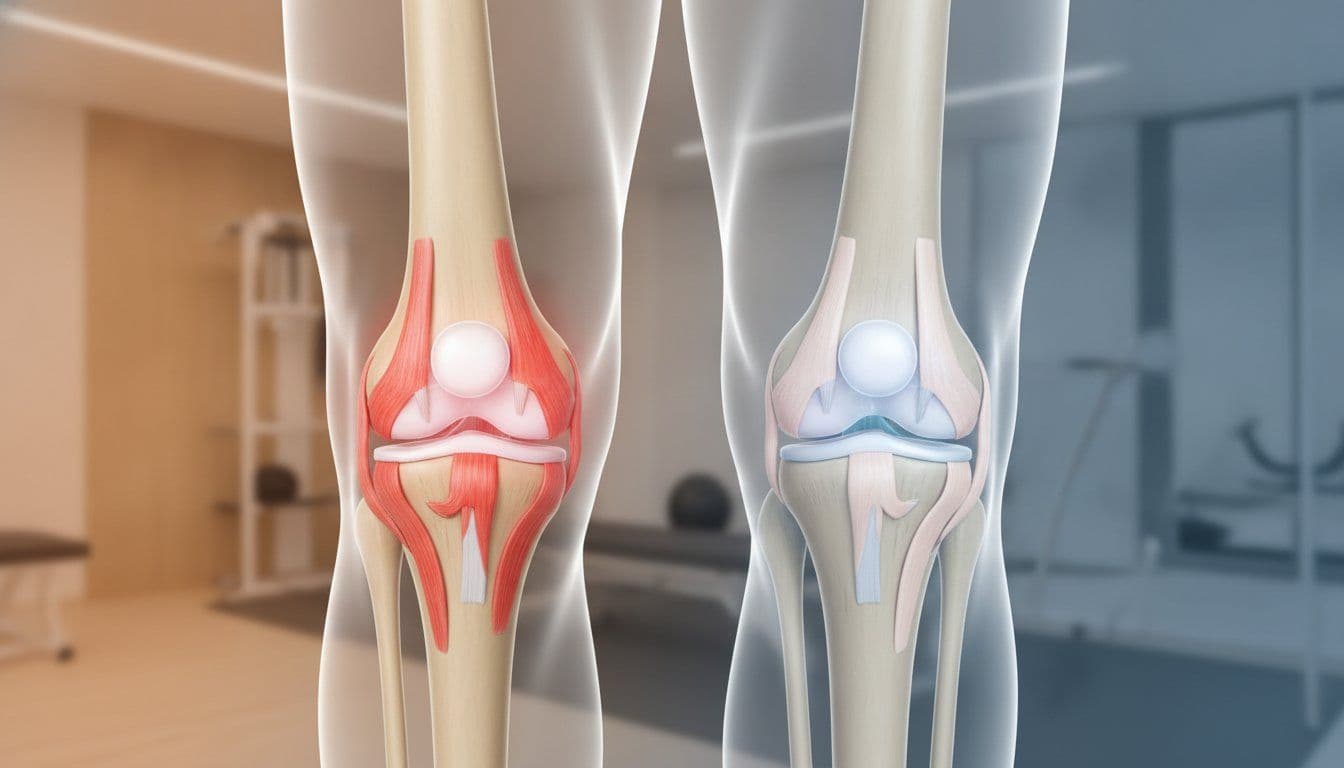
Physiotherapy for Joint Stiffness in Milton Keynes: Get Moving Again Without the Wait
Struggling with stiff joints in Milton Keynes? Get hands-on physiotherapy from day one and start moving freely again, without the long NHS wait.
Joint stiffness isn't just an annoying part of getting older. It's a mechanical problem, and mechanical problems have solutions.
If you're waking up every morning feeling like your body needs ten minutes just to remember how to move, you're not alone, and you're not imagining it. That familiar grind in your knees, the shoulder that won't quite reach the top shelf, the hips that protest every time you stand up from your desk. It's frustrating, it's limiting, and frankly, it gets in the way of the things you actually want to do.
The good news? Stiffness like this rarely means you're simply "getting old." More often, it means your joints need targeted, expert attention rather than a generic exercise sheet and a six-month wait to see someone who'll give you one anyway.
That's exactly where physiotherapy for joint stiffness in Milton Keynes, done properly with real hands-on treatment from day one, makes all the difference. In this article, you'll learn why joints become stiff, what a good physio can actually do about it, and how to get moving again without the endless waiting. Whether your goal is getting back in the garden, back on the running track, or just getting through a working day without wincing, we've got you covered.
Key Takeaways
- Joint stiffness is rarely just a sign of ageing. It's a mechanical problem with a clear biological cause, and understanding why it happens is the first step toward fixing it properly.
- Being handed a sheet of exercises is not the same as receiving treatment. You'll discover why hands-on manual therapy is essential before any strengthening programme can actually work.
- Specialist physiotherapy for joint stiffness in Milton Keynes now includes advanced diagnostic tools like musculoskeletal ultrasound, which can pinpoint the exact source of your stiffness rather than relying on guesswork.
- There's a practical checklist inside to help you decide whether your symptoms genuinely need a professional opinion, and why the "wait and see" approach often makes things worse, not better.
- You'll learn exactly what sets a results-driven, family-run practice apart from a conveyor-belt clinic, and how to get moving again without waiting months for someone to take you seriously.
Why Your Joints Feel Like Rusted Hinges (and Why It's Not Just Age)
Joint stiffness is, at its core, a loss of range of motion and ease of movement. It's that resistance you feel when you try to straighten your knee fully, or the grinding sensation when you rotate your shoulder. Your body is telling you something has changed mechanically, and in most cases, that change is far more addressable than people assume.
Think of your joints as hinges that rely on a thin layer of synovial fluid to stay smooth and responsive. This fluid acts a bit like WD-40, lubricating the joint surfaces and reducing friction with every movement. The problem is that synovial fluid only circulates properly when you actually move. Sit still for long enough and it pools, thickens, and stops doing its job. The joint capsule tightens, the surrounding soft tissue shortens, and suddenly that first step out of bed feels like your knees have been welded overnight.
Here's the part that surprises most people: stiffness does not automatically mean damage. It doesn't mean your joints are worn out or that arthritis has taken hold. In a significant number of cases, what feels like serious structural deterioration is actually mechanical stiffness driven by lifestyle, posture, and movement patterns. That's genuinely good news, because mechanical problems respond well to the right treatment.
Common Causes of Joint Stiffness We See in Milton Keynes
Milton Keynes is a commuter town. A large proportion of residents spend their mornings on the M1 or the train into London, their working day at a desk, and their evenings on a sofa. That's a lot of sustained, static loading on the hips, lumbar spine, and thoracic region, and very little of the varied movement your joints actually need to stay supple. When we're assessing people seeking physiotherapy for joint stiffness in Milton Keynes, sedentary work habits come up again and again as a primary driver.
Post-injury scar tissue is another major culprit. After a sprain, strain, or surgery, the body lays down collagen fibres to repair the damaged area. The issue is that this scar tissue is less organised and less elastic than healthy tissue. It adheres to surrounding structures, restricts glide between tissue layers, and creates that persistent "tight" feeling that never quite goes away on its own.
It's also worth separating inflammatory stiffness from simple mechanical stiffness, because they behave differently and need different approaches:
- Mechanical stiffness tends to ease with movement and warm-up. It's driven by inactivity, posture, or old injuries.
- Inflammatory stiffness is associated with conditions like rheumatoid arthritis or reactive arthritis. It often worsens with rest and improves only partially with movement.
- Osteoarthritic stiffness sits somewhere in between, typically worse after rest but also aggravated by prolonged or high-impact activity.
Knowing which type you're dealing with changes everything about how it should be treated. A good assessment doesn't guess. It identifies.
The Difference Between Morning Stiffness and Chronic Tightness
That groggy, stiff feeling for the first 20 to 30 minutes of the day is extremely common and, in isolation, usually not a red flag. During sleep, you're relatively still for hours. Synovial fluid settles, soft tissue cools slightly, and the nervous system is in a low-arousal state. Movement gradually wakes everything up, fluid redistributes, and most people feel considerably better within half an hour.
The warning sign is when that morning stiffness lasts longer than 45 minutes consistently, or when it's accompanied by joint swelling, warmth, or fatigue. Prolonged morning stiffness of this kind can indicate an inflammatory condition that needs proper investigation rather than a self-managed stretching routine.
Chronic tightness is a different beast entirely. It's the stiffness that doesn't fully resolve, that creeps back every time you sit for more than an hour, and that gradually narrows what you feel able to do. Left unaddressed, it compounds. Muscles shorten to protect restricted joints, movement patterns change to compensate, and what started as a tight hip becomes a stiff lower back and then a painful knee. The good news is that catching this pattern early, before compensation becomes habitual, is exactly where targeted physiotherapy makes the biggest difference.
Lifestyle changes genuinely help here. Regular movement breaks, attention to sitting posture, and targeted mobility work can slow or even reverse the progression of mechanical stiffness. But if you've been trying those things and not getting results, that's a clear signal that you need a hands-on assessment rather than another generic video from the internet. You can explore the full range of conditions we treat at RED Physiotherapy's conditions page to see whether your specific symptoms are something we work with regularly.
Hands-On Physiotherapy vs. The 'Here's a Sheet of Exercises' Trap
You've probably been there. You finally get an appointment, you explain your symptoms, and twenty minutes later you're walking out with a laminated A4 sheet and a vague instruction to "do these three times a day." No hands on you. No real assessment of how your joint is actually moving. Just a piece of paper and a follow-up booked for six weeks' time.
It's one of the most common frustrations we hear from people seeking physiotherapy for joint stiffness in Milton Keynes, and honestly, it's a legitimate complaint. Exercise prescription has its place, but handing someone a strengthening programme before the joint can actually move properly is a bit like asking someone to sprint before they can walk. The joint needs to be unlocked first. Only then can the real work begin.
Why We Prioritise Manual Therapy From Day One
When a joint is stiff, the capsule surrounding it has typically tightened, the synovial fluid isn't circulating efficiently, and the surrounding muscles have gone into a protective guarding pattern. Your nervous system has essentially decided that movement is a threat and is doing its best to limit it. No exercise sheet addresses any of that.
Manual therapy, specifically skilled joint mobilisation techniques, works by introducing controlled, graded movement into the joint itself. This stimulates synovial fluid production and distribution, reduces capsular tightness, and sends new sensory signals to the nervous system that movement is safe. The result is often an immediate, noticeable improvement in range of motion, even within a single session. That's not a marketing claim. That's the physiological mechanism working as it should.
Soft tissue work plays an equally important role. When muscles have been guarding a stiff joint for weeks or months, they develop their own tightness and trigger points that won't resolve with stretching alone. Targeted soft tissue therapy releases that guarding, restores normal tissue glide between layers, and creates the conditions your joint needs to move freely. You can read more about our approach at RED Physiotherapy's about us page.
There's also something important that doesn't appear in any research paper: confidence. When a physio puts their hands on you, identifies exactly what's restricted, and helps you move in a way you haven't been able to for months, it changes your relationship with the problem. You stop bracing against movement. You stop assuming the worst. That psychological shift is part of the treatment, and it matters enormously for recovery.
Moving Beyond Temporary Fixes to Long-Term Autonomy
Our approach at RED Physiotherapy isn't just about making you feel better in the room. It's about making you independent of us as quickly as possible. Once manual therapy has restored meaningful movement, that's when a targeted exercise programme becomes genuinely valuable. Strengthening the muscles around a mobile joint builds resilience and prevents the stiffness from returning. It's the difference between fixing the hinge and reinforcing the whole door.
We know that most people in Milton Keynes are busy. Commutes, desk jobs, family commitments. So the plans we build are realistic ones, not hour-long gym sessions that nobody actually does. We aim for measurable progress in weeks rather than stringing out appointments indefinitely, because our goal is to get you back to the things you care about, not to keep you coming back for the sake of it.
When you're looking at options for physiotherapy for joint stiffness in Milton Keynes, the question worth asking any clinic is simple: will you actually put your hands on me from the very first session? If the answer is unclear, that tells you everything you need to know.
Specialist Solutions for Joint Stiffness in Milton Keynes
Good physiotherapy starts with a good assessment. And a good assessment isn't just a physio asking you to bend and straighten while they nod thoughtfully. At RED Physiotherapy, we've invested in the kind of diagnostic technology that lets us see exactly what's happening inside a joint, not just make an educated guess based on how you describe the pain. That changes everything about how quickly and precisely we can get you moving again.
When people come to us seeking physiotherapy for joint stiffness in Milton Keynes, one of the first questions we ask is whether anyone has actually looked at the joint properly. More often than not, the answer is no. That's where our approach genuinely sets us apart.
Diagnostic Ultrasound: Seeing the Problem Clearly
Musculoskeletal ultrasound gives us live, real-time imaging of the structures inside and around your joint. We can visualise tendons, bursae, joint capsules, and soft tissue in motion, not just at rest. That matters because some problems only show up when the joint is actually moving. A static X-ray simply can't tell you that.
The practical benefit is significant. Within a single appointment, we can:
- Rule out tendon tears or significant structural damage that would need onward referral
- Identify localised inflammation or fluid accumulation that's contributing to your stiffness
- Confirm whether the restriction is primarily capsular, muscular, or tendon-related
- Show you exactly what we're seeing, so you understand your own body better
That clarity matters beyond the clinical picture. When people understand what's actually causing their stiffness, anxiety drops and engagement with treatment goes up. You stop catastrophising about what might be wrong and start working on what we know is wrong. This level of diagnostic technology is typically only available in private specialist clinics, and having it in-house means no referrals, no waiting, and no gaps in your care.
You can explore our full range of diagnostic and treatment services at RED Physiotherapy's services page.
Shockwave Therapy: Breaking Through Chronic Stiffness
Some stiffness simply doesn't respond to manual therapy alone. When a tendon or the tissue surrounding a joint has been restricted for months or years, the cellular environment changes. Blood supply reduces, collagen quality deteriorates, and the tissue essentially gets stuck in a dysfunctional holding pattern. That's where shockwave therapy becomes a genuine game-changer.
Shockwave delivers focused, high-energy sound waves directly into the affected tissue. This triggers a controlled biological response: increased blood flow, stimulation of collagen production, and a breakdown of calcific deposits that can form in chronically irritated tendons. The result is that tissue which had essentially stopped healing starts healing again.
For people dealing with stubborn tendon-related stiffness around the shoulder, hip, knee, or Achilles, shockwave often achieves results that other approaches haven't. It's also a strong alternative for patients who've been offered steroid injections but are understandably cautious about repeated use. Steroids can reduce inflammation quickly, but they don't address the underlying tissue quality. Shockwave does. You can read more about shockwave therapy in Milton Keynes and how it could apply to your specific situation.
Sports massage rounds out our toolkit for broader mobility gains. Where manual therapy targets the joint itself and shockwave addresses deep tissue dysfunction, sports massage works on the surrounding muscular system. It reduces guarding, improves circulation through chronically tight muscle groups, and restores the tissue glide between layers that stiffness progressively shuts down. Used alongside physiotherapy for joint stiffness in Milton Keynes, it accelerates the whole recovery process rather than being a standalone treatment.
The point is this: real specialist care isn't one tool. It's the right combination of tools, applied in the right order, for your specific problem.

The 'Am I Just Getting Old?' Checklist: When to Book a Physio
Here's a question we hear constantly at RED Physiotherapy: "Is this just normal for my age?" Sometimes the honest answer is yes, a little stiffness after a long drive or a cold morning is part of life. But more often than not, the people asking that question have been putting up with something that's genuinely treatable for far longer than they needed to.
So let's make this practical. Run through this checklist and be honest with yourself.
- Your stiffness hasn't improved after two to three weeks of regular movement and stretching
- You've started avoiding certain activities, not because you can't do them, but because you're worried about the aftermath
- You've changed how you walk, sit, or sleep to protect a sore joint
- A stiff hip or knee has started producing aching in your lower back or the opposite leg
- You're taking painkillers regularly just to get through your normal day
- The stiffness is affecting your sleep, your work, or your mood
- You've had a previous injury to the area that never quite felt right afterwards
If two or more of those apply to you, that's not ageing. That's a mechanical problem waiting for a proper solution. You can see the full range of common conditions we treat to check whether your symptoms match something we work with regularly.
The "wait and see" approach is one of the most common reasons people end up with bigger problems than they started with. Stiffness in one joint almost always creates compensations elsewhere. A restricted hip changes how your pelvis moves, which loads your lumbar spine differently, which then strains the muscles on the opposite side. What started as a tight hip quietly becomes a back problem and then a knee problem, and by the time someone books an appointment, we're untangling three issues instead of one. Catching it early, when it's still one problem, is always the smarter move.
Red Flags: When Stiffness Needs Urgent Attention
Most joint stiffness is mechanical and manageable. But some symptoms need faster attention than a standard physiotherapy appointment can provide. If your joint feels hot to the touch, looks visibly swollen, or is waking you up at night with pain that doesn't ease when you shift position, those are signs of potential inflammatory or systemic involvement. Significant swelling that appears suddenly after no obvious injury, or stiffness accompanied by unexplained fatigue and feeling generally unwell, should prompt a conversation with your GP alongside any physiotherapy assessment. A quick assessment in these cases isn't just useful, it can save months of discomfort by identifying the right treatment pathway from the start.
Self-Care Tips to Try Before Your Appointment
While you're waiting to be seen, there are things that genuinely help and a few that make things worse.
Heat is your friend for mechanical stiffness. A warm shower, a heat pad, or even a warm wheat bag applied to a stiff joint for ten to fifteen minutes increases local circulation and reduces the viscosity of synovial fluid, making movement easier. Ice is better suited to acute injuries with obvious swelling. For persistent, chronic stiffness with no visible inflammation, heat wins.
Movement snacks are one of the most underrated tools for office workers dealing with physiotherapy for joint stiffness in Milton Keynes. Rather than sitting for two hours and then trying to stretch it all out at once, set a timer for every 45 minutes and spend two minutes walking, doing gentle hip circles, or simply standing and shifting your weight. Small, frequent movement keeps synovial fluid circulating and prevents the joint capsule from tightening progressively through the day.
And rest? For stiff joints, it's almost always the wrong instinct. Immobility is what caused the problem in the first place. Gentle, pain-free movement is the medicine. If moving a joint causes sharp or worsening pain, that's a signal to get assessed rather than a signal to stop moving entirely.
If you're ticking boxes on that checklist above and these self-care steps aren't shifting things, don't wait another month to find out why. Get in touch with our team and let's figure out what's actually going on.
Recovery Without the Wait: Why RED Physiotherapy is Different
If you've spent any time navigating NHS waiting lists for a musculoskeletal problem, you'll know the drill. Weeks pass. You get a letter. You wait some more. By the time someone actually sees you, the problem has either resolved on its own or quietly got worse. Neither outcome is ideal, and neither is acceptable when you're in pain and trying to get on with your life.
At RED Physiotherapy, we've built our entire practice around doing the opposite. Fast access. Real hands-on treatment from session one. A clear plan with a realistic end point. No padding out your appointment book for the sake of it.
A Family-Run Clinic with Specialist Expertise
There's a meaningful difference between a corporate chain and a family-run clinic, and you tend to feel it the moment you walk through the door. RED Physiotherapy has been run by its clinical directors since 2015, and that matters because the people leading the practice are also the people treating you. There's no junior therapist working from a script while the senior clinician sits in the back office. The expertise is in the room with you, every session.
That setup creates something that larger facilities genuinely struggle to replicate: continuity. You're not re-explaining your history to a different face every time you come in. The person who assessed you is the person progressing your treatment, noticing the small changes week to week, and adjusting the approach accordingly. When you're dealing with something as specific as physiotherapy for joint stiffness in Milton Keynes, that level of consistency accelerates results in ways that a conveyor-belt model simply can't.
You're treated as a person with a life, a schedule, and goals, not as a presenting complaint on a caseload. Meet our expert team and see exactly who you'll be working with.
Booking Your Path to Mobility in Milton Keynes
You don't need a GP referral to book with us. You can contact us directly, get an appointment quickly, and start actual treatment without waiting for a letter, a referral code, or a triage phone call that leads to another waiting list.
Pricing is transparent. You'll know exactly what you're paying before you arrive, and you won't be upsold into packages you don't need. Your first session includes a thorough assessment, hands-on treatment, and a clear explanation of what's causing your stiffness and what we're going to do about it. No vague reassurances. No jargon. Just honest, practical information and a plan that fits your life.
Here's what to expect when you get in touch:
- A prompt appointment without a GP referral or lengthy triage process
- A full assessment in your first session, not a separate booking weeks later
- Hands-on treatment from day one, tailored to your specific joint and your specific goals
- A clear recovery plan with realistic timelines, not open-ended appointments
- Transparent pricing with no hidden costs
Stiffness that limits your movement is not something you should have to wait months to address. Whether you want to get back in the garden, back on the pitch, or simply get through a working day without your joints complaining, the first step is straightforward. Book your assessment today and let's get you moving again, properly, and without the wait.
Physiotherapy for joint stiffness in Milton Keynes doesn't have to mean a long road of uncertainty. With the right hands on you from session one, it can mean real progress, faster than you'd expect.
---
Focus Keywords: physiotherapy for joint stiffness milton keynes, joint stiffness physiotherapy, physiotherapy milton keynes, hands-on physiotherapy milton keynes, private physiotherapy milton keynes, joint stiffness treatment, musculoskeletal physiotherapy milton keynes
Your Next Move Starts Here
Joint stiffness is a mechanical problem, and mechanical problems have solutions. You've seen why stiffness happens, why a sheet of exercises isn't enough on its own, and what genuine specialist care actually looks like. The pattern is clear: the longer you wait, the more your body compensates, and the more complex the problem becomes.
What sets RED Physiotherapy apart is straightforward. We're a family-run practice that's been delivering hands-on treatment since 2015, with HCPC registered clinicians who work with you directly from your very first session. No corporate conveyor belt. No guesswork. Just honest, focused care built around getting you back to the things that matter.
If physiotherapy for joint stiffness in Milton Keynes is what you need, don't spend another month hoping it'll sort itself out. It probably won't, but the right treatment will.
Book your hands-on assessment in Milton Keynes today and let's get you moving freely again, without the wait.
Frequently Asked Questions About Physiotherapy for Joint Stiffness in Milton Keynes
Is physiotherapy effective for joint stiffness caused by arthritis?
Yes, physiotherapy is one of the most effective treatments available for arthritic joint stiffness, and it's supported by a strong body of clinical evidence. The approach differs depending on whether you're dealing with osteoarthritis or an inflammatory condition like rheumatoid arthritis, which is exactly why a proper assessment matters. Manual therapy, targeted exercise, and where appropriate, shockwave therapy can all reduce stiffness, improve range of motion, and help you stay active without relying solely on medication.
Arthritis doesn't mean your joints are beyond help. Many people with confirmed arthritic changes make significant functional gains with the right physiotherapy programme. The goal isn't to reverse the structural changes but to optimise how well the joint moves and how strong the surrounding muscles are, so you're better protected and more comfortable day to day.
How many sessions of physio will I need to see an improvement?
Most people notice a meaningful change within two to four sessions, particularly when hands-on manual therapy is used from the very first appointment. The total number of sessions depends on how long the stiffness has been present, which joint is involved, and how your body responds to treatment. A straightforward mechanical stiffness problem that's been present for a few weeks typically resolves faster than something that's been building for months with established compensations elsewhere.
At RED Physiotherapy, we give you a realistic timeline from your first session, not an open-ended treatment plan that drags on indefinitely. Our aim is to get you independent of us as quickly as possible, with the knowledge and exercises to keep things moving well on your own.
Do I need a GP referral to see a private physiotherapist in Milton Keynes?
No, you don't. Private physiotherapists are autonomous practitioners, which means you can book directly without waiting for a GP appointment first. At RED Physiotherapy, you can contact us, get an appointment quickly, and begin actual treatment without navigating a referral pathway. This is one of the biggest practical advantages of private physiotherapy for joint stiffness in Milton Keynes, particularly if you've already been waiting longer than you'd like.
Can physiotherapy help with morning stiffness in my hands and feet?
It can help, but the approach depends on what's driving the stiffness. Morning stiffness in the small joints of the hands and feet that lasts longer than 45 minutes, or that's accompanied by warmth or swelling, can indicate an inflammatory condition that needs medical investigation alongside physiotherapy. A thorough assessment will help identify whether you're dealing with a mechanical issue or something systemic that needs a different management pathway.
Where the stiffness is mechanical in nature, the same principles apply as with larger joints. Gentle mobilisation, soft tissue work, and targeted movement strategies can all make a real difference to how your hands and feet feel first thing in the morning. We'll always be straightforward with you if we think you need to see your GP alongside physiotherapy.
What is the difference between physiotherapy and sports massage for stiffness?
Physiotherapy addresses the joint itself, the surrounding capsule, and the movement patterns that are contributing to your stiffness. It includes a clinical assessment, manual therapy techniques, and a rehabilitation plan tailored to your specific problem. Sports massage works primarily on the muscular system, releasing tension in the muscles surrounding a stiff joint, improving circulation, and restoring normal tissue glide between layers. Both are genuinely useful, and they work particularly well together.
Think of it this way: physiotherapy unlocks the joint and addresses the root cause, while sports massage helps the surrounding muscular system relax and recover so the joint can move more freely. Used in combination, they tend to produce faster results than either approach alone. At RED Physiotherapy, we offer both services and can advise which combination makes most sense for your situation.
Will the treatment be painful if my joints are already very stiff?
Hands-on treatment for stiff joints should not be painful. Skilled joint mobilisation uses graded, controlled movements, starting gently and progressing only as your joint responds. You may feel some pressure or mild discomfort as restricted tissue begins to move, but a good physiotherapist works within your tolerance and adjusts their approach based on your feedback. Any soreness after a session is typically mild and settles within 24 hours, similar to the feeling after a good workout.
If you've avoided seeking help because you're worried treatment will make things worse, that's an understandable concern, but it's rarely what happens in practice. Most people leave their first session feeling noticeably more mobile than when they arrived, which is usually enough to put those fears to rest.
Can I use my private health insurance at RED Physiotherapy?
Many private health insurance policies do cover physiotherapy, and RED Physiotherapy works with a range of insurers. The best approach is to check your policy documents or call your insurer directly before booking, as coverage varies depending on your plan and whether a GP referral is required by your specific insurer. Once you know what your policy covers, get in touch with us and we can help clarify the process from there.
What should I wear to my first physiotherapy appointment?
Comfortable, loose-fitting clothing that allows easy access to the area being assessed is ideal. If you're coming in for a knee or hip assessment, shorts or loose trousers work well. For a shoulder or upper back problem, a vest top or loose t-shirt makes it straightforward for your physiotherapist to assess movement properly. You don't need any specialist kit, just something you can move freely in and that lets us get a clear look at the joint without you having to change completely.
If you're unsure what to bring or wear for your specific problem, feel free to ask when you book. We'd rather you feel comfortable and prepared than turn up uncertain about what to expect.

Tags:
About the Author
Red Physiotherapy Team
Content Team
Health and wellness content from the RED Physiotherapy team.