
Physiotherapy for Sciatica and Thigh Pain: Finding Real Relief
Tired of sciatica and thigh pain? Our hands-on physiotherapy for sciatica in Milton Keynes finds the real cause for faster relief. Ditch the generic exercise...
What if that agonizing shooting pain down your leg isn't actually the "dodgy back" you've been told it is? It's incredibly frustrating to deal with persistent numbness or a thigh that feels like it's on fire, especially when you're stuck on a six to twelve week NHS waiting list just to be handed a generic exercise sheet. You deserve better than a one size fits all approach that ignores the root cause of your discomfort. At our family-run clinics, we believe physiotherapy for sciatica should start with a real conversation and a hands-on assessment from day one, not just a list of stretches you could have found on YouTube.
We understand the worry that creeps in when you start thinking about spinal surgery or long-term painkillers. The good news is that most sciatica and thigh pain can be managed effectively without a surgeon's knife. We're going to help you discover the truth about your leg pain and why our targeted, manual treatments in Milton Keynes and Northampton provide faster relief than exercise alone. We'll preview exactly how we reach a clear diagnosis and build a treatment plan that focuses on getting you back to your passions, whether that's hitting a PB in the gym or simply walking the dog without a limp.
Key Takeaways
- Uncover the "pain pathway" and understand why that shooting sensation in your foot often starts much higher up in your back.
- Learn why your Milton Keynes office chair might be your worst enemy and how to spot "fake" sciatica caused by tight glutes.
- Identify the key signs of Meralgia Paresthetica so you can stop stressing about your spine if the problem is actually a local nerve pinch.
- Find out why our hands-on physiotherapy for sciatica provides much faster relief than being sent home with a boring list of stretches.
- Master practical home management tricks, from clever pillow placement to the heat versus ice debate, to settle your symptoms tonight.
What is Sciatica? Understanding Your Radiating Leg Pain
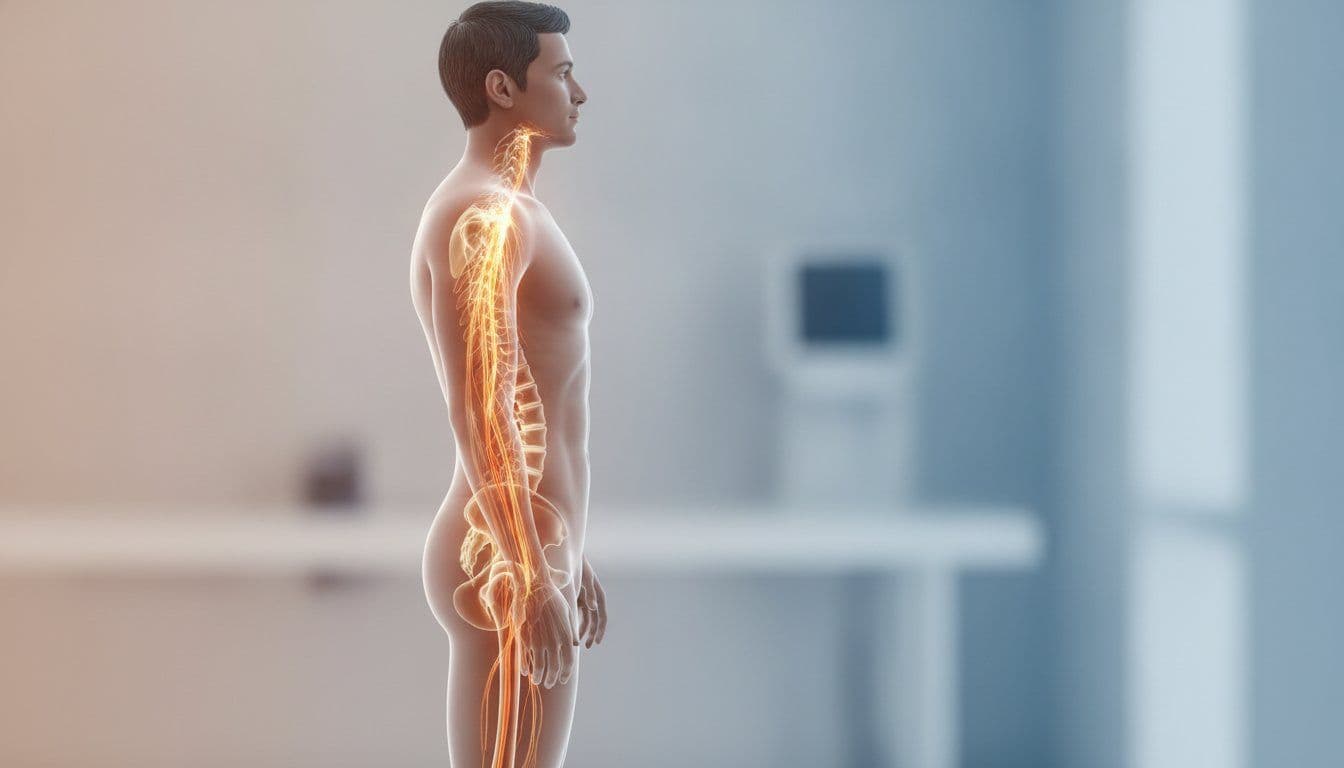
To get to grips with your pain, we first need to understand What is Sciatica? at its core. It isn't a disease in itself; it's a set of symptoms caused by the irritation or compression of the sciatic nerve. This is the longest and thickest nerve in your body. It starts in your lower back, travels through your hips and glutes, and runs right down to your toes. When this nerve gets "pinched" or inflamed, it sends out a distress signal that can be felt anywhere along that entire pathway. While the sensation can be quite scary and incredibly painful, it's rarely a medical emergency. Our role as your physiotherapist is to act as a detective. When you come to us for physiotherapy for sciatica, we aren't just looking at where it hurts. We're hunting for the mechanical "why" behind the pinch.
Common Symptoms You Should Not Ignore
Nerve pain doesn't behave like a normal muscle ache. It's often unpredictable, sharp, and downright miserable. You might experience electric shock sensations that shoot down the back of your leg, or perhaps a persistent numbness that feels like your foot has "gone to sleep" and won't wake up. Some people describe a feeling of ants crawling under their skin, known as pins and needles. A classic sign of true nerve irritation is pain that spikes when you cough, sneeze, or strain. This happens because those actions momentarily increase the pressure inside your spinal canal. If your leg pain feels like a hot poker rather than a dull, heavy bruise, your sciatic nerve is likely calling for help.
Why Your Back is Often the Silent Culprit
It's a common mystery. Your leg is screaming, but your back feels perfectly fine. This happens because the "pinch" occurs at the nerve root in your spine, but your brain projects the pain to where the nerve ends in your leg or foot. Often, a small bulge in one of your spinal discs or even just local inflammation can "chemicalise" the nerve. This means the nerve becomes hypersensitive to even the smallest movements. You don't need a "slipped" disc to feel awful. Sometimes, it's just a bit of joint stiffness or swelling that needs a hands-on nudge to settle down. When you choose physiotherapy for sciatica at our clinics, we focus on reducing that spinal pressure to calm the nerve down quickly. You can find more about the various conditions we treat to see how these spinal issues manifest and how we fix them without surgery.
The Surprising Causes of Sciatica and Nerve Entrapment
While many people assume a herniated disc is the only culprit, our experience in Milton Keynes and Northampton shows that lifestyle habits often play a bigger role. If you're an office worker in Milton Keynes spending eight hours a day in a chair, that constant pressure on your glutes can irritate the nerve directly. Similarly, tradespeople in Northampton who perform repetitive lifting can develop muscular imbalances that "tug" on the sciatic nerve. It's not just physical; stress and tension act like a volume knob for your brain, making nerve pain feel significantly sharper and more overwhelming than it might otherwise be. Identifying these triggers is the first step in successful physiotherapy for sciatica.
Lifestyle and Occupational Triggers
Have you heard of "Wallet Sciatica"? It sounds cheeky, but sitting on a thick wallet or a mobile phone in your back pocket tilts your pelvis and puts direct, lopsided pressure on the sciatic nerve. Over months, this creates a chronic "pinch" that mimics a spinal problem. Your desk setup is another frequent flyer in our clinics. A chair that doesn't support your lumbar curve or a monitor at the wrong height forces your body into compensations that eventually strain the lower back. We also see many "weekend warriors" who experience a flare-up after a sudden increase in activity. If you've just started a new running programme without building up your strength, the repetitive impact can lead you to seek physiotherapy for sciatica to settle the resulting inflammation.
When the Nerve is Trapped Elsewhere
Sometimes, the issue isn't in your back at all. This is known as peripheral nerve entrapment. A prime example is Piriformis Syndrome, where a small muscle in your buttock becomes tight or spasms, squeezing the sciatic nerve as it passes underneath. It feels exactly like a disc problem, but the solution is entirely different. This is why a thorough gait assessment is so vital. By watching how you move, we can see if your hip is collapsing or your foot is over-pronating, both of which can cause the muscles around your nerve to work overtime. While gentle stretches for sciatica can provide temporary relief, fixing the mechanical trigger is the only way to stay pain-free long term. If you're tired of the guesswork, you can chat with our team to find out what's actually causing your symptoms.
Is it Sciatica or Meralgia Paresthetica? How to Tell
If you've been scouring the internet for physiotherapy for sciatica because of a numb patch on your leg, you might be surprised to learn the problem isn't your back at all. Meralgia Paresthetica (MP) is a common "mimic" that we see frequently in our clinics. While sciatica involves the massive nerve exiting your spine, MP is caused by a much smaller nerve getting squashed at the front of your hip. It's strictly an outer thigh issue. You won't feel it in your glutes, and it certainly won't travel down to your toes. We often call it "Skinny Jean Syndrome" because tight clothing, heavy tool belts, or even a sudden change in weight can compress the nerve against the inguinal ligament in your groin. The good news? It's much easier to treat once you know what it actually is.
It's vital to remember that MP is a sensory nerve issue only. This means that while it can be incredibly annoying, it doesn't cause muscle weakness in your foot or a "drop" in your gait. If you're struggling to stand on your tiptoes or find your leg buckling, that's a signal that the problem is likely higher up in the spinal roots. Reassuringly, MP won't cause that deep, throbbing back pain associated with disc issues. It’s a local pinch that requires a local solution, rather than a full-scale spinal rehabilitation plan.
The Location Test for Leg Pain
A simple way to tell the difference is to track the path of your discomfort. Does the pain travel past your knee? If it does, you're likely dealing with a spinal issue. MP typically stops at the knee joint. Another clue is the type of sensation. Sciatica often feels like a deep, gnawing ache or a sharp bolt of lightning. In contrast, MP usually presents as a surface-level burning, tingling, or a "dead" patch of skin on the side of your thigh. If your pain feels more like it's coming from the bony part of your lower back or hip, you might find our sacroiliac joint pain guide helpful for ruling out other common hip-related mimics.
Why a Professional Diagnosis is Essential
Self-diagnosis is a dangerous game when it comes to nerve pain. Treating MP with spinal stretches won't just be ineffective; it could potentially aggravate the real issue. Our team uses specific clinical tests to differentiate between a "root" problem in the spine and a "peripheral" pinch in the hip. We also have the expertise to use musculoskeletal ultrasound for pain, allowing us to see the nerve in real-time and check for inflammation or entrapment. This level of detail ensures your physiotherapy for sciatica, or the treatment for its mimics, is built on facts, not guesswork. We focus on getting you an accurate plan from day one so you aren't wasting weeks on exercises that don't work.

Practical Advice. How to Manage Sciatica at Home
Managing nerve pain at home is about calming the system down rather than forcing it to move. For the first 48 hours of a flare-up, reach for an ice pack. Wrap it in a tea towel and apply it to your lower back for 15 minutes to dampen the chemical inflammation around the nerve root. After that initial period, heat is often better for relaxing the muscles that are likely spasming in sympathy. When it's time for bed, side sleepers should place a pillow between their knees. This keeps your pelvis neutral and stops your spine from twisting, which offloads the pressure on your back. If you're a fan of tight belts or jeans, try the 'Two-Finger Rule'. If you can't slide two fingers under your waistband, it's too tight. Pressure at the groin can aggravate the nerves we've discussed, making your symptoms feel much sharper.
Safe Movement and Pacing
Bed rest is the absolute worst thing you can do for a trapped nerve. It causes your joints to stiffen and your muscles to weaken, which only drags out your recovery time. Instead, focus on 'relative rest'. This means staying active without 'poking the bear' of your pain. If a walk feels okay for ten minutes but hurts at fifteen, stop at ten. If you're working at a desk in Towcester, set a timer. Every 30 minutes, stand up, reach for the ceiling, and walk to the kettle. These micro-breaks are essential for keeping the blood flowing to the nerve and preventing the area from becoming stagnant. Practical physiotherapy for sciatica starts with these small, consistent habits that prevent your symptoms from worsening during the working day.
Gentle Exercises for Nerve Health
Nerve flossing is a brilliant technique to improve mobility. Imagine your nerve is like a thread inside a straw. We want to gently slide it back and forth to ensure it isn't getting snagged on surrounding tissues. This should never be a painful stretch. If you feel a sharp 'pull', you're doing too much and should back off immediately. You can also try simple pelvic tilts. Lie on your back with your knees bent, then gently flatten your spine against the floor by tucking your tailbone. This creates a tiny bit of extra space for the nerve roots in your lower back. While these are great for immediate relief, they are 'entry-level' movements and aren't a replacement for a full physiotherapy for sciatica plan. If you're ready to move beyond basic home management and get to the root of the problem, get in touch with our team to start your recovery.
How RED Physiotherapy Fixes Sciatica. Hands-On Care
If you've been to a clinic before and were simply handed a photocopied sheet of stretches before being sent on your way, you'll find our approach quite different. We don't believe in "exercise-only" rehabilitation. At our family-run practices in Milton Keynes and Northampton, we prioritise a hands-on approach from your very first appointment. By using manual therapy and specific joint mobilisations, we can often reduce the immediate mechanical pressure on your nerve, providing the "breathing room" your body needs to start healing. Our goal isn't just to mask the pain; it's to fix the movement patterns that caused the irritation in the first place. This ensures your physiotherapy for sciatica leads to long-term autonomy rather than a cycle of temporary fixes.
Our Treatment Toolkit for Nerve Pain
We use a blend of traditional expertise and modern technology to get you back to your passions. For chronic cases where the nerve has been grumpy for months, we often introduce shockwave therapy to stimulate the body's natural repair response. Unlike many general practices, we also utilise musculoskeletal ultrasound. This allows us to get a clear, real-time picture of the tissues surrounding your nerve, helping us rule out other issues and confirm our diagnosis. You aren't just another booking to us; we genuinely care about your results. You can meet our team to see the specialists who will be guiding your recovery from day one.
When to Seek Urgent Help
While most nerve pain is manageable with the right physiotherapy for sciatica, there are a few "Red Flag" symptoms that require immediate medical attention. If you experience any of the following, you should skip the physio clinic and head straight to A&E:
- Sudden changes in your bladder or bowel habits (difficulty going or loss of control).
- Numbness or tingling in your "saddle" area (the bits that would touch a bike seat).
- Significant, sudden weakness in your legs that makes standing difficult.
- Sexual dysfunction that appeared at the same time as your back pain.
These symptoms can indicate a rare but serious condition called Cauda Equina Syndrome. For everyone else, rest assured that your pain, while intense, is something we deal with every single day. We're here to provide the expert guidance and hands-on care needed to get you moving freely again without the need for scary surgical interventions or endless packets of painkillers. We focus on efficient, effective results that respect both your time and your wallet.
Take Charge of Your Recovery Today
You don't have to live with the constant shadow of leg pain or the fear that surgery is your only option. We've explored how understanding the "why" behind your symptoms, whether it's true sciatica or a mimic like Meralgia Paresthetica, is the first step toward getting your life back. By choosing expert physiotherapy for sciatica that prioritises hands-on treatment from your very first visit, you're opting for a faster, more effective route to recovery than any generic exercise sheet could provide.
As a family-run clinic, we're deeply committed to your progress and offer transparent, honest pricing so you always know where you stand. We're ready to help you move from a state of frustration to one of confident, long-term health. Don't let another week slip by while you wait for a generic appointment. Book your hands-on assessment in Milton Keynes, Northampton, or Towcester today and let's get you back to the activities you love. You've got this, and we're here to guide you every step of the way.
Frequently Asked Questions
Can sciatica go away on its own without treatment?
Yes, it can, but it is often a bit of a gamble. While mild irritation might settle with rest, you are frequently looking at a frustrating four to six week wait. Without professional physiotherapy for sciatica to address the underlying cause, the pain often returns the moment you return to your normal routine. We prefer to fix the root issue early so you aren't constantly looking over your shoulder waiting for the next flare up.
How long does it take for physiotherapy to fix sciatica?
Most of our patients feel a significant shift in their symptoms after their first hands on session. A full recovery typically takes between four and eight weeks, depending on how long the nerve has been grumpy. We focus on an efficient, results driven plan that prioritises your recovery speed. We don't believe in dragging out treatment or booking unnecessary appointments if you are already back to your best.
Is walking good for sciatica or will it make it worse?
Walking is generally brilliant for nerve health because it encourages blood flow and gentle movement. The trick is to listen to your body and find your "threshold." If you find that your leg pain increases significantly after ten minutes, that is your signal to stop and rest. It is much better to take several short, comfortable walks throughout the day than to push through one long, painful one.
Can Meralgia Paresthetica be mistaken for a slipped disc?
It happens more often than you might think. Because both conditions cause numbness and burning sensations, many people assume they have a serious spinal issue. However, Meralgia Paresthetica is strictly a hip and outer thigh problem. If your pain does not travel past the knee or into your back, it is likely a local pinch that we can resolve without worrying about your spinal discs.
What happens if a trapped nerve is left untreated for too long?
If a nerve is left compressed for a long period, it can become hypersensitive, leading to chronic pain that is much harder to shift. You might also notice persistent muscle weakness or a "heavy" feeling in the leg. Seeking physiotherapy for sciatica early prevents these long term complications and ensures your nervous system doesn't stay in a state of high alert for months on end.
Do I need an MRI scan before I see a physiotherapist?
You absolutely do not need a scan before booking in with us. Our clinical tests are highly accurate at identifying nerve irritation and spinal pressure. In fact, many MRI scans show "bulges" in people who have no pain at all, which can be quite misleading. We treat the person and the symptoms in front of us, using diagnostic ultrasound if we need a closer look at the soft tissues.
Is sciatica the same as a trapped nerve in the back?
Sciatica is a specific type of trapped nerve. Your back is full of different nerves, but the sciatic nerve is the longest and thickest one in the body. When people talk about a "trapped nerve" in their lower lumbar region that causes leg pain, they are almost always talking about sciatica. The treatment principles remain the same; we need to find where the pinch is and offload it.
How much does private physiotherapy for sciatica cost in Northamptonshire?
Private fees in the UK vary based on the clinic's location and the specialist expertise provided. While the NHS is free, the current six to twelve week waiting list is often too long for those in acute pain. Choosing private care means getting a hands on assessment within days. For our most up to date rates in Milton Keynes and Northampton, please visit our prices page for full transparency.
Focus Keywords
- physiotherapy for sciatica

Tags:
About the Author
Red Physiotherapy Team
Content Team
Health and wellness content from the RED Physiotherapy team.