
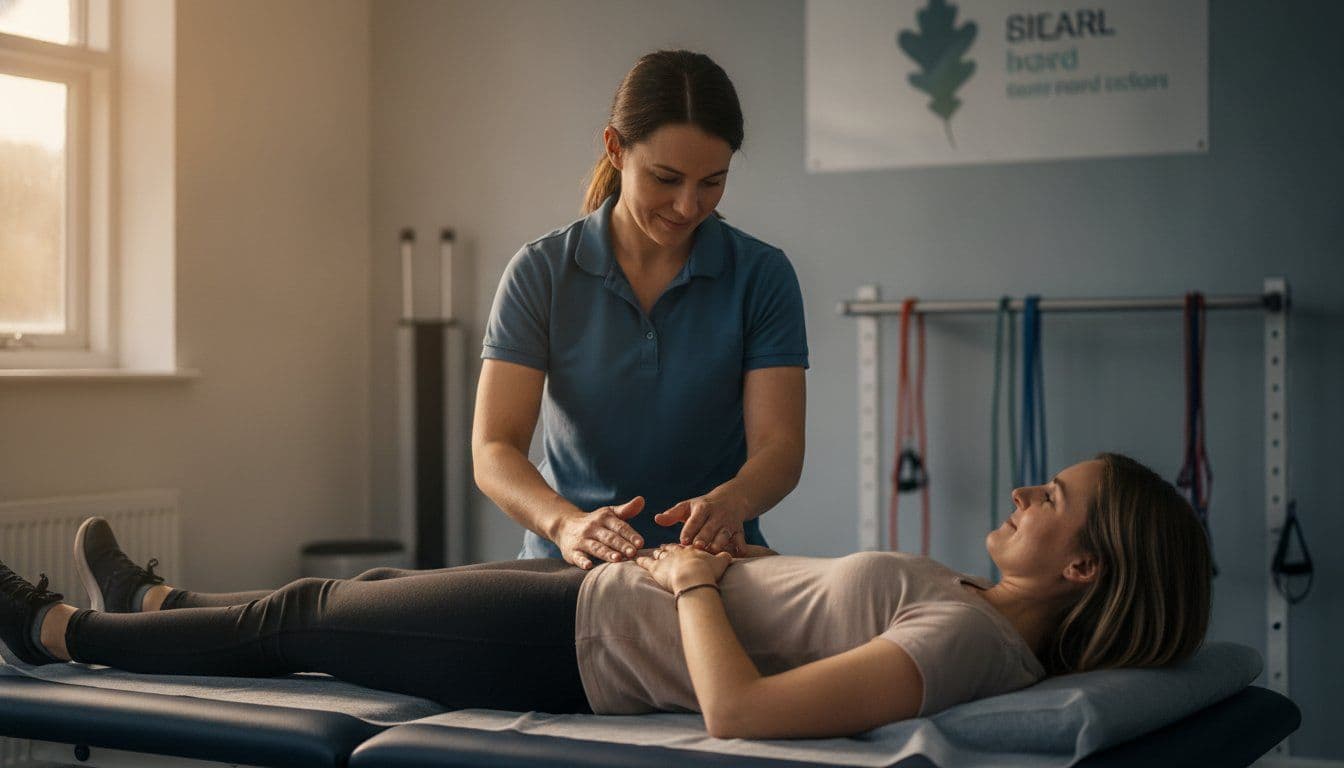
Safe Core Exercises After C-Section: A Physio’s Guide to Real Recovery
Struggling with recovery? Our physio guide offers safe core exercises after C-section to help you rebuild strength and feel like yourself again. Real, hands-...
Let's be honest, after a C-section, your core can feel less like a powerhouse and more like a stranger you haven't seen in months. With C-section rates reaching 32.5% in 2025, you're certainly not alone in this feeling, yet the recovery advice you'll find online remains frustratingly vague. You might be staring at your trainers wondering if you'll ever feel "connected" again, or perhaps you're terrified that one wrong move will pull at your scar. Finding safe core exercises after C-section isn't just about doing a few pelvic tilts. It's about re-establishing the link between your brain and your muscles through expert, hands-on guidance.
We understand that you don't just want to "take it easy," you want to feel like yourself again. This guide provides the exact roadmap we use at our Milton Keynes, Northampton, and Towcester clinics to help you move beyond generic recovery. You'll discover the difference between movement that is merely safe and movement that is truly effective. We'll show you how to rebuild strength from the inside out, giving you the confidence to return to the sports you love without the fear of doing damage.
Key Takeaways
- Understand that a C-section is major abdominal surgery, meaning recovery requires managing intra-abdominal pressure rather than just waiting for the scar to heal.
- Discover a structured progression of safe core exercises after C-section that move from deep breathing to functional movement without straining your incision.
- Learn why traditional crunches and planks can actually hinder your progress and how to replace them with movements that target your deep core muscles effectively.
- Find out how hands-on manual therapy and scar tissue massage can release "tethered" muscles and resolve the back pain often felt after surgery.
- Gain a clear roadmap for returning to high-level activity by rebuilding your natural corset through evidence-based clinical rehabilitation.
The Reality of C-Section Recovery: More Than Just a Scar
A C-section is often described in birth plans as a delivery method, but from a clinical perspective, it is major abdominal surgery. When you spend time understanding the C-section procedure, you realise that the surgeon moves through seven different layers of tissue to reach your baby. This isn't just about a scar on your bikini line. It's about the deep disruption of the abdominal wall and the fascia that holds everything together. Many of my patients in Milton Keynes and Northampton arrive feeling frustrated because they've been left on an NHS waiting list for months, only to receive a generic "take it easy" at their six week check. You deserve a plan that actually addresses the physical trauma your body has navigated.
One of the biggest myths I hear in the clinic is that your abdominal muscles were cut. In reality, they are usually separated and pushed aside to reach the uterus. While this is better for long-term healing, it still leaves the area feeling disconnected or even numb. This is why safe core exercises after C-section are vital. We aren't just trying to get back to the gym; we are teaching your brain how to manage intra-abdominal pressure again. If you jump straight into traditional ab work, you risk putting too much strain on the healing incision and the underlying tissues that are trying to knit back together.
Why the First Six Weeks Matter
The initial six weeks are the inflammatory phase of healing. Your body is busy laying down new collagen and repairing the surgical site. While you shouldn't be lifting heavy weights, doing nothing can be just as detrimental. Gentle walking is essential for circulation and preventing blood clots. It also provides a light, functional load to your core that encourages the tissues to heal with better alignment. At RED Physiotherapy, we focus on movement that supports this natural healing process rather than fighting against it.
If you need to travel long distances or fly during your initial recovery period, specialized medical support can help manage the physical demands of the journey; learn more about RN MEDflights and how they assist non-emergency patients with travel coordination and medical accompaniment on commercial flights.
The Connection Between the Core and Pelvic Floor
Think of your torso as a pressurised canister. The diaphragm is the lid, the core muscles are the sides, and the pelvic floor is the base. Even though you didn't have a vaginal birth, your pelvic floor carried the weight of a growing baby for nine months. It still needs rehabilitation. Effective and safe core exercises after C-section must involve the pelvic floor and the breath. If one part of the "canister" isn't pulling its weight, the whole system fails, often leading to back pain or that "heavy" feeling in your pelvis.
The Science of Post-Surgical Core Rehabilitation
Understanding the science behind your recovery is the first step to feeling like yourself again. The primary focus of any post-surgical rehab is the Transverse Abdominis (TA). Think of this muscle as your body's natural corset. It wraps around your midsection, providing deep stability and support. However, after a Caesarean, there is often a neurological disconnect. Your brain literally "forgets" how to fire these muscles because of the surgical trauma. While social media "fit-mums" might suggest jumping back into intense circuits, this often ignores the physiological reality of tissue healing. Following NHS guidance on C-section recovery is a good starting point, but a tailored plan is what truly restores function.
To help bridge this gap, many women find that holistic wellness care is a valuable addition to their recovery; you can visit Livelovelife Chiropractic to learn how gentle techniques can help re-establish the neurological pathways and support the body's natural healing process.
It isn't just about the muscles themselves. Fascia, the connective tissue surrounding your muscles, can become "tethered" by scar tissue. This creates a literal tug-of-war in your abdomen, making it harder for your core to engage correctly. This is why safe core exercises after C-section must be combined with hands-on treatment. We don't just hand you a sheet of exercises and send you on your way. We use manual therapy to ensure the tissues are mobile enough to actually move when you tell them to. If you're feeling frustrated by a lack of progress, it might be worth looking at our women's health services to see how a hands-on approach makes the difference.
Diastasis Recti and the C-Section Scar
Diastasis Recti, the separation of the rectus abdominis muscles, is incredibly common after pregnancy. When you've had a C-section, the scar can complicate this by creating uneven tension across the abdominal wall. In our Milton Keynes and Northampton clinics, we perform a detailed assessment to check the depth and tension of any gap. We look at how the scar tissue is healing and whether it's preventing your deep core from doing its job effectively.
Managing Intra-Abdominal Pressure
Rehab is all about pressure management. Intra-abdominal pressure is the internal force regulated by coordinated breathing and muscle tension. If you see "doming" or "coning" (a ridge popping out along your midline) during movement, it's a sign that your core isn't managing this pressure correctly. This is your body's way of telling you to scale back. Your diaphragm plays a massive role here; if you're holding your breath, you're spiking that pressure and putting unnecessary strain on your healing scar. Learning to breathe through safe core exercises after C-section is the foundation of every successful recovery.
Why Generic Ab Workouts Fail (and What to Do Instead)
The standard advice for postnatal fitness is often a bit of a joke. Most mums are told to wait for their six week check, get a quick "all clear" from a GP who might not even look at their scar, and then they're left to their own devices. This is where the trouble starts. Many women jump straight back into crunches or planks, thinking they need to "tighten up" as quickly as possible. In reality, traditional sit-ups are often the worst place to start. They create a huge spike in internal pressure that can strain your incision and actually worsen muscle separation. If you haven't re-established the connection to your deep muscles, you're just putting a heavy load on a foundation that isn't ready to hold it.
I often hear patients in our clinics say, "I've tried all the exercises I found online, but they don't work." This isn't because you're "broken," it's usually because your muscles aren't firing in the right order. If your deep core is inhibited by surgical trauma, your hip flexors or lower back muscles will happily take over the work. You might be doing the movement, but you aren't getting the results. This is why safe core exercises after C-section must start with neurological re-education. We need to "wake up" the muscles before we start asking them to lift the heavy stuff. Following Mayo Clinic guidelines on postpartum exercise can help you identify low-impact starting points, but professional oversight ensures you're actually using the right muscles.
Common Pitfalls in Post-C-Section Fitness
One of the biggest dangers of the "too much, too soon" approach is the risk of an incisional hernia. Your abdominal wall is significantly weakened after surgery, and pushing for high-intensity moves before the fascia has healed can cause serious issues. Similarly, many women ignore their pelvic floor because they didn't have a vaginal birth. This is a mistake. Ignoring the base of your "core canister" often leads to long-term issues like incontinence or pelvic organ prolapse. Remember, "no pain, no gain" is a dangerous mantra here. If it hurts, or if you feel a pulling sensation at your scar, your body is telling you to stop.
The RED Physiotherapy Difference: Hands-On from Day One
We do things differently here. We aren't an "exercises-only" clinic that just hands you a generic sheet of movements to do at home. At our local clinics in Northampton and Towcester, we provide hands-on clinical assessments and manual therapy from day one. We use specialist techniques to release scar tissue and "wake up" inhibited muscles that exercises alone can't reach. This personal touch ensures your safe core exercises after C-section are actually effective. If you're tired of conflicting online advice and want a clear, professional plan, you can get in touch with our team to start your real recovery.
5 Safe Core Exercises for Your First 12 Weeks
Finding safe core exercises after C-section shouldn't feel like guesswork. While we've discussed the science of why your muscles might feel disconnected, putting that knowledge into practice requires a phased approach. These movements are designed to be low-impact and gentle on your scar, but they are incredibly powerful for rebuilding your internal corset. For a more personalised assessment and to ensure your form is spot on, our Women’s Health Physiotherapy team can help you fine-tune these movements in person at our local clinics.
Foundational Movements: The First 0-6 Weeks
During the initial healing phase, your focus is on re-establishing the neurological connection between your brain and your core. This isn't about sweat; it's about subtlety.
- 1. Connection Breath: This re-establishes the link between your diaphragm and pelvic floor. Inhale to expand your ribs, and as you exhale, gently lift the pelvic floor. Physio Pro-Tip: Imagine your pelvic floor is an elevator gently rising as you exhale. Don't force it.
- 2. Pelvic Tilts: Lying on your back with knees bent, gently flatten your lower back into the floor by tilting your pelvis toward your chin. Physio Pro-Tip: This is a tiny, controlled rock of the hips. It shouldn't feel like a workout for your legs.
- 3. Static TA Activations: While breathing normally, try to gently draw your lower abdomen away from your waistband. Physio Pro-Tip: Think about pulling your two hip bones toward each other rather than sucking your stomach in.
Building Strength: Weeks 6-12 and Beyond
Once your scar has healed and you have clearance from your postnatal check, we can begin to introduce more dynamic movements. We are now looking to build resistance against movement.
- 4. Glute Bridges: Lift your hips off the floor while keeping your core "set" and your ribs down. This strengthens the posterior chain which supports your core. Physio Pro-Tip: Drive through your heels and squeeze your glutes at the top without over-arching your lower back.
- 5. Modified Dead Bugs: Lying on your back, lift your legs to a tabletop position. Slowly lower one heel to the floor while keeping your back flat. Physio Pro-Tip: If you feel your back arching or see "coning" in your stomach, you've gone too far. Stop and reset.
The goal of these safe core exercises after C-section is functional stability rather than a 'flat stomach' aesthetic. By focusing on how your body manages pressure, you're laying the foundation for a return to high-level activity without the risk of injury. If you're ready to move beyond generic advice and get a hands-on recovery plan that actually works, book an appointment at our clinics in Milton Keynes, Northampton, or Towcester today.
Beyond Exercises: The RED Physiotherapy Hands-On Approach
While safe core exercises after C-section are the foundation of your home recovery, they often aren't enough on their own. Many women find that even with the best intentions, their core still feels a bit like a stranger. This is usually because the physical scar tissue and the trauma of the surgery need a more direct, clinical approach. At RED Physiotherapy, we don't just hand you a list of things to do; we get stuck in with manual therapy to address the root cause of your discomfort. We want to ensure that your muscles aren't just moving, but are actually functioning in harmony.
We often see women who have "recovered" from their surgery but are now struggling with persistent lower back pain. This is usually because the core isn't providing the support the spine needs. In addition to clinical rehab, ensuring your sleeping posture is supported by a quality mattress from belfastbedsuperstore.co.uk can help alleviate pressure on your back while you sleep. We view ourselves as your long-term health partner. Whether you visit us in Milton Keynes, Northampton, or Towcester, our goal is to get you back to your personal passions. Whether that is training for a half-marathon or simply being able to pick up your toddler without a second thought, we provide the hands-on care to make it happen.
Scar Tissue Management and Sensitivity
Scar tissue isn't just a surface-level mark. It can "tether" your abdominal muscles, preventing them from sliding and gliding as they should. This often results in a strange pulling sensation or even patches of numbness around the incision. Our specialist physios use manual techniques to desensitise the area and release the soft tissue. This "wakes up" the inhibited muscles, making your safe core exercises after C-section far more effective. In our experience, combining hands-on treatment with movement is significantly faster than relying on exercise-only protocols.
When to Seek Professional Help
Recovery isn't always a straight line, but there are certain "red flags" you shouldn't ignore. If you are experiencing any of the following, it's time to see a specialist:
- Leaking urine when you cough, sneeze, or lift.
- Pain during sex or internal discomfort.
- A noticeable "bulge" or "doming" along your midline when you move.
- Persistent back or pelvic pain that isn't improving with rest.
These are signs that your internal pressure management system needs a professional tune-up. A "Mummy MOT" or a specialist postnatal check-up can provide the clarity you need to move forward with confidence. You don't have to settle for "just getting by." If you're unsure where to start or want a second opinion on your recovery, you can Contact Us for a full clinical assessment at one of our local clinics.
Focus Keywords: safe core exercises after C-section
Reclaim Your Strength and Confidence
You've been through a lot, and your body deserves more than a "wait and see" approach. Real recovery after a Caesarean isn't about rushing back to the gym for a set of crunches that don't actually work. It's about understanding that your core is a complex system that needs to be reconnected, not just loaded with weight. By focusing on safe core exercises after C-section and addressing the underlying scar tissue with professional care, you can move away from that feeling of disconnection and back toward the activities you love.
At RED Physiotherapy, we don't just give you a list of moves and wish you luck. Our expert Women's Health Physiotherapists provide hands-on treatment from your very first visit to ensure your muscles are actually firing correctly. With clinics across Milton Keynes, Northampton, and Towcester, we're here to help you skip the long wait times and get real, efficient results. You aren't just a patient to us; you're a partner in your own progress.
Beyond specialized physical therapy, monitoring your broader health markers can provide valuable insights during the recovery process. For accessible private medical checks and health assessments, readyhealth.co.uk offers services designed to help you stay informed about your overall wellbeing.
Ready to stop guessing and start your real recovery? Book Your Specialist Postnatal Assessment in Milton Keynes or Northampton today. You've got this, and we're here to make sure you get there safely.
Focus Keywords: safe core exercises after C-section
Common Questions About C-Section Recovery
When can I safely start core exercises after a C-section?
You can start gentle diaphragmatic breathing and static activations within the first few days. However, you should wait until your six week check before starting more structured safe core exercises after C-section. Every recovery is different, so we always recommend a clinical assessment before you start increasing the intensity of your workouts. This ensures your internal tissues are healing just as well as your external scar.
Is it normal to feel a 'pulling' sensation near my scar during exercise?
Yes, a mild pulling sensation is common as scar tissue and fascia begin to stretch. While it's often normal, it's a sign that your tissues are "tethered" and need more mobility. This is where our hands-on treatment makes a massive difference. We use manual therapy to release that tight tissue, making your movements feel smoother and far more comfortable. If the pulling becomes sharp or painful, you should stop and let us take a look.
How do I know if I have Diastasis Recti after a Caesarean?
The most obvious sign of Diastasis Recti is a "doming" or "coning" effect along your midline when you try to sit up or lift something. You might also feel a soft gap between your abdominal muscles. While you can try to feel for this yourself, it's notoriously tricky to get right. Our specialists in Milton Keynes use precise clinical tests to check the tension of the fascia, which is much more important than just the width of the gap.
Can I do planks or crunches if my scar feels healed?
Planks and crunches are usually the last things we introduce, even if your scar looks perfectly fine on the outside. External healing doesn't always mean your deep core can handle the massive spike in internal pressure these exercises cause. If you jump into crunches too early, you risk straining your incision or worsening muscle separation. We'll help you build up the foundational strength first so these moves actually become effective later on.
Will core exercises help with the 'C-section shelf' or pouch?
While exercises won't "melt" fat, they definitely help by improving the tone and tension of your abdominal wall. The "shelf" is often a combination of skin, fat, and muscles that have lost their ability to hold tension correctly. By performing safe core exercises after C-section and using scar massage to flatten the tissue, we can often significantly improve the appearance and support of your midsection. It's about restoring the function first.
What should I do if I leak urine when performing core movements?
If you're leaking during exercise, it's a clear signal that your core "canister" isn't managing pressure correctly. This is incredibly common but it isn't something you have to live with. It usually means your pelvic floor and core aren't working in sync. You should stop the movement that causes the leak and seek a Women's Health assessment. We'll find the weak link in the chain and help you fix it quickly.
How can a Women's Health Physio in Milton Keynes help me recover faster?
We don't just give you a sheet of paper and send you home. Our Milton Keynes team provides hands-on treatment to release scar tissue and "wake up" muscles that have been inhibited by surgery. This clinical approach is much faster than the "wait and see" method. We create a clear, personalised plan that moves you from basic recovery to high-level activity without the frustration of conflicting online advice.
Is it too late to start core rehab if my C-section was years ago?
It is absolutely never too late to start your rehabilitation. We see women in our Northampton and Towcester clinics whose children are now in school and they're still feeling "disconnected" from their core. Your brain and muscles can be retrained at any time. Whether your surgery was six weeks ago or six years ago, we can use manual therapy and targeted exercises to restore your strength and resolve persistent back pain.
Tags:
About the Author
Red Physiotherapy Team
Content Team
Health and wellness content from the RED Physiotherapy team.