
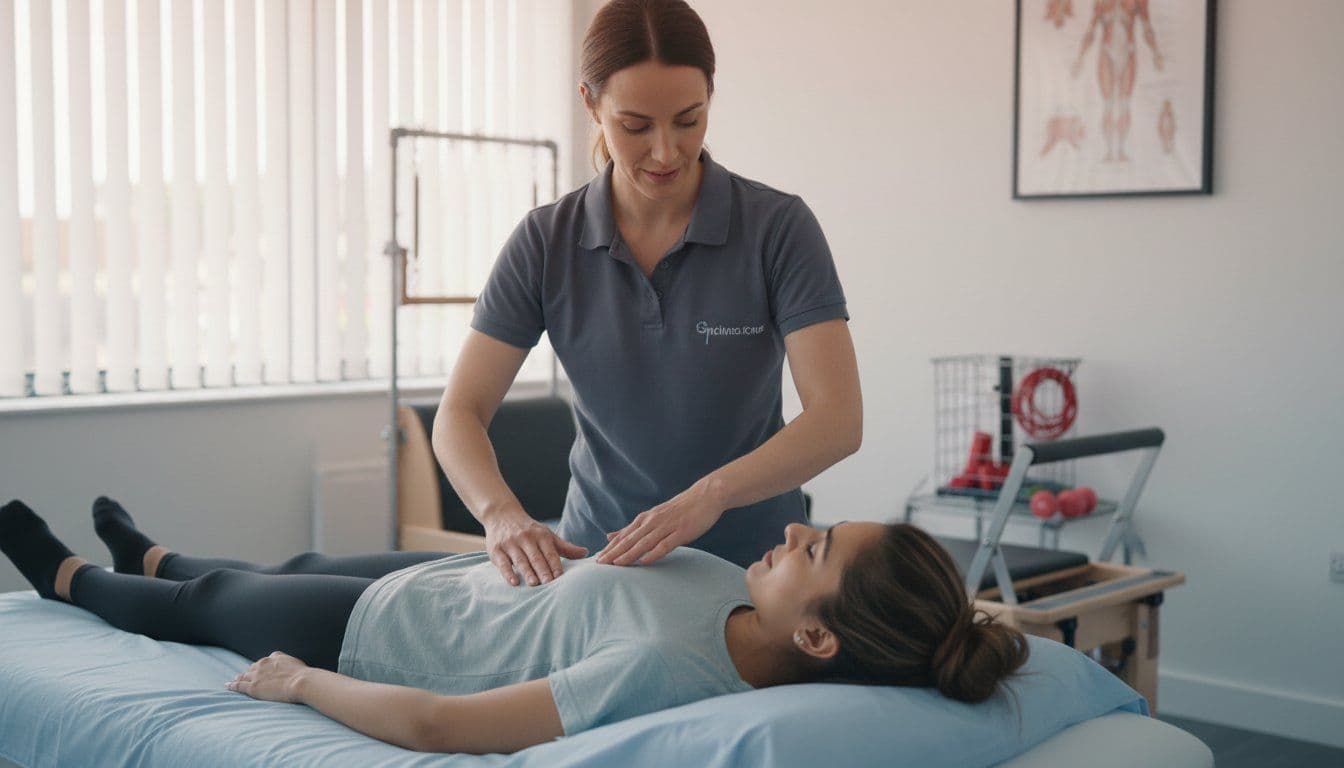
Safe Return to Exercise After Birth Northampton: Your Expert Recovery Guide
Ready for a safe return to exercise after birth Northampton? Ditch the guesswork. Our expert physio guide helps you heal and get back to HIIT with confidence.
Why does the standard six week check often feel like being handed the keys to a Ferrari when you've only just finished the MOT on your own body? It's a common frustration for many mums across Northampton who want to get moving again but feel held back by a gap in their stomach muscles or the constant worry of leaking during a workout. We know you're eager to swap the pram for your trainers, but rushing back without the right support often leads to pelvic girdle pain or long term injury. Achieving a safe return to exercise after birth Northampton isn't about following a generic calendar. At RED Physiotherapy, we treat this as a high performance rehab journey tailored to your specific recovery.
You deserve better than conflicting online advice or being told to just take it easy. In this guide, we'll explain how hands on, expert care helps you understand your new normal and identifies exactly when your body is ready for high impact activity. We'll explore the core pillars of postpartum movement and provide a graduated roadmap to get you back to the HIIT classes or sports you love with total confidence. This is your professional guide to moving from recovery to results without the guesswork.
Key Takeaways
- Learn why your recovery should be guided by how your body feels and performs rather than just waiting for a specific date on the calendar.
- Discover the essential steps for a safe return to exercise after birth Northampton, moving beyond the basic GP check to high impact fitness with confidence.
- Understand why hands on therapy beats generic exercise sheets by releasing tight structures and ensuring your core actually activates correctly.
- Get a clear, phased roadmap that takes you from gentle postnatal walks to running and HIIT workouts without the fear of leaking or pain.
- Identify the specific red flag symptoms that mean you should stop and seek expert clinical advice to protect your long term health.
Understanding a Safe Return to Exercise After Birth in Northampton
Most new mums are told that once they hit the six week milestone, they're "cleared" for exercise. In reality, that GP check is primarily designed to screen for major medical red flags, not to assess if your pelvic floor is ready for the impact of a treadmill or a heavy squat rack. Achieving a safe return to exercise after birth Northampton involves moving away from rigid timelines and focusing instead on a symptom led journey. Your body doesn't work on a calendar; it works on biological healing markers and functional strength. We see many women who feel an intense emotional pressure to "get back to normal" immediately, yet rushing this process often leads to setbacks that take months to correct.
Our approach at RED Physiotherapy prioritises your long term health over a quick fix. We specialise in guiding you through a safe return to exercise after birth Northampton by assessing your unique biomechanics and physical history. Understanding the Postpartum Period is essential because it acknowledges that your body has undergone a massive physiological shift. We act as your high performance mentors, ensuring that when you do return to the gym, you're doing so with a body that is genuinely resilient and ready for the load.
The Reality of Postnatal Healing
Tissue healing times vary significantly depending on your birth experience. For a vaginal delivery, the pelvic floor muscles can be stretched up to three times their normal length, requiring at least 6 to 8 weeks for initial soft tissue repair. If you've had a Caesarean, you're recovering from major abdominal surgery where multiple layers of muscle and fascia need 12 weeks to regain significant structural integrity. You also have to contend with relaxin, a hormone that keeps your ligaments soft and your joints less stable for several months, especially if you're breastfeeding. The golden window for postnatal rehabilitation is the first 12 months following delivery, a period where targeted intervention can prevent years of physical frustration.
Why Northampton Mums Seek Private Care
Waiting for help shouldn't be part of your recovery. Many mums in our community find that NHS wait times for pelvic health referrals can stretch to 12 or 18 weeks, leaving them in a state of limbo while symptoms like leaking or back pain persist. Early intervention is the most effective way to prevent long term issues such as prolapse or chronic diastasis recti. As a family run practice, we pride ourselves on providing fast access to hands on care that focuses on fixing the root cause of your discomfort. You can learn more about our patient first philosophy on our About Us page, where we outline our commitment to getting you back to the activities you love without the wait.
The Core Pillars of Postpartum Movement
Think of your body as a high performance machine that has just undergone a major overhaul. You wouldn't just bolt on new wheels and hope for the best; you would check the chassis and the engine first. The foundation of a safe return to exercise after birth Northampton rests on three specific pillars: your pelvic floor, your abdominal wall, and how you manage internal pressure through breathing. If one of these systems is out of sync, you will likely feel it the moment you try to pick up the pace. At RED Physiotherapy, we don't just hand you a generic sheet of exercises and send you on your way. We look at how these pillars support your movement in real time.
Pelvic Floor Health and Impact
Your pelvic floor isn't just a static muscle; it's a dynamic hammock that needs to react instantly every time your foot hits the pavement. When you run or jump, your pelvic floor has to withstand forces up to 2.5 times your body weight. If it's not ready, you might notice leaking, a feeling of heaviness, or even lower back pain. Simply doing a few kegels while waiting for the kettle to boil isn't enough for an active woman. Our Women’s health physiotherapy assessment goes much deeper, using hands on techniques to check muscle tone, coordination, and strength. This ensures you can safely get started with postpartum exercise without worrying about embarrassing accidents or long term damage.
Restoring the Abdominal Wall
Diastasis Recti often gets a bad reputation online, but let’s be clear: abdominal separation is a normal part of pregnancy. The goal isn't just closing the gap to look better in a swimsuit. It's about restoring functional tension so your deep core can support your spine. If your stomach domes or cones when you sit up or lift your baby, it is a sign that your pressure management needs a tune up. We focus on teaching you how to coordinate your breath with movement, ensuring your core provides a stable base for your limbs to move from. Strengthening this area is a vital component of a safe return to exercise after birth Northampton, allowing you to lift, carry, and eventually sprint with total control. If you're unsure if your core is firing correctly, feel free to reach out for a quick chat with our team.
Why Hands,On Assessment Beats Generic Exercise Sheets
We’ve all seen them: those grainy, photocopied exercise sheets handed out in hospital or found after a quick Google search. While these movements aren't necessarily "bad," they often fail because they ignore the unique physical hurdles your body is facing. At RED Physiotherapy, we don't believe in "exercises,only" care. A truly safe return to exercise after birth Northampton requires a hands,on assessment to identify why certain muscles aren't firing or why you're feeling that nagging pelvic pressure. If your pelvic floor is tight or your scar tissue is restricted, no amount of "bird,dogs" or "pelvic tilts" will fix the underlying biomechanical issue.
Every recovery journey is different. You might be dealing with a "gap" in your stomach muscles that won't close, or perhaps you're experiencing lower back pain every time you lift the car seat. We use our clinical expertise to look beyond the symptoms. By using diagnostic tools like musculoskeletal ultrasound or performing detailed internal examinations, we get a crystal,clear picture of your internal function. This removes the guesswork and allows us to build a plan that is entirely bespoke to your birth experience and your specific fitness goals.
Fixing the Root Cause
Scar tissue from a C,section or episiotomy can act like a tether, pulling on surrounding fascia and preventing your core from engaging properly. Our hands,on techniques work to release these restrictions, restoring normal tissue mobility so your muscles can actually do their job. We address a wide range of postnatal issues, which you can explore on our conditions we treat page. By using manual therapy from day one, we clear the path for your recovery, ensuring that your foundation is solid before we even think about adding weight or speed. We don't just tell you what to do; we manually help your body find the right patterns again.
The RED Physiotherapy Difference
We approach your recovery as high,performance mentors, not just observers. This means we treat you as an active partner in your rehab, moving efficiently from clinical manual therapy to a structured home programme. We don't drag treatment out for the sake of it; our goal is to fix the problem as quickly as possible so you can get back to what you love, whether that’s a local parkrun or a CrossFit session. Every plan we create is entirely tailored, acknowledging that a mum recovering from a 36,hour labour has very different needs than one who had a planned C,section. This patient,first, hands,on philosophy is why so many women trust us to guide their safe return to exercise after birth Northampton. We focus on long,term autonomy, giving you the tools and the physical resilience to stay active for years to come.
Your Graduated Roadmap to Fitness in Northampton
Recovery isn't a race, but it does need a clear direction. You wouldn't expect to run a marathon without training, and your body needs the same respect after the marathon of childbirth. A safe return to exercise after birth Northampton follows a graduated path that respects your biology while building your confidence. We break this down into three distinct phases, ensuring you hit specific strength markers before moving to the next level of intensity. This isn't about doing "enough" to get by; it's about making sure your foundation is rock solid so you can thrive in the long term.
Phase 1 covers the first 0 to 6 weeks. This time is for rest, healing, and gentle "connection" work. Focus on your breathing and short, flat walks to get your circulation moving. If you're local, the gentle circular paths at Abington Park are perfect for these early outings. Phase 2 spans from 6 to 12 weeks. Here, we introduce low impact resistance like bodyweight squats and glute bridges. You can start increasing your walking duration, perhaps tackling the more sustained stretches of the Brampton Valley Way. Phase 3 begins after the 12 week mark. This is the "high impact" window where we prepare you for a safe return to exercise after birth Northampton, focusing on the specific demands of running or gym classes.
Milestones for High,Impact Sport
Before you lace up your trainers for a Couch to 5k or a HIIT session, you need to pass a few functional tests. We look for specific "readiness" markers to ensure your pelvic floor and joints can handle the load. You should be able to achieve the following without any leaking, heaviness, or pain:
- 30 minutes of brisk walking at a consistent pace.
- 10 single leg squats on each side with good control.
- 1 minute of continuous hopping in place.
- 10 repetitions of a "jog on the spot" movement.
If you struggle with any of these, it's a sign that your system needs more targeted strength work. We highly recommend a professional running assessment to check your gait and mechanics before you start pounding the pavement. This prevents the "stop,start" cycle of injury that happens when you return to high intensity too soon.
Practical Advice for the Busy Mum
Finding an hour for the gym is often impossible with a newborn, so we advocate for "movement snacks." These are 5 to 10 minute bursts of targeted exercises, like calf raises while you're making a brew or pelvic floor lifts during a feed. It's also vital to invest in a high quality sports bra, as your breast tissue and ribcage dimensions will have changed significantly. Footwear needs to be checked after pregnancy because hormonal changes often cause the arches of your feet to flatten, which can increase your shoe size and change how you absorb impact. If you're ready to move from walking to running, book your postnatal assessment with our hands,on team today.
When to Seek Help and Your Next Steps
Even with a clear roadmap, every recovery journey has its own unique bumps. Knowing when to pull over and ask for expert directions is just as important as the training itself. A safe return to exercise after birth Northampton isn't just about following a plan; it is about listening to the signals your body sends you. Many women are told that certain aches or "accidents" are just part of being a mum, but we are here to tell you that is nonsense. If a symptom is stopping you from enjoying your life or your fitness, it needs to be addressed properly with hands,on clinical care.
It is also a common misconception that you've "missed the boat" if you didn't seek help in the first few months. Whether your baby is six weeks old or six years old, your body is still capable of change and improvement. We regularly see mums who have put up with discomfort for years, only to find that a few sessions of targeted physiotherapy and manual release work finally resolve the issue. Proactive care now prevents the "wear and tear" problems of the future, ensuring you can stay active and pain,free as your children grow up.
Signs You Need a Specialist Assessment
If you experience any of the following "red flag" symptoms, it is time to stop the DIY approach and see a professional. These signs indicate that your internal support system isn't quite managing the pressure of movement yet:
- A persistent feeling of heaviness, dragging, or a "lump" in the vaginal area.
- Leaking urine or gas when you cough, sneeze, lift, or run.
- Pain in the pelvic joints, lower back, or at the site of a C,section or episiotomy scar.
- Visible "doming" or "coning" down the midline of your stomach during exercise.
- Bulging or pressure that feels like it is pushing outwards or downwards.
Leaking might be common, but it is never normal. It is a sign of a coordination issue that we can fix. We don't just want you to "get by" with pads; we want to restore your physical potential so you can jump on a trampoline or sprint for a bus without a second thought. Our approach is always hands,on, fixing the structural restrictions that generic exercise programmes simply cannot reach.
Start Your Recovery Journey Today
You don't have to navigate this transition alone. Our expert team is dedicated to providing evidence,based, patient,first care that gets results quickly. We combine clinical authority with genuine empathy, treating you as an athlete in rehab rather than just another patient on a list. By choosing a bespoke postnatal checkup, you are investing in your long,term health and autonomy. If you are ready to take the first step toward a safe return to exercise after birth Northampton, contact us today to book your assessment. Let's get you back to the activities you love with a body that feels strong, reliable, and entirely yours again.
Focus Keywords:
- safe return to exercise after birth Northampton
- Women’s health physiotherapy
- postnatal recovery Northampton
- pelvic floor physiotherapy
- Diastasis Recti treatment
- postpartum exercise guide
Take Charge of Your Postnatal Progress
You've already completed the most demanding physical feat imaginable; now it's time to ensure your body is rebuilt for the long term. we've established that a safe return to exercise after birth Northampton isn't a race against a calendar, but a structured journey led by your own physical milestones. By prioritising a hands on assessment over generic advice, you ensure that your pelvic floor and core are genuinely ready for the impact of your favourite fitness classes or a morning run. Our expert team of clinical directors is committed to providing bespoke rehabilitation plans for active mums who want to move without fear or frustration.
There's no need to struggle with "common" symptoms when you can access hands on treatment from day one that targets the root cause of your pain. Whether you're aiming for a parkrun or just want to lift your car seat without a second thought, we're here to guide you every step of the way. Book your bespoke postnatal assessment in Northampton today and start your journey back to peak performance. Your "new normal" should be even stronger than before, and we can't wait to help you get there.
Frequently Asked Questions
When can I safely start running again after giving birth in Northampton?
You should wait at least 12 weeks after birth before you start running to protect your pelvic floor and joints. While you might feel ready at the six week mark, your internal tissues are still healing from the massive physical shift of pregnancy. A safe return to exercise after birth Northampton involves hitting specific strength milestones, like being able to hop for one minute without leaking, before you hit the pavement.
How do I know if I have Diastasis Recti or abdominal separation?
You might notice a doming or coning effect down the middle of your stomach when you sit up or lift your baby. While many people focus on the width of the gap, the real issue is the depth and the lack of tension in the connective tissue. We use hands on assessment to check how well your deep core muscles are managing pressure, which is far more important than just the measurement of the separation itself.
Is it normal to leak a little bit when I jump or sneeze after having a baby?
Leaking is very common but it is definitely not a normal part of being a mum. It is a clear signal that your pelvic floor isn't coordinating correctly with your breath and movement. Whether it’s a tiny drop or a full leak, it is a problem we can fix efficiently through manual therapy and targeted retraining. You don't have to just put up with it or wear pads for the rest of your life.
Can I come for a postnatal assessment if I had a C,section?
Yes, a postnatal assessment is arguably even more important after a C,section because you are recovering from major abdominal surgery. We focus on scar tissue release and restoring the connection between your brain and your abdominal wall. Scar tissue can often feel tight or stuck, which inhibits your core from firing properly. Our hands on approach helps to mobilise these tissues so you can move freely and without discomfort.
How much does a private postnatal physiotherapy session cost in Northampton?
Specialist postnatal assessments in Northampton typically range from £76 for a 30 minute session to £135 for a full one hour Mummy MOT style examination. These prices are based on local market rates effective from 1st April 2026. Investing in a private assessment ensures you get fast access to expert care without the long wait times often associated with other services, allowing you to start your recovery journey immediately.
What happens if I start exercising too early after birth?
Rushing back to high impact exercise too early can lead to long term issues like pelvic organ prolapse, persistent back pain, or worsening abdominal separation. If your muscles aren't ready to manage the pressure, that energy has to go somewhere, and it usually ends up straining your pelvic floor or lower back. Taking the time to build a solid foundation now prevents these wear and tear injuries from sidelining you for months later on.
Do I need a referral from my GP to see a women’s health physio?
No, you do not need a GP referral to see us for a postnatal checkup or women's health physiotherapy. You can book in directly with our team the moment you feel ready to start your recovery. This direct access is a huge advantage for Northampton mums who want to bypass long waiting lists and get straight to the hands on treatment that will actually fix their physical frustrations and get them moving again.
Can physiotherapy help with pelvic girdle pain after pregnancy?
Yes, physiotherapy is highly effective for resolving pelvic girdle pain (PGP) that lingers after pregnancy. We use manual therapy to realign the pelvic joints and release tight muscles in the hips and lower back that are often overcompensating. A safe return to exercise after birth Northampton is much easier once we've cleared the underlying joint irritation and restored your normal movement patterns. We focus on fixing the root cause rather than just managing symptoms.
Tags:
About the Author
Red Physiotherapy Team
Content Team
Health and wellness content from the RED Physiotherapy team.