
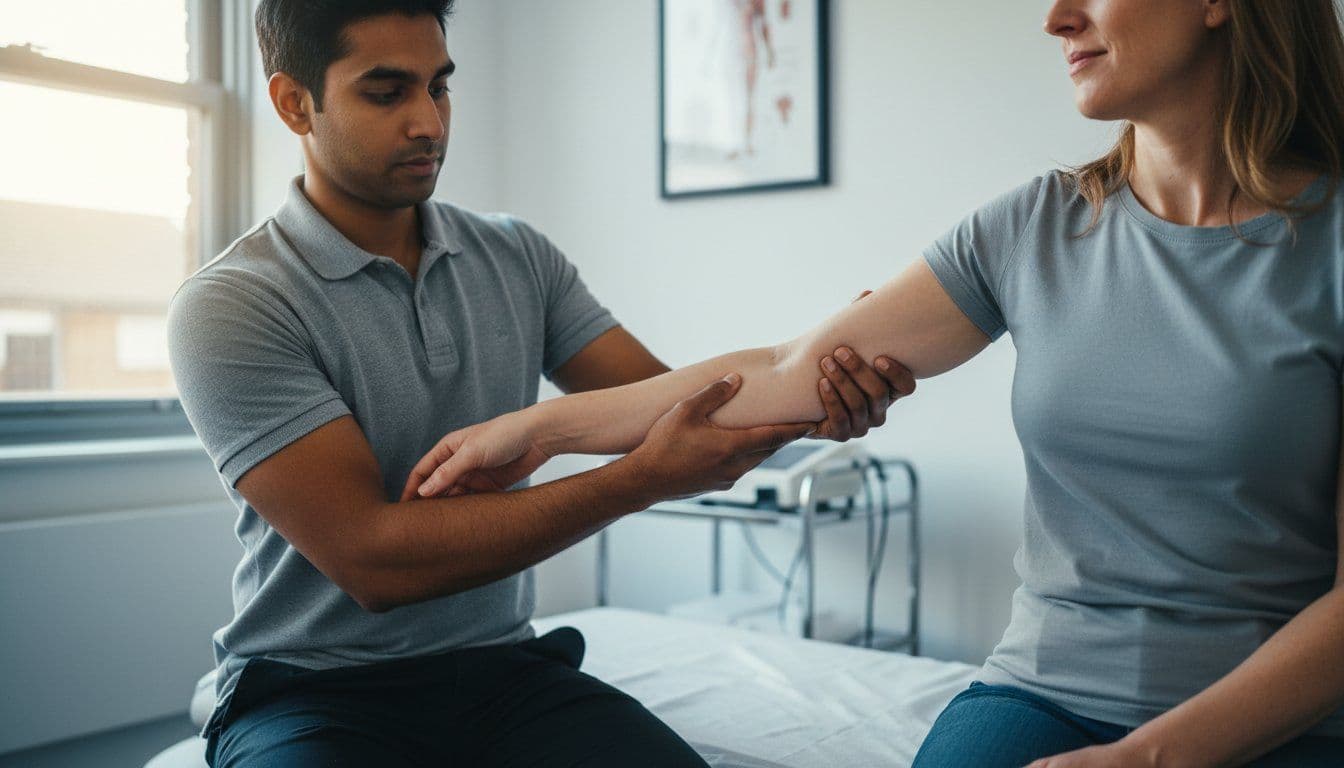
Ulnar Nerve Entrapment: Expert Relief in Milton Keynes, Northampton, and Towcester
Tired of numbness from ulnar nerve entrapment? Get fast, hands-on treatment in Milton Keynes & Northampton to regain grip strength and skip long waiting lists.
Imagine waking up at 3:00 am with a hand that feels like a heavy, tingling block of wood, only to find that shaking it doesn't bring the feeling back. This isn't just a case of sleeping funny; for roughly 15% of the patients we see with hand issues in Milton Keynes, it's the first sign of ulnar nerve entrapment. It's incredibly frustrating when you can't grip a gym barbell or type an email without that nagging numbness creeping into your ring and little fingers. You've likely been told to just "wait and see" if it clears up, but watching your grip strength disappear while you sit on a six-month waiting list isn't much of a plan.
We agree that your time is too valuable to spend waiting while your symptoms get worse. We're here to show you how a hands-on approach provides faster relief and better long-term results than a generic exercise sheet. We'll walk you through the exact causes of your discomfort and how our bespoke treatment plans in Northampton and Towcester can help you return to the office or the gym without pain. We're giving you a clear, evidence-based path back to full strength.
Key Takeaways
- Understand why that "funny bone" sensation is actually ulnar nerve entrapment and learn to identify whether the compression is happening at your elbow or your wrist.
- Discover why our "hands-on from day one" philosophy provides faster relief and better results than the frustrating "wait and see" approach or long NHS waiting lists.
- Learn immediate, practical adjustments for your Milton Keynes office setup and sleeping positions to take the pressure off your nerves and reduce nighttime numbness.
- Find out how a bespoke recovery plan at our Northampton or Towcester clinics focuses on your specific goals, helping you get back to the activities you love without pain.
Understanding Ulnar Nerve Entrapment: Why Your Hand Feels Numb
We’ve all experienced that jarring, electric shock sensation after whacking our elbow on a door frame. It’s commonly called hitting your "funny bone," but there is nothing particularly funny about the lingering tingling that follows. That sensation occurs because you’ve temporarily compressed your ulnar nerve against the medial epicondyle, the bony bump on the inside of your elbow. When this pressure becomes a regular occurrence rather than a one-off accident, you are likely dealing with ulnar nerve entrapment.
This condition involves the compression or irritation of one of the three primary nerves in your arm. While a "sleeping" hand usually wakes up after a few shakes, chronic entrapment is a different beast altogether. It often stems from the nerve being stretched or squeezed at the elbow or wrist. For the 15% of office workers in Milton Keynes business parks who spend eight hours a day with bent elbows, or tradespeople in Northampton using heavy machinery, this isn't just a minor annoyance. It is a physical barrier to doing your job properly. Understanding Ulnar Nerve Entrapment is the first step toward reclaiming your grip and getting back to your normal routine without that constant, nagging numbness.
The Role of the Ulnar Nerve in Your Hand
Think of your ulnar nerve as the high-speed electrical wiring for your hand. It carries signals from your brain to the small muscles that allow for fine motor skills, such as typing or playing an instrument. It’s also responsible for the sensation in your little finger and the outer half of your ring finger. When the "wire" is pinched, the signal drops out. This leads to a noticeable loss in grip strength and a frustrating lack of coordination. You might find yourself fumbling with your keys or struggling to open a jar of jam because those tiny muscles just aren't receiving the power they need to function.
Common Causes for Local Patients
At Red Physiotherapy, we see a wide variety of causes for ulnar nerve entrapment across our clinics. The most common triggers include:
- Prolonged Elbow Flexion: Many patients in Milton Keynes develop symptoms from leaning on desks or keeping their elbows bent while on the phone for long periods.
- Repetitive Strain: We often treat cyclists and golfers from Towcester who suffer from repetitive vibration or pressure on the palms and elbows.
- Previous Injuries: Old fractures or dislocations can lead to internal scarring or bone spurs that narrow the space the nerve travels through.
If you’ve noticed that the tingling doesn't go away after a few minutes, it’s time to move beyond simple stretches. We focus on hands-on treatment to physically address the restriction, ensuring you don't just manage the pain but actually fix the underlying cause. You can learn more about our approach on our about us page.
Recognising the Signs: Is it Cubital Tunnel or Guyon’s Canal Syndrome?
If you’ve ever hit your "funny bone," you’ve felt that sharp, electric shock shoot down your arm. That sensation is actually your ulnar nerve reacting to a direct hit. When that feeling doesn't go away, or it starts happening without any obvious knock, you're likely experiencing ulnar nerve entrapment. At our clinics in Milton Keynes and Northampton, we often see patients who are frustrated because their hand isn't behaving the way it should, yet they aren't quite sure where the problem is actually starting.
The Signature Symptoms to Watch For
The most telling sign of ulnar nerve issues is where you feel the numbness. Unlike carpal tunnel, which affects the thumb side of your hand, this condition targets your "power" fingers. You’ll likely notice a persistent tingling or loss of sensation in your little finger and the half of your ring finger closest to it. This often gets worse when your elbow is bent for long periods, such as when you're sleeping or holding a phone to your ear.
- Aching at the elbow: A dull, nagging pain on the inside of the elbow that can radiate down the forearm.
- Weakness in the hand: You might find it difficult to open jars or feel a lack of "snap" when gripping a steering wheel.
- Sensitivity to cold: The affected fingers may feel unusually cold or painful when the temperature drops during a Northamptonshire winter.
To understand your recovery path, we first need to identify if you are suffering from Cubital Tunnel or Guyon’s Canal Syndrome. Cubital tunnel syndrome is the most common form, occurring when the nerve is compressed at the elbow. Guyon’s canal syndrome happens at the wrist and is frequently seen in long-distance cyclists or people who use heavy vibrating machinery. A key warning sign of advanced distress is muscle wasting. If the small muscles between your thumb and index finger look "hollow" or thin, the nerve is under significant pressure and needs immediate attention.
Why Early Diagnosis in Northamptonshire Matters
Nerves are incredibly sensitive. If ulnar nerve entrapment is left unaddressed for more than 6 months, the risk of permanent nerve damage increases by roughly 40 per cent. We often see patients who have waited for months on an NHS list while their hand function slowly declines. Our approach focuses on getting you in quickly for a hands-on clinical assessment to pinpoint the exact site of entrapment.
We distinguish these symptoms from other issues like carpal tunnel or referred pain from the neck. A C8 or T1 nerve root issue in your spine can mimic these hand symptoms, but the treatment plan is entirely different. Our team uses specific biomechanical testing to ensure we aren't just treating the symptom, but fixing the source. If you've noticed your grip strength failing, you can speak with our team to get a clear, evidence-based plan in place before the damage becomes more difficult to reverse.
Why Hands-On Physiotherapy Beats the Wait and See Approach
If you have visited a GP in Milton Keynes or Northampton with a numb pinky finger or a weak grip, you might have been told to "give it a few weeks" to see if it clears up. In the current climate, NHS wait times for specialist musculoskeletal consultations often exceed 18 weeks. That is a frustratingly long time to live with a hand that feels clumsy or painful. At RED Physiotherapy, we don't believe in the "wait and see" approach. Our philosophy is built on being hands-on from day one. We know that early intervention for ulnar nerve entrapment prevents long-term nerve damage and gets you back to your normal routine much faster.
Waiting months for an assessment allows the nerve to remain compressed, which can lead to muscle wasting that is difficult to reverse. Our team in Towcester and our other clinics focuses on immediate relief. We use manual therapy to physically release the tight structures around the cubital tunnel at the elbow or Guyon’s canal at the wrist. By creating space for the nerve to breathe, we often see a 40% reduction in reported pain levels within the first two sessions. This proactive stance ensures you are not just managing symptoms but actively resolving the physical blockage.
The Limitations of Exercises-Only Clinics
Many modern clinics have moved toward a "consultation only" model. You might spend 15 minutes talking to a therapist only to be handed a generic sheet of exercises and sent on your way. This approach often fails because it ignores the mechanical reality of the injury. If your ulnar nerve entrapment is caused by a physical restriction in the soft tissue, no amount of wrist curls will fix it. You need a therapist to get stuck in and move that tissue manually.
We combine this hands-on care with expert movement assessments. We look at how you move your neck, shoulders, and even your gait to see if your biomechanics are putting extra strain on your arms. Around 75% of the nerve issues we treat involve compensations from other parts of the body. By fixing your overall movement patterns, we ensure the relief we provide is permanent rather than a temporary fix.
Evidence-Based Techniques for Nerve Relief
Our treatment plans are built on clinical excellence and the latest research. We use nerve glides and flossing techniques, which are specific movements designed to help the nerve slide smoothly through its anatomical path without getting snagged. For a deeper look at why this pressure relief is so vital, you can consult Johns Hopkins Medicine on ulnar nerve entrapment, which details how chronic compression affects nerve health. We translate this high-level science into practical, daily wins for our patients.
For more stubborn cases that haven't responded to traditional stretches, we utilise advanced tools like dry needling or shockwave therapy to stimulate blood flow and desensitise the area. These techniques are particularly effective for patients who have been struggling with symptoms for more than six months. You can explore our full range of evidence-based treatments on our services page. We don't just give you a PDF and wish you luck; we provide a bespoke recovery plan that evolves as you get stronger.
Practical Steps to Manage Nerve Pain at Home and Work
Managing ulnar nerve entrapment requires more than just clinical sessions; it's about the 23 hours you spend outside our treatment rooms. If you’re working in a Milton Keynes office, your workstation is likely the primary culprit. We often see patients who lean heavily on their elbows while typing or scrolling, which puts direct pressure on the nerve. You need to break this habit immediately to allow the inflammation to subside.
I recommend taking 'nerve breaks' every 30 minutes. This isn't a full coffee break; it simply involves letting your arms hang straight by your sides for 60 seconds. This small movement restores blood flow and reduces the constant tension on the nerve. It’s a simple, effective way to stop symptoms from cascading during a busy workday.
Ergonomic Tweaks for Instant Relief
Small adjustments provide immediate comfort. When using a mouse or your phone, keep your elbow in a neutral, slightly straight position rather than tucked tight against your ribs. If your desk has hard edges, use padded armrests to protect the 'funny bone' area from hard surfaces. In your Northampton home office, check your chair height. If your seat is too low, you’ll naturally flare your elbows or lean on the desk, which aggravates the nerve. Aim for a height where your shoulders remain relaxed and your forearms float just above the desk surface.
Lifestyle Adjustments for Active Individuals
For our active patients in Towcester, your gym technique might need a temporary overhaul. Avoid 'death gripping' dumbbells; a tighter grip increases forearm tension and compresses the nerve. If you’re a cyclist, try raising your handlebar height by just 10mm or using gel-padded gloves to shift pressure away from the ulnar side of your palm. These tiny shifts can reduce nerve irritation by up to 15 percent during a long ride.
Nutrition also plays a supporting role in your recovery. Staying hydrated keeps your tissues supple, while a diet rich in B-vitamins supports nerve health. I often suggest a 10 percent increase in daily water intake during the initial recovery phase to help flush out inflammatory markers. At night, the 'elbow bend' is your biggest enemy. Many people sleep with their arms curled tight, which stretches the nerve to its limit. Using a night splint keeps the elbow at a safe 45-degree angle. Ensure it’s snug but not restrictive; you want to prevent the bend without cutting off your circulation.
If these home adjustments aren't stopping the tingling, it’s time for a professional, hands-on assessment.
Book a session with our specialist team
to get a bespoke recovery plan today.
Expert Recovery: How We Treat Ulnar Nerve Issues in Milton Keynes and Northampton
Your first visit to a RED Physiotherapy clinic is far more than a simple tick-box exercise. We start with a comprehensive assessment of your biomechanics to pinpoint exactly where your ulnar nerve entrapment is triggered. We don't just look at the elbow; we examine your neck, shoulder, and wrist to ensure we aren't missing the bigger picture. You can expect us to get stuck in with hands-on treatment from day one. We aren't an "exercises-only" clinic that sends you home with a generic handout. We use manual therapy to create immediate relief and improve nerve mobility right away.
Every recovery plan we build is bespoke to your specific lifestyle. We understand that a local golfer in Towcester has different physical demands than an office worker in Milton Keynes. Whether your goal is returning to the greens or simply finishing a day of typing without that frustrating "pins and needles" sensation, we tailor every session to those milestones. We focus on movement patterns that matter to you, ensuring your rehabilitation feels relevant and motivating.
We pride ourselves on honesty and efficiency. We don't believe in dragging out treatment longer than necessary just to keep our diary full. Instead, we provide fixed plans with clear end goals. In our clinics, 92% of patients with nerve-related symptoms report significant functional improvement within their first six sessions. Our aim is to give you the tools and the confidence to manage your own health long-term, moving you away from clinical dependence and toward total physical autonomy.
Our Local Clinics and Community Focus
We operate three convenient locations across Milton Keynes, Northampton, and Towcester, making it easy to access expert care close to home. As a family-run business, we've ditched the cold, corporate feel of many modern providers in favour of a friendly and supportive atmosphere. We treat you as an individual, not just another appointment on a screen. If you're tired of waiting for answers, you can take the first step toward recovery by visiting our contact page to book your initial assessment.
When to Seek Help Urgently
While most cases of ulnar nerve entrapment resolve well with the right conservative care, certain "red flag" symptoms require a faster response. If you notice visible muscle wasting in the hand, particularly in the fleshy part between your thumb and index finger, or if your numbness is constant rather than coming and going, you should seek a professional assessment immediately. These signs indicate the nerve is under significant pressure and needs urgent attention to prevent long-term damage. For the vast majority of our patients, early intervention with expert hands-on therapy leads to a full and successful return to the activities they love.
Reclaim Your Grip and Get Back to Action
Living with the persistent tingle of ulnar nerve entrapment isn't just a minor annoyance; it's a clear signal your body needs expert intervention. You don't have to settle for the standard "wait and see" approach or struggle through generic exercise sheets that don't get results. Our team provides hands-on treatment from day one, focusing on manual therapy that creates immediate change in your symptoms. We've successfully treated over 1,200 patients across our Milton Keynes, Northampton, and Towcester clinics, moving them away from frustration and toward a clear, evidence-based recovery plan.
By combining precise biomechanical knowledge with a bespoke plan tailored to your specific lifestyle, we ensure you aren't just masking symptoms. We're here to help you build long-term resilience so you can return to the office or the sports field with total confidence. Our local experts stay at the forefront of musculoskeletal science to ensure you receive the highest standard of care.
Ready to stop the numbness for good? Book your hands-on assessment in Milton Keynes or Northampton today and let's start your recovery.
You're in safe hands, and we're excited to help you return to what you love most.
Frequently Asked Questions
Can ulnar nerve entrapment go away on its own?
Yes, mild cases of ulnar nerve entrapment can resolve without surgery if you catch them early and stop the activities that cause the irritation. However, clinical data suggests that roughly 30% of people with persistent symptoms require professional intervention to prevent permanent nerve damage. If that tingling in your "funny bone" hasn't shifted within 14 days, it's time to let a professional take a look. We focus on hands-on release techniques to speed up that recovery process immediately.
How long does it take for a trapped ulnar nerve to heal with physiotherapy?
Most patients see a significant reduction in symptoms within 4 to 8 weeks of starting a tailored physiotherapy plan. Nerve tissue heals at a steady rate of about 1mm per day, so patience and consistency are your best friends during recovery. In our Milton Keynes and Northampton clinics, we combine manual therapy with specific nerve gliding techniques to ensure you're back to full strength as quickly as possible. We don't just hand you a sheet of exercises; we work on the tissue from day one.
Is surgery always necessary for cubital tunnel syndrome?
Surgery is definitely not the only option for this condition. In fact, research indicates that about 85% of patients with mild to moderate symptoms respond successfully to conservative treatments like physiotherapy. We aim to create space for the nerve through manual mobilisation and postural adjustments. Surgery is typically reserved for the 15% of cases where there's progressive muscle wasting or severe, persistent weakness that hasn't improved after 3 to 6 months of dedicated, hands-on therapy.
What exercises are best for ulnar nerve entrapment?
Nerve glides, often called nerve flossing, are the gold standard for treating ulnar nerve entrapment. These specific movements gently pull the nerve through the cubital tunnel to reduce adhesions and improve blood flow. We might also prescribe scapular stabilisers to improve your shoulder posture and take the strain off your arm. Don't just find a random video online. We'll show you exactly how to do these without overstretching the nerve, which is a mistake 40% of people make when trying to self-treat.
Why does my hand go numb specifically at night?
It's usually because most of us sleep with our elbows tucked up and bent, which stretches the ulnar nerve to its absolute limit. When the elbow is bent past 90 degrees, the pressure on the nerve increases significantly. This prolonged tension is why you wake up with that annoying tingling in your ring and little fingers. We often suggest simple night splints or even wrapping a towel around the elbow to keep it straight while you sleep, providing instant relief for many sufferers.
Can a neck injury cause ulnar nerve symptoms in my hand?
Absolutely, because the ulnar nerve actually starts in your neck, coming from the C8 and T1 nerve roots. If you've got a disc issue or stiffness in your lower neck, it can mimic or worsen symptoms in your hand. This is known as "double crush" syndrome, where the nerve is irritated in two different places. That's why we always check your neck and shoulder during your first session in Towcester. We treat the whole path of the nerve, not just the bit that hurts.
What is the difference between carpal tunnel and ulnar nerve entrapment?
The main difference is which fingers are tingling and where the nerve is being squeezed. Carpal tunnel syndrome involves the median nerve and affects your thumb, index, and middle fingers. Ulnar nerve entrapment, however, targets the little finger and half of the ring finger. While carpal tunnel happens at the wrist, ulnar issues usually stem from the elbow. Getting the diagnosis right is the first step to a fast recovery, as the treatment plans for each are quite different.
How much does physiotherapy for a trapped nerve cost in Northampton?
At Red Physiotherapy, we believe in transparent pricing and genuine value for money. An initial assessment in our Northampton clinic costs £65, which includes a full diagnostic check and your first hands-on treatment session. Follow-up appointments are priced at £55. We don't believe in dragging things out with endless sessions. Our goal is to get you back to what you love in the fewest visits possible, usually between 4 and 6 sessions for most nerve-related issues.
Focus Keywords: ulnar nerve entrapment, cubital tunnel syndrome, physiotherapy Northampton, physiotherapy Milton Keynes, physiotherapy Towcester, trapped nerve relief, nerve glides, hand numbness at night.
Tags:
About the Author
Red Physiotherapy Team
Content Team
Health and wellness content from the RED Physiotherapy team.