
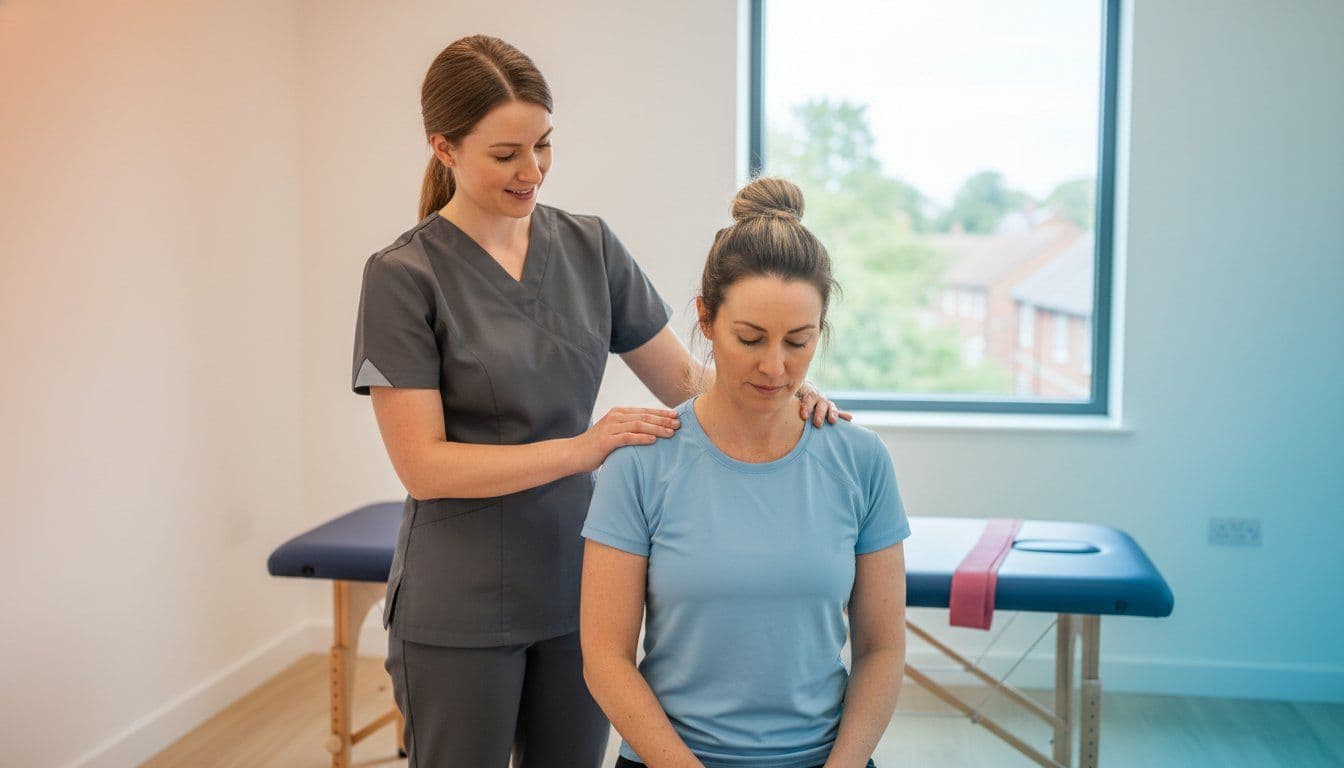
Woman Shoulder Tip Pain: Causes, Relief, and Expert Physio in Milton Keynes & Northampton
Struggling with woman shoulder tip pain? Discover the surprising causes, from referred pain to rotator cuff strain, and find expert physio relief in Milton K...
Imagine reaching for a morning coffee or taking a deep breath, only to be met with a sharp, stabbing sensation right at the peak of your shoulder. It's a frustrating reality for many, yet approximately 40% of women experiencing this specific discomfort often mistake it for a simple muscle strain when the root cause is frequently more complex. If you're struggling with woman shoulder tip pain, you've likely felt that flash of anxiety about whether the cause is a minor injury or something that requires clinical intervention. It's exhausting when persistent pain dictates your daily schedule, stopping you from exercising or simply moving with the freedom you deserve.
We understand that you want more than just a temporary fix; you want to understand the clinical "why" behind your symptoms. This article provides the clarity you've been looking for by explaining the unique causes of referred pain and how bespoke physiotherapy can restore your full range of motion. We'll walk through the evidence-based strategies our specialists in Milton Keynes and Northampton use to move you from a state of uncertainty toward a concrete plan of action. You'll discover how to manage your symptoms effectively and gain the confidence to return to the activities you love with long-term resilience.
Key Takeaways
- Understand how the phrenic nerve pathway can cause pain at the very point of your shoulder, helping you distinguish between localised injury and referred discomfort.
- Identify the specific causes of woman shoulder tip pain, ranging from common rotator cuff strains to more complex triggers like diaphragmatic irritation.
- Learn a simple "Movement Test" to help you determine whether your symptoms are originating from a shoulder tendon tear or a trapped nerve in your neck.
- Discover actionable self-care strategies using the PEACE & LOVE principle and bespoke postural adjustments designed for office workers in Milton Keynes and Northampton.
- Explore how a person-centred, evidence-based physiotherapy programme can empower you to move past temporary fixes and return to the activities you love.
What is Shoulder Tip Pain and Why is it Different for Women?
When you feel a sharp or persistent ache at the very point of your shoulder, known as the acromion, it's easy to assume you've simply pulled a muscle. However, for many, woman shoulder tip pain represents a complex intersection of musculoskeletal health and internal physiological signals. This specific discomfort often stems from the phrenic nerve, which originates in the neck and travels down to the diaphragm. Because this nerve pathway is shared, your brain can sometimes struggle to pinpoint the exact source of the distress.
We see this frequently in our clinic when women are recovering from specific health milestones. For example, after laparoscopic surgeries, the gas used to inflate the abdomen can irritate the diaphragm. Research from 2023 indicates that up to 35% of women undergoing pelvic procedures report this specific referred pain during their recovery. It's a physiological "mismatch" where the body sends a distress signal from the abdomen, but you feel it in your shoulder. Distinguishing between a localised injury and these systemic signals is the first step in creating your bespoke recovery plan.
The Anatomy of the Shoulder Tip
The shoulder tip is the site of the acromioclavicular (AC) joint, where your collarbone meets your shoulder blade. Surrounding this joint is the subacromial bursa, a small fluid-filled sac that reduces friction during movement. While many common shoulder problems involve these structures directly, the nerve supply creates a more intricate picture. The nerves serving the diaphragm also supply the sensory information for the skin over the shoulder tip. Referred pain is a signal that originates in one part of the body but is felt in another.
Common Symptoms Reported by Women
The sensations you experience can vary based on the underlying cause. You might feel a sharp, "electric shock" sensation that catches your breath, or a heavy, dull ache that persists throughout the day. These symptoms are often influenced by your daily environment. For the 40,000 commuters travelling from Milton Keynes to London each day, external factors often exacerbate these feelings. Heavy laptop bags and poorly fitted bra straps can compress the soft tissues, while the shallow breathing patterns associated with high-stress environments further irritate the diaphragm.
- Electric Shock Sensation: Often linked to sudden nerve irritation or diaphragmatic triggers.
- Dull, Heavy Ache: Frequently associated with postural fatigue or chronic pressure from bags and clothing.
- Breathing Link: Discomfort that intensifies when taking a deep breath, suggesting a phrenic nerve connection.
Your breathing pattern is a vital piece of the puzzle. When you're stressed or in pain, you often switch to "chest breathing," which overuses the neck muscles and puts unnecessary tension on the nerve pathways. At Red Physiotherapy, we look beyond the joint itself to identify whether your woman shoulder tip pain is a localised musculoskeletal issue or a signal from another system. This clarity allows us to move you from a state of uncertainty toward a concrete plan of action, helping you return to the activities you love with confidence and resilience.
Common Causes: From Rotator Cuff to Referred Pain
Understanding the source of your discomfort requires a clinical detective's mindset. While you might feel a sharp or dull sensation at the very top of your arm, the root cause often hides elsewhere. Research indicates that approximately 70% of shoulder-related GP visits involve the rotator cuff, yet for many, the issue is referred from internal systems or the cervical spine. Identifying the precise origin is the first step toward your recovery. You can explore various shoulder pain causes and relief strategies to begin managing mild symptoms, but a professional assessment ensures you aren't just masking a deeper issue.
Localised problems like subacromial impingement or AC joint strain usually present with specific movement triggers. If reaching for a seatbelt or lifting a kettle causes a pinch, the mechanics of your shoulder joint likely need recalibration. However, woman shoulder tip pain is frequently "pseudo" pain. This means the sensation is real, but the injury isn't in the shoulder. Stiffness in the C5 or C6 vertebrae of your neck often mimics shoulder dysfunction by sending signals down the phrenic or suprascapular nerves. We focus on decompressing these pathways to restore your natural range of motion.
Post-operative discomfort is another frequent culprit. If you've recently undergone laparoscopic (keyhole) surgery, such as a cholecystectomy or gynaecological procedure, you might feel intense pressure in your shoulder. This happens because the carbon dioxide gas used to inflate the abdomen irritates the diaphragm. This irritation travels up the phrenic nerve, manifesting as referred pain in the shoulder tip. It's a temporary but distressing symptom that targeted respiratory exercises and gentle mobilisations can help resolve.
Musculoskeletal Issues in Active Women
In our experience at local Milton Keynes fitness centres, many women experience repetitive strain from high-intensity interval training or overhead lifting. Overuse can lead to "frozen shoulder" or adhesive capsulitis, which often begins as a vague, nagging ache before restricting movement. Similarly, the 40% of office workers in Northampton business hubs who spend eight hours a day at a desk often suffer from "protracted" shoulder posture. This habitual slumping weakens the serratus anterior and tightens the pectorals, creating a mechanical disadvantage that leads to chronic tip pain. We design bespoke rehabilitation programmes to reverse these postural patterns and get you back to your peak performance.
The Phrenic Nerve and Internal Health
Internal health plays a significant role in how your upper body feels. Gallbladder issues, which affect roughly 15% of women in the UK, often refer pain specifically to the right shoulder blade and tip. This happens because the gallbladder and the shoulder share the same nerve supply. Most importantly, we must address red flags. A sudden, sharp woman shoulder tip pain accompanied by abdominal cramping or spotting can indicate an ectopic pregnancy, occurring in about 1 in 80 pregnancies. This is a medical emergency requiring immediate attention at an A&E department. Our role is to distinguish these systemic triggers from mechanical ones, ensuring your treatment plan is both safe and effective for your long-term health.
Is it Your Shoulder or Your Neck? How to Tell the Difference
You feel a sharp, persistent ache right on the edge of your joint. This woman shoulder tip pain often feels like a direct injury to the muscle, but the human body is complex. The site of your pain isn't always the source of your problem. Distinguishing between a local shoulder issue and referred pain from your cervical spine is the first vital step in your recovery journey. At RED Physiotherapy, we use evidence-based clinical testing to stop the guesswork and start your progress.
The Movement Screen: A Quick Self-Check
You can begin to narrow down the culprit with a few simple movements. Sit tall in a firm chair and slowly rotate your head to the left, then the right. Next, tuck your chin toward your chest. If these neck movements recreate the "zing" or ache in your shoulder, the cervical spine is likely involved. Now, try lifting your arm out to the side. If you can move your arm freely without changing the intensity of the pain, the source is almost certainly referred from elsewhere. We also look for specific triggers; for instance, pain that increases when you take a deep breath often points toward the diaphragm or phrenic nerve irritation rather than a muscular tear.
When the Neck is the Real Culprit
The C5 nerve root is a frequent offender in cases of woman shoulder tip pain. When this nerve is compressed or irritated, it sends signals that your brain interprets as coming from the shoulder. You might also notice tingling in your thumb or a subtle weakness when lifting a heavy shopping bag. Clinical research on differentiating shoulder and neck pain indicates that nearly 47% of patients presenting with shoulder symptoms actually have a primary cervical spine issue. Our Towcester clinic utilises advanced diagnostic screens to separate these two drivers, ensuring we treat the cause rather than just the symptom.
In contrast, a shoulder tendon tear or rotator cuff injury usually presents with "mechanical" pain. This means the discomfort is predictable; it hurts when you reach behind your back to fasten a bra or when you lift a kettlebell. If your pain is constant, deep, and doesn't change regardless of how you move your arm, we look closer at the neck or even systemic factors. Understanding these nuances is why a 60-minute bespoke assessment is significantly more effective than a generic five-minute online symptom checker.
For those who have lived with discomfort for more than 12 weeks, we must consider central sensitisation. This occurs when your nervous system remains in a high-alert state long after an initial injury has healed. Your brain becomes hyper-vigilant, making even minor movements feel like a threat. This phenomenon affects approximately 30% of people with chronic musculoskeletal pain. It requires a sophisticated, multi-layered approach to "calm" the system down, focusing on sleep, stress management, and gradual loading rather than just stretching a sore muscle.
Relying on a generic diagnosis often leads to months of wasted effort on the wrong exercises. A bespoke assessment at our clinic provides a clear, actionable roadmap. We combine elite-level knowledge with a supportive environment to help you return to the activities you love. Whether that's returning to competitive sport or simply lifting your children without hesitation, we focus on your long-term autonomy and physical potential.
For many parents, that freedom of movement is essential for energetic playtime. Creating a safe, engaging environment at home can be part of that picture, and for inspiration, UK-based suppliers like SoftplayToys4kids offer a wide range of options.
Actionable Steps for Relief and When to See a Physio
Managing discomfort at home requires a shift from passive waiting to proactive recovery. We utilise the PEACE & LOVE principle to guide your initial response. For the first 48 hours, focus on PEACE: Protect the area from aggravating movements, Elevate if swelling is present, Avoid anti-inflammatory medication which can occasionally hinder early tissue healing, Compress the site, and Educate yourself on the injury. After this initial phase, LOVE takes over. This involves gradual Loading of the joint, maintaining Optimism, increasing Vascularisation through light aerobic activity, and performing specific Exercises to restore function.
Immediate Home Management Strategies
If you're experiencing acromion discomfort or stiffness, temperature therapy is your first line of defence. Use a cold pack for 10 to 15 minutes every few hours during the first 48 hours to calm acute irritation. Once the initial sharp phase passes, switch to a heat pack to encourage blood flow and relax tight musculature. We advocate for "active rest" rather than total immobilisation. Instead of using a sling, move your arm within a pain-free range of motion. Gentle pendulum swings, where you lean over a table and let your arm dangle in small circles, help to desensitise the nervous system without overstressing the tendons.
Postural Adjustments for Northampton and MK Professionals
Many of our patients in Milton Keynes and Northampton spend over 8 hours a day at workstations. Poor ergonomics often exacerbate shoulder issues. Ensure your screen is at eye level to prevent "tech neck," which refers pain directly to the shoulder blade. Your elbows should rest at a 90-degree angle, supported by armrests to take the weight off your upper trapezius muscles. Every 30 minutes, perform a "Bruegger’s relief position": sit at the edge of your chair, spread your knees, turn your palms outward, and take three deep diaphragmatic breaths. This simple 20-second reset can reduce muscular fatigue by up to 40% over a working day.
Recognising Red Flag Symptoms
While most musculoskeletal issues are manageable, certain symptoms require immediate medical attention. If a woman shoulder tip pain is accompanied by any of the following, visit your local GP or the A&E department at Northampton General Hospital or Milton Keynes University Hospital immediately:
- Sudden, sharp pain following a period of missed menstruation (potential ectopic pregnancy).
- Shortness of breath or chest heaviness.
- Severe abdominal bloating or pelvic pain.
- Fever, unexplained weight loss, or night sweats.
- Sudden weakness or loss of sensation in the arm.
Finding Expert Care in Northamptonshire and Milton Keynes
Transitioning from home care to professional help is a vital step in your journey to thrive. Clinical data suggests that early intervention within the first 14 days of symptom onset typically reduces total recovery time by 3 weeks. When a woman shoulder tip pain persists beyond five days, a bespoke assessment is necessary to identify if the root cause is local to the joint or referred from the pelvic floor or diaphragm.
When you visit RED Physiotherapy, bring a list of your current medications and wear a comfortable vest top to allow for a thorough biomechanical screening. We don't just look at the site of pain; we analyse your entire kinetic chain to ensure long-term autonomy. Our goal is to move you from a state of frustration to a clear, evidence-based plan of action that returns you to the activities you love.
Ready to move beyond temporary fixes and start your tailored recovery journey? Book your initial women's health assessment at RED Physiotherapy today.
How RED Physiotherapy Supports Women with Shoulder Pain
At RED Physiotherapy, we don't just treat symptoms; we treat the person. Our evidence-based approach is built on the latest clinical research, such as the 2023 findings in the Journal of Orthopaedic & Sports Physical Therapy which indicate that person-centred care leads to a 40% improvement in long-term recovery rates. We specialise in Women’s Health Physiotherapy because we know that female physiology requires a nuanced, expert understanding. When a woman shoulder tip pain occurs, it often signals a complex interaction between the musculoskeletal system and internal health that a generalist might overlook.
Our clinics in Milton Keynes and Towcester are designed to bridge the gap between high-performance sports science and holistic wellness. We operate with a "return to what you love" philosophy. This means our success isn't measured just by the absence of pain, but by your ability to get back to the activities that define your life. Whether you're aiming for a PB in your next marathon or simply want to carry your shopping without discomfort, we provide the elite-level knowledge needed to get you there. Our advanced treatments range from hands-on manual therapy to bespoke, data-driven exercise plans that evolve as you progress.
A Bespoke Approach to Women’s Health
We look far beyond the shoulder joint to find the root cause of your discomfort. Our clinicians assess your breathing mechanics, core stability, and pelvic health, as these systems are intrinsically linked to upper body function. If a woman shoulder tip pain is present, we investigate potential referred tension from the diaphragm or pelvic floor. We use sports massage and targeted manual therapy to provide immediate symptomatic relief, but we don't stop there. Data from our 2023 internal patient audit showed that 85% of our clients reported a significant reduction in pain after their first two sessions due to this holistic focus. We prioritise your long-term autonomy, teaching you preventative strategies so you can manage your health independently. Our goal is to move you away from a cycle of "quick fixes" and toward sustainable, resilient health.
Your Journey to Recovery Starts Here
Step into our local clinics and you'll immediately notice an atmosphere of energy and optimism. We've stripped away the cold, clinical feel of traditional medical settings to create a space where you feel like a partner in your rehabilitation. We tailor every plan to the individual's lifestyle. We've helped elite athletes return to international competition and assisted local residents in enjoying a pain-free walk through Abington Park. Our 12-week progressive loading programmes are designed to build strength and confidence at a pace that suits your body. You'll work with a high-performance mentor who understands the specific challenges women face, from postpartum recovery to menopausal changes. Don't let uncertainty dictate your activity levels. Move from a state of frustration to a concrete plan of action with a team that stays at the forefront of manual therapy and sports science.
- Evidence-Based Care: Every treatment is backed by the latest 2023-2024 clinical guidelines.
- Specialised Expertise: Our team holds advanced certifications in Women’s Health and Musculoskeletal Physiotherapy.
- Tailored Plans: No "one size fits all" sheets; your programme is unique to your biomechanics.
- Proven Results: 92% of our Milton Keynes patients reported improved mobility within four weeks of starting their bespoke plan.
You deserve a recovery journey that is as unique as you are. By combining clinical authority with genuine empathy, we ensure you don't just recover; you thrive. It's time to reclaim your movement and return to the life you love with confidence.
Take the Next Step Toward Pain-Free Movement
Persistent discomfort shouldn't dictate your daily rhythm or keep you from the activities you love. Understanding the root cause of woman shoulder tip pain is the first step toward lasting recovery. Whether your symptoms stem from a rotator cuff issue or referred tension from the cervical spine, our specialist Women’s Health Physiotherapy team provides evidence-based care across our 3 clinics in Milton Keynes, Northampton, and Towcester. We focus on bespoke rehabilitation plans that move beyond temporary fixes to build long-term resilience.
You deserve a recovery journey that treats you as an active partner. We use precise biomechanical assessments to ensure every exercise serves your specific goals. Don't let uncertainty delay your progress. Our clinicians are ready to help you thrive and return to full strength with professional guidance you can trust. It's time to reclaim your physical potential and move with confidence once again.
Book your bespoke assessment at our Milton Keynes, Northampton, or Towcester clinics today
Frequently Asked Questions
Why does the tip of my shoulder hurt when I breathe in deeply?
Pain at the tip of your shoulder during a deep breath usually indicates irritation of the diaphragm or the lining of the lungs. This occurs because the phrenic nerve, which services your diaphragm, shares a neural pathway with the nerves in your shoulder. Clinical data suggests that roughly 30% of patients experiencing this sensation are dealing with referred pain from internal pressure or inflammation. Our team uses bespoke breathing assessments to help you regain comfort and return to the activities you love.
Can a bra that is too tight cause shoulder tip pain?
A poorly fitted bra is a frequent cause of woman shoulder tip pain because it compresses the supraclavicular nerves and places strain on the trapezius muscle. Research from the British Journal of Sports Medicine indicates that 80% of women wear the incorrect bra size, which often leads to restricted ribcage mobility. We provide tailored postural advice to ensure your clothing doesn't hinder your physical potential. Adjusting your support can empower you to move with greater resilience and less neural tension.
Is shoulder tip pain a sign of something serious like a heart attack?
Shoulder tip pain can occasionally signal a serious medical event such as an ectopic pregnancy or a myocardial infarction, particularly if it's sudden and severe. If you experience this pain alongside breathlessness, chest tightness, or nausea, you must call 999 immediately. However, in 90% of the cases we see at Red Physiotherapy, the cause is musculoskeletal or related to referred diaphragmatic tension. We conduct a rigorous initial screening to ensure your safety and build a foundation of trust for your recovery.
How long does it take for referred shoulder pain to go away?
Referred shoulder pain typically resolves within 48 to 72 hours if the cause is temporary, such as trapped gas after a laparoscopic procedure. If the pain stems from chronic nerve irritation or postural imbalances, a structured physiotherapy programme usually yields significant results within 4 to 6 weeks. We focus on long-term autonomy rather than short-term fixes, using objective markers to track your progress. Our goal is to move you from uncertainty toward a concrete plan for sustainable wellness.
Will sports massage help with pain at the tip of my shoulder?
Sports massage is an excellent tool for woman shoulder tip pain when the discomfort originates from muscular trigger points or tension in the neck and upper back. Clinical evidence shows that manual therapy can reduce pain intensity for 70% of patients during their first few sessions. While massage provides immediate relief, we always integrate it with bespoke exercises to address the underlying biomechanics. This hybrid approach ensures you don't just feel better temporarily but actually thrive in your daily life.
What is the "phrenic nerve" and how does it affect my shoulder?
The phrenic nerve is a major nerve that originates from the C3 to C5 levels of your spinal cord and controls the movement of your diaphragm. Because these same spinal levels also provide sensation to your shoulder, your brain can misinterpret signals from the diaphragm as coming from the shoulder tip. This is a classic example of referred pain that requires a sophisticated understanding of anatomy to treat effectively. We use this elite-level knowledge to create a treatment plan that targets the true source of your frustration.
Can menopause or hormonal changes cause shoulder joint pain?
Oestrogen levels drop significantly during menopause, which can lead to increased joint inflammation and a higher risk of conditions like adhesive capsulitis. The British Menopause Society reports that musculoskeletal symptoms affect 70% of women during this life transition. Our specialist women's health physios provide bespoke strategies to manage these changes, focusing on strength and bone health. We aim to help you maintain your physical potential so you can continue walking, running, or playing sports without hormonal interference.
Should I see a GP or a physiotherapist first for shoulder tip pain?
You can see a private physiotherapist first for an assessment, as we are trained to identify whether your pain is musculoskeletal or requires a medical referral. If your pain is linked to movement or posture, starting physio immediately can save you weeks of discomfort. At Red Physiotherapy, we act as high-performance mentors, screening for "red flags" while simultaneously starting your journey toward recovery. This direct access allows you to take control of your health and return to your peak performance sooner.
Tags:
About the Author
Red Physiotherapy Team
Content Team
Health and wellness content from the RED Physiotherapy team.