
ACL Reconstruction Rehab in Milton Keynes: Your Roadmap to Full Recovery
Tired of slow progress? Our ACL reconstruction rehab in Milton Keynes provides a hands-on, milestone-based plan to get you back on the pitch, stronger.
Did you know that roughly 86% of ACL injuries happen during sport, with football and netball leading the charge? If you have recently had surgery, you are likely staring at a long road ahead and wondering if you will ever trust your knee to pivot or sprint again. It is completely normal to feel frustrated by slow progress or the "wait and see" approach often found with overstretched services.
We agree that you deserve more than a photocopied exercise sheet and a vague timeline. You need a clear, milestone-based roadmap for your ACL reconstruction rehab Milton Keynes that focuses on hands-on treatment from your very first appointment. We promise to help you regain your strength and peak stability, ensuring your knee feels rock-solid before you even think about stepping back onto the pitch.
In this guide, we will explore our criteria-driven recovery process, explain why manual therapy is vital for your progress, and show you exactly how we bridge the gap between those first tentative steps and a full return to high-performance sport.
Key Takeaways
- Learn why the first six weeks are the most critical for your long-term graft success and how we navigate those early recovery milestones together.
- Discover why a hands-on approach to ACL reconstruction rehab Milton Keynes is far more effective than the "exercise-only" methods typically offered elsewhere.
- Master practical home recovery techniques, including professional advice on icing and compression to keep your swelling under control between sessions.
- Understand our rigorous "Return to Play" testing protocol that ensures you have the strength and confidence to get back to the sports you love.
- Find out how we prioritise your long-term physical autonomy so you can stay active and off the treatment table for good.
Understanding Your ACL Reconstruction Rehab in Milton Keynes
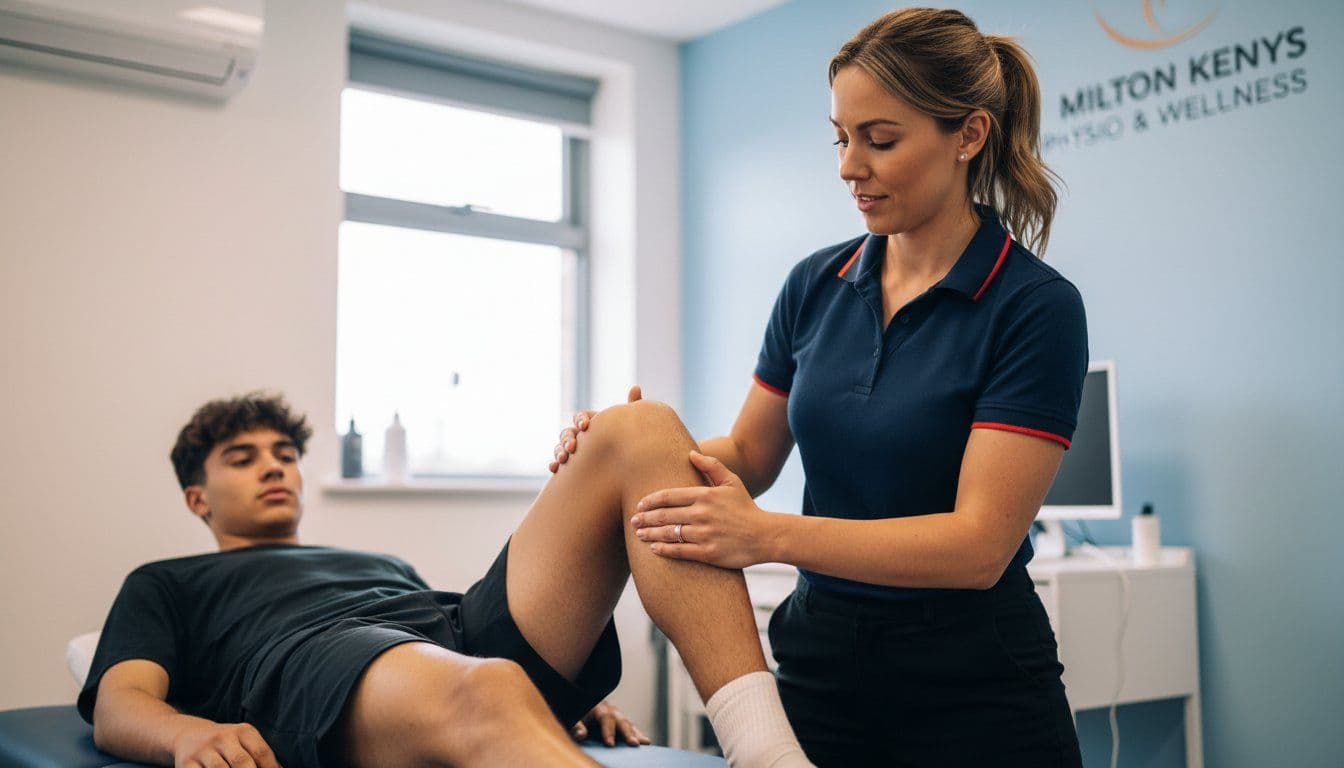
Surgery is only the first half of the battle. The real work begins the moment you leave the hospital and start a structured, multi-phase recovery process. Understanding ACL Reconstruction is vital, but the rehab that follows determines whether you will simply "get by" or return to your absolute best. At RED Physiotherapy, we view this journey as a high-performance mentorship. We don't just hand you a list of exercises and send you on your way. Instead, we provide hands-on clinical expertise from your very first session to ensure your recovery is efficient and effective.
The first six weeks of your ACL reconstruction rehab Milton Keynes are absolutely critical. This is the biological window where your new graft is at its most vulnerable while it begins the process of "ligamentisation." If you push too hard, you risk stretching the graft; if you do too little, you risk permanent stiffness. We find the sweet spot by combining specific loading protocols with manual therapy to keep your joint moving and your swelling under control. Our goal is to move you beyond "just healing" and toward the functional performance required for an active life in Buckinghamshire.
Why Local Expertise Matters for Your Recovery
Milton Keynes is a city built for movement, and your rehab should reflect that. We don't just want you walking around your house; we want you confident enough to enjoy a weekend stroll through Campbell Park or tackle the redways without a second thought. Because we are a family-run practice with deep roots in the community, we understand the specific demands of local sports clubs. Whether you play for a local football side or a rugby team in the surrounding villages, we tailor your milestones to the intensity of your sport. We also maintain strong relationships with local consultants to ensure your specific surgical protocol is followed to the letter, providing a seamless bridge between the operating theatre and the pitch.
The Reality of Post-Surgery Expectations
It is time to move past the cold, detached atmosphere of hospital leaflets. The early stages of recovery can be frustrating, often involving significant swelling and a limited range of motion that makes even simple tasks feel like a chore. You might feel like progress is stalling, but we are here to provide the clarity and momentum you need. We help you set realistic timelines for returning to work and daily activities, ensuring you don't rush back too soon and risk a setback. By addressing common knee conditions and secondary compensations early on, we replace uncertainty with a concrete plan of action that keeps you moving forward.
The Four Critical Phases of Your ACL Recovery Programme
Recovery is rarely a straight line, but it should always follow a logical path. We break your ACL reconstruction rehab Milton Keynes into four distinct phases. This ensures we don't miss a beat and, more importantly, that we don't move you to the next stage before your knee is truly ready. It is about building a joint that is robust, not just one that doesn't hurt. Nobody wants to be the person limping around the Hub because they rushed their rehab and skipped the basics.
Phase One and Two: Building the Foundation
The first few weeks are all about "quieting the knee." We focus on reducing the initial post-surgery swelling and, crucially, getting your knee completely straight. If you can't achieve full extension early on, your gait will suffer for months. We prioritise quad activation because your brain often "switches off" these muscles to protect the joint. While some clinics might just give you a sheet of exercises, we use hands-on physiotherapy to manage scar tissue and joint stiffness from day one. This manual approach helps clear the path for your foundational strength work, making sure your walking pattern returns to normal as quickly as possible.
Phase Three and Four: Power and Agility
Once you are walking comfortably and have a solid base of strength, we turn up the heat. Phase three introduces impact and plyometrics. This is where we teach you how to jump and, more importantly, how to land safely. We don't guess your progress; we use objective testing to prove you are ready for more load. This might involve specific strength tests or balance assessments to compare your operated leg to your healthy one. Our goal is to ensure your symmetry is spot on before we move to the final push.
According to the latest evidence from 2025, the average return-to-sport time has shifted to 9-10 months, as criteria-driven progression has proven far safer than just counting down the weeks. We use detailed gait assessment and running analysis to ensure your form is perfect before you head back to the pitch. If you are feeling stuck in your current routine, you can always reach out for a professional review of your progress to get things moving again.
Why Hands-On Physiotherapy Beats the 'Exercise-Only' Approach
If you have spent any time in the traditional healthcare system, you have likely experienced the "photocopied sheet" phenomenon. You are sent home with a list of leg raises and told to get on with it. While those movements are a vital part of the puzzle, they rarely address the complex way your body reacts to major surgery. Effective ACL reconstruction rehab Milton Keynes requires a much more personal touch. We believe that if you are paying for professional help, you should actually receive hands-on care, not just a gym membership and a pat on the back.
Our approach focuses on the person, not just the scan. When you undergo surgery, your body naturally creates compensations. Your hip might get tight, or your calf might start screaming because it is doing the work your quads aren't ready for yet. This is where manual therapy becomes your secret weapon. By using techniques like joint mobilisations and soft tissue work, we can clear those roadblocks, making your exercises more effective and your recovery much smoother. We act as your high-performance mentors, ensuring you perform every movement with the correct technique to prevent bad habits from taking root.
The RED Physiotherapy Difference
We are a family-run practice, which means we actually care about your results and your time. From your very first appointment, we provide hands-on treatment to manage the immediate aftermath of surgery. We don't drag things out or waste your time with "filler" sessions. Because we prioritise a patient-first approach, we spend the time necessary to understand your specific goals. Whether you want to get back to the building site or the football pitch, our team ensures your plan is as unique as your injury.
Fixing Problems, Not Just Managing Symptoms
An "exercise-only" protocol often leads to frustrating plateaus. You might find that your knee feels stiff no matter how many stretches you do. That is usually because the soft tissue around the joint needs professional attention to move properly. We integrate sports massage and dry needling to release tension and improve local blood flow. This isn't about temporary fixes; it is about creating the best possible environment for your graft to thrive. By maintaining mobility in your hip and ankle, we ensure your knee isn't under unnecessary stress, giving you total confidence in your stability after every session.
Practical Advice for Managing Your ACL Rehab at Home
Your sessions at the clinic are where we do the heavy lifting, but your living room is where the daily progress actually sticks. Creating a recovery-friendly space in your Milton Keynes home makes the "boring" parts of rehab much easier to stomach. You don't need a full home gym to succeed. A firm chair, a couple of pillows for elevation, and a clear area for movement are all you need to keep your ACL reconstruction rehab Milton Keynes on track. Managing your own recovery between appointments is what separates a good result from a great one.
Daily Habits for a Faster Recovery
Integrating quad sets and extension hangs into your daily routine is non-negotiable. We suggest doing them while the kettle is boiling or during the adverts. It sounds simple, but this level of consistency prevents that dreaded "stiff knee" feeling that can stall your progress. Don't forget your overall fitness either. Just because one leg is currently out of action doesn't mean the rest of you has to go to seed. Focusing on upper body strength or seated exercises keeps your endorphins up and your body ready for the harder phases of rehab.
Nutrition and sleep are your best friends during graft ligamentisation. Your body is working overtime to repair tissue and integrate the new graft, so prioritise high-quality protein and at least seven to eight hours of rest. Psychologically, the middle months can feel like a real slog. You aren't "injured" anymore, but you aren't yet "sport-ready." This is where many people lose focus. We recommend setting small, non-physical goals, like mastering a new skill or hitting a specific strength target, to keep your head in the game while your knee catches up.
When to Seek Help: Knowing Your Limits
Learning to distinguish between "good" rehab soreness and "bad" injury pain is a vital skill. A dull ache after a session is usually a sign of progress and muscle adaptation. However, sharp, stabbing pain or a sudden increase in swelling and heat is a signal to stop immediately. If your knee feels significantly warmer than the other or looks like a grapefruit overnight, it is time to give us a shout. We would much rather see you for a quick reassessment than have you push through a setback that costs you weeks of progress.
Regular check-ins are the best way to prevent small niggles from turning into major delays. We are here to act as your high-performance mentors, clearing up any uncertainty and keeping your momentum high. If you are worried about a specific symptom or feel like your progress has plateaued, book a consultation with our team so we can adjust your plan and get you back on the roadmap to full recovery.
Getting Back to Sport with RED Physiotherapy in Milton Keynes
The finish line is finally in sight. Returning to sport isn't just about feeling "okay" again; it's about being robust enough to survive a slide tackle or a sharp change of direction on a wet Saturday morning in Milton Keynes. We don't believe in guesswork or vague "wait and see" timelines. Our "Return to Play" testing protocol is designed for local athletes who want more than just a thumbs up. We look at limb symmetry, power output, and reactive agility to ensure your knee is ready for the specific demands of your game. This data-driven approach is a staple of our ACL reconstruction rehab Milton Keynes, giving you the confidence to play without fear.
Our goal is your long-term autonomy. We don't want you stuck on a treatment table for the next five years, which is why we focus on sustainable movement patterns and proactive management. We give you the tools to stay fit and functional long after your last session with us. It's about restoring your passions, whether that's high-level performance or just being able to kick a ball around with your kids in the garden without worrying about your knee giving way.
Our Team and Facilities
When you step into our clinic, you are working with a group of high-performance mentors who live and breathe movement science. You can meet our team of specialists who will guide you through every milestone of your recovery. We combine clinical authority with genuine empathy, using specialised equipment and hands-on techniques to keep your progress moving. We aren't just here to supervise your gym work. We are here to provide the manual therapy and expert guidance that speeds up your healing process and gets you moving efficiently from day one.
Ready to Start Your Recovery?
We know that private healthcare can feel like a big commitment. However, our transparent pricing offers far better value than months of frustrating, slow progress or living with a knee that feels "unstable." We offer clear plans with real results, ensuring you get exactly what you need without any fluff or unnecessary delay. The process is simple. By contacting us today, you can book your initial assessment and receive a bespoke roadmap tailored to your specific lifestyle and goals.
Your journey from a painful injury back to peak performance starts with a single step. At RED Physiotherapy, we promise a hands-on, patient-first experience that treats you as an active partner in your own success. Let's get you back to the activities you love in Milton Keynes, stronger and more confident than ever before.
Focus Keywords: ACL reconstruction rehab Milton Keynes
Secure Your Path Back to Peak Performance
Your journey from the operating theatre back to the sports you love doesn't have to be a guessing game. We have seen how a structured, milestone-based approach removes the fear of re-injury and replaces it with rock-solid confidence. By choosing a plan that prioritises hands-on treatment from day one rather than just a list of exercises, you ensure your knee is truly ready for the demands of daily life and high-level sport.
Our experienced clinical mentors provide the expert guidance and evidence-based recovery plans you need to succeed. Whether you are aiming for a return to competitive football or simply want to walk through the city without a second thought, we have the roadmap to get you there efficiently. Your ACL reconstruction rehab Milton Keynes deserves a specialist touch that looks beyond the initial injury and focuses on your long-term autonomy.
You have already done the hard part by getting through surgery. Now, it is time to make sure the recovery counts. Book your expert ACL rehab assessment in Milton Keynes today and let's get you back to your best.
Focus Keywords: ACL reconstruction rehab Milton Keynes
Frequently Asked Questions
How soon after ACL surgery can I start physiotherapy in Milton Keynes?
You can typically start your ACL reconstruction rehab Milton Keynes within three to seven days of your operation. Starting early helps us manage your swelling and ensure you get your knee straight as quickly as possible. We focus on gentle hands-on mobilisations and quad activation right from your first visit. This prevents the joint from seizing up and sets the foundation for a much smoother recovery. We treat you as a partner in your progress from the very beginning.
Can I do my ACL rehab on the NHS, or should I go private?
You can certainly use the NHS, but many people find the "exercise-only" approach and long wait times between appointments quite frustrating. Private care at our clinic means you get hands-on treatment from day one and a bespoke plan that moves at your pace. We focus on fixing the root of your movement issues rather than just giving you a sheet of paper. It is about getting fast, effective results so you can get back to your life sooner.
How long does it take to return to football after an ACL reconstruction?
Returning to football usually takes between 9 and 12 months. While older protocols suggested 6 months, modern evidence shows that waiting until your strength and agility milestones are met significantly reduces the risk of re-injury. We use rigorous testing to ensure your operated leg is just as powerful and stable as your healthy one before you head back to the pitch. We won't let you rush back until your knee is truly ready for the game.
What happens if I dont do my physiotherapy after ACL surgery?
Skipping your rehab is a recipe for long-term trouble. Without professional guidance, you risk permanent stiffness, muscle wastage, and a much higher chance of the graft failing. Your body will naturally develop bad movement habits and compensations that can lead to hip or back pain down the line. Proper rehab ensures your knee is robust enough to handle the stresses of your daily life. We make sure you stay on the right path to avoid these setbacks.
Is sports massage helpful during ACL reconstruction rehab?
Absolutely. Sports massage is a vital tool for managing the secondary tension that builds up in your calves, hamstrings, and quads. When your knee is recovering, these surrounding muscles often work overtime and become incredibly tight. Manual therapy helps release this tension, making your exercises more comfortable and effective. It is a key part of our hands-on approach to ensure your whole leg feels mobile. We don't just look at the knee; we treat the whole person.
Will I need a knee brace during my rehabilitation programme?
Most modern protocols have moved away from long-term bracing, but it often depends on your specific surgeon's preference. While a brace can provide a sense of security in the very early days, we focus on building your internal "brace" through targeted strength and balance work. Our goal is to give you total confidence in your knee's own stability so you don't feel like you need external support. We want you moving freely and naturally as soon as possible.
How many physiotherapy sessions will I need for a full ACL recovery?
Every recovery is unique, but most people require between 12 and 24 sessions over the course of a year for a full ACL reconstruction rehab Milton Keynes. We start with more frequent visits in the early weeks to manage swelling and range of motion. As you get stronger, we space the sessions out to focus on high-level strength and sport-specific testing. We offer clear plans and treatment packages that provide great value for your recovery journey.
Can RED Physiotherapy help if my surgery was several months ago?
Yes, it is never too late to get your recovery back on track. If you feel like you have hit a plateau or aren't making the progress you expected with your current routine, we can help. We will assess your current strength, mobility, and movement patterns to identify exactly what is holding you back. From there, we create a clear plan to bridge the gap. We are experts at fixing stubborn problems and getting people back to their peak performance.
Tags:
About the Author
Red Physiotherapy Team
Content Team
Health and wellness content from the RED Physiotherapy team.