
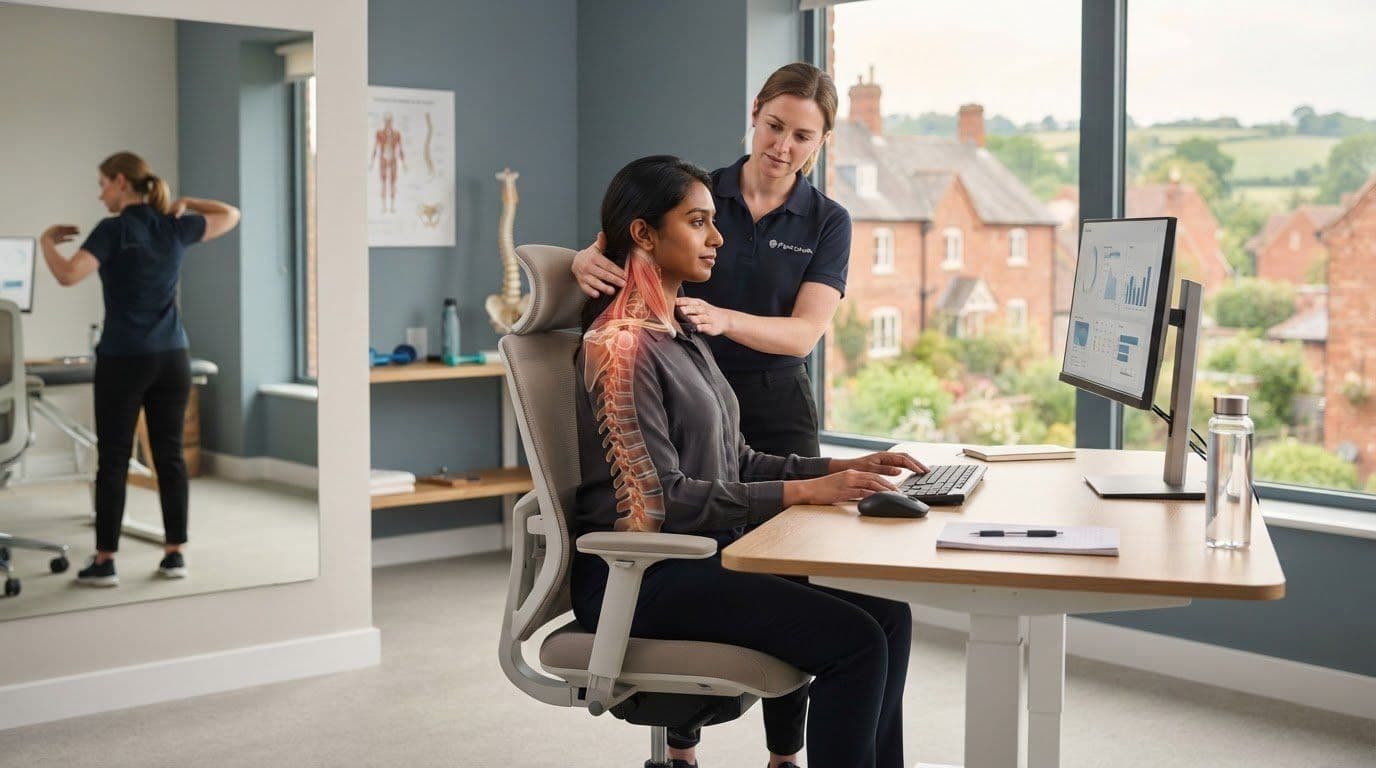
Desk posture analysis in Towcester: understand your aches and improve your setup
Suffering from workstation aches? Our desk posture analysis Towcester service explores your habits, relieves pain, and creates a tailored setup that works.
By mid afternoon, a Towcester commuter’s neck is stiff, their shoulders feel tight and their lower back is starting to ache. Desk posture analysis in Towcester can help you explore whether your workstation, working habits or movement patterns may be contributing. It won’t assume posture is the whole story.
If generic advice to “sit up straight” hasn’t made a lasting difference, you’re not alone. A useful assessment looks at how you work and when your symptoms build, then turns that information into practical changes for your day. You’ll learn what a desk posture assessment can reveal, which adjustments to try at work or at home, and when a physiotherapy assessment may help explore other factors behind your discomfort. The aim isn’t perfect posture. It’s a setup and routine that work better for your body.
Key Takeaways
- A desk posture analysis in Towcester can explore your symptoms, work tasks and workstation habits without assuming posture alone explains your aches.
- Notice when discomfort starts and what you’re doing at the time. This can help make any setup changes more relevant to you.
- Screen height, chair support, keyboard and mouse reach, and opportunities to move are all worth reviewing rather than changing by guesswork.
- If discomfort keeps returning or is getting worse, a physiotherapy assessment can help you decide on practical next steps.
What does desk posture analysis in Towcester actually assess?
Imagine a Towcester office worker who commutes in from a nearby village. Their neck tightens during video calls, while their back aches after long stretches of report writing. Desk posture analysis in Towcester should look beyond how they sit. It considers their symptoms, work tasks and workstation habits to explore what may be contributing, then helps identify changes that fit their working day.
That could mean noticing whether discomfort builds during particular tasks, whether you stay in one position for long periods, or whether your screen and equipment affect how you work. Posture is one possible influence, not a verdict. Aches can have several contributing factors, so blaming one sitting position rarely tells the whole story. You can read a general overview of Posture, but your symptoms and work demands need individual consideration.
Is there one correct sitting posture for desk work?
No single rigid pose suits everyone, and you don’t need to hold one all day. A comfortable position, regular changes in posture and the demands of your task matter more than trying to sit perfectly still. An assessment can help you find workable options rather than another rule you’ll struggle to maintain.
A posture assessment explores how your setup and habits relate to discomfort. It doesn’t diagnose every possible source of pain. If back symptoms are part of the picture, you can also read about back pain and physiotherapy. The aim is to understand your situation, not label your posture as good or bad.
How can a desk posture assessment turn into changes you can use?
A useful assessment should leave you with a plan you can put into practice, not a long list of rules. Desk posture analysis in Towcester can follow a straightforward sequence: talk through your symptoms, identify the tasks that bring them on, review your workstation and agree manageable changes. If your neck gets tight during video calls, for example, the way you view your screen may be worth exploring alongside how long you stay in one position.
What practical workstation changes might be discussed?
Your screen height and viewing position, chair support, and the reach to your keyboard and mouse can all be considered in relation to your comfort and tasks. You might bring frequently used items closer to avoid repeated reaching, or adjust your screen so you can look at it comfortably. Treat these as factors to test, not one size fits all instructions. The UK Health and Safety Executive’s display screen equipment assessment guidance also covers reviewing workstation risks and making suitable adjustments.
Movement matters too. Vary your position, stand for part of a call or take brief opportunities to move between tasks. The aim is a workable routine, not a perfect desk or a timer that becomes another source of stress.
When physiotherapy is appropriate, workstation advice can sit alongside hands on treatment, self management guidance and exercises tailored to your needs. These can be combined to suit your symptoms, priorities and daily routine.

When is desk posture analysis in Towcester a useful next step?
An assessment can be useful if discomfort keeps returning, lasts beyond a short spell or is getting worse, especially when it affects your concentration, sleep or usual activities. It shouldn’t end with “sit up straight”. Desk posture analysis in Towcester should consider your symptoms, work routine and what you’ve already tried, then help you make sense of practical next steps.
Repeatedly moving your chair or buying another cushion may not address the whole problem. Your work setup can matter, but so can other factors affecting your back or neck. The UK Health and Safety Executive’s display screen equipment assessment guidance explains how workstation risks can be reviewed. Physiotherapy can help explore your symptoms and whether workstation adjustments, treatment or another course of action is appropriate.
What should you expect from a tailored physiotherapy plan?
You should leave with clear goals linked to what matters in your daily life, such as getting through work more comfortably or concentrating without constantly shifting to ease an ache. Recommendations should fit your real routine, not become a complicated checklist. At RED Physiotherapy, hands on physiotherapy starts from day one, alongside relevant self management advice and a clear plan. Physiotherapy may also fit alongside care for back or neck discomfort.
For persistent or recurring desk related symptoms, an individual assessment can help clarify what may be contributing and which next steps make sense for you.
Take a practical next step towards a more comfortable workday
Your desk setup may contribute to aches, but it’s not the only possible factor. A useful assessment considers your symptoms, work tasks and habits, then helps you choose realistic adjustments instead of chasing a supposedly perfect posture. If discomfort keeps returning or worsens, physiotherapy can help you understand what may be going on and plan your next steps.
RED Physiotherapy is a family run clinic providing evidence based physiotherapy in Towcester, Milton Keynes and Northampton. Your care is shaped around your needs, with hands on treatment and practical guidance to support changes you can maintain.
If you’re ready to explore what could help, book an appointment to discuss your symptoms and next steps. A desk posture analysis in Towcester can be a useful starting point, and small, well chosen changes can help you feel more confident about your working day.
Frequently Asked Questions
Is desk posture analysis worth it if my pain only happens at work?
Yes. It can be useful because symptoms that appear during work may relate to your tasks, working habits or workstation. Note when the discomfort starts, what you’re doing and whether it eases when you move away from your desk. A desk posture analysis in Towcester can explore those patterns and help you decide whether practical adjustments or a wider physiotherapy assessment may be helpful.
Can bad desk posture cause neck or back pain?
Your working position may contribute to neck or back discomfort, particularly if you spend long periods in one position or your setup makes tasks uncomfortable. But posture alone doesn’t explain every ache, and there isn’t one perfect sitting position that suits everyone. Work demands, movement habits and other factors can also matter, so it’s better to explore the whole picture than blame yourself for sitting “wrong”.
What happens during a desk posture assessment?
You’ll discuss where and when you feel discomfort, what your working day involves and what you’ve already tried. The assessment can then consider relevant workstation factors, such as screen position, chair support and how easily you reach your keyboard and mouse. The aim is to agree realistic adjustments for your routine, not hand you a rigid set of posture rules.
When should I see a physiotherapist about desk related aches?
Consider a physiotherapy assessment if your discomfort keeps returning, persists or is getting worse, particularly if it affects work or everyday activities. Repeatedly changing your setup without understanding what may be contributing can become frustrating. RED Physiotherapy provides evidence based care in Towcester, Milton Keynes and Northampton, with a plan shaped around your symptoms, work demands and goals.

Tags:
About the Author
Red Physiotherapy Team
Content Team
Health and wellness content from the RED Physiotherapy team.