
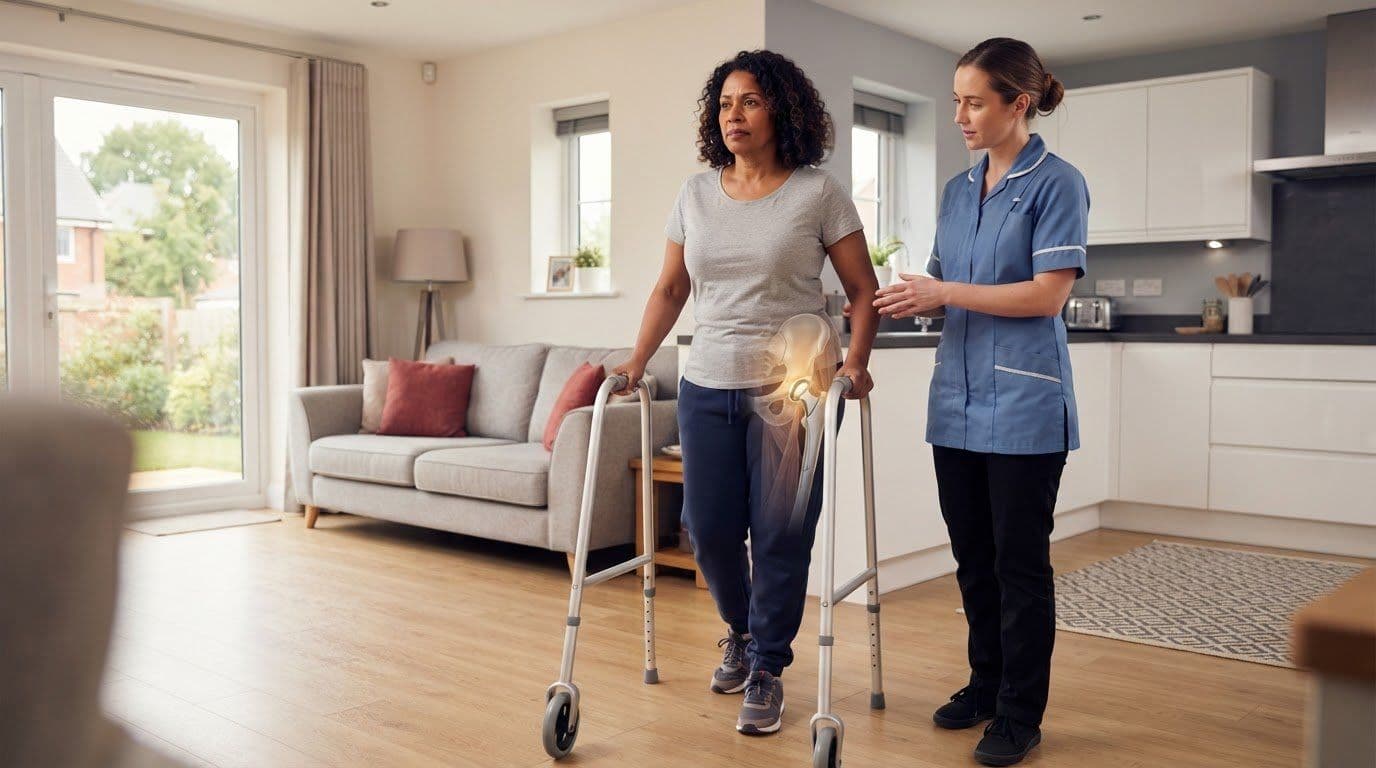
Hip replacement rehab at home in Milton Keynes: a guide
Wondering how to manage recovery safely? Get clear hip replacement rehabilitation Milton Keynes guidance to walk confidently at home and regain mobility.
The first walk from your front door to the kitchen can feel like a bigger challenge than you expected after a hip replacement. You can do much of your rehabilitation at home, but your safest starting point is the plan from your hospital team, not a generic exercise routine. This guide to hip replacement rehabilitation Milton Keynes explains how to make daily movement more manageable while following the advice you’ve been given.
You may be wondering how much walking is enough, whether everyday tasks are safe or where private physiotherapy fits in. Your progress depends on your operation, your health and your surgical team’s guidance, so there is no single timetable that suits everyone. We’ll cover how to follow your plan, organise your home routine and decide when extra physiotherapy support could help.
Key Takeaways
- Use your discharge instructions to guide increases in movement, rather than following a generic exercise routine.
- Plan everyday tasks to make them easier to manage, and only change how you use walking aids or stairs on advice from your clinical team.
- Hip replacement rehabilitation Milton Keynes should reflect your current abilities and the daily activities you want to regain.
- A physiotherapist can help you plan your next steps while keeping your surgical team’s advice at the centre of your recovery.
Hip replacement rehabilitation at home in Milton Keynes: what recovery involves
Rehabilitation at home is about following your surgical team’s advice and gradually rebuilding the movement and confidence you need for everyday life. Your plan should take account of the operation you had, your health, your home and the guidance you received. It is not a race to match someone else’s progress.
Fictional Milton Keynes scenario: A commuter wants to get back to familiar routines after surgery, from preparing breakfast and getting dressed to travelling to work. At first, even these ordinary tasks can take more effort and planning than expected. They focus on manageable goals, use the discharge advice to guide their routine and work towards a commute only as their recovery plan allows.
The type of operation and your personal circumstances affect what rehabilitation involves. For general background on the procedure, see this Hip replacement surgery overview. A useful rehabilitation plan connects your clinical advice with the activities you want to manage at home. Physiotherapy can offer individual support alongside your surgical follow up.
What should guide your first steps at home after hip replacement?
Use the instructions from your hospital team as your reference point. A generic exercise list or online recovery timeline cannot account for the details of your operation or your health, so do not assume it applies to you. If an instruction is unclear, ask your surgical team or treating clinician before changing your routine.
Your movement, confidence and discomfort may vary from day to day. Rehabilitation is guided progress towards everyday function. Focus on the activities that matter to you and follow the plan made for your recovery. Comparing yourself with someone else’s experience does not tell you whether your own progress is on track.
How to approach hip replacement rehabilitation at home safely
A steady routine can make recovery at home easier to organise. Keep your discharge guidance somewhere easy to find and use it to decide what movement is appropriate for you. An online programme cannot take the place of advice based on your operation and recovery.
- Follow your discharge advice. Keep your exercise instructions and relevant contact details somewhere you can find them easily. If you are unsure what an instruction means, ask your surgical team or treating clinician before changing your routine.
- Prepare for everyday tasks. Think about what you will need during the day and where you can keep it within reach. Planning a clear route between the areas you use most may help reduce unnecessary trips. The Home preparation for hip replacement recovery resource includes further ideas for organising your space.
- Practise the movements you have been given. Follow the exercises and movement advice provided for your recovery. Your clinical team’s instructions should guide how you use walking aids, manage stairs and make changes to your household setup.
- Review your routine. Notice how you manage the activities in your plan and whether anything feels different. Do not increase your exercise or change how you use an aid just to keep pace with someone else.
How can you make everyday movement more manageable?
Think through a typical morning before you start. You could keep your phone, drink and breakfast items together to avoid extra journeys. Break tasks into manageable steps and use the movement advice you were given. Your home exercises and progression should follow guidance tailored to your recovery.
If an activity causes a marked or persistent worsening of symptoms, pause it and seek advice from your surgical team or treating clinician. For urgent medical concerns, contact NHS 111. Call 999 if you think it is a life threatening emergency. Physiotherapy can offer extra guidance on movement as part of an individual plan, while your surgical team remains responsible for advice about your operation.

Choosing hip replacement rehabilitation support in Milton Keynes
A physiotherapist can assess how you move and discuss what you want to manage more confidently. For hip replacement rehabilitation Milton Keynes, useful support should reflect your current abilities, daily routine and goals, while staying consistent with your surgical team’s instructions.
What should you expect from a physiotherapy plan after surgery?
Your physiotherapist can discuss what matters to you, look at relevant movements and tailor guidance to your needs. You might want to work towards managing tasks around the home or building towards your usual commute. Reviewing your progress gives you a chance to raise questions and talk through whether your plan needs adjusting.
Physiotherapy is additional support, not a substitute for surgical follow up or the instructions you have been given. If you are uncertain about a symptom related to your operation, contact your surgical team. Your physiotherapist can focus on helping you work towards meaningful activities with an individual plan.
RED Physiotherapy provides evidence based physiotherapy and rehabilitation in Milton Keynes, Northampton and Towcester. You can review the physiotherapy services available and check current treatment prices when considering what support may suit your needs.
Take your next step with confidence
Your next goal might be getting around the house more comfortably or building towards your usual commute. Keep it personal and take each step in line with your surgical team’s advice. If you would value help turning that guidance into a practical plan, RED Physiotherapy offers evidence based care tailored to your needs. As a family run business, we focus on helping you move towards the everyday activities that matter to you.
With hip replacement rehabilitation in Milton Keynes, you do not have to work out every next step alone. Book a physiotherapy appointment with RED Physiotherapy and take a considered step towards rebuilding confidence in your movement.
Frequently Asked Questions
When can I start hip replacement rehabilitation at home?
Rehabilitation usually starts in hospital, with a physiotherapist or occupational therapist supporting you on the day of surgery if possible, and no later than 24 hours afterwards, in line with NICE guidance. Before you leave hospital, you should receive advice for continuing at home. Follow the exercises and activity guidance given specifically for you, rather than adding movements from a general online programme.
Can physiotherapy help after a hip replacement?
Yes. Physiotherapy can help you work through difficulties with movement or everyday tasks and adapt your plan as your needs change. In hip replacement rehabilitation Milton Keynes, you might want extra guidance if you are unsure how to build towards a particular activity, such as getting in and out of a car. Your physiotherapist’s advice should complement, not replace, surgical follow up.
How much does hip replacement rehabilitation cost in Milton Keynes?
The cost depends on the appointment you choose. Check RED Physiotherapy’s current treatment prices for the relevant fee before booking, so you can consider the cost for your own care. When comparing options, look at what each appointment includes as well as the price, and choose support that fits your needs.
What should I do if my hip symptoms worsen during home rehabilitation?
Pause the activity that seems to worsen your symptoms and contact your surgical team or treating clinician for advice, especially if the change is marked or continues. Do not try to push through or change your medication without guidance. For urgent medical concerns, contact NHS 111. Call 999 if you think it is a life threatening emergency.
Tags:
About the Author
Red Physiotherapy Team
Content Team
Health and wellness content from the RED Physiotherapy team.