
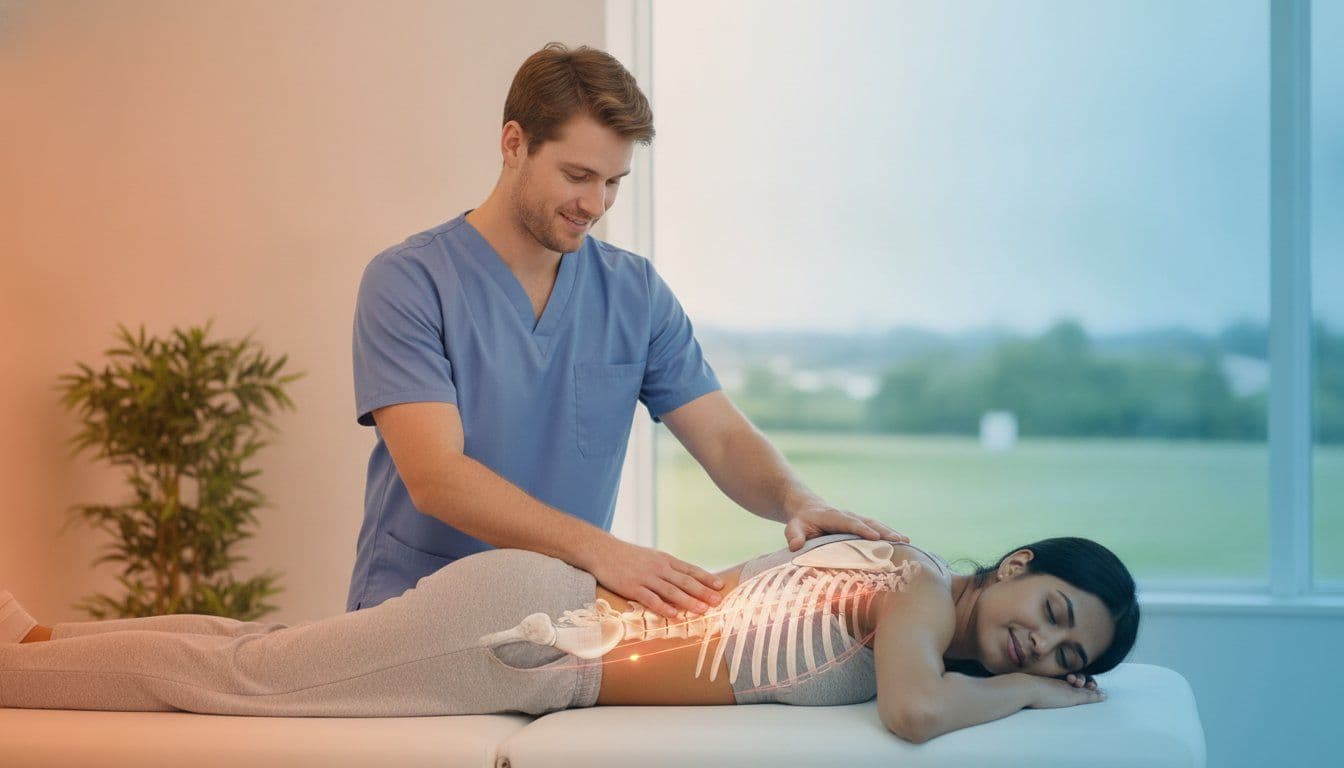
Improve Mobility with Physiotherapy: A Hands-On Guide
Tired of feeling like a rusty hinge? Our guide shows how to improve mobility physiotherapy with hands-on treatment, not just exercises. Get lasting relief to...
What if your morning stiffness isn't an inevitable side effect of your desk job, but a signal that your body is simply waiting for a mechanical tune-up? It’s incredibly frustrating to feel like a rusty gate hinge when you’re trying to hit a personal best or simply play with the kids. You’ve likely tried every YouTube stretch under the sun, only to find the relief lasts about as long as your morning coffee. If you are looking to improve mobility physiotherapy is often the missing link that moves beyond basic exercises to address why your joints feel stuck in the first place.
We understand the annoyance of being told to "just rest" or waiting months for a generic advice sheet while your fitness levels drop. You deserve a plan that starts with hands-on treatment from day one to provide immediate relief and long-term results. In this guide, we’ll show you how expert manual therapy restores your range of motion and helps you return to the activities you love. We will break down the science of movement restrictions, explain why a bespoke approach beats a generic exercise list, and provide a clear roadmap to help you reclaim your physical freedom.
Key Takeaways
- Understand the vital difference between simple flexibility and true joint mobility to ensure your efforts lead to lasting physical change.
- Discover how to improve mobility physiotherapy through hands-on manual treatment that addresses the root cause of stiffness from your very first session.
- Learn why targeting the thoracic spine and hips is essential for office workers and runners alike to prevent secondary pain in the neck and lower back.
- Master practical "movement snacks" and hydration strategies that keep your soft tissues healthy and resilient throughout the working day.
- Identify the specific physical warning signs that distinguish normal post-exercise soreness from joint issues that require professional care.
Defining Mobility: Why Touching Your Toes Isn’t the Whole Story
Many patients walk into our clinics in Milton Keynes or Northampton frustrated because they spend twenty minutes every morning stretching, yet they still feel like they are made of concrete. It is a common mistake to assume that flexibility and mobility are the same thing. To truly improve mobility physiotherapy must look beyond just how long your hamstrings are. We focus on how your joints actually function when you are out in the real world. If you want to move without niggle or restriction, you need to understand the difference between being "bendy" and being mobile.
The Mobility vs Flexibility Debate
Flexibility is simply the absolute range of motion in a joint, often measured by how far someone else can push your limb. Think of it as the length of a rubber band. Mobility, however, is your ability to move through that range with strength and control. It’s the difference between being able to pull your knee to your chest with your hands and being able to lift it there using only your leg muscles. You can be incredibly flexible but still have rubbish mobility if your nervous system doesn't trust you to control that range. This is why What is physiotherapy? is so vital. It bridges the gap between passive range and active, functional movement.
Why We Lose Mobility as We Age (or Sit)
The modern "desk-bound" lifestyle is essentially a mobility trap. When you spend eight hours a day in a chair, your hips forget how to extend and your thoracic spine rounds forward like a prawn. Your body is incredibly efficient; it adapts to the shapes you spend the most time in. This leads to several issues:
- Stuck Patterns: Soft tissues and fascia begin to thicken and lose their elasticity in response to repetitive, restricted positions.
- Neurological Braking: Your brain senses a lack of stability and "locks down" your joints to protect you, creating a sensation of stiffness that no amount of passive stretching will fix.
- Joint Capsule Health: Without varied movement, the lubrication within your joint capsules decreases. It’s a classic case of use it or lose it.
When one area stops moving, your body doesn't just give up. It finds a way to compensate. If your hips are stiff, your lower back has to move twice as much to pick up the slack. Over time, these compensations lead to the "mystery" injuries that seem to appear out of nowhere. To improve mobility physiotherapy at RED focuses on identifying these hidden restrictions and restoring the natural mechanics of your body before those compensations turn into chronic pain.
The Hands-On Difference: Why Exercises Alone Aren’t Enough
If you have ever been to a clinic where the therapist barely looked up from their clipboard before handing you a photocopy of some squats, you will know how underwhelming that feels. It is a common frustration for many of our patients in Milton Keynes and Northampton who have tried to manage their stiffness alone. While movement is essential, trying to perform exercises on a joint that is physically "stuck" is like trying to drive a car with the handbrake on. To effectively improve mobility physiotherapy must involve a hands-on approach that addresses the mechanical and neurological barriers holding you back.
What is Manual Therapy?
In plain English, manual therapy involves specific joint mobilisations and soft tissue techniques performed by your therapist. We don't just "give you a sheet of exercises" and send you on your way. Instead, we use our hands to "desensitise" painful or guarded tissues. When you are in pain, your nervous system often goes into a protective lockdown, making muscles feel tight and joints feel restricted. Hands-on work provides a safe stimulus that tells your brain it is okay to let go, which immediately reduces pain anxiety and builds confidence in your movement.
- Joint Mobilisations: Gentle, rhythmic movements applied to a joint to reduce stiffness.
- Soft Tissue Work: Targeted pressure to release tension in muscles and fascia.
- Immediate Feedback: We can feel how your tissues respond in real-time, allowing us to adjust the treatment instantly.
Restoring the "Joint Glide"
Every joint in your body relies on a subtle "glide" within its capsule to function correctly. When you spend too much time sitting or following a repetitive sports routine, this glide can become restricted. We use manual techniques to physically nudge the joint back into its optimal track, which "resets" the feedback loop between your joint and your brain. It is like oiling a rusty hinge before you try to swing the door wide open. This preparation "primes" your body, making your home exercises significantly more effective because you are finally moving through a clean range of motion rather than fighting your own stiffness.
As a family-run practice, we pride ourselves on being a patient-first clinic that prioritises results over long-winded treatment plans. We believe that you should feel a difference from your very first session. You can learn more about our team and our ethos on our About Us page. If you are tired of slow progress and want to see how a hands-on approach can accelerate your recovery, you can chat with our team today to discuss your goals.
Targeted Strategies: Improving Mobility in the Spine, Hips, and Shoulders
To effectively improve mobility physiotherapy must treat the body as an interconnected system rather than a collection of isolated parts. Your joints don't work in a vacuum. If your upper back is stiff, your neck has to work harder. If your hips are locked, your lower back takes the strain. At our clinics in Milton Keynes and Northampton, we focus on these high-traffic areas to restore the natural mechanics that allow you to move without thinking about it. We look for the "hidden" restrictions that are often the true cause of your discomfort.
Unlocking the Upper Back (Thoracic Spine)
Your thoracic spine is the middle section of your back and it is designed for rotation and extension. The "slumped" desk posture common in many modern offices essentially glues these vertebrae together. When you lose this vital rotation, your body looks for it elsewhere, usually resulting in nagging neck pain or aching shoulders. We use specific manual mobilisations to restore thoracic extension. This simple shift can often provide immediate relief for "mystery" shoulder aches that haven't responded to traditional rest.
The Hips: Your Body’s Powerhouse
The hips are the engine room for every British hill walker and runner. Sitting for long periods shortens the hip flexors and "deactivates" the glutes, which leads to a significant loss of internal rotation. This is a disaster for your gait. If your hip can't rotate, your knee or lower back will try to do it for you, which is a recipe for injury. Restoring this internal rotation is key to pain-free movement. Sometimes, a deep tissue intervention like our Sports Massage is the perfect partner to joint work. It helps to clear out the soft tissue restrictions that keep your hips feeling like they are encased in lead.
We also pay close attention to the shoulder complex. It is a masterpiece of engineering that requires a delicate balance of stability and range for overhead reach. Whether you are lifting a suitcase or a barbell, your shoulder needs to glide perfectly. For those facing unique life stages or challenges, such as pregnancy-related pelvic girdle pain or post-natal recovery, our specialised Women’s Health Physio services provide the targeted support needed to restore function safely. Every body is different, and we ensure your plan reflects your specific goals and lifestyle.
If you have noticed that your movements feel restricted or you are tired of that "locked" feeling in your back, it is time to take action. You don't have to settle for a reduced range of motion. You can book an assessment with our team to find out exactly where your restrictions are coming from and get a clear plan to fix them.

Practical Advice: Improving Your Mobility Between Appointments
While our hands-on work in the clinic is the catalyst for change, the real magic happens in the 167 hours of the week when you aren't with us. To truly improve mobility physiotherapy results must be supported by consistent, low-effort habits at home. Think of your body like a high-performance engine; we do the service and tuning, but you need to keep the oil topped up and the parts moving between visits. This isn't about spending hours in the gym, but about making movement a non-negotiable part of your day.
One of the most effective strategies we recommend is the "Movement Snack". Instead of sitting for four hours and then trying to "fix" it with a punishing evening session, aim for two minutes of movement every half hour. This keeps the joint capsules lubricated and prevents your nervous system from going back into that protective lockdown we discussed earlier. Hydration also plays a massive role here; "dry" fascia is sticky and stiff, so keep a water bottle handy to ensure your soft tissues stay supple and responsive.
The 10-Minute Daily Reset
You don't need a home gym to maintain your progress. Try this simple flow: start with Cat-Cow on all fours to encourage segmental movement in the spine. Follow this with the World’s Greatest Stretch, stepping into a deep lunge and rotating your torso to hit the hips and mid-back. Finish with doorway pec stretches by placing your forearms on a frame and leaning forward. It is the perfect antidote to the "prawn" posture caused by staring at a laptop.
Ergonomics for the Milton Keynes Commuter
Whether you are tackling the roundabouts of Milton Keynes or sitting in a home office in Towcester, your setup matters. However, the "perfect" posture is a myth. The best posture is actually your next posture. If you are stuck in a car, try to adjust your lumbar support slightly every 30 minutes to change the load on your spine. In the office, ensure your screen is at eye level, but more importantly, stand up and walk around whenever you take a phone call to improve mobility physiotherapy outcomes through daily activity.
If you have been using a foam roller or tennis ball at home but aren't seeing results, it might be because you are missing the underlying mechanical restriction. We can help you identify exactly where to focus your efforts so you aren't just rolling around in pain for no reason. To get started on a tailored plan that actually works, explore our full range of physiotherapy services and see how we can help you stay mobile for the long term.
When to Seek Help: Recognising the Signs Your Body Needs Professional Care
It is very tempting to ignore a persistent niggle and hope it simply disappears with enough rest. However, your body is excellent at providing "warning lights" before a minor restriction becomes a major injury. If you have been trying to improve mobility physiotherapy is the most efficient way to stop the guesswork and get back to your passions. The key is knowing the difference between the normal aches of an active life and the signs that your mechanics are genuinely failing you.
One of the most common questions we hear is how to tell "good" pain from "bad" pain. If you feel a dull, heavy ache in your muscles a day after a workout, that is likely just Delayed Onset Muscle Soreness (DOMS). It is perfectly normal. However, if you experience sharp, catching sensations or pain that feels like it is deep inside the joint, that is a clear signal that something is wrong. Waiting for these issues to resolve on their own often leads to compensation patterns where other parts of your body start to overwork and eventually break down.
Red Flags for Mobility Issues
There are specific symptoms that should prompt an immediate visit to one of our clinics. If your pain is waking you up at night or feels significantly worse first thing in the morning, your tissues are struggling to recover. You should also watch out for:
- Sharp, catching pain: Feeling a pinch or a block during normal movements like reaching for a seatbelt or putting on a coat.
- Loss of balance: Feeling unsteady on your feet or like a joint might give way during a walk.
- Persistent stiffness: A range of motion that does not improve even after a thorough warm-up or hot shower.
Your Fast-Track to Recovery
In May 2026, the median wait for NHS treatment reached 12.4 weeks. For many of our patients in Milton Keynes, Northampton, and Towcester, waiting three months for an initial assessment is simply not an option. A delay that long can allow a simple mobility restriction to become a much more stubborn, permanent issue. When you choose private care, you bypass the long wait times and get straight to the solution. You don't need a GP referral to see us; you can simply book in and get started.
At your first session, Our Team will provide a thorough assessment to find the root cause of your restriction. We are a family-run practice that believes in hands-on treatment from day one. We don't just talk about the problem. We start fixing it immediately. If you are tired of feeling restricted and want to improve mobility physiotherapy at RED is designed to get you moving freely again without the fuss. You can Contact Us today to book your assessment and start your journey back to peak performance.
Reclaim Your Freedom of Movement
You don't have to accept stiffness as an inevitable part of your daily life. Whether you are an office worker in Milton Keynes or a runner in Northampton, the path to better movement starts with understanding that mobility is a skill you can refine. By combining expert manual therapy with consistent daily habits, you can break the cycle of restriction and return to the activities that make life enjoyable. We have seen first-hand how restoring joint mechanics can transform a person's quality of life, moving them from a state of frustration to peak performance.
True progress happens when you address the root cause of your stiffness rather than just chasing the symptoms. If you want to improve mobility physiotherapy at RED is designed to give you results from day one. As a family-run practice, we don't believe in generic exercise sheets or long wait times. We believe in hands-on care that respects your time and your goals. Our expert team in MK, Northampton, and Towcester is ready to help you move with confidence again.
Ready to stop feeling stiff? Book your hands-on assessment at RED Physiotherapy today and take the first step toward a more active, pain-free future. You've got this.
Frequently Asked Questions
How long does it take to see improvements in my mobility with physiotherapy?
You will typically feel a shift in your range of motion after your very first hands-on session at our clinic. While the initial relief is great, it takes about four to six weeks for your nervous system and tissues to fully adapt to these new patterns of movement. We aim to fix the root cause efficiently so you aren't stuck in a cycle of endless appointments. Every body is different, but our goal is always a fast and sustainable return to your passions.
Will I have to do exercises every single day to see a difference?
You definitely don't need to spend your life on a yoga mat to see results. We focus on "movement snacks" which are short, two-minute bursts of activity that keep your joints lubricated throughout the day. To improve mobility physiotherapy at RED is about making movement feel like a natural part of your life, not a chore. If you can find ten minutes a day for yourself, you can make significant progress without it feeling like a second job.
Can physiotherapy help with age-related stiffness and arthritis?
Absolutely. Physiotherapy is often the best way to manage the stiffness that comes with arthritis. We use manual techniques to "oil the hinges" of your joints and desensitise the surrounding tissues. This reduces the "bone on bone" sensation and helps you stay active. It is about maintaining your quality of life and ensuring you can keep doing the things you love, whether that is gardening or walking the dog, without being held back by pain.
Is mobility work the same as yoga or Pilates?
Not quite. While yoga and Pilates are brilliant for general wellness, they are often generic classes that don't address your unique restrictions. Mobility work with a physio is a deep dive into your specific mechanical blocks. We identify the exact joint that isn't gliding properly and use hands-on treatment to fix it. Once the block is gone, your yoga or Pilates practice will actually become much more effective and safer for your joints in the long run.
Why does my mobility feel worse in the morning?
This is down to something we call the "gel effect". When you are stationary overnight, the fluid in your joints thickens and your tissues lose some of their hydration. It is perfectly normal, but it shouldn't last for hours. We can show you specific, gentle movements to do before you even get out of bed. These help to "reset" your system and clear that morning fog from your joints quickly, allowing you to start your day with ease.
Can sports massage improve my mobility as well as physio?
It certainly can. While physiotherapy focuses on the mechanics and joint glide, sports massage is the gold standard for clearing soft tissue tension and improving blood flow. Using them together is like giving your body a full service. We offer expert sports massage at our clinics in Milton Keynes and Northampton to help you recover faster and feel more fluid in your daily movements. It is the perfect booster for your overall mobility plan.
Do I need a GP referral to see a physiotherapist at RED?
No, you don't need a referral at all. We are a private, family-run business, which means you can book in directly whenever you feel you need help. This is a much faster alternative to waiting for an NHS appointment. In May 2026, the median wait for NHS treatment was 12.4 weeks, so skipping the queue is a massive advantage. To improve mobility physiotherapy should be accessible when you need it most, not when a system finally has a gap.
What should I wear to my first mobility assessment?
We recommend wearing something that allows you to move freely and lets us see the area we are treating. Shorts are great if we are looking at your hips, knees, or ankles. A vest top or sports bra is best for shoulder and neck issues. Don't worry if you are coming straight from work. We have private changing areas at our Towcester, MK, and Northampton clinics so you can swap into your gym gear easily before we start.
Focus Keywords
- improve mobility physiotherapy
- hands-on physiotherapy
- physiotherapy Milton Keynes
- physiotherapy Northampton
- physiotherapy Towcester

Tags:
About the Author
Red Physiotherapy Team
Content Team
Health and wellness content from the RED Physiotherapy team.