
Managing Work with Chronic Back Pain: A Practical Guide to Staying Productive
Struggling with managing work with chronic back pain? Ditch the generic exercises. Get practical desk tips and hands-on physio to stay productive and pain free.
What if the secret to managing work with chronic back pain isn't about sitting perfectly still like a statue, but about moving with purpose and getting the right hands-on help? We know how it feels when that nagging ache starts to cloud your focus by mid-morning, making you worry that your productivity, and perhaps even your career progress, is slipping through your fingers. It's incredibly frustrating to be told to "just do these exercises" by providers who haven't even laid a hand on the problem area.
At RED Physiotherapy, we agree that you deserve better than a generic PDF of stretches. You need a way to manage flare-ups at your desk and the confidence that you can stay in the game without constant discomfort. In this guide, we'll share practical, expert-led strategies to help you reclaim your workday. We'll look at the latest ergonomic shifts, including the new OSHA 2026 standards, and explain how our hands-on treatment in Milton Keynes, Northampton, and Towcester can fast-track your recovery and keep you performing at your best.
Key Takeaways
- Learn why chasing the "perfect" posture is actually a myth and how simple, desk-based movements can prevent the stiffness caused by static loading.
- Discover practical pacing techniques for managing work with chronic back pain that allow you to hit your deadlines without a mid-afternoon flare-up.
- Understand how to build a "bulletproof" back through targeted strength training and evening routines that support your physical health long after you have logged off.
- Find out why the "wait and see" approach fails busy professionals and how hands-on treatment from day one gets you back to business faster.
- Explore how our clinics in Milton Keynes, Northampton, and Towcester offer a clear, results-driven alternative to the generic exercise sheets often found elsewhere.
The Reality of Managing Work with Chronic Back Pain
Let's be honest. If you are reading this, you are likely exhausted from trying to keep a straight face in boardrooms while your lower back feels like it is being squeezed in a vice. Managing work with chronic back pain isn't just about the physical discomfort. It is a mental marathon that drains your energy before you have even finished your first coffee. Many professionals across Northamptonshire fall into the trap of the "wait and see" approach, hoping it is just a bad week. But when that week turns into months, the goalposts shift from hitting targets to simply making it to 5 PM without needing to lie on the floor.
When Back Pain Becomes Chronic
In clinical terms, we classify chronic back pain as any discomfort that persists for more than 12 weeks. It is the point where the initial injury might have healed, but your nervous system remains on high alert. During long office hours, your pain signals can become oversensitive, firing off even when you are performing safe, routine tasks. This is why early intervention at our Milton Keynes or Northampton clinics is so vital. We don't just look at a scan; we look at how your body is reacting to your specific work environment. Waiting for an NHS referral often means your brain has more time to "learn" these pain patterns, making them harder to break later.
The Impact on Productivity and Career
The real cost of persistent pain often shows up as "presenteeism." This is when you are physically at your desk, but your brain is occupied with managing a flare-up rather than your latest project. Managing work with chronic back pain requires more than just a better chair; it demands a strategy that addresses both the physical and the neurological impact of the condition. This constant low-level stress can lead to a shorter fuse with colleagues and a lack of creative spark, as your brain simply does not have the bandwidth for anything other than the pain. It is easy to start fearing a long-term physical decline or worrying that you cannot keep up with the pace of a modern UK career. Chronic back pain is a manageable condition that requires a proactive strategy rather than a permanent disability that defines your career.
We see patients every day who have been told to just "rest" or "try these three stretches from a leaflet." That advice rarely works for someone with a busy life and high expectations. Moving from surviving the day to truly thriving in your role requires a shift in mindset and a hands-on plan. By addressing the root cause efficiently with our team, you can regain your workplace confidence and stop letting your back dictate your professional trajectory.
Why Your Desk Job Might Be Fuelling the Fire
Most people think they are in pain because they "slouch." In reality, you are likely in pain because you are trying too hard to sit like a mannequin. When managing work with chronic back pain, the enemy isn't necessarily your chair. It's the lack of variety in how you use it. Static loading is the clinical term for what happens when you stay in one position for too long. It starves your spinal discs of the nutrients they need and leaves your muscles feeling as stiff as a board by lunch. Your body was designed to move, not to be a decorative piece of office furniture.
Debunking the Posture Myth
We often see patients who are exhausted from trying to maintain "perfect" posture all day. The truth is that "your next posture is your best posture." There is no single position that is healthy to maintain for eight hours straight. Even the most expensive, ergonomic chair becomes a problem if you don't move in it. Research from Harvard Health notes that managing chronic back pain requires a multifaceted approach that goes far beyond just sitting up straight. We encourage micro-movements, like shifting your weight or gently rotating your neck, every few minutes to keep your tissues hydrated and happy.
Stress, Tension, and the Office Environment
Your back doesn't exist in a vacuum. There is a direct physiological link between a high-pressure meeting and a sudden back flare-up. When you are stressed, your body enters a "fight or flight" state, which often leads to shallow chest breathing. This bypasses your diaphragm and puts extra strain on the small muscles in your neck and lower back that aren't meant to do the heavy lifting. This tension creates a feedback loop that makes your nervous system even more sensitive to pain signals. Resetting your nervous system can be as simple as taking three deep, belly breaths between emails to signal to your brain that you are safe.
Identifying these "pain triggers" is the first step toward a more comfortable workday. It might be the way you lean forward when you are concentrating or how you clench your jaw during a deadline. If you feel like you have tried every chair on the market and still can't find relief, it might be time for a more personalised approach. Our team can help you identify these specific triggers during a physiotherapy assessment, where we focus on hands-on treatment from your very first visit to get those tight muscles moving again.
Managing work with chronic back pain is much easier when you stop fighting your body and start working with it. By breaking the cycle of static loading and addressing the tension that builds up during the day, you can keep your focus on your career rather than your discomfort. It isn't about finding the perfect chair; it's about finding the right movement and the right support to keep you productive.
Pacing and Practical Workplace Hacks for Pain Relief
Managing work with chronic back pain is a bit like managing a bank account. You only have so much "spinal tolerance" to spend each day, and if you blow it all by 11 AM, you'll be in the red by home time. We teach our patients a simple "Traffic Light" system to monitor their symptoms. Green means you feel mobile and can crack on. Amber is that familiar stiffness creeping in, a signal to take a five-minute movement break. Red is a flare-up, which means you need to change your position immediately or seek hands-on help to settle the irritation.
The Pacing Strategy for Professionals
Pacing isn't about doing less; it's about breaking your workload into manageable chunks. We recommend "movement snacks" throughout the day. These are 30-second bursts of activity, like a standing desk stretch or a quick lap of the office, that prevent pain from accumulating. Research on workplace strategies for back pain suggests that self-management is most effective when you balance high-focus tasks with these active recovery periods. Don't be afraid to tell your colleagues you're "taking a quick mobility break." Most of them will probably be jealous they didn't think of it first.
If you find yourself stuck in the "Red" zone more often than not, it's a sign that your current strategy needs an upgrade. While pacing helps you survive the day, our physiotherapy services are designed to fix the underlying issues so you can stop worrying about your "spinal budget" altogether.
Commuting and External Factors
Your workday often starts long before you reach your desk. If you're commuting to Milton Keynes or Northampton, that hour in the car can set a negative tone for the rest of the day. Ensure your car seat provides enough lumbar support, and try to avoid clenching the steering wheel, as this tension travels straight to your back. For those heading into London from Towcester, choose a high-quality backpack with two straps rather than a heavy messenger bag that loads one side of your spine. A 10-minute walk before work can reset spinal lubrication. This simple habit gets the blood flowing to your discs and prepares your body for the day ahead, making managing work with chronic back pain feel much more achievable.
By implementing these small, practical changes, you're taking control of your environment. You aren't just waiting for the pain to happen; you're actively preventing it. This proactive approach is exactly what we champion in our clinics, moving you away from being a passive patient and toward being a high-performance professional who happens to have a very resilient back.
Beyond the Ergonomic Chair: Staying Active Outside the Office
Success in managing work with chronic back pain isn't just about what you do between 9 AM and 5 PM. Your evening and weekend choices are the silent partners in your recovery. If you spend your work hours battling stiffness only to collapse onto a soft sofa for the rest of the night, you are essentially hitting the pause button on your progress. Your body needs a clear signal that it is time to transition from the static load of a desk to the dynamic movement of real life.
Building Resilience Through Movement
Many patients come to us thinking they need to stretch their way out of pain. While flexibility is great, what most office workers actually lack is "load tolerance." This is the capacity of your tissues to handle the demands of your day without complaining. We focus on building functional strength that makes your back feel "bulletproof." This might mean a tailored lifting programme or a running assessment to see how your body handles impact. Identifying hidden imbalances in how you move can be the difference between a nagging ache and a pain-free sprint to the train station.
We often use sports massage as a bridge between your sedentary work life and your active hobbies. It isn't just about relaxation. It is a targeted, hands-on tool that releases the specific tensions built up from hours of concentration, allowing you to exercise with better form and less fear of a flare-up. If you want to move beyond just surviving the week, you can book a consultation with our team to start building your resilience today.
Recovery and Sleep Hygiene
Sleep is the only time your spinal discs truly get to decompress and rehydrate after a long day. If you wake up feeling like a piece of dry toast, your sleeping position might be the culprit. We generally recommend side-sleeping with a pillow between your knees to keep your pelvis level, or lying on your back with a pillow under your knees to take the pressure off your lower spine. Avoid sleeping on your stomach, as it forces your neck and back into an awkward twist for hours on end.
When you get home, take five minutes to "wind down" your back muscles before bed. A gentle heat pack can work wonders for melting away office-induced stiffness, whereas ice is usually better reserved for an acute, sharp flare-up. Managing work with chronic back pain becomes significantly easier when you prioritise this overnight recovery, ensuring you start every morning with a full tank of physical energy rather than a deficit.
How Hands-On Physiotherapy Gets You Back to Business
While pacing and better sleep go a long way, there often comes a point where self-management reaches its limit. Managing work with chronic back pain is significantly easier when you have a professional in your corner who does more than just email you a list of stretches. We understand that as a busy professional, you don't have time for "wait and see" protocols or generic advice. You need a clear, evidence-based plan that delivers real results so you can get back to focusing on your career rather than your discomfort.
The RED Physiotherapy Difference
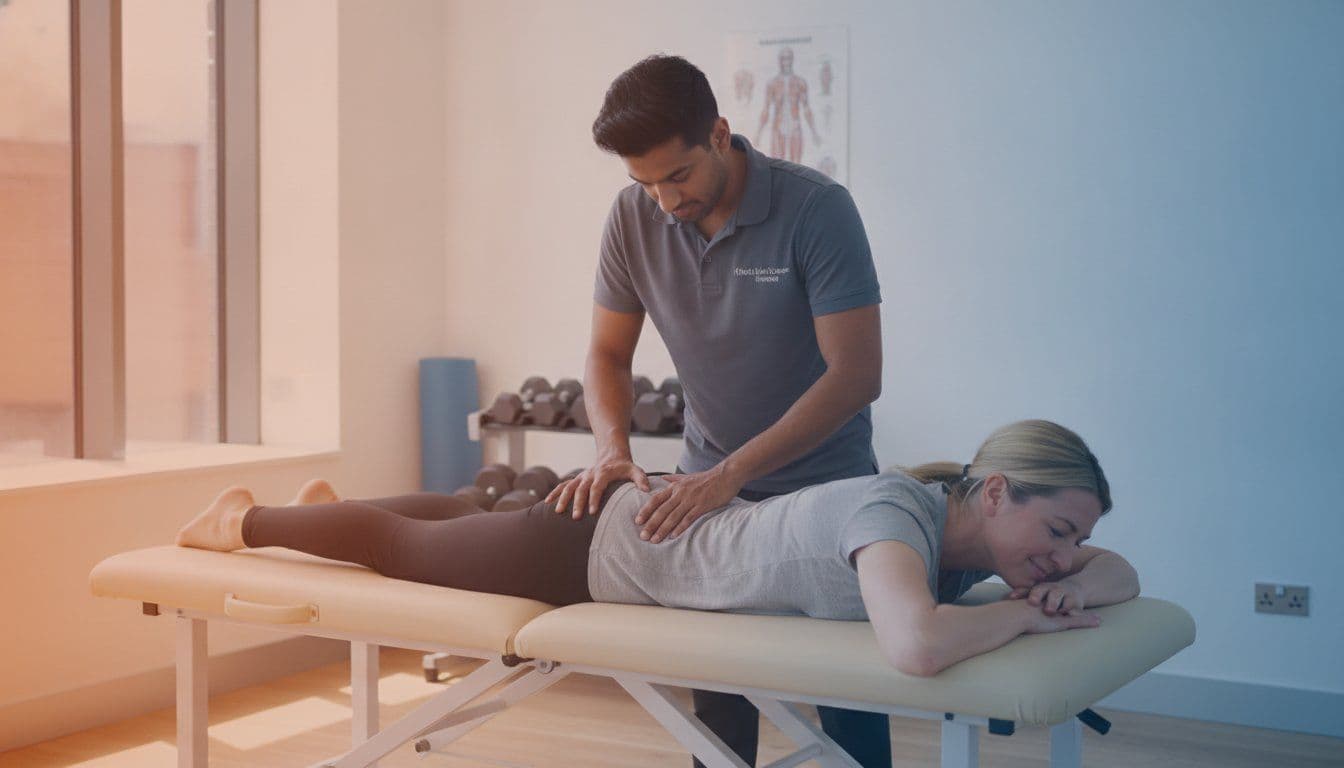
We pride ourselves on being a hands-on clinic from day one. Many providers have shifted toward an "exercise-only" model, but we believe manual therapy is essential for breaking the cycle of stiffness in office-bound backs. When you visit our Northampton or Towcester clinics, we actually take the time to feel what is happening in your tissues and joints. This direct approach helps us desensitise irritated areas and restore movement much faster than exercises alone. For more complex or persistent cases, we can even use diagnostic ultrasound to see exactly what is happening beneath the surface, providing the clarity you need to move forward with confidence.
Our philosophy is about fixing the root cause efficiently. We don't believe in dragging treatment out over months if we can get you moving in weeks. By combining expert manual therapy with a sustainable movement plan that fits into your existing professional schedule, we help you build long-term autonomy. You aren't just a patient to us; you are a partner in your own recovery, and we treat your time with the respect it deserves.
When to Seek Help
It is easy to put off treatment when you are chasing deadlines, but waiting often leads to longer recovery times. If you find that managing work with chronic back pain is becoming your primary daily task, it is time for a professional assessment. You should seek urgent help if you experience "Red Flag" symptoms, such as sudden weakness in your legs, numbness in the "saddle" area, or any changes to your bladder and bowel habits. These require immediate medical attention.
For everything else, don't let a long NHS wait time be the reason your career momentum stalls. We offer fast-track access to expert care in Milton Keynes and the surrounding areas, ensuring you get the hands-on treatment you need when you need it most. If you are ready to stop surviving the workday and start thriving again, contact us today to book your initial consultation. Let's get you back to business.
Take Charge of Your Career and Your Comfort
Managing work with chronic back pain shouldn't be a daily struggle that leaves you exhausted by Friday afternoon. We've looked at how ditching the "perfect posture" myth and adopting a smart pacing system can keep your focus where it belongs. Whether it's taking movement snacks at your desk or building resilience outside the office, these small shifts build the foundation for a much more resilient spine. You don't have to settle for just getting through the day.
However, self-management is only one piece of the puzzle. To truly thrive in your role, you need a plan that addresses the root cause of your discomfort. At RED Physiotherapy, we don't just hand you a sheet of exercises and hope for the best. We provide hands-on treatment from your very first appointment to get you moving freely again. Our expert team across Milton Keynes, Northampton, and Towcester means there are no long waiting lists, so you can get back to work faster. Book your hands-on assessment at RED Physiotherapy today and start your journey toward lasting health. You're in safe hands, and we're ready to help you reach your full physical potential.
Common Questions About Workplace Back Pain
Can I work with chronic back pain or should I take time off?
You can absolutely continue working, and for many people, staying active is actually more beneficial than complete bed rest. Managing work with chronic back pain often involves adjusting your daily habits rather than signing off sick. Unless you have severe neurological symptoms, gentle movement keeps the blood flowing to your spinal discs. We can help you build a practical plan that allows you to stay productive while we treat the underlying irritation.
What is the best office chair for chronic lower back pain?
The best office chair is the one that allows you to change positions frequently throughout the day. While high-end ergonomic chairs offer great lumbar support, they aren't a magic cure if you sit still for eight hours. Look for a chair with adjustable height, armrests, and back tilt. However, even the most expensive chair won't help if you don't follow the rule that your next posture is always your best posture.
How often should I get up from my desk if I have back pain?
You should aim to change your position every 30 minutes at a minimum to keep your joints moving. We often recommend the 30/30 Rule, which involves moving for 30 seconds for every 30 minutes of sitting. This doesn't mean a full gym session; it just means standing up, stretching, or walking to the kettle. These tiny breaks prevent the static loading that makes your back feel like concrete by lunchtime.
Is a standing desk better for chronic back pain than sitting?
A standing desk is a fantastic tool, but it isn't a silver bullet for back pain on its own. Standing all day can be just as tiring for your lower back as sitting for too long. The real benefit comes from the ability to switch between sitting and standing throughout the day. If you do use one, remember to follow the latest ergonomic guidelines for monitor height to prevent neck strain.
When should I see a physio for my workplace back pain?
You should book an appointment as soon as the pain starts to distract you from your tasks or if it lasts longer than two weeks. Waiting for months hoping it will go away often leads to more complex issues. If your pain is radiating down your leg or causing pins and needles, it is definitely time to see us. Early hands-on intervention at our Northampton or Towcester clinics gets you back to full strength much faster.
Can sports massage help with back pain caused by office work?
Sports massage is incredibly effective for releasing the muscular tension that builds up during long office hours. It targets the specific areas that get tight from static loading, like your hip flexors and upper back. While it feels great, we use it as a clinical tool to restore movement. It is a perfect way to bridge the gap between a stressful week at the desk and a weekend of being active.
What exercises can I do at my desk for back relief?
You can perform simple movements like seated spinal rotations, pelvic tilts, and shoulder rolls without even leaving your chair. Gently twisting from side to side or arching and rounding your back helps to keep your joints lubricated. These movements might look small, but they are vital for managing work with chronic back pain. They break the cycle of stiffness and keep your nervous system from becoming oversensitive during high-pressure tasks.
How long does it take to see results from physiotherapy for back pain?
Many patients feel a significant reduction in stiffness after their very first hands-on treatment session. However, creating lasting change in your spinal health usually takes between four to six weeks of consistent care. We focus on getting you out of pain quickly and then building the functional strength you need to stay that way. Our goal is always to fix the problem efficiently so you don't need to keep coming back.
Tags:
About the Author
Red Physiotherapy Team
Content Team
Health and wellness content from the RED Physiotherapy team.