
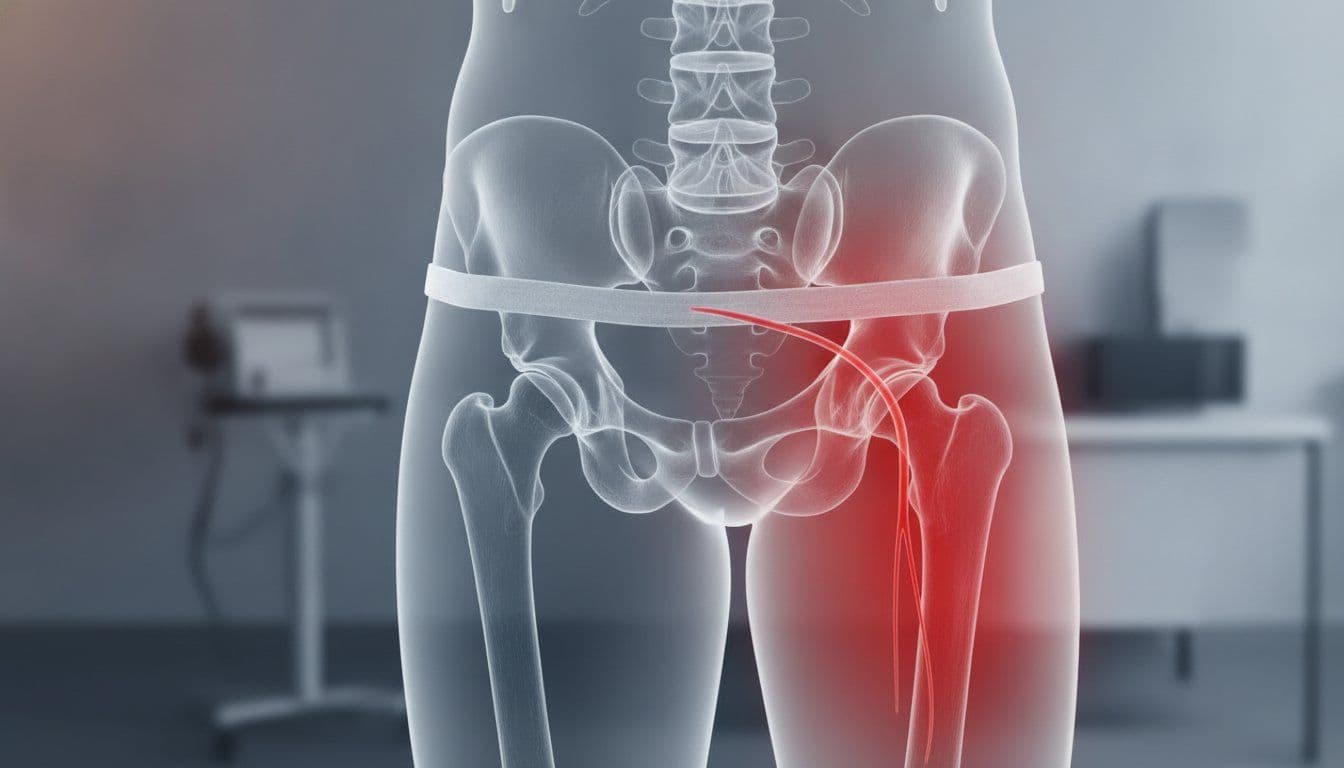
Meralgia Paresthetica: Expert Relief for Tingling and Numb Thighs
Tired of that numb, tingling thigh? Learn the cause of meralgia paresthetica and how our hands-on physio offers fast, effective relief without the long waits.
Is that persistent burning sensation on the outside of your thigh starting to feel like an unwanted permanent fixture? It’s a strange, irritating buzz that doesn’t quite feel like a typical muscle ache, and it is likely making you worry that something is seriously wrong with your nerves. This specific type of discomfort is often a condition called meralgia paresthetica, a sensory nerve entrapment that can make even the simplest daily activities feel like a chore.
You are probably tired of being told to "just wait and see" or finding yourself stuck at the bottom of a long NHS waiting list. It’s incredibly frustrating when you just want to get back to your morning run or sit through a work meeting without that distracting stinging sensation. We understand that you want answers now, not in six months, especially when the worry of permanent damage is playing on your mind.
In this article, we will explain exactly why your outer thigh is tingling and how our hands-on physiotherapy can get you back to pain-free movement quickly. You will discover the root causes of the pressure on your nerve and see how a tailored, clinical plan can provide immediate relief and long-term results. We are moving beyond basic exercise sheets to give you the expert care and confidence you deserve.
Key Takeaways
- Learn why meralgia paresthetica is caused by a trapped nerve in your groin rather than your back, and why it only impacts your sensation.
- Identify the common lifestyle triggers and physical "pinch points" that cause that annoying burning or stinging sensation in your outer thigh.
- Discover the simple "Physio's Checklist" used to distinguish this condition from other common issues like sciatica or a slipped disc.
- Find out how immediate lifestyle changes and loose clothing can help to reduce the pressure on your nerve and ease your symptoms today.
- See why our hands-on manual therapy approach gets you moving faster than the standard "exercise sheet" method offered by many other clinics.
What is Meralgia Paresthetica? Understanding the 'Tingling Thigh' Syndrome
Have you ever noticed a strange, oval shaped patch on the outside of your thigh that feels like it has been injected with local anaesthetic? It is a peculiar sensation. One minute you are walking along, and the next, you realise a section of your skin feels numb, cold, or even like it is fizzing. This isn't just a random quirk of your body; it is a recognised clinical condition known as Meralgia Paresthetica. While the name sounds like a mouthful, the mechanics are quite simple. It involves a single nerve being squeezed as it passes from your pelvis into your leg.
Many patients come into our clinics in Milton Keynes or Towcester worried that they have a slipped disc or a serious spinal issue. It is a logical guess because we often associate leg pain with the back. However, meralgia paresthetica is actually a "peripheral" nerve problem. This means the entrapment is happening further down the line, usually right at the front of your hip or groin area. The nerve in question is the Lateral Femoral Cutaneous Nerve, or LFCN. Its only job is to provide sensation to the skin on your outer thigh. It doesn't control your muscles, which is why your leg still feels strong even when the skin feels like it belongs to someone else.
The Tell-Tale Signs: Is This What You're Feeling?
The symptoms of this condition are usually very specific. Because the LFCN is purely sensory, you won't experience the "heavy leg" or foot drop often seen with sciatica. Instead, look out for these common markers:
- A persistent burning or stinging sensation on the outer part of the thigh.
- Numbness or a "dead" feeling in a specific patch of skin.
- Heightened sensitivity where even the fabric of your trousers or a light touch feels irritating.
- Symptoms that flare up after you have been standing or walking for a long time.
Why Sensory Nerves Behave Differently
It can be incredibly jarring to feel intense burning or numbness while being able to squat, run, and jump without any loss of power. This happens because our nervous system is divided into different "channels." Think of it like a motorway. Motor nerves are the fast lanes carrying signals to move your muscles, while sensory nerves like the LFCN are the lanes carrying information about touch and temperature back to the brain. When only the sensory lane is blocked, the movement signals still get through perfectly fine. Meralgia Paresthetica is a benign but frustrating sensory nerve entrapment that causes altered sensation in the outer thigh without affecting muscle strength or reflexes.
The main culprit behind meralgia paresthetica is a bit of anatomy called the inguinal ligament. Think of this ligament as a tight band of tissue in your groin that acts like a doorway for nerves and blood vessels. If that doorway becomes too cramped, the LFCN gets squashed against the pelvic bone. According to Johns Hopkins Medicine, this compression is the primary reason for the burning sensations you're feeling. It doesn't take much to cause a flare-up. Even minor changes in your daily routine or clothing can turn a perfectly happy nerve into a source of constant irritation.
Lifestyle Habits That Squeeze the Nerve
Sometimes, fashion really does hurt. The "skinny jean" effect is a genuine clinical observation where tight denim or high-waisted trousers create a physical bottleneck right over the hip bone. For tradespeople or police officers, heavy tool belts are a classic trigger. These belts sit exactly where the nerve is most vulnerable, providing a constant, low-level crush. Even office workers aren't safe. Sitting at a desk for eight hours keeps your hips in a flexed position, which can pinch the nerve against the ligament. If you've been struggling with this, our team can help you identify these triggers during a physiotherapy assessment to find a way forward.
Physical Factors and Injury
It isn't always about what you wear. Rapid physical changes, such as pregnancy or sudden weight gain, increase the pressure within the abdominal cavity and groin. This extra tension stretches the inguinal ligament and leaves less room for the nerve to breathe. We also see this in athletes, particularly runners or cyclists, who perform repetitive hip movements that can lead to local inflammation and swelling around the nerve path. Direct trauma, such as a seatbelt injury during a car accident, can also cause immediate compression or bruising to the nerve area.
In some cases, your medical history plays a significant role. Conditions like diabetes can make your nerves more susceptible to injury from even minor compression, as high blood sugar can damage the small blood vessels that feed the nerve. Similarly, if you've had surgery in the hip or abdominal area, scar tissue can form. This tissue can wrap around the nerve like a tight sleeve, restricting its movement and causing that familiar fizzing sensation. Understanding these triggers is the first step toward reclaiming your comfort and getting back to the activities you love.
The Sciatica Comparison
Distinguishing between these two conditions is actually quite straightforward once you know what to look for. Sciatica typically involves pain that radiates from the lower back, through the buttock, and often travels all the way down to the calf or foot. In contrast, the discomfort from meralgia paresthetica is strictly confined to the outer thigh and almost never travels below the knee. According to the Mayo Clinic, the diagnosis is primarily based on your medical history and a physical exam. Most importantly, meralgia paresthetica rarely involves back pain. If your back feels fine but your thigh is on fire, your spine probably isn't the culprit. Our experience with various nerve conditions, including cases like a trapped nerve in neck, allows us to quickly pinpoint the exact source of your irritation.
To help you figure out what's going on, use this quick "Physio's Checklist" to see if your symptoms align with a hip-based nerve issue rather than a back problem:
- Location: Is the sensation strictly on the outer thigh? (Yes points to MP)
- Boundary: Does the tingling stop at the knee? (Yes points to MP)
- Strength: Can you still stand on your tiptoes or heels without weakness? (Yes points to MP)
- Back Pain: Is your lower back generally pain-free? (Yes points to MP)
What to Expect During a Professional Assessment
When you visit us, we perform specific tests to see how the nerve reacts to pressure and movement. One highly effective method is the pelvic compression test, where we apply gentle pressure to the pelvis to see if it temporarily eases your symptoms. We also assess your hip mobility and pelvic alignment to see if mechanical issues are "bottlenecking" the nerve. We don't believe in just handing you a sheet of exercises; we want to feel how the tissues around that inguinal ligament are behaving.
We might also suggest a gait assessment to observe your walking pattern. Sometimes, the way you step or stand puts unnecessary tension on the nerve path. Unlike a hospital scan that just shows your anatomy, our assessment shows your body in action. We can even use musculoskeletal ultrasound for pain to see the nerve in real-time, allowing us to confirm the diagnosis without the long waits for hospital-grade imaging. This hands-on approach ensures we find the root cause, not just the symptom.

Practical Relief: What You Can Do Right Now to Ease the Burn
If you are currently dealing with the burning irritation of meralgia paresthetica, the first thing you need to do is give that nerve some breathing room. While we work on the underlying mechanical issues in our clinics, you can make immediate changes at home to lower the volume of your symptoms. The golden rule is simple: if it’s tight, don’t wear it. Switching to loose-fitting trousers or skirts can significantly reduce the external pressure on the inguinal ligament, which often provides instant, albeit partial, relief from that fizzing sensation on your thigh.
Temperature can also be a useful tool for managing nerve discomfort. While ice is great for calming down acute inflammation if you have recently bumped your hip, many of our patients find that gentle heat is more effective for chronic tingling. Applying a heat pack to the front of the hip can help relax the surrounding muscles, reducing the "squeeze" on the nerve path. Just ensure you don't place heat directly on any numb patches of skin, as you won't be able to feel if it’s getting too hot. This is a common mistake that can lead to accidental burns, so always test the temperature on a sensitive patch of skin first.
The Desk-Worker's Survival Guide
If you spend your day sitting, you are likely keeping your hip in a "crunched" position that irritates the nerve and flares up your meralgia paresthetica. You can manage this by making a few simple adjustments to your workspace:
- Raise your chair height so your hips are slightly higher than your knees. This opens the hip angle and reduces the pinch at the groin.
- Take a standing micro-break every 30 minutes. Even sixty seconds of standing up and gently tucking your tailbone under can reset the tension in your pelvis.
- Avoid crossing your legs. This habit adds lateral pressure right where the nerve is already struggling to glide.
Gentle Movements to Desensitise the Nerve
We often teach a technique called "nerve flossing" in our sessions. Think of this as gently sliding the nerve back and forth through its pathway rather than stretching it like a piece of elastic. By performing slow, controlled hip extensions, you can encourage the nerve to move more freely through the surrounding tissues without triggering a massive flare-up. It’s important to stay within a comfortable range; if the burning increases, you are pushing too hard. Movement is medicine for trapped nerves when done correctly.
If these self-help tips aren't quite cutting it, it’s time for a more targeted, professional approach. You can book a session at RED Physiotherapy to get a clear, hands-on plan that fixes the root cause and gets you back to your best.
Beyond Exercises: The RED Physiotherapy Approach to Nerve Relief
Many clinics handle nerve issues by handing you a photocopied sheet of stretches and sending you on your way. It is the physiotherapy equivalent of a soggy sandwich; it might fill a gap, but it isn't exactly what you signed up for. At RED Physiotherapy, we take a different path. We are a family-run practice that prioritises hands-on treatment from your very first session. If you are struggling with meralgia paresthetica in Milton Keynes or Northampton, you don't need a list of homework. You need an expert who can physically release the tension that is crushing your nerve.
Hands-On Techniques That Make a Difference
Our approach focuses on clearing the "traffic jam" at your hip. We use targeted soft tissue release to ease the grip of the hip flexors and the TFL muscle, which often pull the inguinal ligament tight. We also perform gentle joint mobilisations to ensure your pelvis is aligned correctly, reducing the mechanical stress on the nerve path. For those stubborn cases that haven't responded to traditional methods, we might introduce dry needling or shockwave therapy to stimulate healing and desensitise the area. We aim for fast, effective results so you can stop worrying about your leg and start living your life again.
Your Path to Long-Term Autonomy
Recovery isn't just about feeling better for twenty minutes after you leave the clinic. We create a bespoke plan that fits your specific lifestyle, whether you are a marathon runner or a full-time office worker. We believe in transparency, which is why our pricing is clear and upfront with no hidden surprises. Our goal is to fix the problem for good by teaching you how to manage your body proactively. We want you to have the confidence to return to your favourite activities without the fear of a flare-up lurking around the corner.
If you are tired of long NHS waits and want a real solution, it is time to see a physiotherapist near me who actually listens. We don't just treat symptoms; we treat people. Let's get that outer thigh tingling sorted and get you back to pain-free movement today.
Reclaim Your Movement and Stop the Burn
That annoying, fizzing sensation on your outer thigh doesn't have to be your new normal. You now understand that meralgia paresthetica is a mechanical entrapment, not a permanent nerve disaster or a slipped disc. By adjusting your lifestyle and choosing targeted, hands-on intervention, you can move from frustrating numbness back to full physical potential. It's about opening that "pinch point" in your groin and letting your sensory nerves breathe again.
Since 2015, our family-run team has provided expert hands-on care to help people skip the long NHS waiting lists and get back to their passions. With convenient clinics in Milton Keynes, Northampton, and Towcester, we focus on real results from day one. Don't settle for a generic exercise sheet when you can have a bespoke plan designed for your life. Book your hands-on assessment today and take the first step toward a pain-free future. You've got the tools and the knowledge; now it's time to put them into action.
Frequently Asked Questions
Is meralgia paresthetica a serious condition?
No, it isn't life-threatening or a sign of a serious underlying disease. It is purely a sensory nerve issue, which means it won't cause your muscles to waste away or stop you from walking. However, it is "serious" in the sense that it can be incredibly distracting and painful if ignored. While it won't kill you, it can certainly kill your vibe during a morning run or a long shift at the office.
How long does meralgia paresthetica take to go away with treatment?
Most people see significant improvement within four to six weeks of starting a hands-on treatment plan. However, every nerve is different. If the compression has been there for a long time, it might take a few months for the fizzing to settle completely. We aim to get you moving comfortably as quickly as possible, focusing on releasing the physical pressure points rather than just waiting for things to change on their own.
Can I still exercise and run with a tingling thigh?
You can usually continue to exercise, but you might need to tweak your routine. High-impact activities or movements that involve deep hip flexion, like heavy squats or cycling, can sometimes aggravate the nerve. We often suggest a running assessment or gait assessment to see exactly how you are moving. This allows us to keep you active while ensuring you aren't accidentally squashing the nerve every time you head out for a jog.
Will I need surgery to fix a trapped thigh nerve?
Surgery is very rarely required for meralgia paresthetica. The vast majority of cases respond brilliantly to conservative care, such as manual therapy, postural changes, and loosening up the tissues around the hip. We only consider suggesting a surgical consultation if symptoms are severe, persistent, and haven't responded to several months of dedicated physiotherapy. Most of our patients find they can avoid the operating theatre entirely with the right clinical plan.
Why does my thigh pain feel worse at night?
Nerve pain often feels more intense at night because there are fewer distractions for your brain to process. When you are lying still, you become hyper-aware of every sting and tingle. Additionally, certain sleeping positions, like lying on your side with your knees tucked up, can put extra pressure on the groin area. We can help you find better sleeping postures and use hands-on techniques to lower the sensitivity of the nerve before you head to bed.
Can weight loss really cure meralgia paresthetica?
Reducing weight can certainly help, as it takes the physical pressure off the inguinal ligament where the nerve gets trapped. It isn't always a "cure" on its own, but it is a powerful tool for long-term management. We look at the whole picture, combining lifestyle advice with hands-on treatment to give you the best chance of recovery. If your clothes are fitting a bit looser, your nerve will definitely thank you for the extra breathing room.
What happens if I leave meralgia paresthetica untreated?
If left untreated, the burning and numbness can become a chronic nuisance that limits your daily activities. While it won't lead to muscle weakness, the persistent irritation can make the nerve more "sensitised," meaning it takes less and less to trigger a flare-up. It is much easier to fix the problem when it first appears rather than waiting until the nerve is constantly shouting at you. Early intervention usually leads to a much faster recovery.
Do I need a GP referral to see a physio at RED Physiotherapy?
No, you don't need a GP referral to visit us at any of our clinics. As a private, family-run practice, we offer direct access to our specialists in Milton Keynes, Northampton, and Towcester. This means you can skip the long NHS waiting lists and get started on your recovery immediately. You can simply book an appointment, and we will get to work on a clear, clinical plan to get you back to your best.
Tags:
About the Author
Red Physiotherapy Team
Content Team
Health and wellness content from the RED Physiotherapy team.