
Physiotherapy for Muscle Knots: How to Finally Release That Nagging Tension
Tired of that nagging knot? Discover how our hands-on physiotherapy for muscle knots provides a clinical reset for lasting relief that DIY methods can't match.
What if that stubborn, marble-sized lump in your shoulder isn't actually a "knot" at all, but a functional blockage in your nervous system? You’ve likely tried rubbing it against a doorframe or using a tennis ball, only for the nagging tension to return an hour later. If you're tired of being told to just "do more stretches" by clinics that won't actually get stuck in and treat the painful area, it's time for a different approach. Specialised physiotherapy for muscle knots focuses on more than just temporary comfort. As a family-run practice, we provide a hands-on, clinical "reset" that addresses the root cause of your discomfort from the very first session.
We understand how frustrating it is when localised pain limits your range of motion in Milton Keynes, Northampton, or Towcester. With musculoskeletal conditions affecting up to 32% of the UK population, you're certainly not alone in your frustration. In this article, you'll discover why these trigger points form and how our expert team uses techniques like dry needling and sports massage to provide lasting relief. We'll move past the surface-level fluff to explain the science of neuromuscular tension, ensuring you leave with a clear plan to stay moving freely and prevent the pain from coming back.
Key Takeaways
- Understand why that stubborn "knot" in your shoulder is actually a trigger point in metabolic distress and why it refuses to budge on its own.
- Discover why professional physiotherapy for muscle knots provides lasting relief that simple DIY methods like tennis balls or foam rollers often miss.
- Explore how hands-on clinical techniques, including dry needling and sports massage, work to break the cycle of pain and tension.
- Identify the specific red flags that mean your muscle pain requires expert intervention to prevent long-term mobility issues or mental fatigue.
- Learn about our efficient, patient-first approach that focuses on getting you back to your daily passions without dragging out your recovery.
What Are Muscle Knots and Why Do They Hurt So Much?
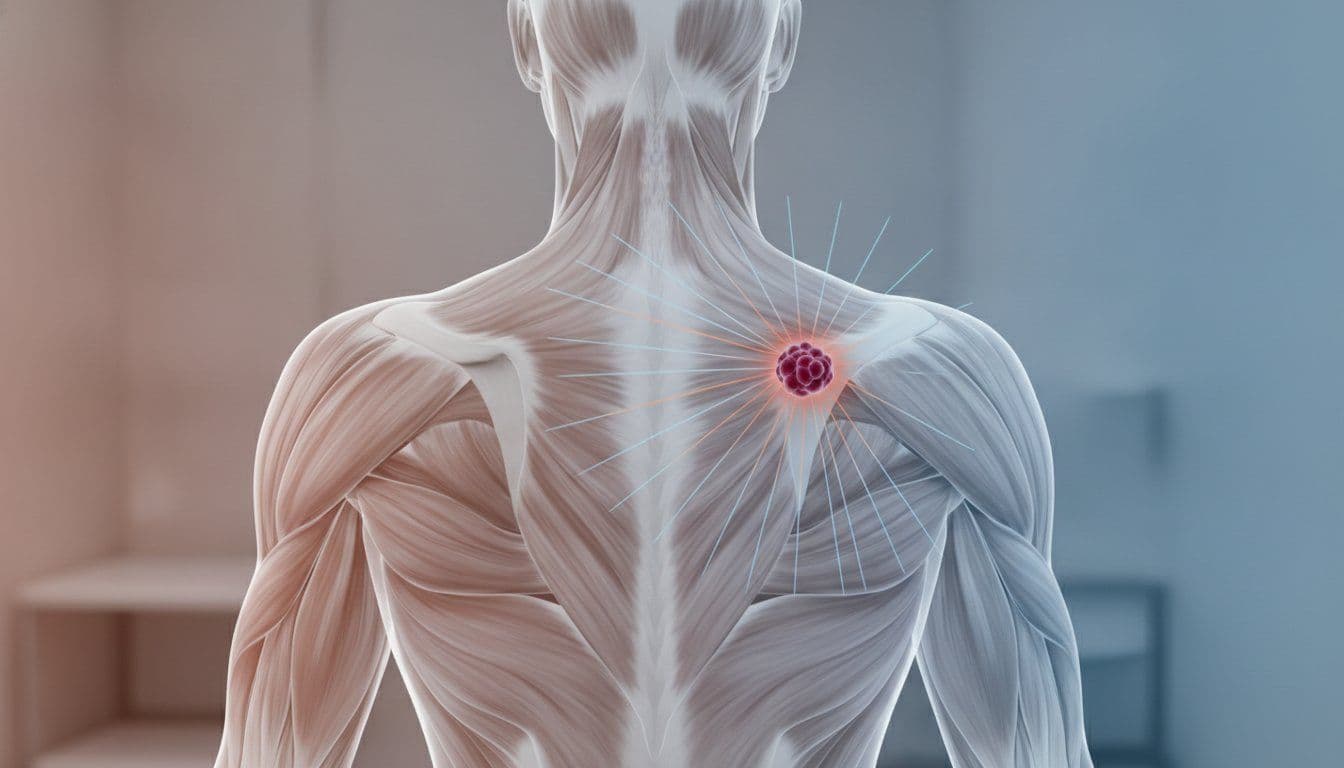
You've felt it before. That hard, tender lump in your shoulder that just won't go away no matter how much you shrug. While we colloquially call them "knots," these are actually myofascial trigger points. To understand What Are Muscle Knots from a clinical perspective, we have to look at them as hyperirritable spots buried within a taut band of muscle tissue. It isn't a literal knot in a piece of string. Instead, it's a localized area of metabolic distress where the muscle fibers have become stuck in a permanent state of contraction.
Active trigger points are the ones causing that constant, nagging ache that follows you through the workday. Latent trigger points are sneakier; they only hurt when you or your physio applies direct pressure. Both types can cause referred pain, which is why a knot in your shoulder blade can often be the secret culprit behind a tension headache. This is why specialized physiotherapy for muscle knots is so effective. We don't just poke where it hurts; we find the source of the distress and help the tissue reset.
The Science of the Niggle: How Knots Form
The most widely accepted theory in our field is the "energy crisis" hypothesis. When a muscle fiber stays contracted for too long, it compresses the tiny blood vessels nearby. This leads to localized hypoxia, or a lack of oxygen, which prevents the muscle from having the energy it needs to actually relax. It's a vicious cycle. Poor posture and repetitive strain from typing or driving often trigger this state. A trigger point is a localized contraction that restricts blood flow and prevents metabolic waste products from being cleared away.
Common Areas for Knots: From Neck to Lower Back
If you spend your life at a desk in Milton Keynes or Northampton, your upper trapezius and levator scapulae are likely your biggest enemies. These muscles hold your head up and pull your shoulders toward your ears when you're stressed. We also frequently treat knots in the gluteal muscles. These are particularly cheeky because they can cause "false sciatica," sending shooting pains down your leg that feel like a nerve issue but are actually just a very grumpy muscle. You can see the full range of conditions we handle at our clinics to see if your pain fits the pattern. Identifying these common culprits early allows us to get you back to your normal routine without the constant distraction of a nagging ache.
Why Your DIY Massage Isn’t Sorting the Problem
We’ve all been there. You’re leaning against a doorframe with a tennis ball or attacking your shoulder with a foam roller, hoping to finally "pop" that stubborn lump. It feels satisfyingly painful at the time, but the relief usually vanishes by the time you’ve finished your morning coffee. The misconception that you can simply mash a chronic knot into submission is one of the biggest hurdles in recovery. While aggressive DIY pressure might provide a temporary distraction for your nerves, it often leads to more inflammation and "guarding," where your brain tells the muscle to tighten even further to protect itself from the perceived attack.
Your nervous system is the ultimate gatekeeper of muscle tension. If your brain perceives a certain movement as a threat, it will keep that muscle locked in a protective contraction. This is a hallmark of myofascial pain syndrome, where the pain becomes a self-perpetuating cycle. Simply rubbing the spot doesn't address why the brain is holding that tension in the first place. Without a professional intervention, you're essentially just shouting at a symptom rather than talking to the cause.
The Problem with Temporary Fixes
General relaxation massage is lovely for stress, but it rarely touches the structural issues of a chronic trigger point. Many of our patients in Milton Keynes and Northampton come to us after getting stuck in the "stretching cycle." They feel tight, so they stretch; the stretch irritates the already distressed muscle fibers, which then tighten up even more to compensate. Professional physiotherapy for muscle knots breaks this loop by identifying the underlying movement dysfunction. If you don't fix the way you sit, move, or breathe, that knot has every reason to keep coming back.
The Neuromuscular Reset: What a Physio Actually Does
A physiotherapist doesn't just push on a sore spot; they perform a neuromuscular reset. We use hands-on manual therapy to send specific signals to your nervous system, essentially giving the muscle "permission" to let go. This is why a professional assessment of your gait or posture is so vital. We need to see if a weak hip is causing your lower back to knot up, or if a stiff neck is forcing your shoulders to do double duty. Our team at RED Physiotherapy specialises in these clinical assessments to ensure we aren't just giving you a temporary fix. If you're tired of the DIY struggle, it might be time to get a professional opinion on that nagging ache.
Clinical Treatments: How Physiotherapy Releases Muscle Knots
At RED Physiotherapy, we believe you can't fix a physical blockage with conversation alone. That’s why we’re a hands-on clinic from your very first session. While some practices might just offer a list of stretches and send you on your way, we get stuck in to break the pain-spasm cycle through direct, clinical intervention. Understanding the Treatment for myofascial pain syndrome often involves a combination of manual therapy and modern technology to ensure the muscle actually lets go. Once we’ve achieved that passive release, we then move into active movement to keep you moving freely.
Dry Needling and Trigger Point Release
This is a game-changer for deep-seated tension. Unlike traditional acupuncture which focuses on energy flow, dry needling is a clinical technique targeting the trigger point directly. When the needle hits the right spot, it elicits a "local twitch response." This is essentially the muscle fiber's way of resetting its electrical activity and releasing the contraction. It’s often much faster and more effective than manual pressure alone for those knots that feel like they're buried inches deep. It is a highly specialised tool in our toolkit for effective physiotherapy for muscle knots.
Sports Massage and Manual Therapy
For many of our clients, a clinical sports massage in Milton Keynes is the first step toward freedom. We use specific manual therapy techniques to improve local circulation and flush out the metabolic waste that builds up in a tight muscle. By combining this with passive stretching and joint mobilisation, we create an environment where the tissue can finally relax. Our Northampton sports massage service is designed to bridge the gap between acute pain and getting you back to your daily passions.
Shockwave Therapy for Chronic Cases
Sometimes, a knot has been there so long it’s practically become part of the furniture. In these chronic cases, we often recommend shockwave therapy. This involve sending acoustic waves into the tissue to stimulate a healing response in dormant, scarred areas. It’s incredibly efficient for long-term "stuck" muscles that haven't responded to traditional methods. By using these advanced tools, we ensure that your physiotherapy for muscle knots is as efficient and effective as possible, saving you from unnecessary, dragged-out treatment plans.

When to Seek Help for Your Muscle Pain
It's easy to dismiss a tight shoulder as just an occupational hazard of the modern desk job. However, ignoring chronic tension can lead to a significant decline in your overall quality of life. In 2024, nearly 18% of people in England reported living with a long-term musculoskeletal condition; many of these cases started as simple "niggles" that were left to fester. When a knot begins to affect your mood or your ability to focus on your work, it has moved beyond a minor inconvenience. Chronic pain is exhausting. It drains your mental energy and contributes to the millions of lost working days recorded across the UK every year.
Seeking help early is often the difference between a quick fix and a long-term struggle. While the NHS provides vital services, the median waiting time for consultant-led treatments was 11.9 weeks as of June 2026. For someone in constant pain, three months is a very long time to wait. Choosing private physiotherapy for muscle knots allows you to bypass these delays and receive hands-on treatment from day one. We focus on getting you back to your passions quickly, whether that’s hitting the gym or just being able to sit through a meeting without wincing.
Signs Your Knot Needs Professional Attention
You should consider booking an assessment if your pain persists for more than two weeks despite rest and self-care. Another major red flag is radiating pain. If that knot in your neck is sending tingling or aching sensations down your arm, or if a gluteal knot is mimicking sciatica, it’s a sign of nerve irritation that requires clinical expertise. Perhaps most importantly, if the pain is costing you sleep or making it impossible to concentrate at your desk, your body is telling you that it can no longer manage the stress on its own.
Preventing the Return: Post-Treatment Care
Once we’ve used manual therapy to reset the tissue, the goal shifts to long-term autonomy. For our Milton Keynes office workers, this often starts with a proper ergonomic set-up. We don't just give you a generic list of tips; we look at how you specifically interact with your workspace. This is paired with a bespoke exercise plan designed to strengthen the muscles that were previously overcompensating. Taking a proactive approach means you aren't just waiting for the next flare-up. By addressing the root cause now, you ensure that your recovery is sustainable and your movement remains fluid. If you're ready to stop managing the symptoms and start fixing the cause, you can book an appointment at our clinics in MK, Northampton, or Towcester today.
The RED Physiotherapy Way: Hands-On Relief in MK, Northampton, and Towcester
We aren't like those big, corporate clinics where you're just a number on a spreadsheet. As a family-run business, we take your recovery personally. We know that if you're coming to see us, you're likely frustrated by pain that hasn't budged and perhaps even more frustrated by the lack of direct help elsewhere. Our approach to physiotherapy for muscle knots is built on efficiency and real-world results. We won't drag out your treatment over months if we can get you sorted in weeks. We're here to provide clear, honest plans that fit into your busy life, ensuring you get back to your passions without any unnecessary faff or filler.
One of the biggest complaints we hear from patients who've tried other clinics is the "exercise-only" trap. You spend your hard-earned money only to be given a sheet of paper and told to do some stretches in the corner. That isn't how we work at RED. We promise hands-on treatment from day one. Whether it’s clinical sports massage, dry needling, or shockwave therapy, we believe in physically addressing the tissue distress while we talk through your long-term plan. This direct approach helps to lower your anxiety and replaces it with a sense of controlled, professional guidance.
What to Expect in Your First Session
Your first 45-minute session is about finding the "why" behind the knot. We perform a thorough clinical assessment to see if your shoulder pain is actually coming from your desk setup or a movement dysfunction in your spine. But we don't just talk for the whole session. You will receive actual hands-on treatment in that very first appointment. We want you to feel a physical difference before you even walk out the door. For full transparency on our session costs and what each treatment involves, you can check our prices page.
Booking Your Recovery
Reclaiming your active lifestyle shouldn't be a chore. We’ve made it easy to access expert care with clinics conveniently located across Milton Keynes, Northampton, and Towcester. You don't need a GP referral to see us, and you certainly don't need to wait months for an appointment like you might with the NHS. We're focused on high-performance results for everyone, from the office worker to the elite athlete. If you're ready to finally shift that nagging tension and move freely again, contact us to get started. We’re here to help you reach your full physical potential and stay there.
Focus Keywords:
- physiotherapy for muscle knots
- sports massage
- dry needling
- shockwave therapy
- Milton Keynes physiotherapy
- Northampton physiotherapy
- Towcester physiotherapy
Ready to Reclaim Your Movement?
You don't have to live with that nagging, marble-sized ache in your shoulder or neck any longer. By understanding that these "knots" are actually complex areas of metabolic distress, you can stop the endless cycle of ineffective stretching and DIY rubbing. Professional physiotherapy for muscle knots provides the neuromuscular reset your body needs to finally let go. We move past the surface-level fluff to deliver clinical, hands-on treatment that targets the root cause of your tension from your very first 45-minute session.
As a family-run business, we're intensely focused on real-world results rather than dragging out your recovery with unnecessary appointments. Our expert clinics in Milton Keynes, Northampton, and Towcester are ready to help you move past the frustration of long waiting lists and "exercise-only" advice. It's time to stop managing the symptoms and start restoring your physical potential. Book your hands-on assessment at RED Physiotherapy today and take the first step toward living a life free from nagging tension. We're here to get you moving freely again.
Frequently Asked Questions
Can physiotherapy really fix deep muscle knots?
Yes, physiotherapy is highly effective for releasing deep trigger points. Unlike superficial massage, clinical physiotherapy for muscle knots uses targeted techniques like dry needling and shockwave therapy. We don't just rub the surface; we address the neuromuscular reason why the muscle is stuck in contraction. This approach ensures a long-term reset rather than a few hours of relief, helping you get back to your daily activities in MK, Northampton, or Towcester without constant pain.
What is the difference between a muscle knot and a trigger point?
There is no clinical difference; "muscle knot" is simply the common name for a myofascial trigger point. Clinically, these are hyperirritable spots within a taut band of muscle fibers. While the term "knot" suggests a physical tangle, it's actually a localized area of metabolic distress and hypoxia. We use professional assessment to identify whether these points are active, causing constant pain, or latent, only hurting when pressed, which dictates our specific treatment plan.
How many sessions of physio will I need for a muscle knot?
Most patients feel a significant difference after just one or two hands-on sessions. Because we focus on hands-on treatment from day one, we aim to resolve the acute pain quickly. For chronic knots that have been present for months, you might need a short course of 4 to 6 sessions to fully retrain the muscle and address underlying postural issues. We never drag out treatment unnecessarily. Our goal is your efficient recovery.
Is dry needling painful when used for muscle knots?
Most patients describe dry needling as a strange sensation rather than a sharp pain. When the needle hits the trigger point, you'll feel a local twitch response, which can feel like a deep cramp or a dull ache for a split second. This is actually a positive sign that the muscle is resetting. While you might feel some muscle soreness for 24 hours afterward, the subsequent release of long-term tension is usually well worth the brief discomfort.
Why do I keep getting muscle knots in my shoulders?
Recurrent shoulder knots are usually caused by sustained postural stress or repetitive strain. If you're an office worker in Towcester or Milton Keynes, your shoulders often hunch forward, putting the trapezius muscle under constant tension. This lack of movement leads to localized hypoxia, where the muscle can't get enough oxygen to relax. We don't just treat the knot; we look at your desk setup and movement patterns to stop the cycle of recurrence for good.
Will a sports massage hurt if I have a lot of knots?
Clinical sports massage involves firm pressure, but it should always be "good pain" that feels productive. We use specific techniques to flush out metabolic waste and improve circulation in the affected area. While it can be tender when we work on a particularly stubborn trigger point, our physiotherapists communicate with you throughout to ensure the pressure is effective without being overwhelming. You'll likely feel a sense of lightness and improved mobility immediately after the session.
Can stress actually cause physical knots in my muscles?
Yes, psychological stress directly manifests as physical tension through the nervous system. When you're stressed, your body enters a "fight or flight" state, often leading to unconscious muscle bracing, especially in the neck and jaw. This constant low-level contraction creates the perfect environment for trigger points to form. Our approach to physiotherapy for muscle knots includes helping you recognize these bracing patterns, providing a physical reset that helps calm the overactive nervous system and restore comfort.
Should I use heat or ice on a painful muscle knot?
Heat is generally much more effective for chronic muscle knots than ice. Since a knot is a localized area of restricted blood flow, applying a heat pack helps to dilate blood vessels and encourage circulation to the starved tissue. This helps the muscle fibers relax. Ice is better suited for acute inflammatory injuries like a fresh sprain. For a nagging knot, 15 minutes of gentle heat can provide temporary relief before your hands-on session at our clinic.

Tags:
About the Author
Red Physiotherapy Team
Content Team
Health and wellness content from the RED Physiotherapy team.