
Physiotherapy for Sciatica: Getting You Back on Your Feet in Milton Keynes & Northampton
Tired of that shooting leg pain? Our hands-on physiotherapy for sciatica in Milton Keynes & Northampton fixes the root cause for fast, lasting relief.
That generic sheet of "back exercises" your GP handed you three weeks ago might actually be why your leg still feels like it’s being hit by a lightning bolt. It's incredibly frustrating when you can't sit through a dinner or sleep for more than two hours without that radiating pain kicking in. You're likely worried that this isn't just a "bad back" but something more permanent, and the thought of surgery is starting to feel like a looming shadow. We completely understand. Effective physiotherapy for sciatica is about much more than just stretching. It's about a hands-on, clinical "reset" that addresses the root cause of your nerve compression rather than just masking the symptoms.
You'll discover why your pain hasn't shifted yet and how our personalised, family-run approach provides faster relief than a one-size-fits-all exercise routine. We'll explore the science behind our manual treatments in Milton Keynes and Northampton, giving you a clear, jargon-free plan to reclaim your movement and stay pain-free for the long haul. It's time to stop managing the pain and start fixing the problem.
Key Takeaways
- Learn why sciatica is actually a symptom of nerve irritation rather than a standalone disease, and how to identify that classic "electric" shooting pain.
- Discover why generic exercise sheets often fail and how hands-on physiotherapy for sciatica provides a much faster "reset" for your body.
- Understand the "MRI Paradox" and why a thorough clinical examination is often more reliable for your diagnosis than a standard scan.
- Get actionable tips for managing pain at your desk, including "nerve flossing" techniques that encourage movement without irritating the nerve.
- Find out how our family-run clinics in Milton Keynes and Northampton offer a fast-track alternative to long waiting lists with treatment starting from day one.
What Actually is Sciatica? (Beyond a Right Pain in the Backside)
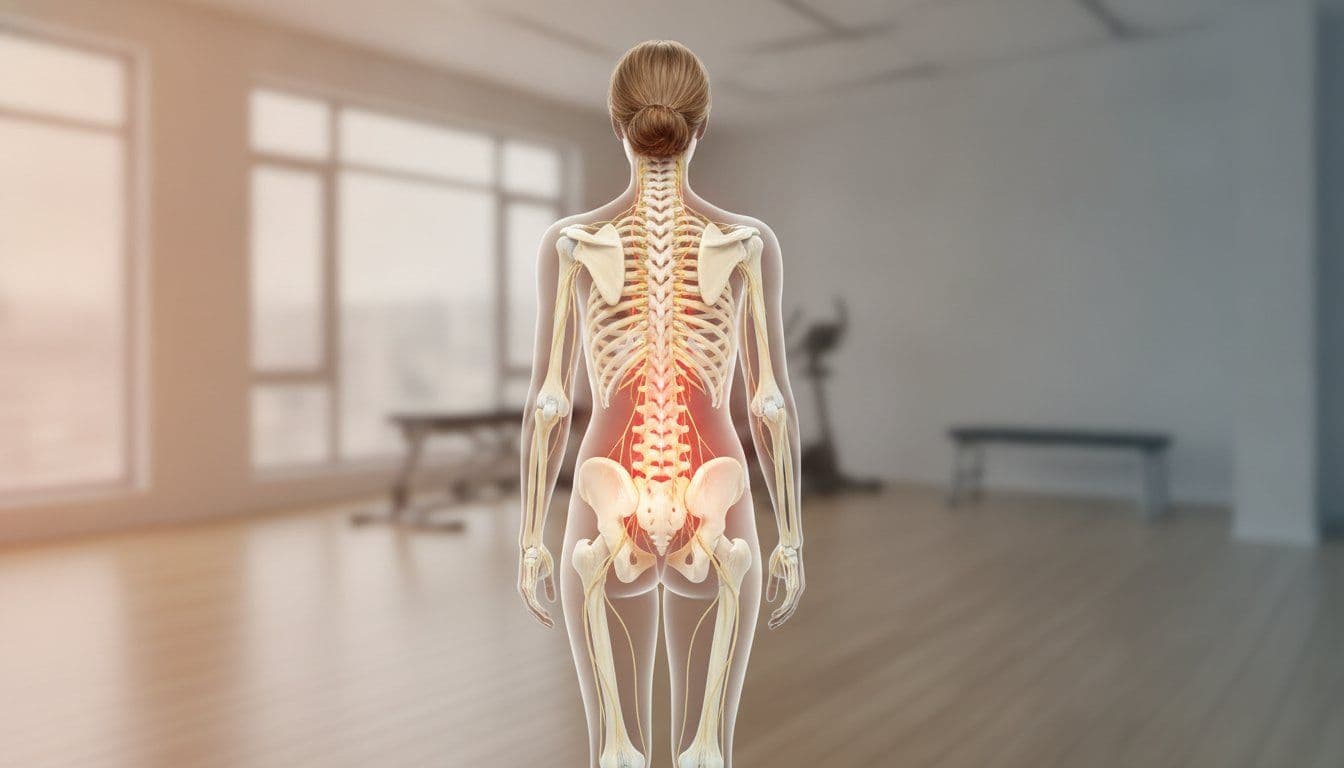
Sciatica isn't a medical condition in itself. It's actually a symptom, much like a cough is a symptom of a cold. When patients ask us What is Sciatica?, they are usually describing the irritation or compression of the sciatic nerve. This is the longest and thickest nerve in your body, originating in your lower back and travelling through your hips and glutes before branching down each leg. When this nerve is pinched, it doesn't just ache; it sends a sharp, electric, or shooting sensation that can make standing or walking feel nearly impossible. While the pain can feel quite alarming, it's important to remember that it is highly treatable. Effective physiotherapy for sciatica focuses on identifying the exact source of that pressure so we can "un-pinch" the nerve and get you moving comfortably again.
Common Symptoms You Might Be Feeling
Most people associate sciatica with a lightning bolt of pain in the buttock, but the symptoms are often more varied. You might experience a persistent "fizzy" sensation or pins and needles that travel all the way down to your toes. In some cases, you might notice a patch of numbness or a strange weakness in your leg that makes you feel a bit unsteady. This discomfort often flares up during specific activities, such as sitting at your desk for hours, or even during a sudden sneeze or cough. Usually, these symptoms only affect one side of the body. If you are experiencing pain or numbness in both legs simultaneously, it is a sign that you need a professional assessment to determine the exact cause of the compression.
The Usual Suspects: What Causes the Compression?
So, why is your nerve so grumpy? The most frequent culprit is a herniated disc, often referred to as a "slipped disc". Despite the scary name, discs don't actually slip out of place; they simply bulge slightly and press against the nerve root. Other common causes include spinal stenosis, which is a natural narrowing of the spaces in your spine, or piriformis syndrome, where a small muscle in your buttock becomes tight enough to squash the nerve. We also see many cases linked to general "wear and tear". It's helpful to think of this as "grey hair for the spine", it's a completely normal part of life and doesn't mean your back is permanently damaged. Our goal with physiotherapy for sciatica is to manage these changes through hands-on treatment and smarter movement patterns. You can explore the various conditions we treat to see how these common issues are managed in our clinics.
Why Generic Exercise Sheets Often Fail (And What Works Instead)
If you’ve visited your GP for leg pain, you’ve likely walked out with a photocopied sheet of stretches. It’s a bit insulting, isn't it? When you can barely put your socks on, a generic list of "bird-dogs" and "pelvic tilts" feels like trying to put out a house fire with a water pistol. The reality is that many people find these exercises actually make their pain worse. This happens because an inflamed nerve is hypersensitive. If you pull on a nerve that’s already compressed, it flares up in self-defence. This is why our approach to physiotherapy for sciatica starts with a physical "reset" rather than a homework assignment.
At RED Physiotherapy, we don't just point at a poster and tell you to get on with it. We believe in a "calm it down, then build it up" philosophy. Research into the diagnosis and treatment of sciatica shows that while exercise is vital, the timing of that exercise is everything. We use manual therapy to create a "window of opportunity". By reducing the immediate pain and muscle guarding, we make it possible for you to actually perform the movements that will eventually get you better. Our family-run clinics focus on getting you to that point as quickly as possible.
The Power of Hands-On Treatment
We provide hands-on care from day one to address the physical restrictions holding you back. Techniques like sports massage and joint mobilisation help to soothe the "guarding" response where your muscles lock up to protect your spine. We also frequently use dry needling to target deep-seated tension that a simple stretch simply cannot reach. Think of this as a reset button for your nervous system. It lowers the "volume" of your pain, allowing your body to relax enough to start the real work of recovery without the constant threat of a flare-up. This tailored physiotherapy for sciatica ensures we are treating your body, not just a set of symptoms.
Moving Beyond the "Exercise Only" Trap
Once the initial fire is out, we look at how you move in the real world. A one-size-fits-all plan ignores the fact that your sciatica might be flared up by the way you sit at your desk or how you walk. If your pain changes when you're on the move, a gait assessment can be a game-changer. We focus on building your long-term autonomy, ensuring you have the strength and movement patterns to avoid a recurrence. If you're tired of generic advice and want a plan that actually fits your life, you can chat with our team about a personalised recovery path.
Do You Really Need an MRI? Understanding the Diagnosis
One of the biggest myths we hear in our clinics is that you can’t start treatment until you’ve had an MRI. It's a bit like refusing to fix a leaky pipe until you’ve taken a professional photo of the water. While scans have their place, they can be remarkably misleading. This is often called the "MRI Paradox". Many people with perfectly healthy, pain-free backs have bulging discs showing up on their scans. If we relied solely on a picture, we might end up treating a "problem" that isn't actually causing your pain. A thorough clinical assessment for physiotherapy for sciatica is usually far more accurate at pinpointing the real culprit than a static image.
What Happens During a Sciatica Assessment?
During your visit, we perform specific physical tests to see how your nerves are behaving. We use tests like the straight leg raise to check nerve mobility and carefully assess your reflexes and muscle strength to ensure your signals are getting through properly. A scan can show us the structure of your spine, but it can't tell us how that structure actually moves or feels. Our hands-on approach allows us to feel for tissue tension and muscle guarding that a cold, static image simply cannot detect. We want to understand your movement and your specific pain triggers, not just your anatomy.
When We Might Suggest Further Investigation
Of course, we aren't anti-scan. There are specific "red flags" or complex scenarios where imaging is the only honest and right choice. If your symptoms aren't following the expected path, or if we need more detail to confirm a diagnosis, we might use diagnostic ultrasound in-house to get immediate answers. If a formal MRI is necessary because it will fundamentally change your treatment plan, we’ll tell you straight. We work closely with local specialists in Milton Keynes and Northampton to ensure you get co-ordinated care without being left in limbo. For many patients, following Practical Steps for Sciatica Relief alongside our clinical care is enough to achieve a full recovery without ever needing to step foot in a scanner. Our goal is to get you back to your daily life efficiently, using the most direct path possible. If you are unsure whether you need a scan, you can always get in touch for an expert opinion.

Practical Steps for Sciatica Relief You Can Start Today
While we always recommend a professional assessment to find the root cause, you don't have to just grin and bear it while waiting for your appointment. There are several ways to lower the "volume" of your pain from home. One of the most effective techniques is "nerve flossing". Unlike a traditional stretch, which can pull on an already irritated nerve, flossing is a gentle movement that encourages the nerve to glide through its surrounding tissues. Think of it like pulling a thread through a needle; you want it to move smoothly without catching. If you're unsure how to start, our team can guide you through the safest movements during your first session of physiotherapy.
Deciding between heat and ice can be confusing, but the answer is often to use both. We usually suggest applying an ice pack to your lower back for 10 to 15 minutes to help settle nerve-related inflammation. Conversely, if your glutes or back muscles feel like they've gone into a permanent spasm, a heat pad can help relax that protective guarding. For sleeping, try lying on your side with a pillow between your knees, or on your back with a pillow tucked under your legs. This simple change can take a significant amount of pressure off your lower spine and help you finally get a decent night's rest.
The "When to Seek Help" Checklist
We want you to feel empowered, but safety is our top priority. There are certain "Red Flag" symptoms that mean you should skip the home remedies and seek urgent medical attention. If you experience sudden weakness in your legs, numbness in your "saddle" area (where you'd sit on a horse), or any changes in your bowel or bladder control, you must head to A&E immediately. These can be signs of Cauda Equina Syndrome, a rare but serious condition. For everything else, if your pain isn't settling after a few days of rest and gentle movement, it's time to transition to professional physiotherapy for sciatica to stop the problem from becoming chronic.
Small Changes, Big Results
For the office workers in Milton Keynes and Northampton, your desk setup is likely your biggest enemy. Avoid "slumping" into your chair, which rounds the lower back and puts maximum pressure on your discs. Try to incorporate "movement snacks" every 30 minutes; even standing up and walking to the kettle can prevent the nerve from becoming static and grumpy. Remember, total bed rest is actually one of the worst things you can do for sciatica. Staying gently active, within your pain limits, keeps the blood flowing and the tissues mobile. If you're ready to stop guessing and start a clear plan, book your assessment with our team today and let’s get you moving properly again.
Expert Sciatica Treatment at RED Physiotherapy
When you're dealing with the sharp, radiating pain of a trapped nerve, the last thing you want is to be stuck on a waiting list for months. According to data from June 2026, the median waiting time for NHS treatment in England has reached 11.9 weeks. That is nearly three months of missed sleep and restricted movement. At RED Physiotherapy, our family-run clinics in Milton Keynes, Northampton, and Towcester offer a faster alternative. We specialise in a "fast-track" approach that prioritises getting you through our doors and under our expert care as quickly as possible. We don't believe in long, drawn-out processes; we believe in results.
Our commitment to you starts with hands-on treatment from your very first session. We aren't a clinic that just hands you a piece of paper and hopes for the best. For persistent or complex cases that haven't responded to traditional methods, we offer advanced technology like shockwave therapy. This evidence-based treatment can be a game-changer for chronic nerve irritation, helping to stimulate the body's natural healing response when other interventions have stalled. This integrated approach ensures that your physiotherapy for sciatica is as modern and effective as possible.
Meet Your Recovery Mentors
Our practice is built on the expertise of our team, a group of specialists who understand the physical and emotional toll of chronic pain. We like to think of ourselves as high-performance mentors. We have the clinical knowledge to handle complex nerve compression, but we stay grounded and approachable. You won't find any cold, medical detachedness here. We might be a bit cheeky, but we are intensely focused on your progress. Our ultimate goal is your long-term autonomy. We want to fix the root cause of your pain and give you the tools to manage your health independently. We don't want you coming back forever; we want you back out in the world, living your life to the full.
Ready to Ditch the Pain?
Taking the first step toward recovery is often the hardest part, especially when you've been let down by generic advice in the past. You don't need a GP referral to see us privately, which means you can bypass the bureaucracy and start your physiotherapy for sciatica immediately. Whether you are an office worker struggling to sit through meetings or an active individual eager to get back to the gym, we have a clear, honest plan for you. If you are ready to stop managing your symptoms and start solving the problem, booking an assessment is the most effective move you can make. Let's get you back on your feet and moving without fear.
Take the First Step Toward Pain-Free Movement
Living with the constant shadow of nerve pain is exhausting, but it doesn't have to be your permanent reality. We've explored why generic exercise sheets often fall short and how a hands-on "reset" is the key to calming an irritated sciatic nerve. By choosing specialised physiotherapy for sciatica, you're moving beyond temporary fixes and toward a clear, sustainable recovery plan. You don't need to stay stuck on a waiting list for months or worry about needing a scan before you can start feeling better. The focus should always be on your specific movement patterns and long-term autonomy.
Our family-run clinics in Milton Keynes and Northampton are ready to provide hands-on treatment from day one. We focus on fixing the root cause of your discomfort so you can return to the activities you love without the fear of a flare-up. Whether you want to sit through a meeting comfortably or get back to your weekend runs, we are here to mentor you every step of the way. It's time to stop guessing and start progressing. Book Your Sciatica Assessment at RED Physiotherapy Today and let’s get you back on your feet for good.
Frequently Asked Questions
How many sessions of physio will I need for sciatica?
Most patients see a significant shift in their symptoms within 4 to 6 sessions of physiotherapy for sciatica. However, because every nerve is different, your plan is entirely bespoke. We aim to get you back to your normal routine as efficiently as possible without dragging out treatment. Our goal is to provide hands-on relief from day one so you can start moving with confidence rather than waiting weeks for a result.
Can I still exercise or go to the gym with sciatica?
You can definitely stay active, but you might need to swap the heavy deadlifts for something more nerve-friendly temporarily. Movement is medicine for a compressed nerve, provided it doesn't cause a sharp flare-up. We often recommend low-impact activities like walking or swimming while we work on your recovery. Staying active within your pain limits is far better for your long-term health than total bed rest, which can actually make the nerve more sensitive.
Is it better to sit or stand when I have sciatica pain?
Standing or gentle walking is usually much more comfortable than sitting. When you sit, you put the maximum amount of pressure on your lumbar discs, which can further irritate the sciatic nerve. If you have an office job in Milton Keynes or Northampton, we suggest using a standing desk or taking frequent "movement snacks". If you must sit, ensure your lower back is well-supported and try not to slump into your chair for long periods.
Will sports massage make my sciatica worse?
A targeted sports massage should help rather than hinder your recovery. While we never massage the nerve directly, releasing the tight muscles in your glutes and lower back can take a huge amount of pressure off the area. This helps to lower your body's "guarding" response. It's a key part of our hands-on approach at our family-run clinics, ensuring your muscles aren't working against your recovery process and keeping you moving freely.
Why does my sciatica pain feel worse at night?
Sciatica often feels more intense at night because inflammation can pool when you're still for long periods. Also, certain sleeping positions can inadvertently stretch or compress the nerve. We suggest sleeping on your side with a pillow between your knees to keep your spine neutral. This simple adjustment often provides enough relief to help you stay asleep. If the pain persists, it’s a sign that your physiotherapy for sciatica needs to address that nighttime sensitivity.
What is the difference between a trapped nerve and sciatica?
Sciatica is simply a specific type of trapped nerve. While you can trap nerves in your neck or wrist, sciatica refers specifically to the irritation of the large sciatic nerve that runs from your lower back down to your toes. Think of "trapped nerve" as the category and "sciatica" as the specific member. Both respond brilliantly to our hands-on clinical approach, where we work to identify exactly where the compression is happening.
Can physiotherapy help if I have a herniated disc?
Absolutely, physiotherapy is the primary treatment for most herniated discs. The majority of these "bulges" actually reabsorb or settle down naturally over time without the need for surgery. We focus on reducing the pressure on the disc and strengthening the surrounding muscles to support your spine. Our evidence-based care ensures you have a clear roadmap for recovery, moving you from acute pain back to your full physical potential with confidence.
Tags:
About the Author
Red Physiotherapy Team
Content Team
Health and wellness content from the RED Physiotherapy team.