
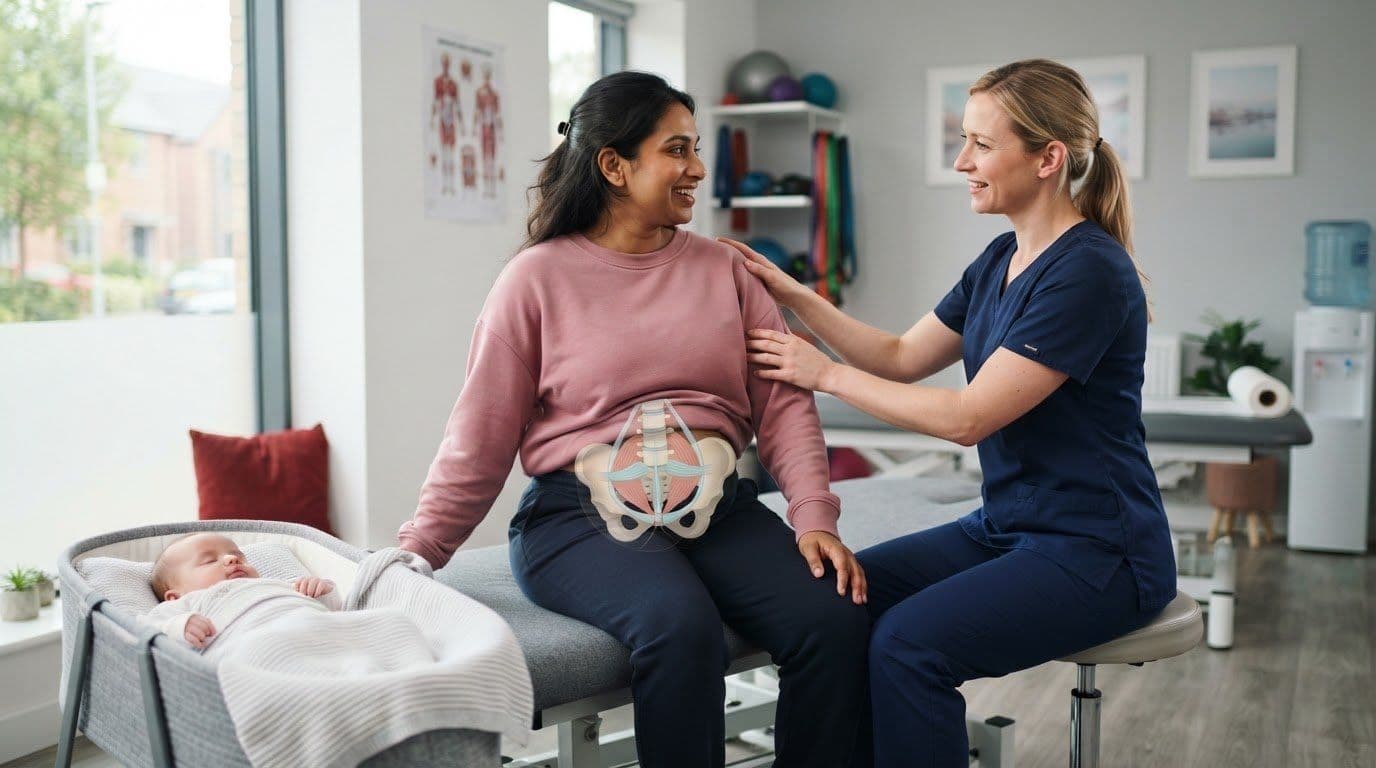
Postnatal check up for new mums Northampton: what to expect
Wondering what happens at a postnatal check up for new mums Northampton? Find out what physio involves, why it helps, and how to book your assessment today.
Do you need a postnatal physiotherapy check after having a baby? Not automatically. It may be useful if a physical concern is affecting your everyday life, or you want guidance on returning to activity. A postnatal check up for new mums Northampton gives you space to talk through what you’re experiencing and whether physiotherapy could help. You don’t need to wait until a concern feels overwhelming, or assume every change after birth needs treatment.
This guide explains how a physiotherapy assessment differs from routine postnatal care, what you may be asked and how to decide whether support suits you. You’ll also find practical ways to prepare, raise sensitive concerns at your own pace and choose a next step without feeling rushed into exercise or treatment.
Key Takeaways
- A postnatal physiotherapy check can focus on recovery and movement concerns, while routine midwife or GP care has a different role.
- Sharing your symptoms, health history and goals can help shape an individual assessment and practical next steps.
- A postnatal check up for new mums Northampton may be worth considering if a physical concern is affecting daily life or your return to activity.
- Use your own needs and goals to decide whether private physiotherapy feels right for you, and factor in the appointment cost.
Postnatal check up for new mums in Northampton: how physio fits with routine care
A postnatal physiotherapy check focuses on physical changes that affect comfort, movement or everyday activities. It has a different purpose from routine maternity care and doesn’t replace support from your midwife or GP. If you’re considering a postnatal check up for new mums Northampton, think of it as a chance to discuss your recovery and decide whether physiotherapy could be useful for you.
Routine postnatal care supports your wider health and wellbeing after birth. Physiotherapy focuses on how your body feels and functions as you move through daily life. The Postpartum Period can involve a range of physical and emotional changes, so the support you need will depend on your own experience.
What is different about a postnatal physiotherapy check?
The assessment starts with your concerns, your birth and recovery, how you’re feeling and what you’d like to do. You might want to talk about lifting your baby, getting up from the floor, returning to walks or easing back into sport. A physiotherapist can discuss movement or pelvic health concerns without assuming you need treatment. You can ask questions, explain what feels manageable and talk through any proposed assessment before deciding what you’re comfortable with.
For example, imagine you’re an active new mum in Northampton who notices discomfort when getting up from the floor or carrying your baby. You may wonder whether it’s part of recovery or worth mentioning. A physiotherapy conversation gives you room to describe when it happens and what you’d like to do more comfortably. The next step might be tailored advice, further assessment or no physiotherapy treatment if it doesn’t fit your needs.
RED Physiotherapy provides women’s health physiotherapy in Northampton, with care tailored to your concerns. It complements, rather than replaces, routine maternity or GP care.
What a postnatal physiotherapy assessment in Northampton may involve
A little preparation can make it easier to explain what you’ve noticed, especially if symptoms come and go. Before your appointment, jot down when the issue appears, what you were doing and whether anything seems to ease or aggravate it. You might also note activities you’ve paused or changed, such as running, lifting or getting down to the floor. There’s no need to keep a detailed diary or arrive with medical terminology.
Your physiotherapist can use that information to focus on what matters to you, rather than trying to cover every possible postnatal concern. Depending on why you’re attending, you may discuss how you manage everyday tasks and what you’d like to build towards. Any proposed assessment should relate to that conversation. You can talk through the options before deciding what feels appropriate.
What can you bring up during the appointment?
Bring up the question you’ve been putting off, even if you’re not sure how to describe it. You could say, “I notice this when I carry the baby,” or “I’m not sure how to approach exercise again.” Details about what you were doing and what you find difficult help make the conversation useful. RED Physiotherapy’s women’s health physiotherapy supports discussion of postnatal concerns related to your physical health and movement.
You can ask what a suggested assessment is intended to clarify, what alternatives there are and what the next step might involve. You remain in control of what you agree to. An internal examination or hands on treatment isn’t automatic, and nothing should proceed without your agreement. By the end, you should have a clearer understanding of your options, even if the next step is simply to monitor a concern or seek advice elsewhere.

Is a postnatal check up right for you in Northampton?
You don’t automatically need physiotherapy after giving birth. It may be worth considering if a physical concern is affecting your daily routine, confidence or plans to return to activity. Perhaps you’re avoiding a walk, finding it uncomfortable to lift your baby or unsure how to approach getting back to sport. An assessment can help you explain what’s happening and discuss suitable next steps. If you’re uncertain, you can ask for advice without committing to ongoing treatment.
Private physiotherapy has a cost, so it’s sensible to look at the current physiotherapy prices before deciding. An assessment can help you make a more informed plan, but it can’t guarantee a particular result. Your next step should be based on your concerns, preferences and goals, not a standard programme that every new mum is expected to follow.
How to take a practical next step
Before you book, write down your main concern and one everyday activity you’d like to manage more comfortably. Note when the problem occurs, what makes it easier or harder, and what you hope to return to. That gives you a clear starting point for the conversation, even if you’re still unsure what kind of support you need.
Some symptoms need prompt medical attention rather than a routine physiotherapy appointment. If you have severe or rapidly worsening symptoms, contact your maternity team, GP or NHS 111 for advice. For a life threatening emergency, call 999. Don’t wait for a physio check if you feel seriously unwell.
If you’d like to explore whether a postnatal check up for new mums Northampton fits your needs, appointment bookings are available here.
Take your next step at your own pace
You don’t need to have everything figured out before taking a next step. RED Physiotherapy provides women’s health physiotherapy in Northampton, with evidence based care shaped around your needs. The team also provides physiotherapy in Milton Keynes and Towcester. Think about what you’d most like to feel more confident doing, then use that as a starting point for a conversation.
When you feel ready, book a postnatal physiotherapy appointment. You can talk through your concerns and agree a practical plan at a pace that feels right for you.
Frequently Asked Questions
Is a postnatal physiotherapy check the same as the six week GP check?
No. They have different purposes. Your GP check considers your wider health and wellbeing after birth, while physiotherapy focuses on physical concerns that may affect movement or comfort. Keep your routine maternity and GP appointments even if you also arrange physiotherapy. If you have a concern, tell the relevant clinician directly so you can discuss the right support.
When can I see a physiotherapist after giving birth?
There isn’t one suitable time for everyone. When you see a physiotherapist can depend on your birth, recovery, symptoms and what you hope to discuss. If you’re uncertain about timing, speak with your midwife or GP, particularly if you have ongoing health concerns. You can also explain your circumstances when arranging an appointment, so the conversation starts with what feels appropriate for you.
Do I need symptoms to book a postnatal physiotherapy check?
No. You can seek advice about a goal, such as rebuilding confidence for exercise, even if you don’t have a specific symptom. A postnatal check up for new mums Northampton isn’t something every mum must have. It may be useful if you’d value personalised guidance, but you can discuss your aims and decide whether physiotherapy is relevant before considering treatment.
Will a postnatal physiotherapy assessment include an internal examination?
Not automatically. An internal examination may not be needed to discuss your concern or agree a suitable next step. If an examination is suggested, your physiotherapist should explain why, what it involves and any alternatives, then seek your consent. You can ask questions, decline or stop at any point. Your comfort and choice should guide the assessment.
Tags:
About the Author
Red Physiotherapy Team
Content Team
Health and wellness content from the RED Physiotherapy team.