
Postnatal Diastasis Recti Repair in Milton Keynes: Get Your Core Strength Back
Get expert postnatal diastasis recti repair in Milton Keynes. Our hands-on therapy helps you regain core strength and confidence, bypassing long NHS waits.
Last Tuesday, Sarah discovered that trying to lift her two year old into the car seat was enough to trigger a sharp, familiar ache in her lower back. It was a frustrating reminder that, months after giving birth, her core still felt "disconnected" and strangely weak. If you are struggling with a visible gap or a stomach that doesn't feel like yours anymore, you are in good company. Clinical data suggests that 60% of women still have abdominal separation six weeks after delivery, yet many are left to navigate this journey without expert guidance.
We understand the frustration of being stuck on a long NHS waiting list while your back aches and your confidence dips. You deserve a clear, bespoke plan that goes beyond a few generic exercise handouts. This article explains how our hands-on approach to postnatal diastasis recti repair in Milton Keynes can bridge that gap and help you feel physically resilient again. We will preview the manual techniques we use to restore your biomechanics and provide a safe roadmap for returning to the gym or running without the fear of injury.
Key Takeaways
- Understand the science behind the post-pregnancy tummy gap and why your connective tissue needs more than just a few planks to heal properly.
- Discover why our hands-on philosophy beats the standard "exercises-only" advice by using manual therapy to encourage your body to repair itself.
- Bust common recovery myths and learn why you do not need to close the gap completely or rely on binders to feel strong again.
- Follow a practical, staged roadmap for your postnatal diastasis recti repair Milton Keynes to ensure you are moving safely and effectively.
- Learn how bespoke, person-centered care helps you regain your confidence and return to the activities you love without the guesswork.
Understanding Diastasis Recti and That Post-Pregnancy Tummy Gap
If you’ve noticed a soft bulge or a persistent gap down the middle of your stomach after having a baby, you aren't alone. It’s a common part of the motherhood journey, but it doesn't mean you have to live with a core that feels like jelly. This condition, known as diastasis recti, involves the thinning and stretching of the linea alba, the connective tissue that holds your "six-pack" muscles together. During pregnancy, your body produces hormones like relaxin to soften your tissues, allowing your bump to expand. While this is a brilliant biological feat, it often leaves the abdominal wall struggling to bounce back once the baby arrives.
A deeper look into Understanding Diastasis Recti shows that while most women experience some degree of separation by the third trimester, roughly 60% still deal with it six weeks after birth. When looking for postnatal diastasis recti repair Milton Keynes, many mums worry about the physical width of the gap. However, the width is only one part of the puzzle. At Red Physiotherapy, we focus on functional tension. It isn't just about how far apart the muscles are; it’s about whether that connective tissue can still support your internal organs and transfer load when you lift your toddler or head back to the gym.
How to Tell if You Have a Gap
You can perform a simple check at home by lying on your back with your knees bent. Gently lift your head and shoulders off the floor while feeling the midline of your stomach. If you see a "dome" or a "loaf" shape popping up, or if your fingers sink deep into the gap, it’s a sign that the tension isn't quite right. While a two-finger gap is often cited as the threshold for concern, we look closer at the quality of the tissue. You might also notice symptoms like a nagging lower back ache or a feeling of "heaviness" in your pelvic floor, both of which suggest your core isn't providing the stability you need for daily life.
The Long-Term Risks of Ignoring It
Leaving a significant gap untreated isn't just a cosmetic issue; it’s a functional one. An unsupported core forces other parts of your body to overcompensate, which frequently leads to chronic back pain and poor posture. There is also a direct link between diastasis recti and pelvic floor dysfunction, including incontinence or even pelvic organ prolapse. Waiting for an NHS appointment can sometimes take months, during which time these compensations become more "baked in" and harder to fix. We believe in early, hands-on intervention to stop these issues in their tracks, ensuring you can return to the activities you love without fear or discomfort.
If you're concerned about your recovery, exploring our conditions page can help you understand how we address these musculoskeletal shifts. We don't just hand you a sheet of exercises and send you on your way. We provide a bespoke plan that combines manual therapy with targeted movement to restore your strength and confidence.
Why Hands-On Physiotherapy is Essential for Diastasis Recti Repair
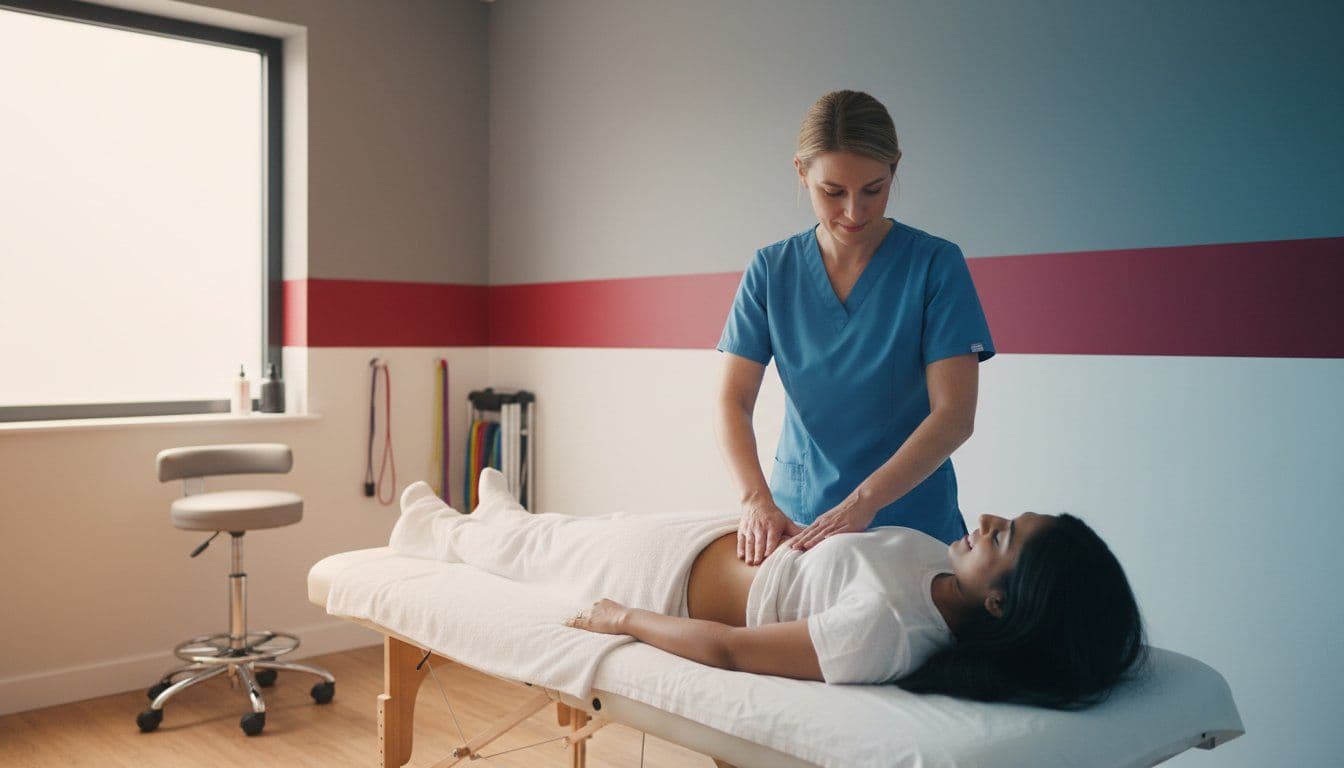
At RED Physiotherapy, we don't believe in the "here is a PDF of exercises, see you in six weeks" approach. That simply isn't how you fix a gap in your abdominal wall. For effective postnatal diastasis recti repair Milton Keynes mums need more than just a home workout plan. We focus on hands-on manual therapy from your very first session because your muscles and connective tissues, specifically the linea alba, need the right environment to heal. If your back is stiff or your pelvis is tilted, you're constantly putting tension on that midline gap. We use physical treatment to improve blood flow and settle the nervous system, which allows the body to start the repair process properly.
Our philosophy is built on the fact that your core doesn't work in isolation. It's part of a complex system involving your ribcage, pelvis, and diaphragm. When we see you at our Milton Keynes clinic, we look at your alignment immediately. If your ribs are "flared" or your pelvis is tucked, it creates unnecessary pressure on your stomach muscles. By manually adjusting these positions, we reduce the mechanical stress on your midline, making every exercise you do ten times more effective. You'll leave your first session having already had physical treatment, not just a chat.
Manual Therapy Techniques We Use
- Soft tissue release: We target tight back and hip muscles. When these are overactive, they act like a tug-of-war team pulling your core muscles away from the centre.
- Diaphragm releases: Proper breathing is the foundation of core strength. We use hands-on techniques to ensure your diaphragm moves freely, helping you manage internal pressure so it doesn't push out against your diastasis.
- Tactile feedback: We use our hands to help you "find" your deep core. It's often hard to reconnect with these muscles after pregnancy, and physical guidance helps your brain re-establish that connection faster.
Beyond the Exercises
It's a common mistake to think that more movement always equals faster healing. In reality, jumping straight into traditional crunches or heavy lifting can actually make your separation worse. You can read more about the risks of improper movement in this guide on Beyond the Plank: Common Myths. Research suggests that roughly 60% of women experience some level of diastasis recti at six weeks postpartum, yet many are given generic advice that doesn't account for their specific body mechanics.
We use our diagnostic skills to see how your core handles real-world loads, such as lifting a 10kg car seat or carrying a toddler. Every birth story is different, whether it involved a long labour or a C-section, so your recovery plan must be bespoke. We don't just want you to "close the gap," we want you to have a core that is functional and strong for the long term. If you're ready to move past generic advice, you can learn more about our bespoke treatment services to see how we can help you get back to feeling like yourself again.
Beyond the Plank: Common Myths About Postnatal Recovery
There is a lot of noise online about "snapping back" after pregnancy. Most of it is unhelpful, and some of it is plain wrong. When you are looking for postnatal diastasis recti repair Milton Keynes, you need clinical facts rather than Instagram fads. Our team sees mums every day who have been told they can never lift heavy objects again or that their "gap" must be zero to be healthy. This misinformation only adds to the stress of new motherhood.
Let's clear the air and look at the most common myths we hear in the clinic:
- Myth 1: You must close the gap completely. Success isn't measured by the width of the separation alone. A 2cm gap with firm, functional connective tissue is far better than a 1cm gap that feels soft and lacks tension.
- Myth 2: Waist trainers are the only way back. These binders act like a temporary crutch. They might make you look smoother in a dress, but they don't teach your muscles how to fire. Relying on them can actually weaken your deep core over time.
- Myth 3: You can never do high-impact sports again. This is rubbish. With a progressive, hands-on recovery plan, you can return to running, HIIT, and heavy lifting. Your body is resilient, it just needs the right recalibration.
- Myth 4: Surgery is the only option for large separations. While surgery has its place, many women with significant gaps achieve excellent functional results through targeted physiotherapy. We focus on restoring the system, not just the skin.
The Truth About Core Pressure
Recovery isn't just about doing hundreds of bird-dog exercises. It's about managing the pressure inside your abdomen. Every time you sneeze, cough, or lift your toddler, that pressure has to go somewhere. If your core isn't coordinating properly, that pressure pushes out against your midline or down onto your pelvic floor. Many women try to "suck it in" to look flatter, but this actually creates more downward pressure and can lead to prolapse or leaking. We teach you how to coordinate your breath with movement, ensuring your midline is protected during the daily chaos of parenting. Understanding Why Hands-On Physiotherapy is Essential allows us to manually assess how your muscles respond to these pressure changes in real-time.
Aesthetics vs. Function
It is easy to get caught up in how your stomach looks in the mirror. However, our priority for your postnatal diastasis recti repair Milton Keynes is how you move and feel. A "closed" gap doesn't matter if you still have back pain or feel weak when carrying the car seat. We focus on "functional tension," which is the ability of your connective tissue to transfer load across your body. When that tissue is strong, your stomach looks flatter naturally because your muscles are doing their job. You can find more about how we treat these issues on our conditions page. We want you to stop worrying about the tape measure and start focusing on your strength, resilience, and long-term health.
Focus Keywords:
postnatal diastasis recti repair Milton Keynes
Your Milton Keynes Recovery Roadmap: Practical Steps to Healing
Recovery isn't a straight line, but it certainly helps to have a map. You've spent nine months growing a human, so don't expect your core to bounce back over a weekend. We see too many mums trying to rush into burpees at week four, only to end up with more "doming" and frustration. A successful postnatal diastasis recti repair Milton Keynes journey follows a logical, evidence-based progression that respects your body's healing timeline.
- Step 1: The Golden Month. Your first few weeks are about rest, nutrition, and gentle alignment. Focus on breathing deeply into your ribs rather than just your chest. This helps the diaphragm and pelvic floor start talking to each other again.
- Step 2: The 6-Week Milestone. This is the ideal time for a specialist physio assessment. While your GP check is great for general health, we look specifically at the integrity of your linea alba and how you manage internal pressure.
- Step 3: Controlled Loading. Once we've cleared you, we start reintroducing load. This might mean progressive pram walks through the inclines of Campbell Park. We want to see how your core handles movement before we add heavy weights.
- Step 4: High-Performance Return. This is the final push back to running, HIIT, or your favourite local fitness class. We ensure you have the "functional tension" required to protect your midline during high-impact sports.
Daily Habits for a Stronger Core
The work doesn't just happen in our clinic; it happens in your lounge and at the supermarket. To protect your midline, always use the "log roll" when getting out of bed. Roll onto your side first and use your arms to push up, which prevents the "sit-up" motion that causes the gap to bulge. When you're lifting heavy car seats or bags of shopping, keep the load as close to your body as possible. Finally, stay hydrated and keep your fibre intake high. Straining on the loo is one of the worst things for a recovering core, as it creates massive internal pressure that pushes against your abdominal wall.
Local Milton Keynes Fitness Integration
When you feel ready to head back to a local Yoga or Pilates class, honesty is your best policy. Tell your instructor you're recovering from diastasis recti so they can offer modifications for planks or crunches. For your walking routines, Milton Keynes is brilliant. Start with the flat paths around Willen Lake before tackling the more challenging terrain in Campbell Park. As your tissues heal and your strength returns, you might find that you've developed some compensatory tightness in your back or hips. This is the perfect time to move from clinical physio to our sports massage services to keep your muscles supple and injury-free.
If you're tired of guessing whether an exercise is safe or why your tummy still feels "weak," it's time for a professional perspective. We don't just give you a sheet of exercises; we provide hands-on treatment to get you moving properly again. Book your assessment today and let's get your recovery on the right track.
Expert Postnatal Care at RED Physiotherapy Milton Keynes
We know that being a new mum is exhausting. Your body has been through a massive transition, and the last thing you need is a clinical, cold environment where you feel like just another patient on a conveyor belt. At RED Physiotherapy, we are a family-run clinic. We treat you as an individual with specific goals, whether that is lifting your toddler without pain or getting back into your local running club. Our specialist team understands the unique biomechanical shifts that happen after pregnancy and how they impact your daily life.
When you walk through our doors, you won't get fluff or vague promises. You get honest, effective care from the very first minute. Your initial appointment involves a thorough assessment of your abdominal wall and pelvic floor function, followed immediately by hands-on treatment. We don't believe in just handing out exercise sheets and sending you home. We use manual therapy to release tension and improve tissue quality, ensuring your postnatal diastasis recti repair Milton Keynes is moving in the right direction from day one.
Our Hands-On Approach in Action
We have helped many Milton Keynes mums avoid the surgical route by focusing on functional restoration and core integration. While the NHS provides a vital service, current waiting lists for non-urgent physiotherapy often exceed 18 weeks. That is a long time to live with a core that feels unstable or weak. By choosing private care, you bypass these delays and start your recovery while your body is most receptive to change. Our therapists work directly on the fascia and musculature, providing the tactile feedback your brain needs to reconnect with your core muscles effectively.
Ready to Feel Like Yourself Again?
Recovery is not just a possibility; it is a plan we build together. We want you to return to the activities you love without the constant worry of "doming" or nagging back pain. You can find all the details regarding our prices on our website, with no hidden costs or surprise fees. Our Milton Keynes clinic is designed to be accessible and welcoming for busy parents who need results without the wait.
To start your postnatal diastasis recti repair Milton Keynes, simply book your session online or give us a call. We will get you booked in quickly, usually within 48 hours, so you can stop managing symptoms and start fixing the cause. You deserve to feel strong, capable, and like yourself again. Let's get to work on getting your strength back.
Focus Keywords:
- postnatal diastasis recti repair Milton Keynes
- Milton Keynes physiotherapy
- postnatal core recovery
- diastasis recti treatment MK
- private physio Milton Keynes
Take Control of Your Postnatal Recovery Today
Restoring your core isn't just about closing a physical gap; it's about regaining the functional strength you need for a busy life. Generic online workouts often miss the mark, which is why our expert Women's Health specialists prioritise hands-on treatment from day one. We believe in fixing the root cause rather than just managing symptoms. By choosing private care, you avoid the standard 18 week NHS maximum wait times and get started on your recovery immediately.
Your journey toward a stronger, more resilient body starts with a bespoke plan tailored to your specific goals. Whether you want to return to high-impact sport or simply carry your child without discomfort, our team is here to guide you. We provide the professional postnatal diastasis recti repair Milton Keynes mums deserve, focusing on long-term health rather than quick fixes. You've looked after everyone else; now it's time to look after yourself. Book your postnatal assessment at RED Physiotherapy today and let's get you back to feeling like you again.
Focus Keywords: postnatal diastasis recti repair Milton Keynes, postnatal recovery Milton Keynes, women’s health physiotherapy Milton Keynes, diastasis recti exercises, core strength after pregnancy.
Frequently Asked Questions
Is it ever too late to repair diastasis recti?
It is never too late to start your postnatal diastasis recti repair in Milton Keynes. Your body retains the ability to build muscle and improve the tension of your connective tissue regardless of whether you gave birth six months ago or sixteen years ago. Clinical research confirms that the linea alba remains responsive to targeted loading and manual therapy long after childbirth. We have helped many women in their 40s and 50s regain core stability and close their abdominal gap through our hands-on approach.
Can I fix my stomach gap without having surgery?
You can successfully manage and improve a stomach gap without surgery in approximately 90% of cases. Most women find that a combination of manual therapy and specific functional movements restores enough tension to the midline to stop any "doming" or discomfort. Surgery is typically a last resort reserved for severe cases where the connective tissue has completely lost its structural integrity. Our goal is to help you avoid the operating table by building a resilient, functional core that supports you daily.
How many sessions of physiotherapy will I need for diastasis recti?
Most patients require between 6 and 10 sessions of physiotherapy to achieve significant, lasting results. While you will often feel a positive change in your core engagement after just 2 visits, true tissue remodeling and strength building take time. We usually space these appointments over a 12 to 16 week period to monitor your progress and adjust your hands-on treatment. Your recovery plan is entirely bespoke, focusing on your specific lifestyle and the physical activities you want to return to.
Does the NHS provide treatment for diastasis recti in Milton Keynes?
The NHS does offer some support for abdominal separation, but access is often limited to general advice or group exercise classes. Current data suggests that waiting lists for specialist pelvic health referrals can exceed 18 weeks in many UK trusts. Many local women choose our clinic to bypass these delays and receive immediate, one-on-one attention. We provide a hands-on service from your first visit, ensuring you don't feel like just another number in a crowded system.
Can I still exercise if I have a stomach gap?
You can definitely continue to exercise with a stomach gap, but you must adapt your routine to manage abdominal pressure. We recommend avoiding high-strain movements like traditional crunches or heavy overhead presses until your core can handle the load without bulging at the midline. Our team will show you how to modify your favorite gym moves or yoga poses so you can stay active safely. Staying mobile is vital for your recovery, provided you are using the right techniques.
Will my diastasis recti get worse if I have another pregnancy?
A subsequent pregnancy does not automatically mean your diastasis recti will worsen, especially if you prepare your body beforehand. Studies show that women who engage in core-strengthening programs before and during their next pregnancy have a 35% lower risk of developing severe separation. We focus on building a "functional foundation" that supports your abdominal wall as it stretches again. This proactive approach helps you maintain better control and speeds up your recovery after the next baby arrives.
Why does my stomach still look pregnant months after giving birth?
That "mummy tummy" appearance often persists because the stretched connective tissue and weakened deep core muscles cannot hold your internal organs in place. It is a structural issue rather than a weight issue; the abdominal wall has lost its ability to provide internal tension. Through targeted postnatal diastasis recti repair in Milton Keynes, we work to restore this "corset" effect. By improving muscle control and tissue health, we help flatten your profile and resolve that persistent pregnant look.
What is the "Mummy MOT" and do you offer it?
The Mummy MOT is a comprehensive 60 minute postnatal assessment that checks your posture, pelvic floor, and abdominal muscles in detail. We offer this specialist service to provide you with a clear roadmap for your recovery after childbirth. It is an essential check-up for any woman wanting to return to running, lifting, or high-impact sports safely. You will leave the session with a full report and a tailored plan to help you regain your strength and confidence.
Tags:
About the Author
Red Physiotherapy Team
Content Team
Health and wellness content from the RED Physiotherapy team.