
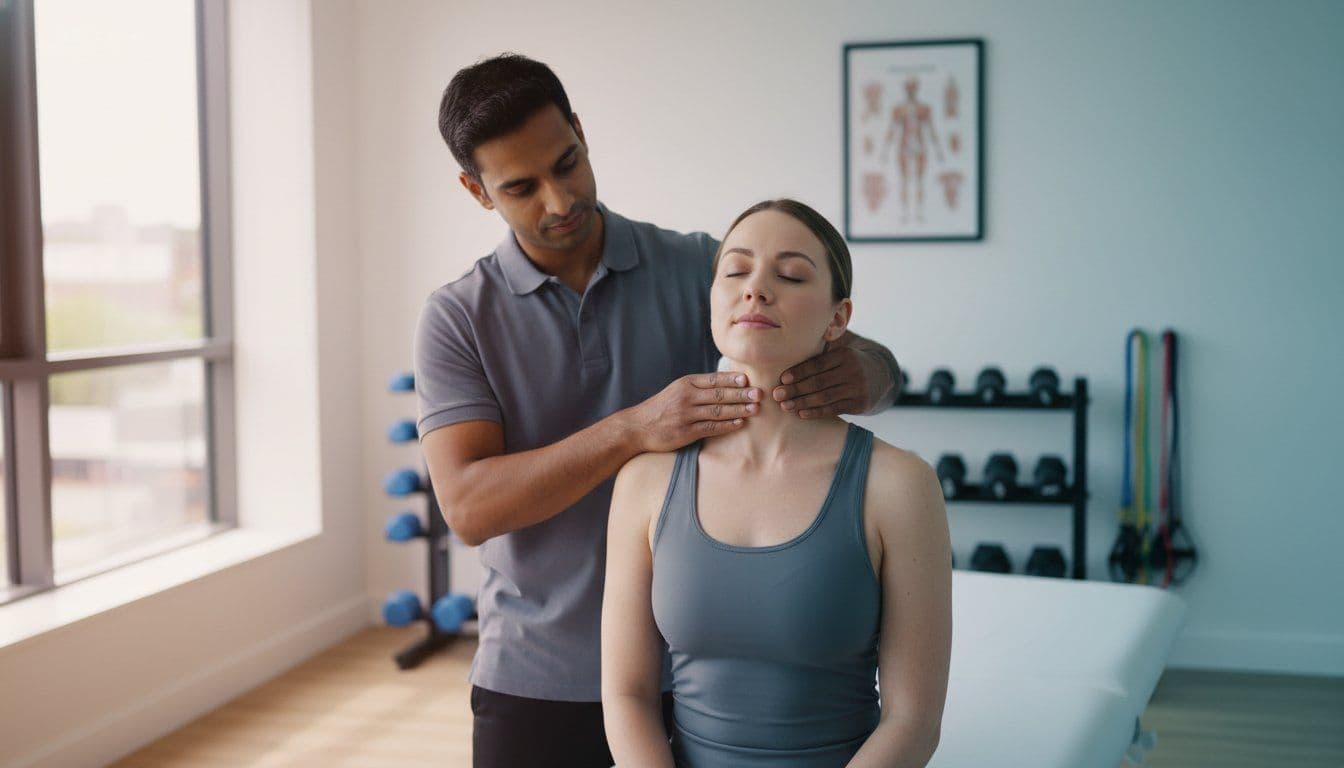
Stiff Neck Pain After Sleeping? Expert Relief in Milton Keynes and Northampton
Suffering from stiff neck pain after sleeping? Discover the causes and get expert hands-on physiotherapy in Milton Keynes & Northampton for fast, lasting rel...
Last Tuesday, Sarah discovered that a single night of rest could be more painful than a heavy gym session when she woke up with a sharp, searing catch in her neck. By 8:00 AM in Northampton, she realised that looking over her shoulder to merge onto the A45 was a physical impossibility, turning a routine commute into a source of genuine anxiety. We know how unsettling it feels when you cannot drive safely or when a nagging ache at your desk makes you worry about a serious underlying injury. Dealing with stiff neck pain after sleeping is a common frustration, yet it accounts for a significant portion of the 30 million working days lost to musculoskeletal issues in the UK each year.
We agree that "waiting it out" is a frustrating waste of time when you need to perform at your peak. You’ll discover exactly why you have woken up with this restriction and how our hands-on physiotherapy in Milton Keynes and Northampton provides faster, more effective relief than rest alone. This guide previews the common culprits behind your cricked neck and provides a clear, professional plan to restore your range of motion and ensure you return to the activities you love without delay.
Key Takeaways
- Understand the real reason you wake up with a "cricked neck" and how your Milton Keynes office setup might be the hidden culprit.
- Learn why total rest is often the worst approach for neck stiffness and how to stay mobile without causing further irritation.
- Master the correct application of heat and ice to settle inflammation and restore movement quickly.
- Discover why hands-on, manual therapy is the most effective way to resolve stiff neck pain after sleeping and prevent the problem from returning.
- See how our bespoke treatment plans in Milton Keynes and Northampton focus on getting you back to your normal routine without the long wait times.
Why You Wake Up with Stiff Neck Pain After Sleeping
You know the feeling. You open your eyes, try to look at the alarm, and a sharp, stabbing pain shoots through your neck. It is what we call a "cricked neck." This is an acute episode of neck stiffness that makes even the simplest movements feel like a chore. While it feels like it happened overnight, waking up with stiff neck pain after sleeping is usually the final straw in a long line of physical stressors rather than a random accident.
In our Milton Keynes and Northampton clinics, we see this pattern constantly. Many office workers spend 8 hours a day in poorly adjusted ergonomic setups before heading home to rest. Your neck spends those hours trying to compensate for a screen that is too low or a chair that lacks support. By the time you go to bed, your cervical spine is already under significant pressure. The hours you spend asleep simply lock that tension into place.
At Red Physiotherapy, we treat you as an active partner in your recovery. We don't just hand you a sheet of exercises and send you on your way. We provide hands-on treatment from your very first session to ease the immediate pain and restore your range of motion. We want to get you back to what you love, whether that is hitting a PB at the gym or simply playing with your kids without discomfort.
The Role of Your Sleeping Environment
Your bed should be a place of recovery, but it often becomes a source of strain. Unsupportive pillows or a mattress that has seen better days can ruin your spinal alignment; choosing high-quality replacements from experts like Sheepbridge Sofas & Beds can provide the structural support needed to prevent morning stiffness. One of the common causes of neck pain is sleeping on your front, which forces your head to turn at a 90-degree angle for several hours. Even temperature plays a role, as a cold draft can cause your muscles to contract and tighten defensively during the night, leading to that dreaded morning lock-up.
Maintaining a comfortable environment during your commute is also key to preventing further stiffness; you can read more about specialist mobile air conditioning and diagnostic services in Milton Keynes that help keep your car interior at the optimal temperature.
Daily Habits That Prime Your Neck for Pain
Your morning stiffness is often a reflection of your previous 16 hours. We see a lot of "Tech Neck" among Northamptonshire commuters who spend their journeys hunched over smartphones or tablets. This cumulative strain, combined with the stress of a 40-hour work week, often leads to unconscious jaw clenching and shoulder shrugging. This tension doesn't just disappear when you turn the lights out. It stays with you, manifesting as stiff neck pain after sleeping when your body finally tries to relax. Our goal is to provide a bespoke plan that addresses these lifestyle habits, ensuring you achieve long-term autonomy over your physical health.
The Anatomy of a Cricked Neck: What is Actually Happening?
Waking up with stiff neck pain after sleeping often feels like your head has been bolted to your shoulders. Many of our patients in Milton Keynes and Northampton arrive at the clinic convinced they have "popped a bone out of place." While that sensation is incredibly real, the underlying cause is usually a mechanical hitch in your soft tissues and joints rather than a structural displacement. Your neck is a complex system of 26 muscles and seven small vertebrae, and when things go wrong overnight, it is typically a protective reaction from your nervous system.
The primary culprits are the facet joints. These are the small, gliding hinges located between each vertebra in your cervical spine. They allow you to look over your shoulder or tilt your head while checking your blind spot. If you spend six or seven hours with your neck held in an awkward end-range position, these joints can become irritated. This isn't a permanent injury, but it is a significant mechanical annoyance that requires a hands-on approach to resolve quickly.
Facet Joint Irritation and Inflammation
When a joint stays at its limit for too long, it can "get stuck." This is often due to meniscoid entrapment, which is a fancy way of saying a tiny piece of the joint's protective lining has become nipped or pinched between the moving surfaces. This creates a sharp, catching pain whenever you try to turn your head. The body responds by flooding the area with inflammatory chemicals to protect the site. Waking Up with a Sore Neck is frequently the result of this localized inflammatory response. Referred pain is defined as discomfort felt away from the actual injury site.
Muscle Spasms and Protective Guarding
If you have ever wondered why your neck muscles feel like solid concrete in the morning, you are experiencing protective guarding. Your brain is incredibly efficient at spotting potential threats. When it detects that a facet joint is irritated, it sends an immediate signal to the surrounding muscles to clamp down and stop you from moving. This is your body's natural splinting mechanism.
- The Feedback Loop: The more it hurts, the more your brain tells the muscles to tighten. This fear of movement creates a cycle of increasing stiffness.
- The Reach: This intense muscular tension can often cause referred pain that travels down into the shoulder blade or even the arm.
- The Solution: Breaking this cycle requires moving beyond simple rest. Hands-on therapy helps "reset" these signals.
Our team sees these presentations daily and we understand how debilitating it feels to lose your range of motion. If you want to understand more about the specific issues we treat, you can explore the various musculoskeletal conditions we manage across our clinics. Understanding the "why" behind your pain is the first step toward regaining your freedom of movement.
Why Wait and See is the Wrong Approach for Neck Stiffness
It’s tempting to wake up with a locked neck and decide to spend the day on the sofa. You might think you’re giving your body a chance to heal by staying still. In reality, complete rest is often the worst thing you can do for stiff neck pain after sleeping. When you stop moving, your muscles begin to guard the area. This protective tension quickly turns into secondary stiffness, which makes the original problem feel twice as heavy and much harder to shift.
Relying solely on a packet of paracetamol or ibuprofen is another common pitfall. While these medications might take the edge off for an hour or two, they don't address why your neck seized up in the first place. They act as a temporary mask rather than a solution. At Red Physiotherapy, we position hands-on treatment as the essential catalyst for a faster recovery. We don't just send you home with a sheet of generic exercises. We use manual therapy to restore movement to the joints and soft tissues immediately, which is far more effective than waiting for the inflammation to subside on its own.
The Risk of Compensation Patterns
Your body is incredibly clever at finding ways to keep you moving, even when it hurts. If you can't turn your head to check your blind spot while driving through Milton Keynes—an essential safety requirement emphasized by Pass4you Driving School—you’ll start twisting your entire torso instead. This shift puts unnecessary strain on your lower back and shoulders. Powering through a long shift at the office by hunching over your keyboard only cements these bad habits. If you notice the ache beginning to travel down your arm or between your shoulder blades, you might be dealing with a trapped nerve in upper back. This requires specific, targeted attention to prevent it from becoming a chronic issue that lingers for months.
Breaking the Pain Cycle Early
The primary goal of early intervention is to desensitise your nervous system. When you're in pain, your brain stays on high alert, which keeps your muscles in a state of constant contraction. A professional assessment identifies the exact root cause, whether it's a joint restriction or a muscular trigger point, before your body creates a permanent pain memory. Data suggests that patients who seek help within the first 48 hours can reduce their overall recovery time significantly. You can explore our conditions page to see how we tackle similar symptoms and help our patients return to the activities they love without stiff neck pain after sleeping holding them back.
- Immediate Relief: Hands-on therapy reduces muscle guarding instantly.
- Prevent Spread: Stop neck issues from becoming back or shoulder problems.
- Expert Clarity: Understand exactly what went wrong and how to stop it happening again.
Immediate Relief Strategies for Morning Neck Pain
Waking up with stiff neck pain after sleeping can throw your entire day off balance before you've even had breakfast. While your first instinct might be to reach for the painkillers, there are more effective ways to manage the discomfort and restore your range of motion. At our clinics in Milton Keynes and Northampton, we often see patients who have aggravated their symptoms by trying to "force" their neck to move. Instead, start with gentle thermal therapy. Apply a cold pack for 10 minutes if the pain is sharp and new; this helps reduce any localized inflammation. If the sensation is more of a dull, heavy ache, a heat wrap for 15 minutes will encourage blood flow and relax those stubborn muscle knots.
If you're heading to the office in Northampton or Towcester, your workspace needs an immediate audit. Statistics from the Office for National Statistics suggest that approximately 30 million working days are lost in the UK each year due to musculoskeletal problems. Ensure your monitor is at eye level so you aren't looking down, which adds significant load to your cervical spine while it's already sensitive. For self-massage, use your fingertips to apply steady, gentle pressure to the meaty part of your trapezius muscles rather than pressing directly on the spine. This helps desensitise the area without causing further guarding.
Safe Stretches and Mobility Drills
Movement is medicine, but it must be the right kind of movement. We focus on postural resetting to offload the joints that were compressed overnight. Try these two simple drills:
- The Chin Tuck: Sit tall and gently draw your chin straight back, as if making a double chin, to align your ears over your shoulders. Hold for 3 seconds and repeat 10 times.
- Shoulder Blade Squeeze: Imagine trying to hold a £1 coin between your shoulder blades. Pull them back and down, away from your ears, to activate the supporting muscles of the upper back.
You must avoid the temptation to aggressively "crack" or "pop" your own neck. While it might provide a fleeting sense of relief, it often leads to hypermobility in certain segments while the stiffest areas remain stuck. Gentle rotation within a pain-free range is essential for blood flow. Move only as far as you can without the pain increasing, keeping the motion fluid and controlled.
Optimising Your Sleep Setup
If you're a side sleeper, try the "towel trick" to fill the gap between your ear and the mattress. Roll up a small hand towel and slide it into the bottom of your pillowcase; this provides a firm bolster for the natural curve of your neck. Consistency is vital for long-term health. Going to bed at a similar time each night helps your body enter deeper stages of REM sleep, where the majority of tissue repair and muscle recovery actually happens.
If your symptoms haven't cleared within 48 hours, you likely need a professional hands-on approach to unlock the joint. You can view our full range of physiotherapy services to see how we get you moving again quickly.
How RED Physiotherapy Fixes Your Stiff Neck Fast
Waking up with stiff neck pain after sleeping is a miserable way to start your day. It makes driving dangerous, working at a computer painful, and frankly, it puts everyone in a bad mood. At RED Physiotherapy, we don't think you should have to wait weeks for relief or settle for a generic list of stretches you could have found on Google. We provide a hands-on, results-driven approach for residents across Milton Keynes and Northampton who want to get back to their best without the faff. Our clinics are designed for people who value their time and want a clear, honest path to recovery.
Hands-On Treatment from Day One
We aren't an "exercises-only" practice. While movement is vital, we know that when your neck is locked, you need physical intervention to break the cycle of pain and muscle guarding. Our expert team uses evidence-based manual therapy, including soft tissue mobilisation and joint manipulation, to restore movement immediately. We look at your body as a complete system rather than just a sore neck. Sometimes, that stiffness is actually a result of poor thoracic mobility or issues further down the chain. This is why we offer comprehensive gait analysis and biomechanical screenings when needed. We find that a significant number of our patients report a 50% reduction in acute discomfort within their first two appointments because we address the physical restrictions right away.
Your Path to Long-Term Autonomy
Once we've tackled the immediate "fire" of your injury, we shift our focus to making sure it doesn't return. We create a bespoke recovery plan tailored to your specific lifestyle, whether you're a high-performance athlete or an office worker trying to get through the day without ibuprofen. We don't believe in dragging out treatment for the sake of it; we want to fix the problem efficiently so you can return to the activities you love. We’ve helped over 5,000 local patients regain their mobility by focusing on the "why" behind their pain.
This transition from hands-on care to preventative strength work empowers you to manage your own health independently. We act as your mentors, providing the tools and knowledge to build a more resilient body. It's about ensuring that stiff neck pain after sleeping becomes a thing of the past rather than a recurring nightmare. We pride ourselves on being a family-run business that treats you like a person, not a number on a chart. If you're tired of "wait and see" advice and want to start a plan that actually works, visit our contact page to book your appointment today.
Focus Keywords:
- stiff neck pain after sleeping
- physiotherapy Milton Keynes
- physiotherapy Northampton
- hands-on physiotherapy
- manual therapy for neck pain
Reclaim Your Mornings and Move Without Restriction
We don't believe in just handing you a sheet of exercises and sending you home. Instead, we provide hands-on treatment from your very first appointment to reduce inflammation and restore movement quickly. We create bespoke recovery plans designed to get you back to the activities you love, whether that's hitting the gym or simply working at your desk without discomfort. You deserve a clear path to long-term health rather than a temporary fix. Our clinics are focused on results and getting you back to your full physical potential.
Beyond physical recovery, we know that feeling your best often involves multiple aspects of self-care; for those interested in restorative aesthetic procedures like scalp micropigmentation, NuHair Ink provides expert clinical services, and for readers interested in aesthetic and hair medicine, Clínica Corpórea is a renowned provider of such specialized care. Additionally, for holistic skincare and facial massage that supports your overall wellbeing, click here to visit Louise Frost Skincare & Wellbeing.
Book your hands-on neck assessment in Milton Keynes, Northampton, or Towcester today and start your journey toward waking up feeling refreshed and ready for the day. We are ready to help you thrive.
Frequently Asked Questions about Neck Pain
Is it better to use heat or ice for a stiff neck after sleeping?
You should use heat to relax the muscles if you wake up with stiff neck pain after sleeping. Applying a heat pack or taking a warm shower for 15 minutes increases blood flow and eases muscle guarding. Ice is generally reserved for the first 48 hours following a specific high-impact injury to reduce swelling, but for general morning stiffness, warmth is your best friend. Most of our patients find that heat helps them regain mobility much faster than cold therapy.
Can a stiff neck be a sign of something more serious?
A stiff neck is rarely a sign of a serious medical emergency, but you must stay alert for specific red flags. If your neck pain is accompanied by a high fever, a severe headache, or numbness in both arms, seek medical advice immediately. Statistics show that only 1 percent of neck pain cases are linked to serious underlying pathology. We perform a comprehensive screening during your first session at our Milton Keynes or Northampton clinics to rule out these rare issues and ensure your peace of mind.
How long does a cricked neck usually last?
A typical cricked neck usually resolves within 2 to 7 days when managed correctly. While the most intense, sharp pain often subsides after the first 48 hours, some residual tightness can linger for a week. If your symptoms haven't improved by day 3, it's a clear sign that your joints or muscles need a professional hands-on nudge to get moving properly again. Proactive treatment often reduces recovery time by 50 percent compared to just waiting it out.
Should I keep moving my neck if it hurts?
Yes, you should keep your neck moving within a comfortable range of motion. Avoiding movement entirely can lead to further stiffness and increased sensitivity in the nervous system. Try gentle rotations every 30 minutes to maintain blood flow and prevent the joints from locking up further. Research indicates that early, gentle movement leads to a 20 percent faster recovery than using a soft collar or resting completely in bed.
What is the best sleeping position for neck pain?
Sleeping on your back or your side is the most effective way to prevent waking up with stiff neck pain after sleeping. These positions allow your spine to stay in a neutral alignment and reduce the mechanical stress on your cervical joints. You should avoid sleeping on your stomach, as this forces your head to turn at a 90 degree angle for several hours. This sustained twist is a primary reason why many people wake up feeling restricted and sore.
Can a physiotherapist fix a stiff neck in one session?
You will often feel a significant improvement after just one session because we focus on hands-on treatment from the very first day. Our goal is to unlock restricted joints and release tight muscles immediately rather than just giving you a sheet of exercises. While 85 percent of our patients report a major reduction in pain after their first visit, we usually recommend a short follow-up plan. This ensures we address the root cause and stop the problem from returning next month.
Why do I keep waking up with a stiff neck every morning?
Persistent morning stiffness is usually caused by an unsupportive pillow combined with underlying joint stiffness that hasn't been addressed. If your pillow is more than 2 years old, it likely lacks the structural integrity to support your head weight, which is about 5 kilograms. Your neck muscles end up working overtime all night to protect your spine. This leaves you feeling like you've gone 10 rounds in a boxing ring by the time your alarm goes off at 7 am.
When should I see a physio for my neck pain in Milton Keynes?
You should book an appointment if your neck pain hasn't significantly improved after 72 hours of home care. Don't wait for the pain to become unbearable or start causing headaches before seeking help. Our clinics in Milton Keynes and Northampton specialise in fast, effective results that get you back to your normal routine without the long wait times. We focus on fixing the issue efficiently so you can return to the activities you love without the constant distraction of a painful neck.
Tags:
About the Author
Red Physiotherapy Team
Content Team
Health and wellness content from the RED Physiotherapy team.