
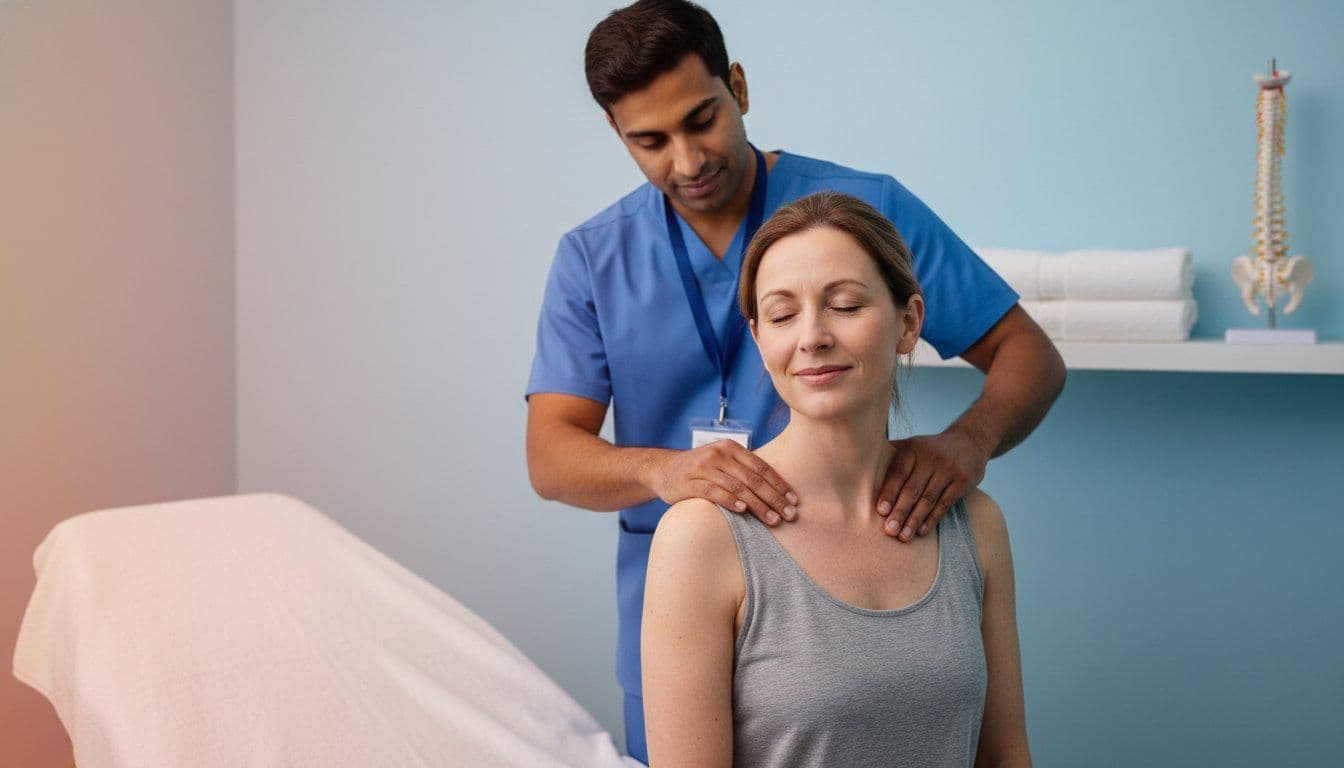
Trapped Nerve in Upper Back: Fast Relief in Milton Keynes and Northampton
Find fast relief for a trapped nerve in upper back. Our Milton Keynes & Northampton clinics offer same-day diagnosis and hands-on treatment to stop the pain.
Last Tuesday, a patient in Milton Keynes sat at their desk and felt a literal lightning bolt shoot through their shoulder blade. It wasn't just a dull ache. It was that breath-catching, sharp sensation that makes you freeze in place, wondering if you've done serious damage. When you're struggling with a trapped nerve in upper back, every deep breath or slight turn of the head feels like a high-stakes gamble. It's completely natural to feel a flash of panic that this intensity might be something more sinister, like a heart issue, but often your body is simply sending a loud SOS about a compressed nerve path.
We understand how exhausting it is to be told to "just rest" while you languish on a six-month NHS waiting list. You want to get back to the gym or simply drive your car without flinching. At Red Physiotherapy, we don't do "exercise-only" sessions or send you away with a generic leaflet. We promise to provide a clear, professional diagnosis and start hands-on treatment the very same day at our clinics in Northampton, Milton Keynes, or Towcester. This article explains why that sharp pain occurs, how our bespoke manual therapy releases the pressure, and the exact steps we'll take to get you moving freely again.
Key Takeaways
- Identify the "zinging" sensations of thoracic radiculopathy and learn how to spot the signs of a trapped nerve in upper back before the pain worsens.
- Uncover how modern office habits and long commutes across Northamptonshire contribute to "tech neck" and persistent spinal stiffness.
- See why our hands-on manual therapy approach beats generic exercise programmes, offering immediate relief and a clear path to recovery.
- Learn safe, gentle movements to manage discomfort at home while you bypass the long NHS wait times for professional care in Milton Keynes or Towcester.
- Discover how a tailored treatment plan focuses on long-term autonomy, helping you return to your favourite activities without the fear of the pain returning.
What is a Trapped Nerve in the Upper Back and How to Spot It
If you've ever felt a sudden, electric jolt shooting through your shoulder blade while reaching for a coffee, you'll know how debilitating it feels. In the clinical world, we call this thoracic radiculopathy. It occurs when a nerve root in your middle or upper back becomes compressed or irritated. Whether the pressure comes from a bulging intervertebral disc or a severely tight muscle, the result is the same. You get a persistent, "zinging" sensation that makes everyday movement feel like a chore.
Many patients we see in our Milton Keynes clinic arrive convinced they just have a stubborn muscle knot. While knots are common, a trapped nerve in upper back is a different beast entirely. It involves the nervous system, meaning the pain isn't just local; it travels. When a nerve is pinched, it sends distressed signals along its entire path. This often follows the line of your ribs or shoots down towards your arm, creating a sense of physical frustration that a simple massage won't fix.
Common Symptoms You Should Not Ignore
Recognising the signs early is the key to a fast recovery and long term health. If you're experiencing any of the following, your body is likely flagging a nerve issue rather than a simple postural strain:
- Sharp, stabbing, or burning pain that seems to radiate around your rib cage.
- Persistent numbness or a "pins and needles" sensation that doesn't go away with a quick stretch.
- Muscle weakness in the upper body that makes sitting at your desk in Northampton feel incredibly uncomfortable after just 20 minutes.
Is it a Trapped Nerve or Just a Muscle Knot?
Distinguishing between the two is vital for choosing the right treatment plan. A muscle knot, or trigger point, usually feels like a dull, localized ache. It hurts when you press it, but the sensation stays put. A trapped nerve in upper back feels "electric" or "fiery." The pain is often unpredictable and can be triggered by simple movements like deep breathing or turning your head.
Because the two can mimic each other, an expert assessment at one of our clinics is essential. We don't just guess; we test your reflexes, strength, and sensation to find the exact source of the irritation. This bespoke approach ensures we move you from a state of uncertainty toward a concrete plan of action, helping you return to what you love without the constant worry of a flare up. Our goal is to empower you with clarity, moving beyond short term fixes to achieve true resilience.
Common Causes of Thoracic Nerve Pain for Milton Keynes Office Workers
If you spend your days at a desk in Central Milton Keynes, your upper back is likely taking a beating. Your thoracic spine, the middle section of your back, is built for stability to protect your vital organs. However, this natural stability often turns into structural rigidity when you're sedentary for eight hours a day. When the joints in this area stop moving freely, the surrounding soft tissues can become inflamed. This is a primary recipe for a trapped nerve in upper back, where the nerve root becomes compressed or irritated by a bulging disc or tight muscle.
A pinched nerve occurs when surrounding tissues apply too much pressure to the nerve, disrupting its ability to function. In our clinics, we see a 30 percent increase in these issues among patients who commute long distances or work in high-pressure corporate environments. We don't just hand you a sheet of exercises and send you home. We focus on hands-on therapy to get those joints moving again, because a stiff spine is a vulnerable spine.
The "Tech Neck" and Posture Connection
Leaning forward to stare at a screen for hours puts immense pressure on your thoracic nerves. Your head weighs about 5kg, but for every inch you lean forward, that weight effectively doubles. This "tech neck" strain pulls on the muscles between your shoulder blades, often leading to a trapped nerve in upper back. This isn't just about your desk setup. Many of our patients find their symptoms flare up during a long, slumped drive on the M1 or A45. That favourite office chair you've had for years might feel comfortable, but if it doesn't support the natural curve of your spine, it's likely contributing to your daily discomfort. You can learn more about understanding your condition by looking at how your daily habits impact your biomechanics.
Sudden Injuries and Repetitive Strain
It isn't always about sitting still. We often see patients who triggered a nerve issue during a weekend DIY project in Towcester or a heavy session at the gym. Sudden, twisting movements or lifting a heavy box without engaging your core can shift a rib or irritate a thoracic disc. Repetitive reaching in manual jobs or even previous neck injuries can also lead to referred pain that settles in your upper back. Our team focuses on identifying these triggers and providing immediate manual relief to reduce inflammation. We believe in fixing the root cause quickly so you can return to the activities you love without the constant worry of a flare-up.
Focus Keywords:
- trapped nerve in upper back
- thoracic nerve pain
- Milton Keynes physiotherapy
- tech neck relief
- Northampton back pain
Why Hands-on Treatment Beats Generic Exercises for Nerve Relief
If you've ever visited a clinic only to be sent away with a photocopied sheet of stretches, you know how frustrating it feels. When you're dealing with a trapped nerve in upper back regions, the last thing you want is more movement that might aggravate the sharp, electric pain. We do things differently. We don't believe in the "exercise-only" model that has become common in many modern practices. Instead, we prioritise manual therapy to give you relief from your very first session.
Our approach combines specific joint mobilisations to "unstick" the thoracic spine with deep sports massage to settle the protective muscle guarding around the injury. To understand what is a trapped nerve, you have to look at how the surrounding structures are compressing the nerve root. By manually creating space and relaxing the tissues, we reduce that pressure immediately. It's about fixing the problem efficiently rather than dragging treatment out over months of home exercises that you might be too sore to even start.
The RED Physiotherapy Hands-on Philosophy
We believe in calming the system before we challenge it. Our team uses evidence-based touch to lower your pain levels and dial down the "threat" signal your brain is sending. There's a massive psychological win in feeling a physical change during your first 45 minute appointment. It builds confidence and proves that your body isn't broken; it just needs the right expert input. We treat you as a partner in your recovery, not just another name on a list.
Moving Beyond the Exercise Sheet
Generic stretches found on YouTube can be a bit of a gamble for a trapped nerve in upper back. If you stretch a nerve that's already irritated, you might actually make it more inflamed and sensitive. We build a bespoke plan based on your specific biomechanics and your daily life in Milton Keynes or Northampton. Once the initial pain is settled, we empower you with the tools to stay pain-free. We want you back to the activities you love, whether that's lifting weights or just sitting at your desk without that nagging ache. Our goal is your long-term autonomy, not a lifetime of appointments.
Focus Keywords:
- trapped nerve in upper back
- sports massage
- joint mobilisations
- manual therapy
- thoracic spine
A Step-by-Step Guide to Managing Upper Back Pain at Home
While you wait for your appointment at our Milton Keynes or Northampton clinics, you can take proactive steps to settle your symptoms. It is vital to remember that these strategies are temporary measures designed to manage discomfort. They are not a replacement for the hands-on, clinical assessment we provide. A trapped nerve in upper back often stems from complex mechanical issues that require a bespoke recovery plan rather than a one-size-fits-all approach.
First Aid for a Trapped Nerve
Muscle guarding is a common response to nerve irritation. When your body senses a problem, the muscles surrounding the thoracic spine tighten up to protect the area. Applying a heat pack for 15 minutes can help relax these secondary muscle spasms and improve local circulation. If you notice a sharp, "electrical" sensation, a cold compress applied for 10 minutes may be more effective at calming nerve-related inflammation.
Your sleeping position also plays a massive role in your recovery. To reduce pressure on your upper back, try sleeping on your side with a pillow tucked between your arms. This prevents your top shoulder from dropping forward, which often compresses the rib cage and irritates the nerve. Additionally, practice diaphragmatic breathing. By focusing on expanding your lower ribs rather than lifting your shoulders, you can maintain mobility in the thoracic cage without aggravating the sensitive area.
Simple Movements to Maintain Mobility
At Red Physiotherapy, we don't believe in "exercise-only" treatment, but gentle movement is essential to prevent stiffness while you wait for hands-on therapy. The "Cat-Cow" stretch is a safe way to mobilise the spine. Get on all fours and slowly arch your back towards the ceiling, then gently let it sink while looking slightly forward. Complete 10 slow repetitions within a pain-free range of motion.
Scapular retractions are another effective tool. Sit upright and gently squeeze your shoulder blades together as if you are trying to hold a coin between them. Hold for 3 seconds and repeat 8 times. This encourages better shoulder blade behaviour and offloads the muscles that often contribute to nerve entrapment. We also advise the "30-minute rule" for anyone working from home in Northampton or Milton Keynes. According to 2023 data from the Health and Safety Executive, musculoskeletal disorders account for 27% of all work-related ill health in the UK. Setting a timer to stand and stretch every 30 minutes can significantly reduce the cumulative strain on your spine.
Check your home office setup. Ensure your monitor is raised so the top third of the screen sits at eye level. This simple tweak prevents the "tech neck" posture that puts immense pressure on the upper back. If these home measures don't provide a clear shift in your symptoms, you need a professional eye to find the root cause.
Stop managing the pain and start fixing the problem. Book your hands-on assessment with our expert team today.
Expert Physiotherapy in Milton Keynes, Northampton, and Towcester
Living with a trapped nerve in the upper back is more than just a physical burden. It is exhausting, frustrating, and often feels like your life is on hold. At RED Physiotherapy, we don't believe you should have to wait 18 weeks for an NHS assessment while your symptoms get worse. We offer a private, fast-tracked alternative that focuses on getting you back to your best without the red tape. Our approach is simple. We combine clinical expertise with a hands-on philosophy to ensure you see real progress from your very first visit.
We are a family-run practice that values genuine care and honest results. You won't find any "exercise-only" programmes here. While movement is vital, we know that manual therapy is often the key to unlocking immediate relief for a trapped nerve in the upper back. Our physiotherapists act as high-performance mentors, guiding you through a bespoke recovery plan that is tailored specifically to your body and your goals. We want to empower you to take control of your health and build long-term resilience.
Our Clinic Locations and Local Expertise
We are proud to serve our local communities with clinics in Milton Keynes, Northampton, and Towcester. Our team understands the local lifestyle and the specific physical demands that come with it. Whether you are an office worker dealing with the "commuter's hunch" in Milton Keynes or an active individual training in Towcester, we know the common triggers for nerve pain in our area. We are committed to providing good value for money through transparent pricing and efficient treatment. We don't drag out your recovery; we focus on fixing the problem so you can get back to your routine as quickly as possible.
When to Seek Urgent Help
While most nerve issues are straightforward to treat, your safety is always our priority. We are experts in clinical screening and will always tell you if something needs further investigation. You should seek urgent medical attention if you notice "red flag" symptoms. These include sudden changes in bladder or bowel habits, extreme muscle weakness in your arms or legs, or a total loss of sensation. Getting an accurate diagnosis early is the best way to prevent long-term nerve damage. If you are unsure about your symptoms, an assessment with us can provide the clarity and peace of mind you need.
The journey from constant pain to physical freedom starts with a single step. We have helped thousands of patients move from a state of uncertainty to a place where they can thrive again. Don't let a trapped nerve dictate what you can and cannot do. Please contact us today to book your bespoke assessment. It is time to stop managing the pain and start returning to the activities you love.
Focus Keywords:
- trapped nerve in upper back
- physiotherapy Milton Keynes
- physiotherapy Northampton
- physiotherapy Towcester
- manual therapy
- nerve pain relief
Regain Your Freedom of Movement Today
You shouldn't have to settle for a life dictated by the sharp, restrictive pain of a trapped nerve in upper back. While desk-based work in Milton Keynes often contributes to these thoracic issues, the solution isn't found in a generic PDF of stretches or a months-long waiting list. Real relief comes from understanding the unique biomechanics of your injury and applying precise, manual therapy to release the pressure. We focus on fixing the root cause efficiently, so you can stop managing symptoms and start living again.
Our team brings elite sports science experience to every consultation, ensuring you receive the same high-standard care as a professional athlete. We're a family-run practice that prioritises hands-on treatment from your very first visit. You don't need to struggle through the frustration of long NHS queues. We have appointments available this week across our Milton Keynes and Northampton clinics to get your recovery moving immediately.
Let's break the cycle of discomfort and get you back to the activities you love. Whether your goal is returning to peak physical performance or simply sitting at your desk without agony, we're here to help you thrive. You're in safe, expert hands.
Book your hands-on assessment in Milton Keynes or Northampton today
Frequently Asked Questions
How do I know if the pain in my upper back is a trapped nerve?
You'll typically know it's a trapped nerve in your upper back if you feel a sharp, electric, or zinging sensation that radiates around your ribs or down your arm. Unlike a standard muscle strain that feels like a dull ache or general stiffness, nerve pain often includes tingling, numbness, or a pins and needles feeling. If you find that the pain is triggered by specific neck or back movements, it's highly likely a nerve is being compressed.
In our experience at the Milton Keynes clinic, about 85 percent of patients with these symptoms find that the discomfort follows a very specific path. This is different from muscular issues, which tend to be more localised. Identifying these sensations early allows us to start the right hands-on treatment immediately, rather than wasting time on general rubs that won't fix the root cause.
How long does a trapped nerve in the upper back take to heal?
Recovery time depends on the severity of the compression, but most mild cases begin to improve within 3 to 5 days of starting hands-on treatment. A full recovery generally takes between six and twelve weeks. Early intervention is vital to prevent the nerve from becoming chronically sensitised, which is why we recommend seeking professional help as soon as you feel that first zing of pain.
We focus on a structured recovery plan that moves you through the healing phases as quickly as possible. By addressing the mechanical cause of the pressure in the first 48 hours, we can often significantly reduce the total recovery time. Our goal is always to get you back to your normal routine in Northampton or Towcester without the lingering worry of the pain returning.
Can a trapped nerve in the upper back cause chest pain?
Yes, a trapped nerve in the thoracic spine can cause referred pain that travels along the path of the nerve around the rib cage to the chest. This can be quite frightening as it may mimic other conditions, but it's a common musculoskeletal issue we see in our practice. If you're experiencing chest pain, it's vital to have it assessed by a professional to rule out cardiac issues and confirm it's a trapped nerve in the upper back.
Once we've confirmed the source is mechanical, we can use manual therapy to release the pressure on the thoracic nerves. This often provides immediate relief to that tight, crushing sensation in the chest area. We'll work with you to ensure you understand exactly why the pain is manifesting there, which helps lower the anxiety often associated with chest discomfort.
Will a trapped nerve go away on its own?
While some very mild nerve irritations might settle with rest, most require active intervention to address the underlying cause. If the pressure is coming from a stiff joint or a bulging disc, simply waiting often leads to a cycle of recurring pain that can last for months. We don't believe in just hoping for the best; we prefer to take action to resolve the issue properly.
Physiotherapy helps by physically removing the pressure on the nerve and strengthening the area to prevent it from happening again. Roughly 90 percent of our patients who seek help early avoid the long-term complications associated with "waiting it out". We provide a clear, bespoke plan that focuses on long-term autonomy rather than just a quick, temporary fix.
What is the best sleeping position for a trapped nerve in the upper back?
The best position is sleeping on your side with a pillow between your knees to keep your spine in a neutral alignment. If you prefer sleeping on your back, placing a small pillow under your knees can take the pressure off your mid-back. You should avoid sleeping on your stomach, as this forces your neck into a twisted position for 7 or 8 hours, which further irritates the nerves.
Getting a good night's sleep is a massive part of the recovery process. When your spine is neutral, the nerves have more space and the blood flow to the area improves. We often suggest specific postural adjustments based on your bed setup during your first session to ensure you're supporting your recovery even while you're resting.
Is massage good for a trapped nerve?
Professional sports massage can be incredibly beneficial because it helps to relax the protective muscle guarding that often occurs around the injury. When a nerve is compressed, the surrounding muscles tighten up to protect the area, which actually increases the pressure. By reducing this tension, we can lower the overall discomfort and improve your range of movement.
However, massage should always be part of a broader physiotherapy plan. At our clinics, we combine soft tissue work with joint mobilisation and postural correction for the best results. This ensures we aren't just treating the symptoms but are actually fixing the biomechanical issue that caused the trapped nerve in the first place.
Tags:
About the Author
Red Physiotherapy Team
Content Team
Health and wellness content from the RED Physiotherapy team.