
Cyclist Injury Prevention in Milton Keynes: A Proactive Guide to Pain-Free Miles
For cyclist injury prevention in Milton Keynes, look beyond the bike. Learn how our hands-on physio fixes the root cause of pain for longer, faster rides.
You could spend a fortune on a custom carbon frame and the latest electronic shifting, but if your knees start screaming ten miles into a Redway loop, that investment isn't doing much for you. It's a common story we hear at the clinic. Many local riders find themselves cut short by nagging lower back pain or frustrating numbness in their hands, often leaving them wondering if they need a new bike or a new set of joints. When it comes to cyclist injury prevention Milton Keynes cyclists often focus entirely on the machine, yet your body is the most important component of every ride.
We know how much you value your time in the saddle, and we agree that physical discomfort should never be the reason you cut a session short. This guide will show you how hands-on physiotherapy and smart conditioning can keep you riding further and faster without the dread of overuse injuries. We'll explore the vital link between your body's mobility and your bike's setup, explaining why a proactive, hands-on approach is the most effective way to stay pain-free and focused on the miles ahead.
Key Takeaways
- Stop ignoring the niggles that creep in while navigating the Redways and learn why most cycling pain comes from your body, not just your bike.
- Discover why cyclist injury prevention Milton Keynes must include hands-on assessment to fix the underlying mobility issues that a mechanical bike fit simply can't reach.
- Understand the value of manual therapy and soft tissue release in resetting your joints, ensuring you're moving efficiently before you even clip in.
- Learn the "Three Ride Rule" to distinguish between normal training fatigue and a brewing injury that needs professional attention.
- Implement a quick, five minute warm up routine specifically designed to handle the unique stop-start nature of the local Milton Keynes cycle network.
Common Cycling Injuries for Milton Keynes Riders
Milton Keynes offers a unique landscape for cyclists. We are blessed with over 200 miles of Redways and some lovely rolling hills out towards the villages. However, the stop-start nature of the city grid system and the sheer volume of repetitive pedalling can take a toll on your joints. Effective cyclist injury prevention Milton Keynes starts with understanding that your body isn't a machine. While a mechanical failure is obvious, a physical one often starts as a quiet niggle before it eventually screams at you.
Most of the issues we see at the clinic aren't from dramatic spills. Instead, they fall under the category of Common Cycling Injuries caused by overuse. When you consider that a typical rider might perform over 5,000 pedal revolutions in a single hour, even a tiny imbalance becomes a massive problem. It's the repetitive load on specific "hotspots" that leads to tissue breakdown and persistent pain. If you're training for a long distance event or just commuting to the office, these micro-stresses add up quickly.
There's also the mental side to consider. Being sidelined from your weekend club ride or your morning commute is incredibly frustrating. We see patients who are genuinely gutted to be off the bike, feeling like they're losing their fitness and their social outlet. Our goal is to get you back to the Redways as fast as possible with a body that's actually ready for the work. We don't just want to patch you up; we want to make you more resilient.
The Big Three: Knee, Back, and Neck Pain
Patellofemoral pain, often called "cyclist’s knee," is a classic example of an overuse issue. It isn't always about saddle height. Often, it's a case of your glutes not firing properly or your feet collapsing in your shoes. Lower back strain is another frequent visitor, usually caused by staying in an aggressive aero position for too long or "mashing" heavy gears up the inclines near Bow Brickhill. If your neck and shoulders feel like they're in a vice, the culprit is often a stiff mid-back rather than just your handlebar reach.
Numbness and Nerve Compression
Numbness is a warning sign you shouldn't ignore. "Handlebar Palsy" occurs when the ulnar nerve is compressed against the bars, leading to tingling in your fingers. Similarly, "hot foot" or burning sensations in the toes often stem from poor shoe fit or nerve irritation. If you're feeling tingling that travels down your arm, it might actually be a trapped nerve in neck issue rather than a wrist problem. Identifying the root cause is the first step in effective cyclist injury prevention Milton Keynes.
Why Your Body Engine Needs More Than a Bike Fit
Many riders in Milton Keynes believe that once they've spent a few hundred pounds on a professional bike fit, their injury worries are over. While getting your saddle height and reach dialled in is helpful, it's only half the battle. A bike fit assumes your body is a perfectly symmetrical, mobile machine. In reality, most of us are a bit wonky. If you spend your day hunched over a desk in Central MK before hopping on your bike, your psoas is likely tight and your glutes are probably sleeping on the job. No amount of mechanical adjustment can compensate for a body that isn't moving correctly.
True cyclist injury prevention Milton Keynes requires looking at the engine rather than just the frame. If your hip mobility is restricted, your body will find that extra range from somewhere else, usually your lower back or your knees. Pushing through what some call "normal" cycling pain is a fast track to chronic issues. We often see riders who have ignored a dull ache for months, only for it to turn into a significant tendon problem that keeps them off the road for weeks. Understanding the importance of preventing cycling injuries means acknowledging that your physical limitations dictate how well you can actually fit your bike.
We use gait and movement analysis to see how your body actually behaves under load. It's one thing to look good in a static photo, but quite another to maintain that form when you're grinding up a hill in Great Brickhill. By identifying these functional imbalances early, we can stop a minor niggle from becoming a season-ending injury. If you're tired of guessing why your hip hurts, it might be time for a professional assessment to get things moving properly again.
Mobility vs. Flexibility in the Saddle
There's a massive difference between being flexible and being mobile. You might be able to touch your toes, but can you maintain a flat back while producing power in a deep aerodynamic tuck? That's functional mobility. Your posterior chain, including your hamstrings and glutes, needs to be strong enough to support your spine under load. If your quads are overly dominant and tight, they'll pull on your kneecap regardless of how expensive your pedals are. We focus on building the specific strength you need to hold your position without straining your joints.
The Hands-On Difference at RED Physiotherapy
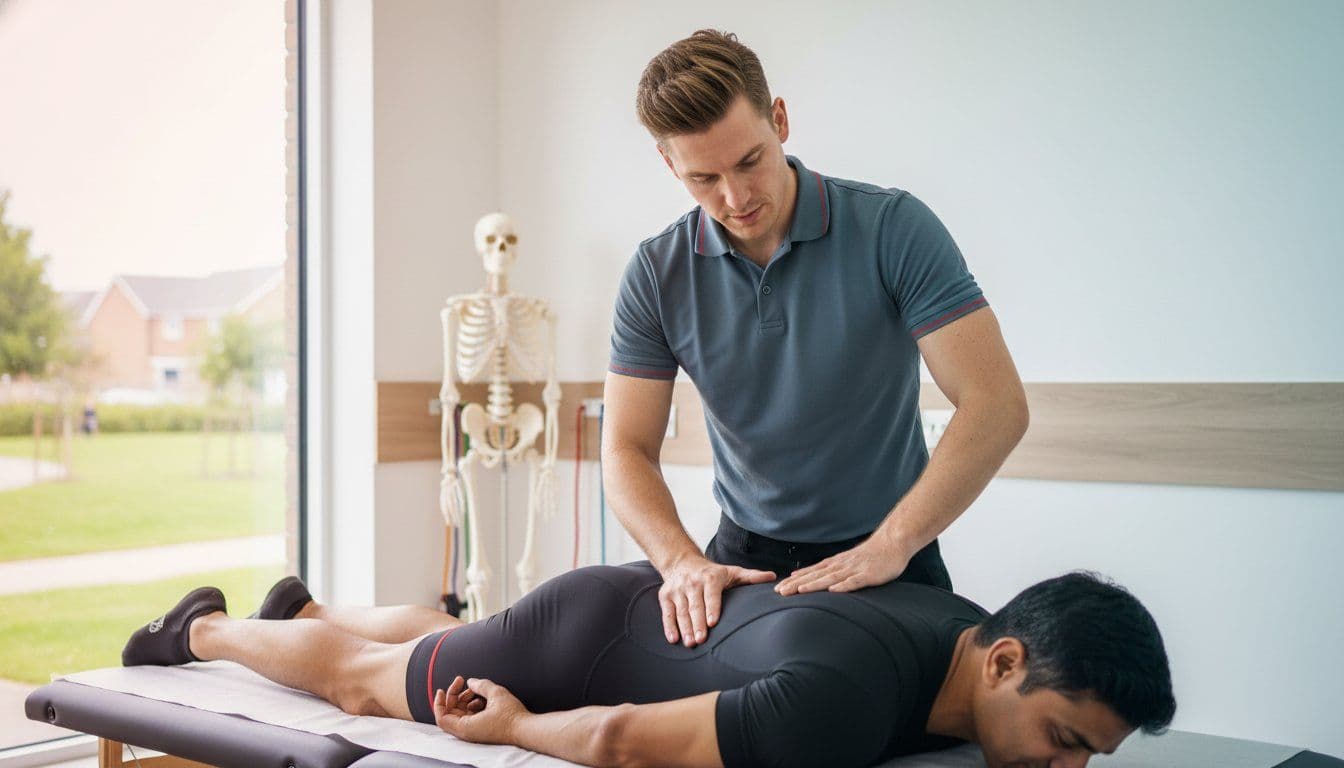
We don't believe in the "here's a sheet of exercises, see you in six weeks" approach. At RED Physiotherapy, we prioritise hands-on treatment from your very first session. By using manual therapy and soft tissue release, we can identify exactly where your movement is snagging. Whether it's a stiff ankle joint affecting your pedal stroke or a pelvis that isn't sitting quite right, we find the root cause with our hands. You can explore our services to see how we combine this manual expertise with clinical knowledge to get you back to peak performance.
The RED Method: Three Pillars of Cyclist Injury Prevention
We don't just throw a list of generic stretches at you and hope for the best. That's not how we work. To achieve lasting cyclist injury prevention Milton Keynes riders need a structured approach that addresses the physical reality of their bodies. We call this the RED Method. It's built on three specific pillars: resetting the tissue, building stability, and managing the load. When these three elements work together, you're not just avoiding pain. You're becoming a more efficient, powerful athlete.
This framework is designed to create a sustainable riding career, whether you're a weekend warrior or a competitive club rider. Most injuries occur because one of these pillars has collapsed. Perhaps you've built the strength but ignored the recovery, or maybe you've increased your mileage too quickly for your joints to keep up. By balancing all three, we ensure your body engine is as well maintained as your bike.
Pillar One: The Power of Sports Massage
For high mileage riders, sports massage is a necessity, not a luxury. Think of it as a deep clean for your muscular system. Over time, the repetitive motion of pedalling can cause "adhesions" in the IT band and quads. These tight spots pull on your kneecap and hips, ruining your efficiency. Hands-on manual therapy allows us to break down these restrictions and reset your muscle tone. Regular maintenance prevents those small, annoying niggles from becoming season-ending injuries that keep you off the road for months.
Pillar Two: Strength for Stability
Many cyclists avoid the gym because they fear "bulking up" and becoming heavy on the climbs. Under proper physio guidance, this simply doesn't happen. In fact, "core strength" for cyclists is actually about pelvic stability. If your pelvis is rocking in the saddle, you're leaking power and putting immense strain on your lower back. We focus on targeted strengthening exercises that keep your foundation rock solid. This allows your legs to pump like pistons without your torso collapsing, making you faster and much less likely to develop chronic back pain.
Pillar Three: Load Management
The final piece of the puzzle is load management. This is about ensuring you don't do too much, too soon. Whether you're returning from a break or aiming for a personal best on a local segment, your connective tissues need time to adapt to the stress. We help you understand the "sweet spot" of training volume. This proactive approach to cyclist injury prevention Milton Keynes ensures that your progress is steady and your recovery is prioritized, keeping you in the saddle for the long haul.
Practical Injury Prevention Tips for Milton Keynes Cyclists
Cycling in Milton Keynes is a unique experience. One minute you are cruising along a scenic stretch of the 200 mile Redway network, and the next you are navigating the stop-start rhythm of our famous roundabouts. This constant shifting and braking puts a specific kind of stress on your body that you won't find on long, flat continental roads. Mastering cyclist injury prevention Milton Keynes style means adapting your habits to match this environment. It is about being proactive before the first ache even starts.
A solid warm up does not need to take half the morning. Five minutes of dynamic movement, such as leg swings and torso twists, is enough to prime your nervous system and get blood flowing to your hard working muscles. When you hit the steeper inclines out towards Bow Brickhill, remember the "Gear Choice" rule. Avoid "mashing" big gears at a low cadence. Instead, shift down and keep your legs spinning at 80 to 90 RPM. This simple change reduces the sheer force on your kneecaps and saves your joints from unnecessary wear and tear.
Recovery is just as vital as the ride itself, but you do not need a shed full of expensive gadgets to do it right. Simple post-ride strategies like targeted stretching and using a foam roller on your "hotspots" can prevent muscle adhesions from setting in. If you are struggling with a persistent niggle that won't go away with rest, it might be time to book an assessment with us so we can find the root cause before it stops you riding altogether.
On-the-Bike Habits
Your posture should be a moving target. Every 20 minutes, perform a quick "body scan" and ensure your elbows are soft. Locking your arms sends every vibration from the road straight into your neck and shoulders. If you are heading out on a long loop to Olney, vary your hand position on the bars frequently. This small movement prevents prolonged pressure on the ulnar nerve, which is the main culprit behind that annoying hand numbness many riders experience.
Off-the-Bike Maintenance
What you do when the bike is in the shed matters just as much as the miles you put in. Proper hydration and nutrition are the building blocks of tissue repair. Without them, your recovery will always be sluggish. Spend ten minutes on a foam roller focusing on your quads and glutes to keep the fascia mobile. As a general rule, use ice for new, sharp pains to calm inflammation, and use heat for older, stiff muscles that need a bit of help loosening up before your next outing.
Fixing the Problem: When to See a Milton Keynes Physio
We all like to think we can "ride through" a bit of discomfort. It is almost a badge of honour in the local cycling community. However, there is a fine line between a bit of muscle soreness and a genuine injury. At the clinic, we suggest using the "Three Ride" Rule. If a specific ache or niggle persists for three consecutive rides, it is no longer just a case of being a bit stiff. It is your body telling you that something is fundamentally wrong with how you are moving. Ignoring these signals is a gamble that rarely pays off.
Waiting for an appointment elsewhere often means weeks of frustration while your fitness levels drop. Even worse, your body will naturally try to protect the painful area by shifting the load to other joints. This is how a simple knee issue can quickly turn into a hip or lower back problem. By the time you get seen, you are dealing with a complex web of compensatory injuries. Our approach to cyclist injury prevention Milton Keynes is about breaking that cycle early. We want to see you while the problem is still manageable, not when you have been forced off the bike entirely.
When you walk through our doors, you won't just get a sheet of generic exercises and a "see you in six weeks" wave. We provide hands-on treatment from your very first session. We use our hands to find the tension, reset the joints, and get your body back into a neutral state. Our commitment is to keep you as active as possible during your recovery. We don't believe in total rest unless it is absolutely necessary. Instead, we find the "safe zone" that allows you to keep turning the pedals while we fix the underlying issue.
Warning Signs You Should Not Ignore
Some symptoms are clear indicators that your body needs professional attention. If you experience any of the following, it is time to stop guessing and start fixing:
- Persistent Pain: Any discomfort that lasts for hours or days after you have finished your ride.
- Night Pain: Aches that wake you up or prevent you from getting comfortable in bed.
- Morning Stiffness: Feeling like a rusty hinge for the first hour after you wake up.
- Neurological Signs: Any sensation of "pins and needles," numbness, or sudden weakness in your limbs.
Your Road Map to Recovery
Every rider is different, which is why every plan we create is bespoke. We look at your specific cycling goals, whether that is surviving the commute or smashing a local time trial. We move you through a logical progression from immediate pain relief to long term performance enhancement. Once we have cleared the initial injury, we focus on making you more resilient than you were before. If you are ready to stop the frustration and get back to pain-free miles, contact us today for a full hands-on assessment.
Get Back to the Redways with Confidence
Your time on the bike should be about the thrill of the open road and the beauty of the local scenery, not a countdown until your knee or back starts to ache. We have explored how a perfect bike setup is only as good as the body riding it. By focusing on functional mobility and the three pillars of the RED Method, you can transform your cycling experience from one of nagging frustration to one of peak performance. Proactive cyclist injury prevention Milton Keynes isn't just about avoiding the clinic; it's about building a body that can handle every mile of the Redway network without complaint.
At RED Physiotherapy, we pride ourselves on being a family run clinic that provides hands-on treatment from day one. Our team of high performance mentors is here to ensure you get real results without the long waits or generic exercise sheets. We don't just want to fix your pain; we want to help you reach your full physical potential so you can stay in the saddle for years to come. Stop guessing whether it is your bike or your body causing the issue and let us give you a clear plan of action.
Book Your Hands-On Cycling Assessment in Milton Keynes Today and let's get you moving properly again. We look forward to seeing you back at your best and ready for your next big ride.
Frequently Asked Questions
How often should a cyclist get a sports massage for injury prevention?
Get a sports massage once every four to six weeks if you are a regular rider. If you are training for a big event or clocking up high mileage on the Redways, you might benefit from a session every fortnight to manage muscle tension. Regular maintenance helps catch small adhesions before they turn into a full blown injury. It is about keeping your tissues supple so you can stay in the saddle for longer distances.
Can a bad bike fit cause permanent joint damage?
Prolonged riding with a poor setup can lead to chronic joint issues rather than instant permanent damage. Over time, incorrect alignment causes uneven wear on your cartilage and repetitive strain on your tendons. While your body is resilient, pushing through sharp pain for months can lead to long term changes in joint health. Correcting your position and your body's mechanics early is the smartest way to ensure your joints last a lifetime.
What is the most common cycling injury seen in Milton Keynes clinics?
Patellofemoral pain, or "cyclist’s knee," is the most frequent complaint we treat in our local clinics. This often stems from the repetitive nature of pedalling combined with the stop-start rhythm of the Milton Keynes grid system. It is a classic example of why cyclist injury prevention Milton Keynes is so important. We often find the root cause isn't the knee itself, but rather weak glutes or stiff ankles that force the knee to work harder.
Is it normal for my hands to go numb during a long ride?
Numbness is a common complaint, but it certainly isn't something you should accept as normal. It usually indicates that a nerve is being compressed, often the ulnar nerve in your palm. This can be caused by putting too much weight on your hands or having your wrists at a funky angle. Simple changes to your hand position and checking your core strength can usually take the pressure off and stop the tingling for good.
Do I need to stop cycling if I have knee pain?
You rarely need to hang up the bike entirely just because of a bit of knee pain. Total rest is often counterproductive because it doesn't fix the underlying movement problem. We prefer to modify your riding volume or intensity while we work on the cause. By using hands-on treatment to clear tissue restrictions and strengthening the supporting muscles, we can usually keep you turning the pedals while you recover.
How can I tell if my back pain is from cycling or my office chair?
Pay attention to when the pain actually starts to find the culprit. If your back feels stiff after an hour at your desk, it is likely postural stress from sitting. If the ache only appears twenty miles into a ride or when you are climbing, it is probably a cycling specific issue. Often, it is a bit of both. Your office chair sets the scene, and your bike position acts as the trigger for the discomfort.
What exercises are best for preventing cyclist lower back pain?
Focus on exercises that build pelvic stability and strengthen your posterior chain. Glute bridges, bird-dogs, and planks are fantastic for ensuring your lower back isn't doing all the heavy lifting while you pedal. These movements help you maintain a solid foundation in the saddle, preventing the "rocking" motion that often leads to lumbar strain. Building this off-bike strength is a vital part of staying pain-free during your weekend miles.
Tags:
About the Author
Red Physiotherapy Team
Content Team
Health and wellness content from the RED Physiotherapy team.