
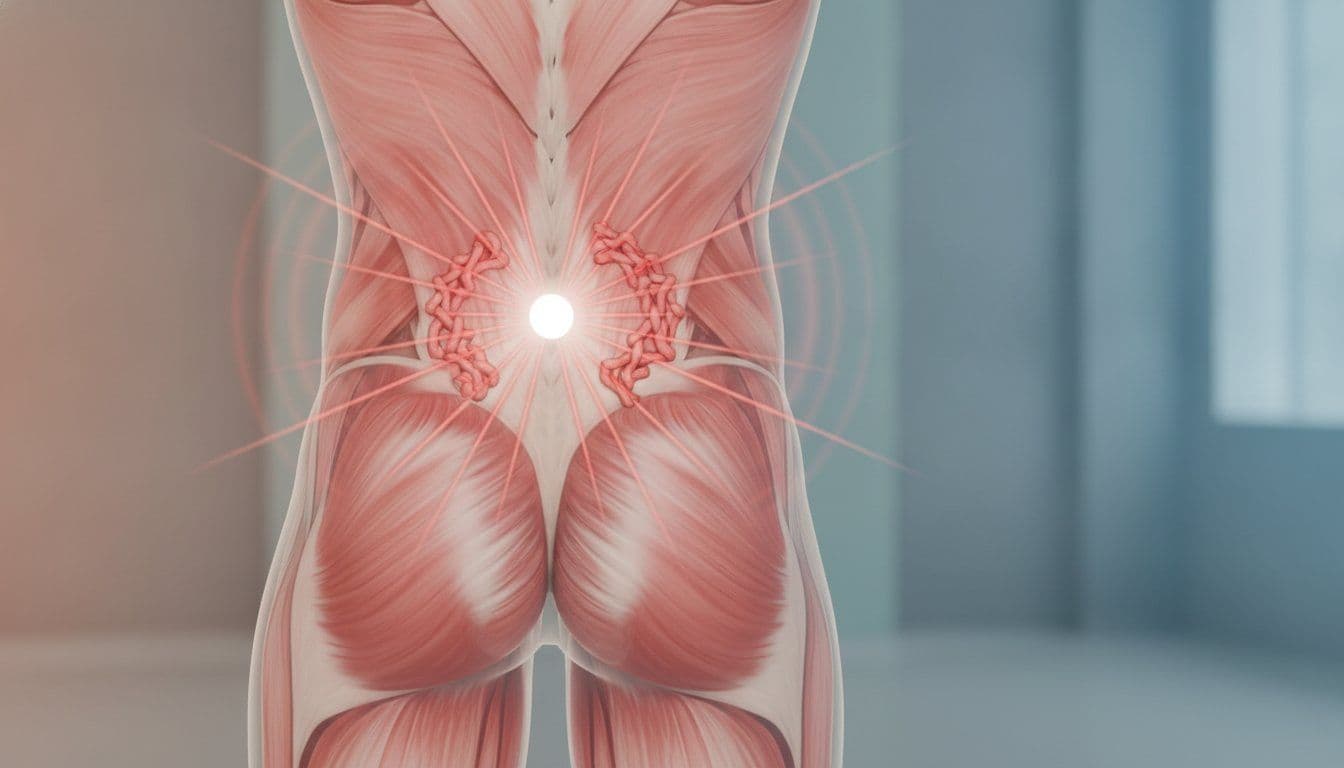
Dry Needling for Back Pain: The "Reset Button" Your Muscles Are Craving
Tired of that nagging ache? Discover how dry needling for back pain acts as a 'reset button' for stubborn muscles, offering fast relief when exercises fail.
If you are currently staring at a generic sheet of exercises while your lower back feels like it is clamped in a vice, you have been let down. We know the feeling. You want to sit at your desk without that nagging ache and get back to the gym without feeling like a rusty gate. It is incredibly frustrating to be stuck on a months-long NHS waiting list only to be told to "just keep moving" when your muscles simply won't cooperate. This is where dry needling for back pain acts as the clinical "reset button" your body is craving.
At our family-run clinics in Milton Keynes, Northampton, and Towcester, we do not believe in passive care or endless exercise handouts. You deserve a hands-on approach that actually addresses the root of the tension. In this guide, you will discover how dry needling provides fast-acting relief for stubborn discomfort and why combining it with a professional recovery plan is the secret to lasting mobility. We will break down exactly how this technique works to release those stubborn trigger points and get you back to the activities you love.
Key Takeaways
- Learn why dry needling for back pain acts as a clinical "reset button" for stubborn muscle spasms that standard stretching simply cannot reach.
- Understand the clear distinction between dry needling and traditional acupuncture, focusing on how we target specific physical trigger points to release deep tension.
- Discover why our hands-on, family-run approach is the antidote to generic exercise sheets, providing you with real-world results from day one.
- Get a clear picture of what to expect during your session, including a thorough assessment to ensure you are back to your best as quickly as possible.
What is Dry Needling for Back Pain and How Does it Work?
Dry needling is a modern, evidence-based treatment used by specialised physiotherapists to target muscle pain. To understand what is dry needling in a clinical context, you have to see it as a precision tool for your recovery. It involves inserting a sterile, fine filament needle directly into "trigger points" or tight bands of muscle in your back. Using dry needling for back pain allows us to trigger a "local twitch response" to reset the muscle and improve blood flow. It acts as a clinical tool for neuromuscular resetting rather than traditional energy work or "Qi" flow.
Understanding Myofascial Trigger Points in Your Back
When we talk about a "knot" in your back, we are usually referring to a myofascial trigger point. These are hyper-irritable spots in a taut band of muscle that feel like a hard pea under the skin. They don't just sit there quietly. They often cause referred pain, meaning a knot in your lower back might be the reason you feel a dull ache in your hip or leg. Because these points are physically stuck in a contracted state, they often resist standard stretching or light massage. Stretching a muscle with a trigger point is often like pulling both ends of a knotted piece of string. It just makes the knot tighter. We need a more direct approach to get things moving again.
The "Reset Button" Effect: Why Your Back Responds So Fast
The magic happens when the needle meets the trigger point. This contact creates a "Local Twitch Response" (LTR), which is a brief, involuntary contraction of the muscle fibres. This twitch is the sign that the muscle is "resetting." Physiologically, this process encourages oxygenation and vital chemical changes in the tissue, flushing out acidic waste products that build up in tight muscles. It's a bit like rebooting a computer that has frozen. Once the "reset" happens, the muscle can finally relax and return to its normal length.
One of the biggest advantages of dry needling for back pain is its ability to reach deep muscle fibres that even the most skilled hands cannot always access. For those suffering from deep-seated lower back or mid-back tension, the needle bypasses the skin and superficial fat to hit the target directly. It's a precise, efficient way to restore movement and blood flow. This provides a perfect foundation for the hands-on rehabilitation we provide at RED Physiotherapy, ensuring your recovery is as fast as possible.
The Science of the Twitch: Why Dry Needling Targets Back Tension Better Than Stretching
If you've ever spent twenty minutes on a foam roller only to feel just as stiff ten minutes later, you've experienced the limits of surface-level treatment. Stretching often only hits the superficial layers of tissue, but dry needling for back pain goes straight to the source of the spasm. When your back "goes," your brain sends a signal to the muscles to tighten up and protect the area. This creates a "pain-spasm-pain" cycle that keeps you feeling like you're made of concrete. The needle interrupts this neurological loop, forcing the muscle to relax in a way that passive movement cannot match.
The "Local Twitch Response" (LTR) is the definitive sign that the treatment is working. It’s an involuntary contraction of the muscle fibres that feels like a quick, deep pulse. This isn't just a physical sensation; it is a biochemical event. A 2025 meta-analysis of 13 trials with 590 participants concluded that dry needling significantly reduces pain intensity and improves functional disability. By triggering this response, we can clear out the acidic waste products that keep your muscles in a state of constant guard. This evidence-based approach is exactly why we prioritise it for our patients in Milton Keynes and Northampton who need fast, reliable results.
Neurological vs. Mechanical Benefits
Dry needling offers a two-pronged attack on your pain. Mechanically, the needle physically disrupts the tight bands of muscle that have become "stuck." On a neurological level, the stimulus encourages the brain to release natural pain-relieving chemicals like endorphins. This combination is why many people experience an improved range of motion almost immediately after a session. Seeing how dry needling targets trigger points clarifies why it is such a powerful tool for restoring fluid movement.
When Stretching Isn’t Enough
A common mistake is trying to "stretch through" the pain. However, if your stiffness is linked to a trapped nerve in the neck or lower back, aggressive stretching can actually increase nerve irritation. Dry needling allows us to reduce muscle guarding without tugging on sensitive nerves. It creates a vital window of opportunity for effective rehabilitation. If you're ready to stop the guesswork, you can speak with our expert team to find the right path forward.
Dry Needling vs. Acupuncture: Clearing Up the Confusion
It is a common misconception that dry needling is just "modern acupuncture." If you are searching for dry needling for back pain, it is helpful to understand that while the tools are similar, the "why" behind the treatment is completely different. Acupuncture is a holistic practice rooted in Traditional Chinese Medicine, focusing on restoring equilibrium through energy channels known as meridians. It is often used to treat systemic issues such as sleep quality or fertility. As physiotherapists, we operate in the world of Western anatomy and neurophysiology. We aren't chasing energy. We are chasing the physical knots and dysfunctional muscle fibres that are making your life miserable.
We choose dry needling specifically for sports injuries and desk-based postural back pain because it deals with the reality of your daily life. When you spend hours hunched over a laptop, your back muscles aren't suffering from a "Qi" blockage. They are suffering from prolonged mechanical strain and a lack of blood flow. By targeting the specific muscles that have become overloaded, we can provide a level of relief that feels grounded in science rather than tradition. It is about fixing the mechanical failure of the tissue so you can sit, stand, and move without that constant, nagging ache.
The Clinical Difference: Anatomy vs. Meridians
The primary difference lies in the map we use. A traditional acupuncturist follows a map of points that has existed for thousands of years to balance the body's systems. A physiotherapist uses a map of your individual anatomy, looking for specific musculoskeletal conditions. This is why dry needling is the preferred "hands-on" tool for back pain in our family-run clinics. We use it to treat the muscle itself, rather than the whole body system. It is a targeted, results-driven approach designed to get you out of the treatment room and back to your normal routine as quickly as possible.
Which One Is Right for Your Back Pain?
Deciding on the right treatment starts with identifying if your pain is structural, muscular, or systemic. If your discomfort is caused by a specific physical issue, like sacroiliac joint pain, dry needling is often the superior choice. Our Northampton physios focus on the structural and functional side of recovery, ensuring that every needle has a clear anatomical purpose. We want to see how your body moves and where it is restricted. By choosing a treatment that aligns with Western medical principles, you can feel confident that you are receiving a plan based on hard evidence and real-world results.

What to Expect During Your Dry Needling Session at RED Physiotherapy
Walking into our clinics in Milton Keynes, Northampton, or Towcester, you will immediately notice we aren't your typical cold, clinical environment. We are a family-run team, and we treat you like a person, not a number on a spreadsheet. When you come to us for dry needling for back pain, we follow a clear, professional process to ensure you get the results you're after without any unnecessary fluff.
- Step 1: The Assessment. We start by listening to your story. We don't just hand you a sheet of exercises; we perform a thorough physical check to ensure dry needling is the right tool for your specific recovery.
- Step 2: Mapping the Tension. Your physiotherapist will palpate the area to identify the exact trigger points causing your back ache. This is where our hands-on expertise really shines.
- Step 3: The Insertion. We use incredibly fine, sterile needles. Most people feel a tiny "prick" or a dull ache as the needle enters the muscle, but it is rarely described as sharp pain.
- Step 4: The Twitch. This is the "reset" we mentioned earlier. You will feel a strange but satisfying sensation as the muscle releases. It is the physical sign that the tension is melting away.
- Step 5: The Follow-Up. We don't just needle you and send you on your way. We provide manual therapy and a clear plan to keep that muscle moving properly.
If you are tired of waiting for answers and want to see how this process can work for you, book an assessment with our expert team today.
Does it Hurt? (The Honest Truth)
We believe in being straight with you. Dry needling for back pain isn't a spa massage; it is a clinical treatment. You might feel a heavy, dull ache or a sensation similar to a small cramp during the twitch response. However, most of our patients find this "good pain" because they can feel the deep-seated tension finally letting go. We keep you comfortable and relaxed throughout the session, explaining every step so you always feel in control of your progress.
Practical Tips for Post-Treatment Care
After your session, your body needs a bit of help to process the "reset." Hydration is your best friend here. Drinking plenty of water helps flush out the metabolic waste released from the trigger points. You should also keep moving gently. A short walk is much better than heading straight back to a desk chair. If you feel a bit of "needle soreness" the next day, don't panic. It is perfectly normal and usually feels like the muscle has had a good workout. Actionable tip: Use a heat pack, not ice, on the treated area. Heat keeps the blood flowing and helps the muscle stay relaxed and mobile.
Why Our Hands-On Approach Beats "Exercises Only" for Back Pain
If you have ever been handed a photocopied sheet of exercises and sent on your way, you know exactly how hollow that feels. It is one of the most common complaints we hear from people frustrated by the current healthcare landscape. At RED Physiotherapy, we don't believe in "exercise-only" protocols that ignore the physical reality of your pain. While dry needling for back pain is a fantastic tool to reset the nervous system, it is most effective when integrated into a broader, hands-on plan. We get stuck in from day one, often combining needling with sports massage to flush out tissue and restore movement. This multimodal approach is why a 2025 meta-analysis found that dry needling combined with physical therapy produced better outcomes than needling alone.
With back pain costing the NHS roughly £3.2 billion per year in primary care, it is no wonder wait times are frustratingly long. Patients in Milton Keynes and Towcester choose us because they want to skip the queue and get back to their lives. We are a family-run business, which means we care about your progress as much as you do. We don't drag out treatment for the sake of it. Our focus is on long-term autonomy, giving you the tools to stay healthy rather than creating a dependency on endless sessions. We want you to reach your full physical potential, not just settle for the absence of discomfort.
When to Seek Help: Red Flags and Back Pain
While most back pain is musculoskeletal and responds well to therapy, it is vital to know when your body is signalling something more serious. These "red flags" require urgent clinical attention. If you experience sudden leg weakness, numbness in the "saddle" area, or any loss of bladder or bowel control, seek medical help immediately. For everything else, early intervention is the best way to prevent a minor "niggle" from turning into a chronic, life-altering problem. Approximately 31 million workdays are lost in the UK each year due to musculoskeletal issues. Taking action now keeps you in the game.
Book Your Recovery in Milton Keynes, Northampton, or Towcester
Finding a physiotherapist near me who actually listens shouldn't be a chore. As a family-run practice, we pride ourselves on being approachable, grounded, and intensely focused on results. We cut through the medical jargon and focus on what matters: getting you back to the gym, the garden, or simply through a full day at the office without that nagging ache. You can find our clinics in Milton Keynes, Northampton, and Towcester, where we specialise in dry needling for back pain and hands-on rehabilitation. We are ready to help you hit that reset button and start your recovery today. Don't let back pain dictate your schedule any longer.
Focus Keywords
- dry needling for back pain
Hit the Reset Button on Your Recovery
Living with a back that feels like it’s permanently clamped in a vice is exhausting. You’ve learned that dry needling for back pain is a powerful, science-backed tool for releasing those stubborn trigger points that stretching just can’t reach. It isn't about energy flow; it’s about physical results and getting your muscles moving exactly as they should. At RED Physiotherapy, we believe you deserve better than a generic exercise sheet and a long wait. As a family-run clinic with expert clinical directors, we provide hands-on treatment from your very first session to ensure your recovery is efficient and long-lasting.
The best part? You don't have to wait months for an appointment. We don't do long waiting lists, so you can often get seen this week at our clinics in Milton Keynes, Northampton, or Towcester. It’s time to stop managing the pain and start fixing the problem. Book your hands-on back pain assessment today and take the first step toward getting back to the activities you love. We’re here to help you reach your full physical potential, one session at a time.
Frequently Asked Questions
Is dry needling for back pain safe?
Yes, dry needling for back pain is extremely safe when carried out by a qualified professional. At our clinics, we use single-use, sterile needles and follow strict clinical standards. Research indicates that the vast majority of side effects are minor and temporary, such as slight bruising or soreness. It is a highly controlled procedure designed to reset your muscles without the risks associated with more invasive surgical options.
How many sessions of dry needling will I need for my back?
Every back is different, but most patients notice a significant change within three to five sessions. We don't believe in dragging out treatment for months on end. Our goal is to hit that "reset button" efficiently and move you onto the strengthening phase. Your physiotherapist will provide a clear, professional recovery plan during your first assessment in Milton Keynes or Northampton so you know exactly what to expect.
Can I go to the gym after a dry needling session?
We usually recommend taking it easy for the rest of the day. While gentle movement like a light walk is brilliant for keeping the blood flowing, you should avoid heavy lifting or high-intensity gym sessions for about 24 hours. Your muscles need a little time to process the "reset" and settle down. Think of it as a recovery day that paves the way for much better performance in your next workout.
Will dry needling help with my sciatica or trapped nerve?
It can be incredibly effective for managing the symptoms of sciatica. While the needle doesn't treat the nerve itself, it releases the intense muscle guarding and tension that often clamps down around an irritated nerve. By relaxing these "protective" spasms in your lower back or glutes, we can significantly reduce the pressure and radiating pain. This creates a much-needed window for us to work on the underlying structural cause.
Is dry needling better than a sports massage for back pain?
Neither is strictly "better," as they do different jobs. A sports massage is fantastic for broad tissue work and circulation, whereas dry needling for back pain is a precision tool for reaching deep-seated trigger points that hands simply cannot touch. In our Towcester and Milton Keynes clinics, we often combine both. We use the needle to reset the deep spasm and massage to flush the area, giving you the best of both worlds.
Do I need a GP referral to get dry needling at your Northampton clinic?
No, you don't need a GP referral to see us. You can book straight in at our Northampton clinic and get started this week. This is one of the biggest perks of choosing a private, family-run practice. You get to skip the frustratingly long NHS waiting lists and move straight into a hands-on treatment plan. We handle the full assessment ourselves to ensure dry needling is the right tool for your specific recovery.
What are the side effects of dry needling for back pain?
The most common side effect is a bit of "muscle soreness" that feels similar to the day after a tough gym session. You might also notice some minor bruising at the needle site or feel a little tired immediately after the treatment. These effects are temporary and usually clear up within 24 to 48 hours. Most patients find these small trade-offs are well worth the rapid reduction in back muscle tension and improved mobility.

Tags:
About the Author
Red Physiotherapy Team
Content Team
Health and wellness content from the RED Physiotherapy team.