
Physiotherapy for Neck Pain in Milton Keynes: Get Back to Your Best Without the Fluff
Tired of that stiff neck? Get hands-on physiotherapy for neck pain in Milton Keynes. We offer real relief, not just exercises. Get back to your best, fast.
What if that nagging ache in your neck isn't just an annoying side effect of your commute, but a clear sign that your body is ready for more than just a generic list of stretches? You're likely tired of waking up with a neck so stiff it feels like it's made of solid concrete. It's frustrating to spend your workday in one of Milton Keynes’ busy office hubs while constantly rubbing your shoulders, especially when you need effective physiotherapy for neck pain milton keynes to get back to your best. We know you want to return to the gym or your favourite sport without feeling like your movement is restricted by a dodgy neck.
I understand the frustration of "exercise-only" clinics where you never actually receive any manual treatment. That's why we do things differently. You can discover a faster route to recovery that focuses on immediate relief and long-term strength without the fluff of endless NHS waiting lists. In this article, I'll explain how our family-run practice uses hands-on techniques to resolve your discomfort. We'll look at why your pain persists, how to fix it efficiently, and the clear, personalised plan you need to stay moving freely for the long haul.
Key Takeaways
- Understand why your office environment is a major factor in your discomfort and how to spot the "MK Desk Slouch" before it becomes a chronic issue.
- Discover why hands-on physiotherapy for neck pain milton keynes is essential for immediate relief, especially if you've been frustrated by "exercise-only" advice in the past.
- Learn the difference between simple mechanical pain and more complex issues, ensuring you know exactly when it's time to seek professional help.
- Gain practical, "no fluff" tips for staying active at your desk, including why your next posture is always your best posture.
- Explore how a personalised, family-run approach can help you skip the queues and return to your favourite sports or gym routine much faster.
Understanding Neck Pain in Milton Keynes: Why You Are Hurting
Neck pain is easily one of the most frequent complaints we see at our Milton Keynes clinic. It isn't just "one of those things" that comes with age. Usually, it's a direct result of how we live and work in a modern city. Whether you're an office worker in the Hub or a commuter heading into London, your neck takes the brunt of your daily routine. Understanding the causes of neck pain is the first step toward moving freely again.
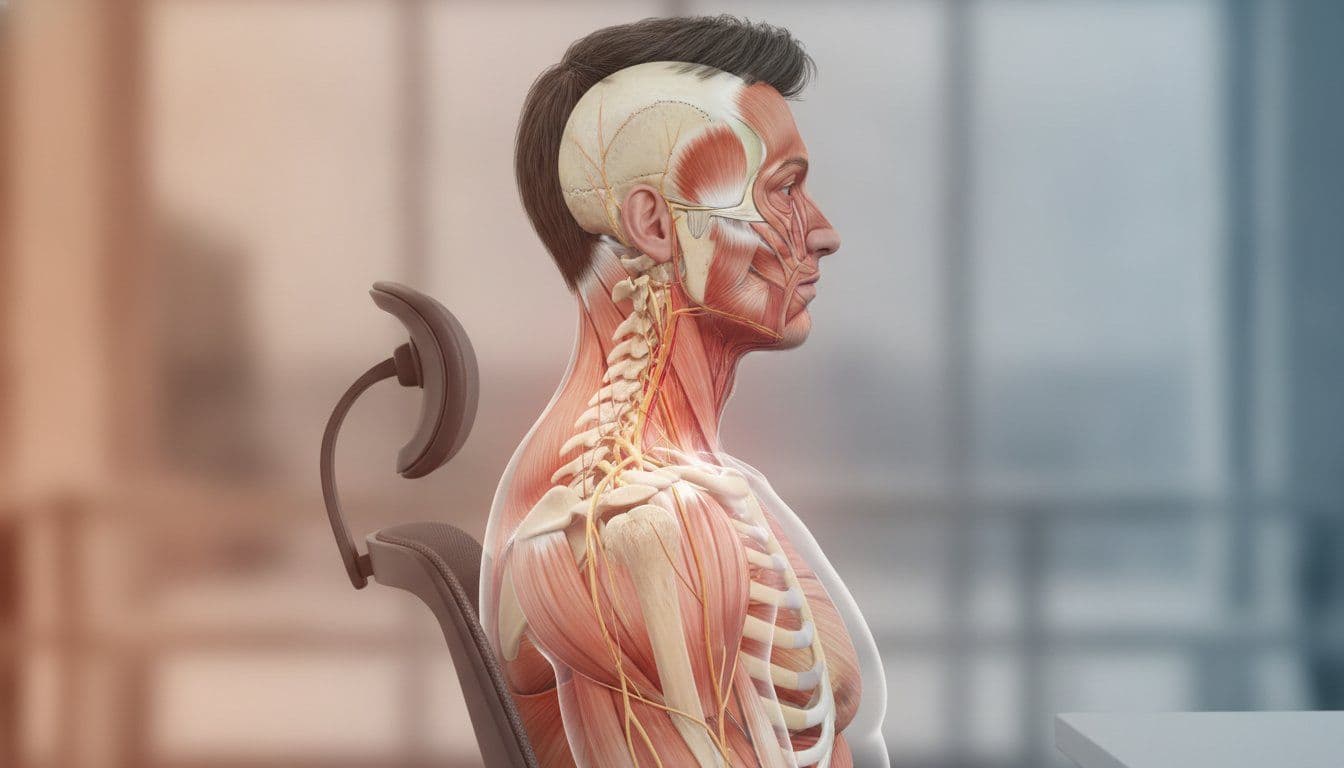
The "MK Desk Slouch" is a term we use often. When you're locked into a screen for eight hours, your head naturally drifts forward. This puts an incredible amount of pressure on your cervical spine. Your neck muscles weren't designed to hold a bowling ball sized head at that angle for hours on end. This constant tension leads to the stiffness and discomfort that brings people through our doors seeking physiotherapy for neck pain milton keynes.
Your commute doesn't help either. Sitting in stop-start traffic on the M1 or bracing yourself on a fast train to Euston forces your neck to stay in a static, often tense position. Over time, these micro-stresses add up. While a simple muscle strain might resolve with rest, many of our patients are dealing with mechanical issues where the joints simply aren't moving as they should. We often use tools like musculoskeletal ultrasound, which you can find more about on our conditions page, to get a clear picture of what's happening under the skin. This ensures we aren't just guessing about your recovery.
Common Symptoms We See in the Clinic
Everyone experiences pain differently, but there are a few patterns we see daily. If you recognise these, you aren't alone:
- Sharp pain: That sudden jab when you turn your head to check your blind spot at a roundabout.
- Dull aches: A heavy, nagging sensation that spreads from the base of your skull into your shoulders or upper back.
- Neurological signs: Tingling or "pins and needles" that travel down your arm, which often indicates nerve irritation rather than just a tight muscle.
The "Cricked Neck" Phenomenon
We've all been there. You go to bed feeling fine and wake up unable to look to the left. This "cricked neck" often happens because of muscle guarding. If you've been sleeping in a draft or your pillow doesn't provide enough support, your muscles can go into a protective spasm. It's your body's way of trying to keep you safe, even if it feels like a total betrayal. We look at everything from your sleeping position to your joint mobility to stop this from becoming a recurring nightmare.
Beyond the Stiff Neck: What is Actually Going On?
Your neck is a sophisticated piece of engineering. It's a complex bridge of seven vertebrae, shock-absorbing discs, and a high-speed network of nerves that keep everything functioning. While most people focus on the muscles, the root cause of your discomfort is often mechanical. This means the joints aren't moving as they should, leading to that "stuck" feeling. While NHS advice on managing neck pain suggests staying active, we find that a bit of hands-on help is usually needed to get those joints gliding properly again.
Postural stress is another big player. Your muscles are incredibly resilient, but they do get tired. If you're constantly leaning into your screen, your upper trapezius and levator scapulae muscles are working overtime to stop your head from falling forward. Eventually, they fatigue and start sending pain signals. This is why physiotherapy for neck pain milton keynes needs to look at your endurance and habits, not just your symptoms. It's about building a body that can handle your lifestyle without complaining.
There's also the common myth of the "trapped nerve." People often use this term to describe any sharp pain, but a truly trapped nerve is actually quite rare. Most of the time, we're dealing with nerve irritation. This is where a nerve is being slightly compressed or chemical inflammation is making it extra sensitive. It's a subtle difference, but it changes how we approach your treatment to get you back to your best as quickly as possible.
Disc Issues and Nerve Irritation
Cervical radiculopathy is a term that sounds far more intimidating than it usually is. It simply refers to a nerve in your neck being irritated, often by a bulging disc or local inflammation. This irritation often presents as a deep ache around your shoulder blade or a shooting sensation down the arm rather than pain in the neck itself. If you're worried about these symptoms, you can read our detailed guide on a trapped nerve in neck to understand the specifics. If things aren't improving, checking our specialist services might help you find a faster way to get relief.
The Tension Headache Connection
Do you ever feel like your head is in a vice? That's often a tension-type headache triggered by the suboccipital muscles at the base of your skull. When these muscles tighten up due to neck stiffness, they refer pain over the top of your head or behind your eyes. Patients often describe a sense of "brain fog" that magically clears once we restore normal movement to the upper neck. It's all connected, and addressing the neck stiffness is usually the key to stopping those nagging daily headaches.
Hands-On Physio vs. The "Exercise Sheet" Culture
There is a growing trend in modern healthcare that often leaves patients feeling like a number on a conveyor belt. You might have experienced it before: you wait weeks for an appointment, only to be given a generic photocopied sheet of stretches and sent on your way without anyone actually laying a hand on you. At our family-run clinic, we believe that is a missed opportunity. Effective physiotherapy for neck pain milton keynes should involve hands-on care from the very first session. If your joints are stiff and your muscles are in spasm, asking you to perform exercises without first addressing those physical blocks is like trying to drive a car with the handbrake on.
Our "no fluff" policy means we focus on what works. We use manual therapy to "unlock" the door, reducing your pain and restoring range of motion so that your exercises actually become effective. This balanced approach is highlighted in professional guides for physical therapy for neck pain, which emphasise the importance of individualised, clinician-led care. We aren't interested in keeping you coming back for months on end. We want to fix the problem, give you the tools to stay pain-free, and get you back to your life as quickly as possible.
Our Hands-On Techniques
We use a variety of manual methods to get you moving again. Joint mobilisations involve gentle, rhythmic movements applied to the vertebrae to improve glide and reduce stiffness. To complement this, we often use deep tissue work to calm angry, overactive muscles. If you're looking for targeted recovery, our sports massage in Milton Keynes is a fantastic way to address the soft tissue tension that often accompanies chronic neck issues. It's about preparing the body for movement, not just rubbing where it hurts.
Advanced Tools for Stubborn Pain
Sometimes, manual therapy needs a little extra help. For those stubborn cases that haven't responded to traditional methods, we offer advanced options like dry needling or shockwave therapy. These are game-changers for chronic tissue changes where the body has stopped its natural healing process. We also use musculoskeletal ultrasound to see exactly what is happening beneath the surface, removing the guesswork from your recovery. You can learn more about how we fast-track healing with Shockwave Therapy Milton Keynes to see if it's the right fit for your specific injury. We believe in using every tool at our disposal to ensure you progress as fast as possible.

Practical Tips for the Milton Keynes Desk Warrior
If you spend your days in one of the Milton Keynes office hubs or working from a home setup in a spare room, you've probably searched for the "perfect posture." I'll let you in on a secret: there isn't one. The human body is designed for variety, not for staying in a single position for hours on end. The best posture is always your next posture. Movement is the real medicine for a stiff neck, and small, frequent changes to your routine can make a massive difference in how you feel by 5:00 PM.
Start with your setup. You don't need a thousand-pound chair to find relief. Ensure your monitor is at eye level so you aren't constantly peering down. If you're on a laptop, use a separate keyboard and prop the screen up on a stack of books. These five-minute adjustments reduce the mechanical load on your cervical spine. To counteract the "desk slouch," try the chin tuck. Simply draw your head straight back, as if you're making a cheeky double chin, and hold for a few seconds. It's a subtle way to reset your deep neck flexors without drawing too much attention from your colleagues.
Stress also has a habit of settling right in your upper shoulders. When you're under pressure to hit a deadline, your shoulders naturally creep up toward your ears. Periodically check in with yourself and consciously drop your shoulders. This simple act of awareness helps break the cycle of muscle guarding that often leads people to seek physiotherapy for neck pain milton keynes. If these self-help steps aren't quite cutting it, you can get in touch with us for a professional assessment to get things moving properly again.
The 20-20-20 Rule for Neck Health
Static loading is the enemy of a healthy neck. To combat this, follow a modified 20-20-20 rule. Every 20 minutes, take 20 seconds to move your neck through its full range of motion. Gently look over each shoulder and tilt your ear toward your shoulder. A great tip is to drink more water. Not only does it keep your discs hydrated, but it also forces you to get up and walk to the kitchen or the loo more often, ensuring you never stay static for too long.
Sleeping for Success
Waking up with a "crick" in your neck is a sign that your sleeping position is working against you. The goal is to keep your spine in a neutral line. For most people, the "one pillow rule" is best. If you sleep on your side, your pillow should be just thick enough to fill the gap between your ear and the mattress. If you're a back sleeper, a thinner pillow prevents your head from being pushed too far forward. Avoid sleeping on your stomach, as this forces your neck into a twisted position for hours, which is a recipe for morning stiffness.
When to Seek Help: Getting Back to Your Best
It's incredibly common to hope that a stiff neck will just sort itself out with enough rest or a few ibuprofen. It's tempting to think your pain is just "part of the furniture" now, but it really doesn't have to be. If you've been in the "wait and see" phase for more than two weeks with no real improvement, your body is sending you a clear signal that the current strategy isn't working. Delaying treatment often leads to compensatory movements, where you start overusing your shoulders or back to make up for your neck's lack of mobility. This only creates more problems down the line. Seeking professional physiotherapy for neck pain milton keynes early on saves you significant time and money by nipping the issue in the bud before it becomes a chronic, stubborn habit.
While most cases we see in the clinic are mechanical and perfectly treatable, there are certain "red flags" that mean you should seek urgent medical attention from a GP or A&E. You should get checked out immediately if your neck pain is accompanied by a fever, unexplained weight loss, or a sudden loss of coordination in your hands. Similarly, if you experience new weakness in your arms or any changes in your bladder or bowel habits, don't wait. These symptoms are rare, but they require a different type of clinical pathway.
If you aren't experiencing those red flags but your pain is stopping you from sleeping, working, or enjoying your training, it's time to take action. As a family-run clinic, we pride ourselves on getting to the root of the problem quickly. We focus on efficient, hands-on results so you can get back to your best without the fluff of endless, unnecessary appointments.
The RED Physiotherapy Recovery Plan
Your journey starts with a comprehensive initial assessment. This is far more than just a quick chat. We perform a series of physical tests to check your joint mobility, nerve health, and muscle strength to see exactly what is holding you back. We want to understand your specific goals, whether that's sitting through a long meeting without a headache or returning to heavy lifting at the gym. You can learn more about RED Physiotherapy and our patient-first philosophy to see why we're the right fit for your recovery.
Your Next Steps to Relief
We believe in total transparency, which is why we don't hide our costs behind "quote-only" walls. You can check our prices online to see how we offer great value for specialist, hands-on care from day one. Our team is ready to help you move from a state of frustration to a concrete plan of action. Don't let a stiff neck dictate your lifestyle for another day. Contact our friendly team in Milton Keynes to book your assessment and start your journey back to full physical potential today.
Take Control of Your Recovery and Move Freely Again
Living with a stiff neck shouldn't be your "new normal" just because you work in a busy Milton Keynes office. We have explored how the right mix of lifestyle adjustments and targeted, manual therapy can break the cycle of discomfort. You now know that generic exercise sheets often fall short. What you really need is a tailored approach that addresses the mechanical roots of your pain.
As a family-run clinic, we are committed to providing hands-on treatment from day one. We don't believe in making you wait on long NHS lists or dragging out your recovery with unnecessary fluff. If you are ready to stop rubbing your shoulders and start moving with confidence again, it's time to act. Choosing the right physiotherapy for neck pain milton keynes is about investing in your long-term health and performance.
Book your hands-on neck assessment in Milton Keynes today and let’s get you back to your best. You deserve to live, work, and train without being held back by pain.
Frequently Asked Questions
How many sessions of physiotherapy will I need for my neck pain?
Most patients see a significant change within four to six sessions, though this varies based on how long you have been struggling. During your initial assessment, we provide a clear recovery plan so you know exactly what to expect from the start. Our "no fluff" approach means we aim to get you moving again as efficiently as possible. We don't drag out treatment; we focus on hands-on results that help you stay pain-free long term.
Is it better to use heat or ice for a stiff neck?
Use ice for a brand-new injury to reduce swelling, but reach for a heat pack for that chronic, nagging stiffness. Heat helps to relax tight muscles and improve blood flow, which is often exactly what a "desk warrior" needs after a long day at the office. If you aren't sure which is best for your specific situation, we can guide you during your session to ensure you are supporting your recovery at home correctly.
Can physiotherapy help with headaches caused by neck tension?
Absolutely, as many headaches are actually "cervicogenic," meaning they start in the neck. When the joints in your upper neck become stiff, they refer pain into your head, often feeling like a tight band behind your eyes. By using hands-on physiotherapy for neck pain milton keynes, we can restore joint glide and calm the suboccipital muscles. This often provides immediate relief from that heavy "brain fog" and the nagging tension that disrupts your workday.
Do I need a GP referral to see a private physio in Milton Keynes?
You don't need a GP referral to see us at our private clinic. You can simply book an appointment and get started with your recovery immediately. This is one of the biggest benefits of private care; it allows you to bypass the lengthy NHS waiting lists that often delay your progress. We will perform a full clinical screening during your first visit to ensure that physiotherapy is the safest and most effective route for your recovery.
What should I wear to my first neck physiotherapy appointment?
Wear something comfortable that allows us to see your neck and shoulders clearly. A loose t-shirt or a vest top is usually the best choice for our patients. Since we provide hands-on treatment from day one, we need easy access to the area to perform joint mobilisations or deep tissue work. You don't need special gym gear, but being able to move freely will help us assess your range of motion accurately during the session.
Is neck clicking or popping during exercises dangerous?
Neck clicking or "popping" is usually just gas bubbles moving in the joint fluid and isn't dangerous on its own. It is a bit like cracking your knuckles. However, if the clicking is accompanied by a sharp pain or a catching sensation, it is definitely worth mentioning to us. We will assess the mechanics of your joints to ensure everything is moving as it should and reassure you that your neck is stable and strong.
Can a trapped nerve in my neck cause pain in my hand?
Yes, an irritated or "trapped" nerve in your neck can definitely cause pain, tingling, or numbness all the way down into your hand. This is because the nerves that control your arm and hand all originate from your cervical spine. If a nerve is being compressed or irritated at the source, the signal can be felt anywhere along its path. We use targeted assessments to find exactly where the nerve is being bothered and provide relief.
Why is my neck pain worse in the morning after sleeping?
Morning stiffness often happens because your neck has been in a static position for hours. If your pillow doesn't support the natural curve of your spine, your muscles have to work overtime to protect the joints while you sleep. This leads to that "cricked" feeling when you wake up. We can look at your sleeping posture and help you find the right support to ensure you wake up feeling refreshed rather than restricted by pain.

Tags:
About the Author
Red Physiotherapy Team
Content Team
Health and wellness content from the RED Physiotherapy team.