
Physiotherapy for Trapped Nerve in Shoulder: Fast Hands-On Relief
Fed up with shooting shoulder pain? Our guide to physiotherapy for trapped nerve in shoulder offers fast, hands-on relief to stop the ache and get you moving...
What if that sharp, electric-shock sensation in your shoulder isn't actually a shoulder problem at all? It is incredibly frustrating to deal with a constant ache or a tingling arm, especially when you are stuck on an NHS waiting list for months just to get a basic assessment. You likely feel like your body is sending out a distress signal that no one is listening to. At RED Physiotherapy, we believe that physiotherapy for trapped nerve in shoulder issues must be proactive. You deserve more than a generic exercise sheet; you need to understand why your arm feels heavy and how to stop the shooting pain before it dictates your entire day.
We promise to help you uncover the root cause of your discomfort, whether the issue starts in your neck or your shoulder, and provide immediate, hands-on relief to get you back to peak performance. This guide explores the common symptoms of a compressed nerve, explains why our manual approach works faster than a "wait and see" strategy, and provides a clear recovery plan to help you avoid surgery. It is time to move from uncertainty toward a concrete plan of action that restores your strength and your freedom to move without fear.
Key Takeaways
- Learn how to distinguish between a simple muscle strain and a trapped nerve by identifying telltale electric shock sensations and buzzing feelings in your arm.
- Understand why the common wait and see approach can lead to long term nerve sensitivity and why early intervention is vital for a full recovery.
- Discover how specialised physiotherapy for trapped nerve in shoulder issues uses hands-on techniques from day one to restore the blocked signals between your brain and muscles.
- Get practical, immediate advice on ergonomic adjustments and pacing strategies to manage your symptoms while working in Milton Keynes or Northampton offices.
- Find out how our family-run clinics provide a clear, efficient path back to peak performance without the frustration of lengthy NHS waiting lists.
What Exactly is a Trapped Nerve in the Shoulder?
A trapped nerve isn't usually "stuck" in the way people imagine. Instead, it's a state of compression or irritation where something, perhaps a tight muscle or a bulging disc, is encroaching on the nerve's space. This pressure creates a physical bottleneck that prevents the nerve from doing its job correctly. While the sensation can be alarming, it's essentially a mechanical issue that requires a mechanical solution.
Think of your nerves as the body's internal wiring. When the signal is clear, your brain and muscles communicate effortlessly. When a nerve is pinched, that signal becomes "blocked" or distorted. You might feel this as a sudden jolt, a dull ache, or a strange sense of heaviness in your arm. Your brain is trying to talk to your shoulder muscles, but the message is getting garbled along the way.
The Science of the Blocked Signal
Nerves are encased in a protective coating called the myelin sheath. When pressure is applied to this sheath, it disrupts the electrical flow. A minor irritation might result in a fleeting "pins and needles" sensation. A more significant impingement, however, can lead to genuine muscle weakness because the electrical "instruction" from your brain simply cannot get through. Effective physiotherapy for trapped nerve in shoulder pain focuses on identifying the severity of this blockage to create a bespoke recovery plan that restores that vital communication line.
Why Your Shoulder Pain Might Actually Be a Neck Issue
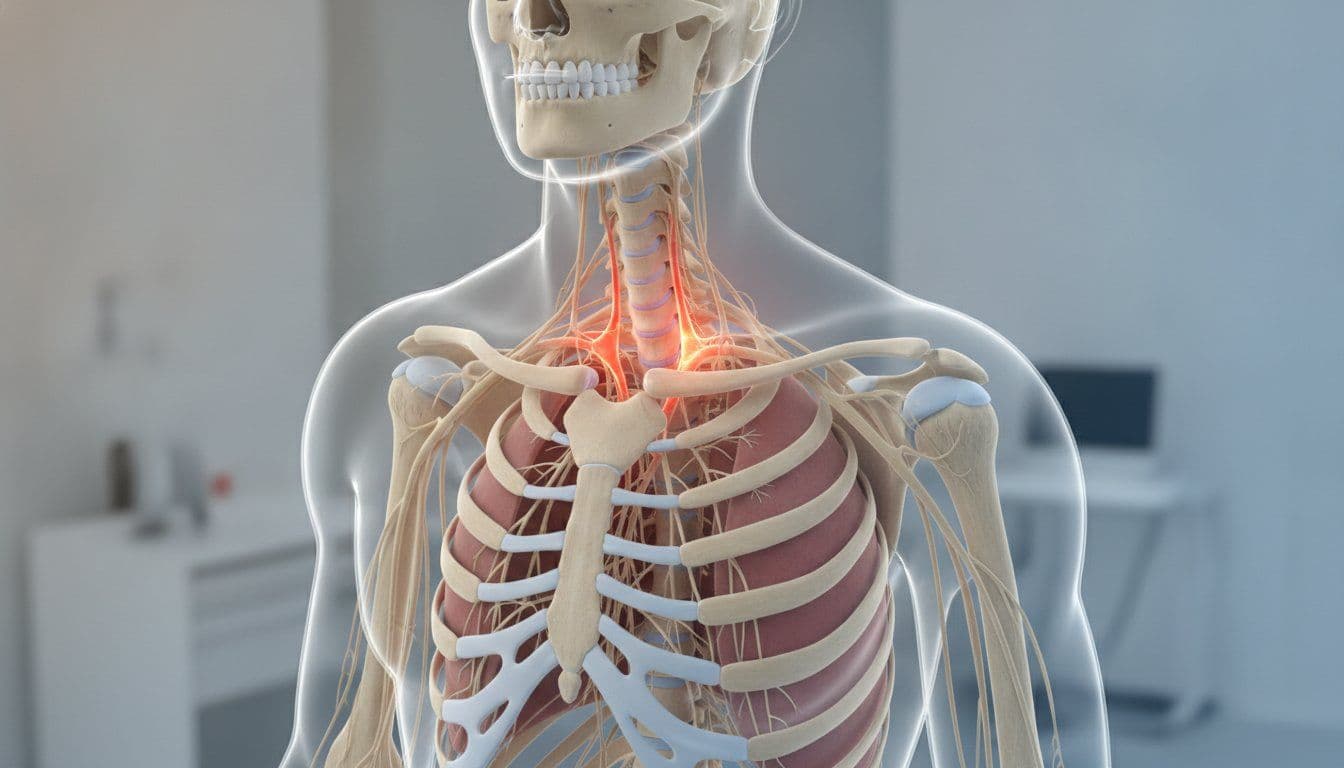
One of the most frequent realisations for our patients is that the pain in their shoulder blade or deltoid is actually coming from their neck. The nerves that serve your arm exit the spine in your neck and travel through a complex gateway in your shoulder. If the nerve is compressed at its exit point in the neck, a condition known as cervical radiculopathy, you might only feel the symptoms further down in your arm.
This is what we call referred pain. It's a bit like a fault in a light switch causing a flicker in a bulb across the room. If we only focus on the bulb, which is your shoulder, we will never fix the switch in your neck. Our approach involves a thorough assessment to find the true source of the "ouch" so we can apply hands-on treatment where it matters most. While nerve pain feels intense, it is a highly treatable condition that responds brilliantly to the right movement and manual therapy. Professional physiotherapy for trapped nerve in shoulder issues ensures we aren't just chasing symptoms but fixing the root cause.
Recognising the Signs: Is it a Nerve or Just a Muscle Strain?
Distinguishing between a standard muscle pull and a nerve issue is the first step toward getting the right help. While a muscle strain usually presents as a dull, throbbing ache that feels tender to the touch, nerve pain is far more volatile. It often manifests as a sharp, electric-shock sensation that can travel unexpectedly from your shoulder down toward your hand. If you are noticing a persistent "buzzing" or a feeling of "pins and needles" around your shoulder blade, you are likely dealing with nerve irritation rather than a simple muscle tear.
A major 2025 analysis of 86 studies revealed that shoulder blade pain is a symptom in 72% of people with a trapped nerve in their neck, making it the third most common symptom after neck and arm pain. This data highlights why so many people mistakenly think they have a muscular knot when the problem is actually neurological. Seeking expert physiotherapy for trapped nerve in shoulder pain helps identify these patterns early, preventing a temporary niggle from becoming a chronic problem.
Nerve symptoms have a habit of flaring up at the most inconvenient times. For many office workers in Milton Keynes or Northampton, the pain peaks after sitting at a desk for long periods. Gravity and static postures can increase the pressure on already sensitive nerves. You might also find that your symptoms feel significantly worse at night, making it almost impossible to find a comfortable sleeping position without proper guidance.
The Four Classic Symptoms of Nerve Compression
- Radiating Pain: A sharp, burning, or "searing" sensation that travels along the path of the nerve, often moving from the neck down the arm.
- Localized Numbness: A "dead" or hollow feeling in specific patches of skin, almost as if that part of your body has been given a local anaesthetic.
- Persistent Tingling: Known clinically as paresthesia, this is the classic "pins and needles" sensation that doesn't go away simply by changing your position.
- Functional Weakness: This is a major red flag. If you find it difficult to grip a kettle, open a jar, or lift your arm to brush your hair, the nerve signal to your muscles is being seriously compromised.
The Mystery of the Trapped Nerve in the Neck
It is surprisingly common for a trapped nerve in the neck to masquerade as a shoulder problem like bursitis or a rotator cuff tear. Because the nerves serving your arm originate in the cervical spine, any compression at the source sends pain signals further down the line. This is why a professional assessment is so vital. If you only treat the shoulder, you are just managing the symptoms while the root cause remains untouched. If you are tired of guessing what is wrong, our team can provide the clarity you need to start moving forward again.
Why "Wait and See" is the Worst Advice for Nerve Pain
The standard advice for many years was to "wait and see" if nerve pain would settle on its own. While this might save the NHS some immediate resources, it is often the worst thing you can do for your long-term health. As of June 2026, the number of people waiting more than 52 weeks for planned NHS treatment rose to 105,711. Leaving a nerve compressed for that long isn't just uncomfortable; it's risky. Prolonged pressure can lead to nerve scarring and a state of chronic sensitivity where the nerve stays "on" even after the initial pinch is gone.
Proactive physiotherapy for trapped nerve in shoulder problems is about unblocking the communication line before permanent changes occur. By intervening early, we often find that patients need fewer sessions to reach their goals. It is much easier to calm a frustrated nerve than it is to retrain one that has been screaming for six months. Our goal is to get you back to your best as quickly as possible, without the unnecessary delays that turn a simple fix into a complex recovery.
The Dangers of the "Rest" Myth
The idea that you should take to your bed and stay perfectly still is completely outdated. Total rest is actually one of the quickest ways to make a trapped nerve feel worse. Nerves require a healthy blood supply and space to glide. When you stop moving, the surrounding tissues can become stagnant and stiff. This often leads to secondary issues like a "frozen shoulder" where the joint itself locks up because you've been protecting it for too long. We use specific, gentle movements designed to "floss" the nerve through the surrounding muscles and joints, restoring blood flow and helping the nerve desensitise.
Hands-On Therapy vs. Generic Exercise Sheets
Many clinics have moved toward an "exercises-only" model where you are given a generic sheet of stretches and sent on your way. At RED Physiotherapy, we do things differently. As a family-run practice, we prioritise a hands-on approach from your very first session. We don't expect you to do all the hard work alone while you're still in significant pain. Our therapists use joint mobilisations and specialised soft tissue work to physically create space for the nerve. This manual intervention helps release the physical pressure in your neck or shoulder, providing a level of relief that an exercise sheet simply cannot match.

Practical Relief Steps While Waiting for Your Appointment
While you wait for your clinical assessment, there are several adjustments you can make to lower your daily pain levels. Managing a trapped nerve is often about reducing the "noise" in your nervous system. This means avoiding activities that provoke those electric-shock sensations. Pacing is your best friend here. Instead of trying to power through a full day of housework or desk work, break tasks into ten-minute chunks. If you feel a flare-up starting, stop and change your position immediately.
Sleeping is often the biggest challenge for patients seeking physiotherapy for trapped nerve in shoulder relief. If you sleep on your side, place a pillow in front of your chest to support your painful arm. This prevents the shoulder from slumping forward, which often increases the pinch on the nerve. For your neck, ensure your pillow height keeps your spine neutral, neither tilted up nor down. When it comes to temperature, heat is usually more effective than ice for nerve pain. While ice is great for a swollen ankle, it can make a sensitive nerve feel more irritable. A warm pack on your neck helps relax the surrounding muscles, reducing the overall pressure on the nerve fibres.
Ergonomics for the Modern Office Worker
For those of you working in Milton Keynes or Northampton offices, your desk setup is likely a major factor. The "Screen Height" rule is simple: the top third of your monitor should be at eye level. If you are looking down at a laptop all day, you are overstretching the nerves in your neck and upper back. Your setup might be the hidden culprit behind your shoulder pain. Try to take a micro-break every 30 minutes. Simply standing up and letting your arms hang loosely for 60 seconds can reset the tension and improve blood flow to the affected area.
Safe Nerve "Flossing" Techniques
Nerve flossing is a gentle way to encourage the nerve to glide through its pathway rather than being stretched. Imagine the nerve is a thread passing through a straw; flossing helps it move without getting snagged on tight tissues. A safe start is a gentle neck-to-shoulder glide. Tilt your head slowly away from the painful side while simultaneously lowering your shoulder. Move rhythmically and slowly. Crucially, this should never feel like a traditional "stretch". If your symptoms increase or start shooting down the arm, stop immediately. If you are unsure about your technique, it is best to book an assessment with a physiotherapist to ensure you are moving safely toward recovery.
How RED Physiotherapy Gets You Back to Your Best
At RED Physiotherapy, we believe you shouldn't have to navigate your recovery in the dark. While other clinics might rely on guesswork, we use musculoskeletal ultrasound to see exactly what is happening beneath the skin. This allows us to track the nerve pathway and identify the precise point of irritation, ensuring your treatment is as accurate as possible. We are a family-run practice with clinics in Milton Keynes, Northampton, and Towcester, and we are committed to providing a level of care that gets you back to your peak performance efficiently.
Our RED Physiotherapy approach is built on the principle that your time and your health are valuable. We don't drag out treatments or keep you coming back for unnecessary follow-ups. Instead, we focus on high-impact, evidence-based results that restore your freedom to move. Specialised physiotherapy for trapped nerve in shoulder pain is about more than just managing symptoms; it's about rebuilding your confidence in your own body so you can return to the activities you love.
Our Hands-On Philosophy from Day One
When you walk through our doors, you won't be handed a generic exercise sheet and sent home. From your very first session, you will receive hands-on treatment and a clear, actionable recovery plan. We use a combination of joint mobilisations and sports massage to create physical space for the nerve to breathe. This manual work is essential for lowering the immediate "threat" level in your nervous system. Whether your goal is returning to the golf course or simply enjoying an afternoon in the garden, we tailor every technique to your specific lifestyle.
Advanced Diagnostics and Fast-Track Recovery
For chronic cases where muscle tension has become a protective "armour" around the nerve, we offer advanced tools to break the cycle of pain. Shockwave therapy is particularly effective for releasing deep-seated tension, while dry needling can help "reset" the muscles that are guarding the area. These modern methods, combined with our clinical expertise, ensure that your recovery is as fast as it is thorough. If you are tired of waiting for answers, contact us today to book a priority assessment and start your journey back to full health.
Take Control of Your Recovery Today
Living with the sharp, electric-shock sensations of a trapped nerve is exhausting, but you don't have to wait for months on a waiting list to find relief. By understanding that your shoulder pain often originates in the neck and choosing proactive movement over total rest, you are already halfway to recovery. Specialist physiotherapy for trapped nerve in shoulder pain ensures you aren't just masking symptoms but physically creating the space your nerves need to heal. It is about moving from a state of frustration to a clear, actionable plan that puts you back in the driver's seat.
At RED Physiotherapy, our family-run team brings over 10 years of experience to every session. We believe in hands-on treatment from day one, using advanced tools like musculoskeletal ultrasound to get you fixed fast without the fluff. With clinics conveniently located in Milton Keynes, Northampton, and Towcester, expert help is closer than you think. Stop letting nerve pain dictate your schedule and start your journey back to peak performance. Book your hands-on assessment at RED Physiotherapy today. We look forward to helping you get back to the activities you love with confidence and ease.
Frequently Asked Questions
How do I know if my trapped nerve is causing permanent damage?
Nerves are actually quite resilient, but they don't like being squeezed for long periods. While permanent damage is rare, you should look out for persistent numbness that doesn't change when you move or significant muscle wasting in your arm. Most people find that a dedicated course of physiotherapy for trapped nerve in shoulder issues prevents any long term fallout. We focus on restoring that electrical flow before your body starts to accept the pain as a new normal.
Can a trapped nerve in the shoulder go away on its own?
It might quieten down if you stop moving, but it rarely fixes the mechanical reason the pinch started in the first place. If your desk setup in Milton Keynes is still causing you to slouch, the nerve will likely flare up again the moment you get busy. We want to stop the "yo-yo" effect of recurring pain. Getting a professional to look at the mechanics ensures you aren't just crossing your fingers and hoping for the best.
Is it better to use heat or ice for a pinched nerve in the shoulder?
Stick with heat for nerve issues. Nerves are a bit like us; they prefer being warm and cosy. Ice can actually trigger more sensitivity and "zinging" in an already angry nerve. A warm pack on your neck or shoulder blade helps the surrounding muscles to let go, which takes the physical pressure off the nerve itself. It is a simple and effective way to manage things between your hands-on sessions in Northampton or Towcester.
How long does it typically take for physiotherapy to fix a trapped nerve?
You should start feeling a real difference within the first few sessions as we work to "unblock" the signal. Research indicates that 75% to 90% of these cases resolve fully within 4 to 12 weeks when managed correctly. We don't believe in dragging things out for the sake of it. Our aim is to give you the hands-on treatment and the right movement plan to get the job done as efficiently as possible.
Why does my trapped nerve feel worse when I am trying to sleep at night?
Pain often peaks at night due to a drop in body temperature and a lack of natural movement. When you are still, blood flow to the nerve slows down and any inflammation can pool around the "pinch" point. Combine that with a pillow position that might be overstretching your neck and you have a recipe for a wake-up call at 3 am. We can show you exactly how to prop yourself up to keep the nerve happy while you rest.
Can stress or anxiety make the symptoms of a trapped nerve feel worse?
Absolutely. Your nervous system is one big loop and when you are stressed, your brain naturally turns up the volume on all pain signals. It is like having a sensitive car alarm that goes off when a leaf touches the window. Stress also makes you hold tension in your neck and shoulders, which physically tightens the space around the nerve. Part of our job is helping you turn that volume back down.
What is the difference between a trapped nerve and a slipped disc in the neck?
A slipped disc is a common "why" behind the "what." The disc is the physical cushion between your vertebrae. If it bulges or "slips," it can press on the nerve as it exits the spine. The "trapped nerve" is the resulting pain, tingling, or weakness you feel in your shoulder or arm. Both respond brilliantly to the right physical management and manual therapy without needing to resort to surgery.
When should I see a doctor or physio immediately for shoulder nerve pain?
You should seek help immediately if you notice a sudden loss of strength, such as being unable to hold a kettle or lift your arm at all. If you experience any changes in your bladder or bowel control, or if the numbness spreads to your saddle area, please head to A&E. For everything else, like those nagging electric shocks or persistent buzzing, come and see us. We will get you a clear answer and a proper plan of action.
Focus Keywords:
- physiotherapy for trapped nerve in shoulder
- trapped nerve in shoulder symptoms
- nerve pain relief Milton Keynes
- hands-on physiotherapy Northampton
- trapped nerve treatment Towcester

Tags:
About the Author
Red Physiotherapy Team
Content Team
Health and wellness content from the RED Physiotherapy team.