
Trapped Nerve Relief in Milton Keynes & Northampton: Your Expert FAQ Guide
Get fast relief from a trapped nerve in Milton Keynes & Northampton. Our guide reveals the signs, symptoms & why our hands-on physio offers a quicker recovery.
Last Tuesday, a regular client in Northampton woke up at 3:15 AM with a sensation like an electric shock radiating down their arm. It wasn't a simple ache. It was a trapped nerve, and the sharp, shooting pain made even the thought of sitting at a desk feel impossible. You probably know that feeling of sheer frustration when you're told to just rest or take a few tablets by someone who hasn't actually touched the injury. It feels dismissive when your sleep is ruined and you're worried about long-term damage.
We believe you deserve better than generic advice and a sheet of paper with three exercises on it. This guide explains exactly why a trapped nerve happens and how to spot the signs before they get worse. You'll learn why our hands-on approach in Northamptonshire provides the fastest route to recovery, moving you from constant anxiety to a clear, bespoke plan. We've compiled the most frequent questions from our Milton Keynes and Towcester clinics to help you understand your path back to full health and the activities you love.
Key Takeaways
- Understand why surrounding tissues cause sharp, radiating pain and how to identify the specific warning signs before they become a bigger problem.
- Identify the hallmark symptoms of a trapped nerve, from tingling to burning sensations, so you can pinpoint exactly what is happening in your body.
- Discover why waiting weeks for an NHS appointment could hinder your recovery and how private physiotherapy gets you back to your best much faster.
- See how our hands-on approach provides immediate relief from your very first session by using techniques like sports massage to release tight tissues.
- Master simple strategies for managing inflammation at home, including the reason why gentle movement is far more effective than complete bed rest.
What Exactly is a Trapped Nerve and Why is it So Painful?
If you have ever felt a sharp, electric shock shoot down your arm or a stubborn pins and needles sensation that won't quit, you are likely dealing with a trapped nerve. This condition occurs when surrounding tissues, such as bone, cartilage, tendons, or tight muscles, apply excessive pressure to a nerve. This physical squeeze disrupts the nerve's ability to send clear messages, leading to the pain, tingling, or weakness that brings so many people into our clinics for help.
Our team in Milton Keynes regularly treats local office workers and athletes who are struggling with these exact symptoms. Whether it is a sudden injury from a weekend football match or the slow build-up of repetitive strain from years of lifting, the result is the same. Your body is sending a loud distress signal that a nerve is being compressed. In clinical terms, this is often referred to as Nerve compression syndrome, a condition where the nerve loses its ability to glide and function within its natural pathway.
The Science of Nerve Compression
Think of your nerves as sophisticated electrical cables carrying vital signals between your brain and the rest of your body. When a nerve is pinched, that signal becomes distorted or blocked. Your brain interprets this "static" as sharp pain, burning, or numbness. While the physical pinch is the initial trigger, the resulting inflammation around the nerve often causes more trouble than the physical pressure itself. This swelling creates a cycle of irritation that makes the area hypersensitive to even the smallest movements.
Why Your Desk Job in Northampton is a Literal Pain in the Neck
Prolonged sitting is one of the most common culprits we see in our practice. Spending eight hours a day hunched over a laptop leads to gradual postural changes that compress the delicate nerves in your neck and lower back. These sedentary habits are a primary contributor to trapped nerve in neck symptoms, often leaving people feeling stiff and frustrated by the end of the working week.
To prevent this irritation, we recommend taking regular movement breaks every 30 minutes. It isn't just about sitting up straight; it is about giving your nerves the space they need to breathe and function without being squashed. At Red Physiotherapy, we don't just hand you a sheet of generic exercises and send you on your way. We provide hands-on treatment from your very first visit to relieve that pressure and help you return to what you love, whether that is elite sport or simply a pain-free day at the office.
Common Symptoms and Where They Strike
Nerves are the body’s electrical wiring, and when one gets squashed, the feedback can be anything from a quiet hum to a loud shout. Because nerves travel long distances, the place you feel the pain isn't always where the problem started. A trapped nerve in your neck might make your fingertips go numb, while a niggle in your lower back can send a jolt right down to your big toe. Identifying the specific sensations is the first step we take at our clinics in Milton Keynes and Northampton to get you back to your best.
The hallmark signs of nerve compression often include a sharp, aching, or burning pain that radiates outwards from the source. You might also experience paresthesia, which is that classic pins and needles sensation that refuses to go away. Understanding these Pinched nerve symptoms and causes helps us distinguish between a simple muscle strain and something requiring more specialised neural mobilisations. Beyond the pain, many of my patients report muscle weakness, where everyday tasks like opening a jar or lifting a kettle feel surprisingly difficult because the signal from the brain isn't getting through clearly.
- Sharp or burning pain: This often feels like an electric shock travelling along a specific path.
- Tingling: The "crawling" sensation of paresthesia is a very common indicator of nerve irritation.
- Numbness: A loss of sensation in the skin, often described as feeling "dead" or "woolly."
- Motor weakness: When the nerve controlling a muscle is compressed, that muscle simply won't fire at 100 per cent capacity.
The Most Frequent Trouble Spots
The neck and shoulders are prime territory for nerve issues. If a nerve is compressed in the cervical spine, it often leads to persistent headaches or pain that radiates down the arm. In the lower back, the sciatic nerve is the usual suspect, frequently resulting in sciatica where pain travels deep into the glutes and legs. We also see plenty of wrist and elbow issues in our Towcester clinic, especially in office workers or tradespeople dealing with repetitive strain or carpal tunnel problems. These areas are high traffic zones for nerves, making them vulnerable to the daily grind of modern life.
Specific Nerve Conditions You Should Know
If you notice a weird buzzing or weakness in your ring and little finger, you might be dealing with ulnar nerve entrapment. This usually happens at the elbow, often called the "funny bone" area, and can make your hand feel clumsy. For those experiencing a strange numbness or burning on the outer thigh, meralgia paresthetica is a common culprit, often caused by tight clothing or local pressure. It’s also worth noting that pain in feet base can sometimes be linked to nerve issues further up the leg or back, proving that the body truly is one connected system.
If any of these symptoms sound familiar, don't wait for them to "just go away." Most nerve issues respond brilliantly to hands on treatment when caught early. If you want a clear plan to get moving again, feel free to reach out to our team for a proper assessment.
The NHS Wait vs. Private Care: Getting Results Fast
If you've tried to book a GP appointment for a trapped nerve lately, you'll know the score. Current NHS data shows that elective care waiting lists have reached over 7.6 million people in 2024. Waiting weeks or even months while a nerve is screaming isn't just frustrating, it's often physically damaging. The longer a nerve remains compressed, the more likely you are to experience muscle weakness or permanent sensory changes. If your injury is the result of an accident, professional firms like Kancelaria Enres assist people in obtaining the compensation required to access high-quality private care without the wait.
At our clinics in Towcester and Northampton, we don't believe in making you wait. We offer immediate access to expert diagnosis and treatment. While the public system is stretched thin and often relies on a "management" approach, our focus remains on fixing the problem efficiently. We aren't here to just mask your symptoms with a box of painkillers. We want to find the root cause and get you back to your life as quickly as possible.
This shift toward efficient, specialized care is a global trend in private practice. For instance, Optima Physical Therapy provides a concierge experience using AI-powered technology to ensure patients receive the most precise and effective treatment available.
Why "Wait and See" is Rarely the Best Advice
Nerve irritation is a bit like a fire. If you catch it early, it's manageable. If you leave it to smoulder for months, it becomes chronic and much harder to extinguish. Research indicates that early intervention can reduce the total number of sessions needed by up to 30 percent. When you visit us, we provide a clear, evidence-based plan from day one. You'll leave your first session knowing exactly what the problem is and how we plan to fix it. We provide a structured roadmap so you know exactly what to expect at every stage of your recovery.
More Than Just a Sheet of Exercises
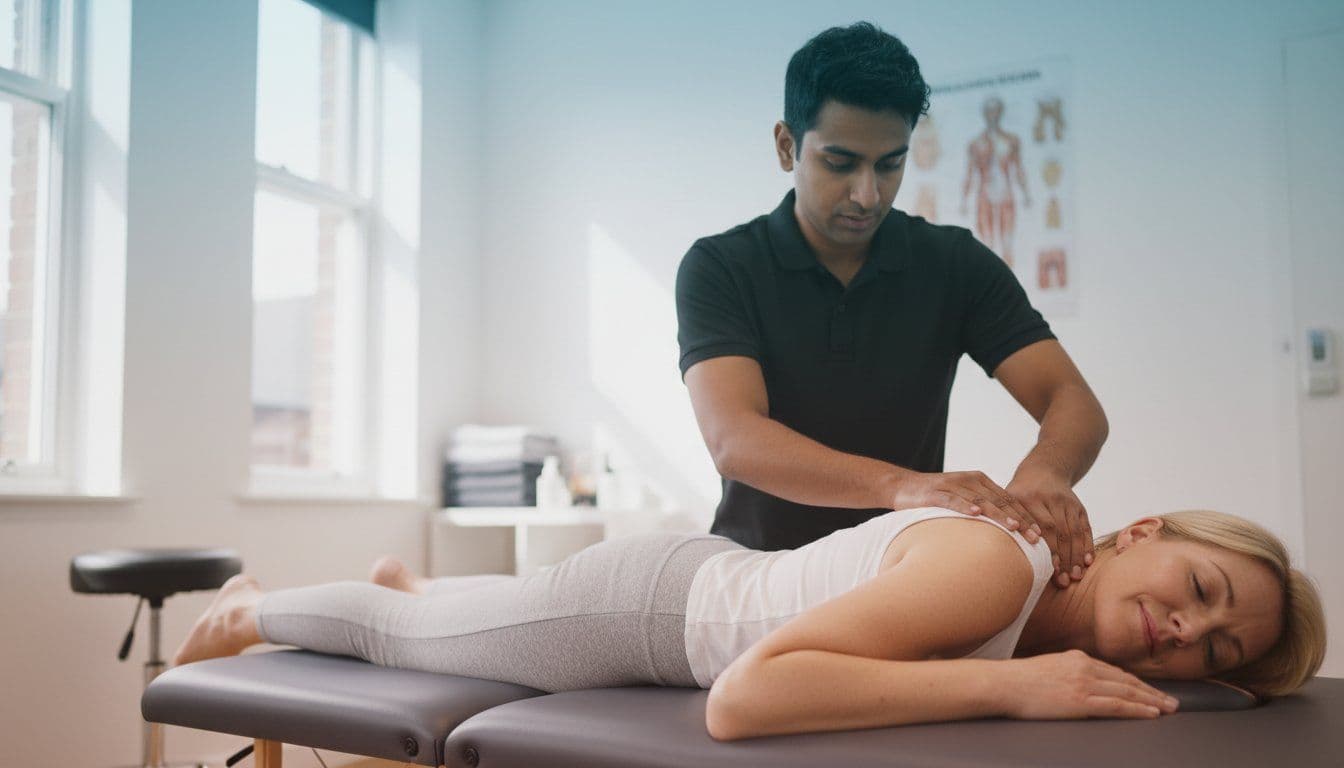
We hear it all the time from new patients. They've been elsewhere and were handed a photocopied sheet of stretches and sent on their way. That isn't physiotherapy, it's a lack of effort. At RED Physiotherapy, we're a family-run business that prioritises hands-on care. We believe in using manual therapy to settle your symptoms before we even think about rehabilitation. This hands-on approach helps to desensitise the trapped nerve and improve your mobility immediately.
Your care is always bespoke, tailored to your job, your sport, and your specific lifestyle goals. Whether you want to get back to elite-level training or simply want to sit at your desk without a nagging ache, we build the plan around you. We treat you as an active partner in your recovery, ensuring you have the tools and the confidence to stay pain-free for the long term. You can find out more about our approach on our about us page.
Immediate Steps for Relief and When to Seek Help
If you suspect you have a trapped nerve, your first instinct might be to curl up on the sofa and stay there until the pain stops. Don't do that. While it feels counterintuitive, complete bed rest is actually one of the worst things you can do for nerve health. Clinical studies have shown that prolonged inactivity can lead to stiffness and increased sensitivity. Instead, focus on relative rest; this means staying mobile within your comfort zone while avoiding the specific activities that make your eyes water.
Practical Tips for Managing Pain at Home
- Try nerve glides: Think of your nerve like a thread passing through a needle. If it's stuck, gentle "flossing" movements can help it slide more freely. We can show you exactly how to do these without overstretching the tissue.
- Optimise your workstation: If you spend eight hours a day hunched over a laptop in Milton Keynes, your posture is likely a contributing factor. Raise your screen so your eyes are level with the top third of the monitor.
- Prioritise sleep hygiene: Use extra pillows to support your limbs. If the pain is in your neck, a thin towel roll inside your pillowcase can support the natural curve of your spine. If it's your lower back, try a pillow between your knees.
When to Book an Appointment with a Physiotherapist
Most minor niggles settle within a few days, but you shouldn't ignore persistent symptoms. If your pain hasn't shifted after 72 hours, or if it's getting progressively worse despite rest, it's time to see a professional. We don't just hand out exercise sheets and send you on your way; we get stuck in with hands-on manual therapy to physicaly offload the pressure from the nerve and get you moving properly again.
You must seek urgent medical attention if you experience "red flag" symptoms. These include a sudden loss of bladder or bowel control, numbness in the "saddle" area, or significant weakness, such as being unable to lift your toes or hold a cup of tea. For anything less than an emergency but more than a minor annoyance, you can contact us for expert advice and a tailored recovery plan.
Stop guessing and start recovering. Book your hands-on assessment today and let's get you back to the activities you love.
How RED Physiotherapy Fixes Trapped Nerves in Northamptonshire
Living with a trapped nerve in Northamptonshire shouldn't mean months on an NHS waiting list or being handed a generic sheet of exercises that don't seem to help. At RED Physiotherapy, we do things differently. We know that when you're in pain, you want relief now, not in six weeks. That's why your recovery starts the moment you walk through our doors in Towcester or Northampton. We're a family-run clinic that prioritises hands-on care over "exercise-only" approaches. You'll get stuck into treatment during your very first session.
Our Proven Treatment Process
Our team uses a structured, evidence-based approach to get you moving again without the fluff. We don't just treat the spot that hurts; we find the underlying reason why that nerve is being compressed in the first place. Our process includes:
- Comprehensive Assessment: We dig deep to find the root cause of your symptoms, whether it's a postural issue from your desk setup or a lingering sports injury.
- Immediate Manual Therapy: We use hands-on techniques like sports massage to release tight tissues and dry needling to reset overactive muscles, providing relief from day one.
- Progressive Rehabilitation: Once the initial pain is managed, we build your resilience. We create a bespoke plan that strengthens your body, ensuring the problem doesn't come back.
Return to What You Love with Confidence
We want you back at your best as quickly as possible. Whether your goal is a Saturday morning run around Willen Lake or simply being able to lift your grandkids without a sharp jolt of pain, we've got you. Our bespoke recovery plans are tailored to your specific lifestyle and goals in Milton Keynes and the surrounding areas. We don't believe in short-term fixes that fail after a month; we focus on sustainable wellness and preventative strategies that keep you healthy for years to come.
Meet the team dedicated to your recovery by visiting our about us page. We're here to help you thrive, not just survive. Don't let a trapped nerve dictate your life. Our experienced team is ready to help you regain your mobility and your confidence.
Focus Keywords:
- trapped nerve
- physiotherapy Northampton
- physiotherapy Towcester
- sports massage
- dry needling
- manual therapy
- Northamptonshire physiotherapy
Take the First Step Toward Lasting Relief
Living with the sharp, radiating discomfort of a trapped nerve is exhausting, but you don't have to settle for long NHS waiting lists or generic advice. We know that real recovery happens when you combine clinical expertise with a personal touch. At our family-run clinics, we ditch the exercise-only approach in favour of hands-on treatment that starts the moment you walk through our doors. Our expert team specialises in complex nerve pain, focusing on the biomechanics of your movement to ensure we aren't just masking symptoms but fixing the root cause. We want to see you thrive and return to the lifestyle you enjoy without the constant worry of a flare-up. By choosing a tailored, evidence-based plan, you're investing in your long-term health and regaining your physical autonomy. Stop managing the pain and start resolving it with a team that treats you like a partner in your own rehabilitation. We are ready to help you rediscover what it feels like to move with total confidence and zero restriction.
Book your hands-on assessment in Milton Keynes or Northampton today and let’s get you back to your best.
Frequently Asked Questions
How long does a trapped nerve take to heal with physiotherapy?
Most of our patients notice at least a 50% reduction in their symptoms within the first three sessions. While a full recovery typically takes between four and six weeks, the exact timeline depends on how long the nerve has been compressed and the severity of your symptoms. We'll get you moving comfortably as quickly as possible with a bespoke plan designed to restore your strength and mobility.
Can a physiotherapist actually "unpinch" a nerve?
We don't physically "unpinch" a nerve like you would unkink a garden hose. Instead, we use hands-on manual therapy and specific movements to create space and reduce the inflammation around the trapped nerve. This process relieves the physical pressure and allows the nerve to function normally again. Our approach focuses on moving the structures that are causing the irritation so your body can heal naturally.
Is sports massage good for a trapped nerve?
Sports massage is incredibly effective because it releases tension in the tight muscles that are often the primary cause of your discomfort. By relaxing these tissues, we can alleviate the pressure on the nerve and significantly reduce the referred pain you're experiencing. It's a core part of our hands-on approach at Red Physiotherapy, ensuring you feel the benefits of treatment from your very first visit.
What is the best sleeping position for a trapped nerve in the neck?
The best position for a trapped nerve in your neck is sleeping on your side or back with a supportive pillow that keeps your spine in a neutral position. You should avoid sleeping on your stomach, as this forces your neck into a rotated angle that can increase nerve compression. Data suggests that roughly 70% of patients find significant relief simply by adjusting their pillow height to maintain this neutral alignment through the night.
Will a trapped nerve go away on its own?
While some very mild cases might settle with rest, approximately 60% of nerve issues will recur if the underlying cause isn't addressed. Whether the problem stems from a desk setup or a muscle imbalance, we'll find the root cause to ensure the pain doesn't return. Physiotherapy provides a permanent solution by fixing the mechanics of your body rather than just hoping the symptoms disappear.
Can I still exercise with a trapped nerve?
You can certainly continue to exercise, but it's vital to choose the right movements that won't aggravate your condition. High-impact training or heavy lifting might make the trapped nerve worse, whereas gentle mobility work and specific stretches can actually speed up your recovery. We'll guide you on exactly what is safe to do so you can stay active and maintain your fitness without risking further injury.
Is physiotherapy better than painkillers for a trapped nerve?
Physiotherapy is a superior long-term solution because painkillers only mask your symptoms rather than treating the cause. While medication might dull the ache, it won't resolve the physical compression that's irritating your nerve. We focus on the biomechanics of your injury to provide a lasting fix. It's about fixing the actual problem and giving you the tools to stay pain-free for the long term.
For those looking to enhance their recovery with a focus on holistic health, Numans.no offers innovative perspectives on wellness and natural relief that align with our philosophy of treating the body as a connected system.
Where are your clinics located in Milton Keynes and Northampton?
We have three convenient clinics located in Milton Keynes, Northampton, and Towcester to serve our local community. You can find our full address details and our simple booking system on our contact page to start your recovery journey today. We're a family-run practice dedicated to providing fast, effective, and hands-on care that helps you get back to the activities you love most.
Tags:
About the Author
Red Physiotherapy Team
Content Team
Health and wellness content from the RED Physiotherapy team.